Friday, April 07, 2006

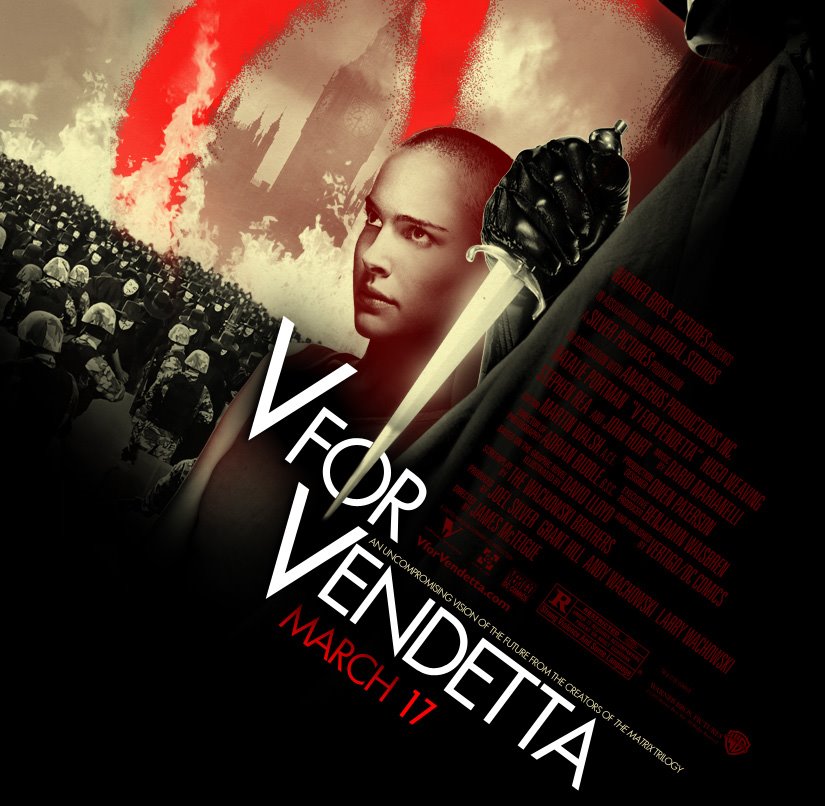
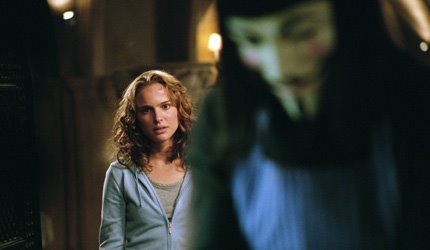
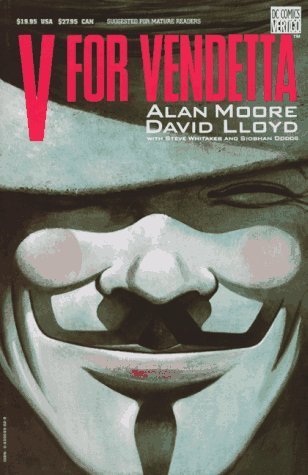
BEHIND THE MASK: MORE ON V FOR VENDETTA


V for Vendetta-- I know, I know, that’s so two weeks ago. But the movie, less than flawless though it may be, has rib-sticking power, and I like the fact that it’s forcing itself to churn and burn around in my head to the degree it has so far. And I really liked the degree of debate that it inspired in my comments column—meager by the standard of some blogs, perhaps, but pretty juicy for the old SLIFR. A couple of points of view came to light in the last week or so, after my original piece had been bumped far enough down the page as to be relatively missable. I liked what I read in these pieces—two from posts on other blogs, the other from a private e-mail from a friend whose permission I have secured so I might reprint his comments here—enough to want to highlight them in their own post and ensure that they didn't get buried at the bottom of a two-week-old item.

************************************************************

First up, David Lowery, proprietor of Drifting had this to say when he checked after reading my post:

”Wonderful review, Dennis, and one which I would have agreed with completely up until I saw the film again the other day. I think it's a fairly successful adaptation of a difficult work, and I admire it greatly for what it does right - but the filmmakers make one or two very crucial errors that essentially dumb everything down, that make the politics subversive on a very surface level (which, granted, is still more than one might expect from an action movie). I'll have a review of my own at my blog shortly in which I go into these issues more throroughly. For the meantime, I'll just say that I'm glad people are seeing it and that it's inspiring so much writing and eloquent, multi-sided discussion - that alone validates the film.”

I was definitely intrigued. I like the process of debating ideas about movies, especially one like this, and I like to think I can keep an open mind about thoughts that don’t fall in line with my own. And that last sentiment was certainly one I could get behind. So I kept my eyes open for David’s own post and, sure enough, a few days later David was ready to go. Here’s a taste:

”It's not the ideology that's problematic, necessarily, but that the Wachowskis and director James McTiegue don't have the courage of their convictions. The film, so revolutionary up to a point, is ultimately unable to commit to the concept of noble anarchy espoused by Alan Moore in the original graphic novel. The film wants to support this, and it makes steps in that direction; but at the crucial point, it sidesteps the issue and reduces a legitimately challenging thesis to something of more Orwellian proportions. Granted, Moore's novel was a polemic against Thatcherian fascism that owed much to 1984, and in preserving a great deal of his solution to Big Brother, the film is quite radical. At the last minute, though, the filmmakers take what it is a very gray area and make it distinctly black and white; after aspiring for intelligent provocation, the Wachowskis settle at the end for inspiration.”

What’s fascinating about Lowery’s approach is that for all of his exposition of what he sees as the film’s flaws, he still makes a reader want to see the film for their own experience with it. In fact, by the time he concludes his own comments, he’s ready to see the film again and enjoy it and admire it despite his own criticism. Check out David Lowery on V for Vendetta and enjoy a very good writer grappling with a very provocative film.

**********************************************************

The second piece, entitled “The Smallest of Killings: The Public Sacrifice of Alan Moore and V for Vendetta,” fooled me. Posted on Chris Stangl’s blog The Exploding Kinetoscope, I admit I was expecting another anti-Wachowski tirade from yet another angry fan of the graphic novel. Instead, the article serves up the perspective of a very levelheaded appreciator of the graphic novel who attempts to see what film adaptation does to the original work, how it filters and/or alters the original ideas, and what the film ends up doing apart from the original work. Here are a couple of choice excerpts, the first considering how the film compares to Moore’s storytelling strategy:

”There’s no way for a narrative film to get away with the kind of radical formal experimentation of Moore’s novel. This is a book in which a chapter is structured as sheet music, for random example. But retained are Moore’s trademark impossibly complex networks of visual motifs, echos and mirrors; in Vendetta, the flashiest is the letter V itself, showing up as graffiti, as crossed knives, as a massive row of dominos, as a smear of blood, as a Roman numeral on a prison cell, and in a crucial moment, in the linked arms of two young lovers. The film cannot best the novel’s exhaustive inventiveness, but when the parallel rebirth of Evey in a nighttime rain, and V’s origin story by fire are startlingly intercut, it demonstrates a respectful attempt to retain a sense of Moore’s craft.”

And then, on the film’s point of view:

”It seems to me that V for Vendetta is primarily about how fascism works, how it happens, and a warning that it is the complicity of a citizenry that will allow it to happen again. There are other important questions posed, about the tensions between individuality and nationalism, about media manipulation, about the fate of ill-mounted revolutions. But that’s the core idea. While the celebratory blowing-up of Parliament at the film’s finale, it must be admitted, is unequivocally “positive,” there is never the assumption that V’s means have justified his ends. He spends equal time carefully preserving works of banned art, but destroys beautiful historic architecture; he teaches Evey the power of personal spiritual freedom by torturing her; he cultivates extinct roses only to use them as calling cards for murder: V can only understand art and people as the ideas they symbolize. He can only love or do violence to them based on that relationship. It’s a shortcoming for a human being as much as it is a strength for an activist. And so Vendetta asks: IS this guy right?”

There’s much more in Stangl’s very well written and reasoned piece, and it’s worth checking out at his appropriately titled blog The Exploding Kinetoscope.

**************************************************************

The other notes I found well worth passing on came in a private e-mail to me last week. They specifically referred to some of the comments made in the wake of my own thoughts on the film. But the main reason I wanted to publish them is because they convincingly offered a response to one of my major complaints about the film. Here’s what I said:

”V For Vendetta is by no means perfect. When Evey's friend, a host of a national TV talk show, played by Stephen Fry, stages a brutal satire of dictatorial figurehead John Hurt (seen throughout the film mostly on video monitors invoking the spirit, if not the letter, of 1984's Big Brother), it seems a crucial misstep that he so arrogantly misjudges the dictatorship's willingness to come directly to his home and shut him down permanently. The incident is used to remind Evey of the abduction and execution of her own parents and lay the groundwork for her own imprisonment, but it's a narratively sloppy way to achieve those ends. Fry's character, who functions largely as a safe-and-sane harbor for the fugitive Evey, for all intents and purposes an above-ground mirror version of V, could have easily served as more than just a ill-thought-out plot device. (I'll be interested to see if the comic book makes the same mistake.)”

I haven’t made it far enough along into the book to know whether or not this development is taken whole hog from Moore, but even if it is I doubt I’ll still be thinking of it as a “mistake,” thanks to these thoughtful comments and their ability to open my eyes a little bit:

”One thing I wanted to say about Stephen Fry's character... The way I interpreted his staging of the satire of John Hurt's character is that Fry's character does what he does because he's simply tired of wearing the mask of the jolly funny man for the state-run network. He knows that he will be put out of his misery once they find his copy of the Koran, and he doesn't care because he's weary of lying about who he really is and lying to the viewing public by distracting them from the horror that exists all about them. His celebrity has given him comfort and the ability to collect things, but he has to put on a front because it is expected of him, and all those pretty things have to be kept locked behind closed doors. And given that the Wachowskis are such private guys, and that one of the brothers maintains an alternative lifestyle that most people would find peculiar, I think it's safe to say that Fry's character mirrors one or both of them more than he mirrors V.”

The reader went on to wonder whether it was the filmmakers or their corporate sponsors who were making the kinds of explicit links to the Bush administration that SLIFR regular That Little Round-Headed Boy was hearing some reviewers claim, links that he was not seeing in the film itself:

“That Little Round-Headed Boy put forth his take regarding links to the Bush administration, suggesting that the moviemakers themselves might have started that particular discussion. I think that it was Time-Warner, and not the Wachowskis, who started the whole thing. While they stopped short of featuring the movie on the cover of Time, they did devote two pages to the controversial nature of the film (and a sidebar review that was very favorable), and they didn't shy away from mentioning the current administration and 9/11. Odd, but the other day I was thinking how 9/11 has eclipsed so many things, like the Oklahoma City bombing, where a terrorist with an ax to grind with the government and explosives consisting of or derived from fertilizer leveled the federal building. Anyway, TLRHB said that he'd give credit to Spielberg for, I guess, being able to weave politics into his art, I'd have to disagree. The Wachowskis seem a whole lot braver than Spielberg, who really chickened out in Munich in my estimation, not that I expected him to do otherwise.”

Finally, the reader took issue with the Alan Moore quote cited by Benaiah at the end of his own negative assessment of the film in the comments section of my post.
Benaiah said:

“I keep meeting people who love this movie, and my only solace in my bitterness after seeing what they did to Moore's brilliant work is a quote from the author himself: Interviewer: ‘How do you feel about Hollywood ruining your work?’ Moore: ‘What are you talking about? They didn't ruin my work. It is right up there on the shelf.’”

I thought Moore’s quote was funny and, if somewhat maddeningly egocentric, then also a fairly clearheaded way of separating his own work from the adaptation without trying to make it seem like a successful adaptation was an impossible proposition. (Of course, this comment is taken out of context from the interview in which it originally appeared, and it is well known that Moore’s general attitude approaches just that level of artistic arrogance.) But the reader, in his e-mail, thought a whole lot less of Moore’s response than either I or Benaiah did and wasn't too shy about saying so:

”That quote by Alan Moore is just glib shit. It's what I would expect of a writer who sounds pretty talented as well as quite full of himself. If you're a fan of his and his books, a quote like that makes you say, "Yeah, way to zing 'em!" But what writer under the sun looks forward to having her/his work adapted? And, in the case of this particular work, to have one of the biggest communications conglomerates in world release the dang thing-- man, irony is just cold.”

******************************************************************

V for Vendetta may have fallen off the average moviegoer’s radar in time it takes to say Ice Age: The Meltdown, but thoughtful comments like these, and writing like that found on David Lowery and Chris Stangl’s blogs, work to ensure that the tangled, complex responses inspired by the film, and the graphic novel, have a chance to get worked out, or at least massaged and further twisted around to encourage the squeezing out of as much intellectual juice as the film will allow. I still think it’s a terrific movie, and I look forward to wrestling with it again sometime soon.

THE ELEPHANT OF THE PUBLIC SOUL


Fun on Friday, directly from the DVD liner notes on the Taiwanese release of an Irwin Allen classic:

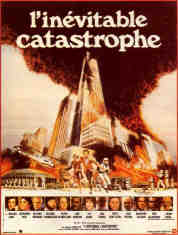
“The Swarm-- Monsters by the millions, and they are all for real! Excel to take the director of the disaster condition the text, once the successfully be responsible for the Neptunian number and skyscraper conflagration of a the action in the drama part, and have to feel the elephant of the public soul with result, have the authentic fact conduct and actions the basis, persons the details that match wits also there is certain science can’t he stunt of the letter, high also increased then that penetrate everywhere.”

All that and Olivia De Havilland too!

It’s a busy Friday, but all looks good for part three of Professor’s Brainerd’s Christmas Quiz Answers tonight, PLUS the unveiling of a brand-new quiz for spring break. Stay tuned, killer bees!

(Thanks to Thom McGregor for passing along the April 2, 2006 page from her “365 Stupidest Things Ever Said” desk calendar, from whence the overwhelming quote seen above was lifted.)

Wednesday, April 05, 2006

A NEW WORLD MASTERPIECE ON A BUDGET-- HOLLYWOOD BOULEVARD


Roger Corman, master of the low-budget, independent exploitation picture, turns 80 years old today, and a bunch of us around the blogosphere have taken up Tim Lucas’s tight-turnaround request for a commemorative Roger Corman Blog-a-Thon in our teeth and will proceed to shake it for all it's worth today.

For many, mere mention of the name Roger Corman is to conjure images of Boris Karloff, Jack Nicholson and Dick Miller in tights, of Vincent Price quothing The Raven forevermore, of Peter Fonda and Bruce Dern and their boss hogs in The Wild Angels, of Robert Vaughn as the Teenage Caveman, of Ray Milland’s X-ray eyes, of man-eating plants and beatniks creating art out of artfully posed corpses.

For me, thinking of Corman is to think of all these things, all these people, all these films. But I usually gravitate toward the Corman of New World Pictures, probably because these were the pictures being made, and splashed all over the movie pages of the Portland Oregonian, when I was a movie-loving teenager in the ‘70s. I don’t think I ever saw one of them in a drive-in or anywhere else during that time, but the advertising was enough to fuel a thousand fantasies about the actors involved, the rough-and-tumble scenarios of the films themselves, and how exciting actually getting to see one would inevitably be. (For an excellent consideration of one great piece of ad art for a Corman classic, be sure to check out That Little Round-Headed Boy’s terrific analysis of the one-sheet for Big Bad Mama, his contribution to today’s blog-a-thon. TLRHB also provides a link to the poster’s artist, John Solie, who you will be delighted to find out created some of the most indelible images of movie advertising to come out of the era of ‘70s exploitation films.)

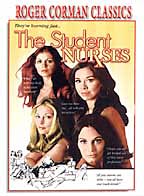
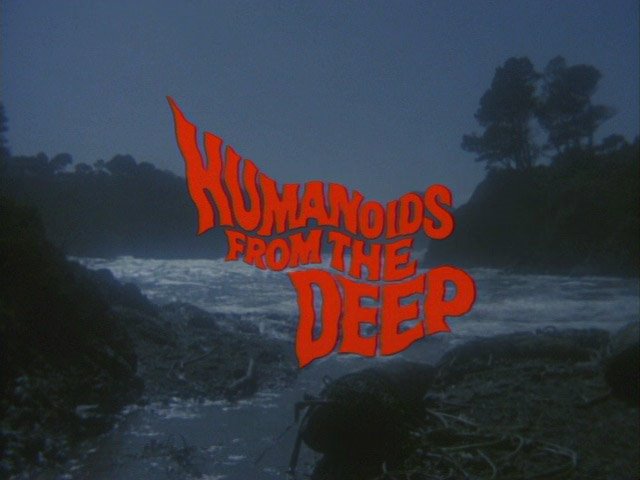
When I finally started catching up with the New World of Roger Corman in the 1970s during my college days, a period extending roughly from The Student Nurses (Stephanie Rothman, 1970) up through Humanoids from the Deep (Barbara Peeters, 1980), I can say I was rarely disappointed. However, Humanoids seems a good dividing line for Corman between the relatively innocent cynicism of the ‘70s films and a more self-conscious nihilism that seemed to take over New World films in the following decade, and the transition seems to have happened midway through the film itself. On the surface, Humanoids was a grotty sci-fi shocker in a very familiar mode, and the concept behind it is typically tasteless-- aquatic mutants go on a rampage of rape aimed at crossbreeding wit humans to create a new master race of dominant amphibious species. But Humanoids was a B-movie shot in the shadow of Alien, itself a B-movie with A-list trimmings, and the realization of Corman B-movie roots being subsumed by mainstream Hollywood seems to send strange shock waves through the filmmakers and their film. Humanoids ends up seeming like an angry attempt to reclaim the grotesqueries which used to be the sole province of the drive-in B-movie by mindlessly trumping Alien’s signature shock set pieces. By the time I witnessed the horrifically bloody forced Caesarean birth that caps Humanoids, I felt like I’d truly had enough of the recycling aesthetic of Roger Corman.

But there were so many delights that came in the decade before. The “Nurse” movies-- The Student Nurses, Private Duty Nurses (George Armitage, 1971), Night Call Nurses (Jonathan Kaplan, 1972) and Candy Stripe Nurses (Alan Holleb, 1974)—were unpretentious delights of exploitation mixed with social commentary that would provide a very profitable template for the producer in the coming years, as would the female prison series embodied by titles like The Big Doll House (Jack Hill, 1971), Women In Cages (Gerardo De Leon, 1971), The Hot Box (Joe Viola, 1972) and The Big Bird Cage (Jack Hill, 1972) and Caged Heat (Jonathan Demme, 1974). Corman turned director Steve Carver loose on the gangster picture, and he came up with two solid entries-- Capone (1975) starring Ben Gazarra, and Big Bad Mama (1974) starring, of course, Angie Dickinson. And the candy-colored anarchist satire of Paul Bartel’s Death Race 2000 (1975) and Allan Arkush’s Rock and Roll High School (1979) are close to irresistible.


"If it's a good picture, it's a Miracle!"

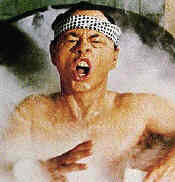
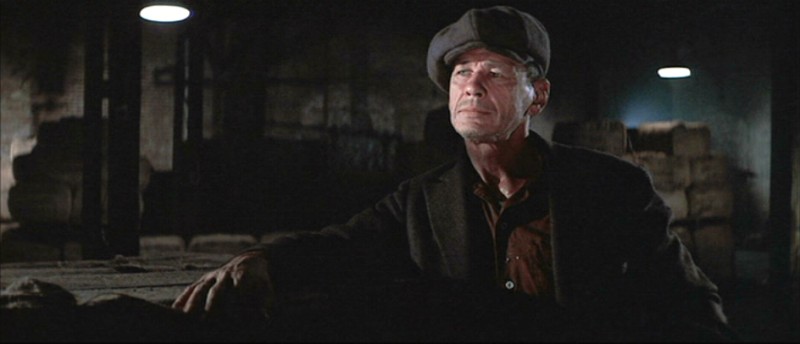
None of these, however, is as perfect in its nonexistent aesthetic, as endearing in its macro-budget sensibility, or as biting a love letter to the world of dirt-cheap exploitation pictures, simultaneously embracing and lampooning the conditions under which they are (or were) made, as is Hollywood Boulevard (1976), directed by Joe Dante and Allan Arkush. This casual, ragged, coarsely funny, sharply observant comedy is maybe the best movie the Roger Corman of the ‘70s ever put his name on, and nothing he’s done since has come close to its insouciance and crude charm. It was made on a bet, on a dare, by a couple of novices looking for a way into the directing business and stands as a monument to creativity borne of tension, lack of money and materials, and making films about what you know and love, not because anyone is likely to be impressed, but simply because you know and love the subject.

The mythology runs as follows (at least as it is related on the Hollywood Boulevard DVD commentary hosted by Dante, Arkush and the film's producer Jon Davison)—Davison was having lunch with Corman one day and made the boss a bet that he could turn in a theatrically releasable movie for less money than had ever been spent on a New World production up to that time. This was, of course, a concept the notoriously frugal Corman could really get behind, and his only insistence was that there be, as was his typical demand, regular infusions of nudity and violence into the film, for marketing purposes, of course. Davison recruited Dante and Arkush, who were cutting trailers for New World at the time, to direct, and soon they were cobbling together a script (officially credited to Patrick Hobby, the name of the hapless screenwriter played by Jeffrey Kramer in the film) built entirely around existing action and stunt scenes from previous Roger Corman opuses. The final budget? $50,000. And, to the movie’s everlasting charm and credit, it looks it.

A sharp eye will notice, cut in amongst footage created by Dante and Arkush of the adventures of an exploitation film crew, headed up by Paul Bartel’s clueless and pretentious director, as they blithely go about shooting a picture a week, a ton of shots from Caged Heat, Death Race 2000, The Terror (seen at a drive-in), Big Bad Mama, Night Call Nurses and Crazy Mama. The existing footage blends well enough with the comedy built around it (not that we’re ever intended not to notice anyway), and it serves to pad the action and save Dante and Arkush thousands of dollars, as well as the embarrassment of having to admit that they wouldn’t know how to shoot such sequences themselves anyway.


"Buzz off!"

Dante calls it, on the commentary track, “a big home movie about the making of this movie.” And it’s certainly about the making of just about every other Roger Corman movie of the period too. But for all the comedy that blooms at the expense of Corman, the notoriously penny-pincher, Hollywood Boulevard is a movie of a remarkably sunny disposition, its cynicism balanced by a belief in, if not a love of movie production, then certainly in the movies themselves. The Corman figure here is embodied by Bruno Kirby look-alike Richard Doran as “P.G.,” and it’s a mark of the movie’s genial attitude toward this casting-couch sleazeball that when an actress incorrectly refers to him as “G.P.,” another responds, “It’s P.G., not G.P.” and the first woman’s only response is an affectless “Whatever.” Any movie about exploitation filmmakers that can link one of its central figures to a way-inside, utterly tossed-off joke about a change in the M.P.A.A. ratings system that was already old news by a couple of years in 1976—and have it be about the “PG” rating and not the sacred “R,” for heaven’s sake-- has definitely got its heart in the right place. And as if any further evidence of this proper pulmonary location is needed, Dante and Arkush intercut a typical picnic-in-the-grass romantic montage between the movie’s pie-eyed protagonists with Commander Cody and the Lost Planet Airmen performing their gleefully obscene speed-freak country ditty “Everybody’s Doing It.” It makes absolutely no logical sense, but the movie hits a high off of this scene that infuses everything that comes after and happily takes the rest of the movie's running time to dissipate.


"Truckin'/Truckin'/Fuckin'/Fuckin'/Everybody's Doin' It Now"

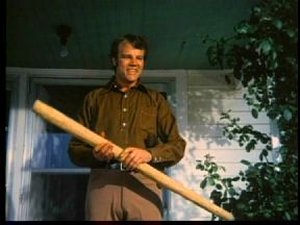
But then, the entire cast has their hearts in the right place too; it’s a cast led by exploitation stars, low-budget filmmakers and veteran professionals that are, to a member, more casually appealing and blessed by sharper timing than they would be in almost anything else they did. Candace Rialson, in 1976 very much a sought-after starlet—she graced Holleb’s Night Call Nurses two years before, and would star the following year in a very popular exploitation comedy about a girl and her talking vagina called, strangely enough, Chatterbox-- is immensely appealing as the wide-eyed Midwest hopeful to hits Hollywood with plenty of big dreams and ends up driving a getaway car in a bank robbery (she thinks she’s been recruited as a stunt driver) before ever hooking up with the good folks at Miracle Pictures (“If It’s a Good Picture, It’s a Miracle!”) and becoming a star (sort of). Jeffrey Kramer, who later than same year would be seen patrolling the beaches with Roy Scheider’s Chief Brody in Jaws, plays the aforementioned Patrick Hobby with a loose-limbed, wisened-up Jimmy Olsen that is very appealing. (It’s a central joke embedded in Dante and Arkush’s premise that Rialson, all fresh-scrubbed and beauteous and straight off the farm, looking to hit the fast track to fame and fortune in the movies, should immediately hook up with the screenwriter.)


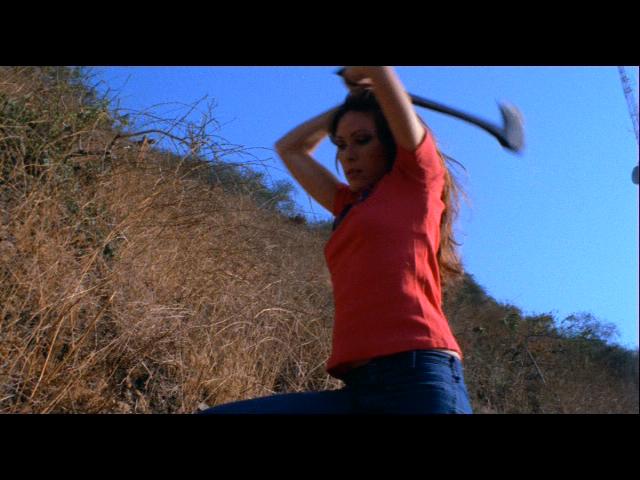
"Careful with that axe, Mary McQueen!"

Paul Bartel and Mary Woronov, in the early stages of their roles as exploitation cinema’s answer to Nichols and May, are delightful as the semi-self-deluded director and his nasty, ambitious, deliciously bitchy star—it struck me in seeing the movie again tonight just how unabashedly sexy Woronov could be on screen, which is something considering that the first time I saw her, made up and glowering as the horrific Miss Togar in Rock and Roll High School, I thought she was a female impersonator who bore a strictly unfortunate resemblance to Tim Curry. Rita George and Tara Strohmeier are sexy and funny as the two other starlets, Bobbi and Jill, who round out Bartel’s traveling stock company of hotties. (I actually met Strohmeier once when I first arrived in Los Angeles and came begging to the offices of the Los Angeles Reader, where she was the paper’s film editor, for a job as a film reviewer. I don’t know whether she was impressed or not that I remembered her topless seduction scene in a hammock, where she tries to seduce an unseen lover while swatting mosquitoes off her bounteous chest. All I know is that I didn’t get the job.)

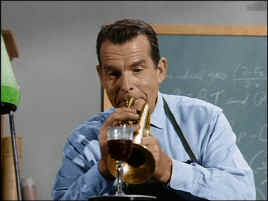
And, of course, the incomparable Dick Miller is genius as usual as Walter Paisley (the name of the murderous beatnik artist/poseur he played in Corman’s Bucket of Blood, and the name he would always have whenever he appeared in a film directed by Dante). At one point in Hollywood Boulevard, he takes Kramer and Rialson out on an ill-fated visit to a drive-in theater for the world premiere of the shot-in-the-Philippines actioner they just wrapped the week before, and while they’re waiting for the main attraction, they watch Corman’s The Terror, specifically a scene between Miller and Boris Karloff. There’s a nice sense of poignancy about Miller looking at himself on screen with the horror icon, but it’s one of the many things that are right about Hollywood Boulevard that the emotion is never pushed, just acknowledged. We’re to understand that it’s Paisley on screen, not Miller, and that connecting of the dots between Corman’s higher-toned Poe adaptations of the ‘60s and the no-frills B-movie milieu of Hollywood Boulevard is perfectly pitched for a movie so in love with everything, even the cheap sleaze and corner-cutting, about the world of low-budget filmmaking.

In 1982, a friend and I made our first visit to Los Angeles. I had recently discovered Hollywood Boulevard on cable and in the months prior to our visit ended up seeing it several times and loving it. And because of this movie, I screwed up the courage to contact New World Pictures in order to set up a screening of some of the Super-8 films my friend and I had made in the hopes of getting an in at Corman’s Venice studio. We ended up getting an audience with one of Corman’s producers, a very friendly woman by the name of Mary Ann Fisher, who gave us a tour of the facilities—New World was, at that time, partially located in a converted lumber yard, and several of the sets for Jimmy Murakami’s Battle Beyond the Stars and some other strange interstellar epic starring Klaus Kinski called Android were still standing. We showed her our films, and mid-screening she even took a call for Mr. Corman himself. And all during our meeting I waxed enthusiastic about Hollywood Boulevard, which had even by then gained a following and a measure of notoriety, at least, I suppose, within insider filmmaking circles. I was glad to be able to talk about any work from the New World stable, but particularly about this movie, which I genuinely did love, and I have a feeling that enthusiasm, coupled with her enjoyment of the films we showed her, was a major reason why she told us to come back, hang around and take a very low-paying entry-level gofer-type job with the studio.


Walter: "Have you been in pictures?"
Robby: "Not recently. I don't do nudity."


I know my friend wasn’t really interested—he was looking to get back home to his fiancé, and the lure of being a $2.00-an-hour gofer for Roger Corman probably didn’t fit into his future plans too neatly—but I’ve never really squared it in my head why I, being the relatively unfettered one at the time, didn’t take her up on her offer. It probably had something to do with the fact that I was still about five years away from being ready to hurl myself into a world as different from the one I grew up in as that of “Hollywood,” and I was scared shitless at the prospect. But it may also have had something to do with knowing the environment that I was enamored of, as represented however accurately or inaccurately by Hollywood Boulevard, was already something that belonged to another era. Filmmakers like Dante, Arkush, Martin Scorsese, Peter Bogdanovich, Francis Ford Coppola, even Ron Howard, their associations with Corman were all long past, belonging to a time of Corman-influenced (or hampered, depending on who you talk to) filmmaking that was like lightning in a bottle, not likely to be casually reproduced, and a look at the films Corman produced in the ‘80s and ‘90s seems to bear this observation out. This is just another reason why Hollywood Boulevard has such a special place in my heart—it’s a raucous comedy, a bittersweet satire of the movie business, but it’s also a tribute to that very style of fly-by-the-seat-of-your-pants cinematic ingenuity on which Corman built his empire that was made while that style was still flourishing and functioning and still had some juice left in it. It may be ragged and stitched together and weaker at the seams in some places than others, but in the history of films about filmmaking there aren’t too many others, no matter what their budgets and ambitions, that, in my estimation, can stand next to it. I really do think it’s a jewel, a modest masterpiece in this famously frugal producer’s crown of tarnished jewels. He didn’t direct it, but today’s blog-a-thon guest of honor got it made, and for that, coupled with the fact that it’s his 80th birthday, I’m proud to salute Roger Corman and say thank you for all his films, but most especially the tour he provided us in 1976 down a sleazy, sexy, sensationally funny section of Hollywood Boulevard.

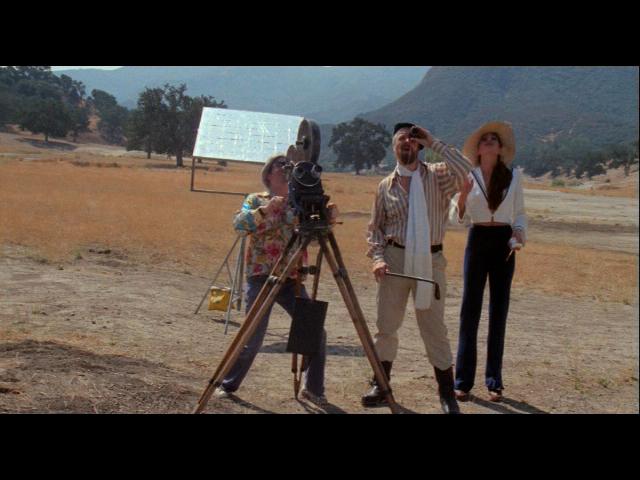
(My many thanks to friend and fellow Hollywood Boulevard enthusiast Machine Gun McCain for providing the wonderful screen grabs that make this post so much fun to look at. I owe you at least 10 or 12, MGM!)

*************************************************************************

Blogless reader C. Jerry Kutner, a frequent contributor to Bright Lights Film Journal and proprietor of The Richard M. Powers Cyber Art Gallery, submitted this comment regarding Roger Corman that
I'm happy to post for him:

"One of the greatest things an artist can accomplish is the creation of his own universe. John Ford did it. Peter Jackson did it with his Tolkien trilogy. And Roger Corman did it in his Edgar Allan Poe/H.P. Lovecraft series (House of Usher-1960 through Tomb of Ligeia-1964). Happy Birthday, Roger! May you never be forgotten!"

Thanks for your contribution, Mr. Kutner!

***********************************************************************

More Roger Corman Blog-a-Thon entries available at the following sites:

The House Next Door (Matt Zoller Seitz)
Flickhead (Ray Young)
More Than Meets The Mogwai (Aaron Graham)
That Little Round-Headed Boy
Greenbriar Picture Shows (John McElwee)
Between Productions (Robert Cashill)
Coffee, Coffee and More Coffee (Peter Nellhaus)
FilmZoneX (Dave Bohnert)
Johnny Larue's Crane Shot (Marty McKee)
Lance Tooks' Journal (Lance Tooks)
Nadaland (Robert J. Lewis)
The House of Irony (Steven Wintle)
The Bleeding Tree (Neil Sarver)
VertiBlog (Marty Langford)
Tales from the Lab (Dr. Gangrene)
KGB Productions, Inc. (Karl Bauer)
Giant Monster Blog (Brian O.)
The Exploding Kinetoscope
(Chris Stangl-- from his essay "The Roger Corman That Conquered the World," a spot-on observation relevant to my own piece: "The real lessons of Roger Corman's career are resourcefulness, savvy and taking joy in the doing of the job.")


Thanks again to Tim Lucas for poking us with a sharp stick and getting these out there!

Tuesday, April 04, 2006

EDWARD COPELAND's BEST OF THE BEST: Ten Instances When The Academy Got It Right


Although I did cast my vote, I must say I fell asleep at the wheel and missed a big opportunity to promote Edward Copeland’s recent poll on the Worst Best Picture Winners Ever. It was an opportunity for readers to cast their own top ten choices, complete with as much commentary as they cared to include, and Edward’s compiling of the results made me realize it was a project those who enjoy the quizzes from the professors here at SLIFR U would probably have enjoyed as well.

My apologies to Edward, a frequent visitor to this site (as I am to his), for not doing my part to promote his fascinating poll or participating in the comments column with further observations after it was published.

But all is not lost. Those who fancy a run at listing their top ten best choices for Best Picture by the Academy of Motion Picture Arts and Sciences are directed toward Edward’s new contest. This time out, he’ll be ranking, from the 78 Best Picture winners, the best from 1 to 10, number 1 being the best of the Best. Edward will tally the results and post them by April 30 or May 1. And Edward adds this comment:

“Remember: Only complete, ranked lists will be counted. Also, I'd like more of you to include comments this time for when I assemble the announcement post.” (That last part was directed toward the likes of me, I’m afraid…)

So if you’re looking for a place not to vent this time, but to say, “Here, dear Academy, are ten instances when you really got it right,” then head on over to Edward Copeland on Film and pick your top 10 (he’s provided a handy list of all 78 winners right there on his site).

DAVE CHAPPELLE'S BLOCK PARTY plus TIM LUCAS WANTS YOU! and other BLOGOSPHERE NOTES


Hi, everybody! I’ve been dormant in the old blogosphere (as far as new material on this one, anyway) for nearly a week now, but it’s time to get the old furnace fired up again. Lots to write about, most importantly part three of the Professor Brainerd answers, which will lead IMMEDIATELY into a brand-new quiz to hopefully appease the veterans and snare a whole bunch of new students who have never participated in SLIFR U’s testing programs. And there are several items on deck, new and old, that I’d like to get on-line before too much more dust is allowed to gather on them. I’m imagining that this week will be a very productive and entertaining one at Sergio Leone and the Infield Fly Rule.

I didn't get to see Slither over the weekend, and I desperately want to see it before it disappears. But I did make it to the Van Buren Drive-in in Riverside Saturday night with the Southern California Drive-in Movie Society, where I took in a late-night double feature of Spike Lee's terrific, surprisingly muted Inside Man and Dave Chappelle's Block Party, which turned out to be the best movie I've seen so far this year. Speaking as someone not at all in love with hip-hop, the music or the cultural phenomenon, I was completely disarmed by Chappelle's ease and genial mania as host of the movie and of the block party itself, as well as the movie's egalitarian spirit and the multitude of electrifying musical performances that anchor and solidify that spirit. Backed by rock-blues band nonpareil the Roots, the stage pulsates with high-voltage life brought by Mos Def (who proves himself, if you didn't already know from The Hitchhiker's Guide to the Galaxy, a snappy comedian here as well), Kanye West, rappers Dead Prez, a reunion of the Fugees, and most startlingly, Erykah Badu and Jill Scott. And Chappelle himself is casually hilarious within director Michel Gondry's equally casual, yet kinetically exciting and vibrant documentary style; Gondry lets the performers shine without extraneous editing trickery or other ostentatious directorial moves, taking it all in with the kind of enthusiasm that translates very well to a viewing audience. Chappelle, recruiting unlikely audience members for his block party from the populace (white as well as black) of his hometown in Ohio, at one point stumbles upon a college marching band, and their genuine joy at being invited to come to New York and participate in the show had me in tears. I had my FM-stereo sound cranked pretty loud at the drive-in Saturday night too; I felt like the movie showed me elements of a musical style that I was in no position or frame of mind to appreciate before. Now I'll be scouring the papers, praying for an Erykah Badu concert, with special guests Dead Prez and the Roots. I can't imagine another movie in 2006 making me feel as good as Dave Chappelle's Block Party did, but if such a beast does come bouncing down the trail, won't I be the lucky one?

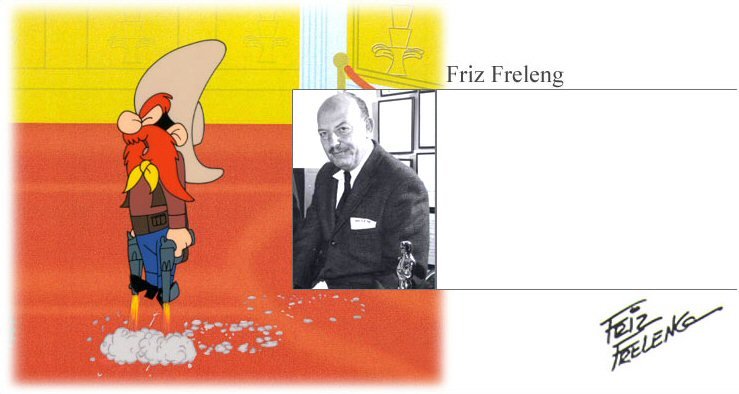
Don’t forget, the Angie Dickinson Blog-a-Thon is but a mere two weeks and two days away. And the ideas for new blog-a-thons just keep rolling in. The latest comes from Brian Darr, who will be announcing very soon the date for his proposed Friz Freleng Blog-a-Thon, an idea that has been generating lots of excitement amongst the regular participants in the Blog-a-Thon network. Keep an eye on Brian’s blog Hell on Frisco Bay for more details as they become available.

And Tim Lucas, of Video Watchdog magazine, “the perfectionist’s guide to fantastic video,” is celebrating the 80th birthday of Roger Corman all this week on his own blog, Tim Lucas’ Video WatchBlog. Tim is making an admittedly short-notice call for entries in a Roger Corman Blog-a-Thon to be posted on the actual date of Corman’s 80th birthday, which is this coming Wednesday, April 5.

In Tim’s words, “I realize this is short notice... but I'd like to see a Roger Corman "Blog-A-Thon" this Wednesday. That gives you about as much time as Roger had to make The Little Shop of Horrors. It doesn't have to be ambitious, just post a rough-and-ready blog in the true Corman spirit. It's the least we can all do for a man who has given us 50 years of entertainment; the man who infused exploitation with social commentary; the man who kept Vincent Price and Boris Karloff and Peter Lorre working when no one else would; the man who discovered everybody from Jack Nicholson to James Cameron to Jennifer Love Hewitt; the man who made Dick Miller a star; the man who sent Angie Dickinson the script for Big Bad Mama; the man, when all is said and done, who changed the face of Hollywood… Fellow bloggers, there's the gauntlet. Consider it thrown down. I've got my eye on all of you. Don't make me pluck it out.”

So, in the interest of keeping my my eyesight working properly, such as it is, I’m doing my part to help Tim spread the word on his “rough-and-ready” Blog-a-Thon idea. As always, if you have a blog and would like to particpate, send Tim an e-mail at Tim@videowatchdog.com and let him know what you’re up to. And also, as always, if you have an itch to put down a few words but have no blogspace to call your own, feel free to send your submissions to me at powser2@earthlink.net and I will post it, along with my own modest entry, on Wednesday. The Corman Blog-a-Thon might, in some ways, brush up a little too closely with the Angie Blog-a-Thon for some, but personally I see no conflict of interest—I’ve got a idea that steers way clear of the Angie-Roger connection. (And TLRHB, this might be a good place to go after that drive-in aesthetic idea!)

Roger Corman on Wednesday, and a whole passel of other new goodies coming your way this week on SLIFR-- I went to CostCo this weekend and stocked up on Monster Khaos Energy Drink, so I’m good to go. I hope you are too!

Wednesday, March 29, 2006

PROFESSOR BRAINERD'S CHRISTMAS QUIZ-- THE ANSWERS (PART TWO: FALLING IN LOVE, GREAT and Not-So-Great PERFORMANCES and THE FEAR FACTOR)


Welcome to part two of the official round-up of questions for Professor Brainerd’s Christmas Quiz. It seems to take longer and longer with each new quiz to get these questions gathered into digestible form, even though this quiz is just a little over half as long as the last one from Professor Wagstaff. Why? Only my hairdresser knows for sure, and if you’re familiar with the male-pattern baldness that I pass off as a hairstyle, you’ll know just how far you can trust my hairdresser. So we’d best forget about precedent (and when I say “we’d,” I of course mean “I’d”) and instead worry only about the task at hand. In that spirit, let’s get on with it, shall we?

And since this is a class reunion of sorts, I thought might hand out a couple of awards to some of our participants. Pat yourselves on the back when I call your names:

FIRST QUIZ SUBMITTED: Roscoe
FURTHEST TRAVELED TO GET HERE: Peet, all the way from the Netherlands
THE GEORGE WILSON GENIAL CRANKPOT AWARD: The Mysterious Adrian Betamax, of course
PURTIEST CONTESTANT: Call me biased, but it’s gotta be Thom McG (sorry, Snake!)

Okay, enough of this silliness. Let’s get on to the officially sanctioned silliness. In case you want to do a little catch-up work, you can access a complete list of my answers to Professor Brainerd’s Christmas Quiz here. And if you want to check out the group’s answers to the Celebrity Smackdown section of the quiz that I posted last week, don’t bother with that troublesome scrolling down– just click here for instant gratification. In the interest of time, I’ve recreated the questions and then provided the answers, with my own commentary attached onto the ends of individual answers ONLY when I just couldn’t resist.

1) DESCRIBE THE MOMENT WHEN YOU KNEW YOU LOVED THE MOVIES
Here was a chance to reach down into the memory bag and try to come up with a specific moment that brought it all into focus for you, and the responses, short, long and longer, were good enough to leave me wanting even more.

“It was around the time Titanic came out and I was sitting in a theater. I wasn’t watching Titanic, but it may have been an epic/big budget type movie and I remember as I left the theater I realized that I couldn’t remember what I was doing for the two hours beforehand. I had gotten lost in the story and had no concept of myself. I remember at that moment thinking I want to do this again and I want to make other people feel this way.” - Roscoe


“Somewhere between when I first saw Dr. Strangelove and A Hard Day's Night, Fall 1964.” - Peter Nellhaus


“I was in first grade and my folks let me go to Walt Disney’s Sword in the Stone with a friend from school. I been hooked on movies ever since. Plus, it did not hurt that my favorite cousin was the biggest movie buff in town.” - Murray

“When that giant f-ing ‘S’ blasts in at the same moment the music hits a crescendo at the beginning of Superman. That still blows me away.” - Snake Plissken
(Have you seen the trailer for Superman Returns yet, my friend? I’ll be curious to hear what you think...)

“It’s a tough call, but the earliest memory of my love for the movies seems to have been after seeing Family Plot and trying to find out all about this Hitchcock fellow.” - Machine Gun McCain

"Lily Tomlin shrinking in The Incredible Shrinking Woman amazed me as a kid. Even though I can’t remember anything else about the movie now, my parents then gave me more Lily Tomlin movies to watch, which led to Steve Martin movies, and so on until I was as full-fledged a cinephile as I could be, before I knew there was such a thing as a director.” - Nilblogette
(I think TISW still holds up pretty well. The suspense in the sequence when Lily falls into the garbage disposal is close to unbearable, and it’s still a pretty clever satire of consumer culture.)

“Wow. I'm not really sure. Probably my first ever movie in a theater, which was The Jungle Book. My dad took me when I was quite small. I ate all the candy he smuggled in well before the opening credits started. I can remember being impressed by the sight of the screen and the HUGE curtain, the smell of the popcorn, the way the seats flipped up...all of it.” - Beege
(Beege, I can most definitely relate...)

“I think the drive-in did it for me. I'm sure I've told this one before, but we lived on a farm (we weren't farmers, but we did have chickens; our house was rented from the farmers so my dad could paint and write, and it was a ramshackle place with mice and lots of creepy, creaky corners), and before my youngest sister and brother were born, Dad took us all in the Plymouth station wagon to the drive-in to see Day of the Triffids and whatever co-feature I slept through. We had the back seat folded down, with sleeping bags and pillows, we were all in our pajamas, the night was warm, we played on the playground under the screen until the movie came on (or more likely the previews, or cartoon, or whatever), then ran back to the car. The screen was enormous (well hey, I was four, but I'll bet it was), and the Triffids were terrifying (again, I was four), and the color, the music, the excitement of the story onscreen and of the experience. I could pick any of several other moments when I realized movies were my favorite thing, many of them indoors, but this is the earliest memory I have of realizing that there was nothing more fun or exciting than watching a movie.” - Blaaagh

“There were many different moments of discovery, at many different levels. I suspect I was probably hooked when my dad took me to see Star Wars at age 4. I still can remember looking at those Cantina creatures from my four-year-old eyes. Though admittedly, I wasn't movie-obsessed as much as I was Star Wars obsessed until much later.” - Brian

“The film that kicked me in the head and made me love the movies was when I was in the beautiful Chinese Theater and FELT it shake, rattle and roll during the movie Earthquake in SENSURROUND!” - Sal

“The earliest moment that I can recall is upon seeing 2001, at an afternoon matinee – I’d read the Clarke novelization, read The Making of 2001, had the soundtrack, but had yet to actually see the film, until the chance came during one of the re-releases in the mid-70’s.” - Robert

“I was a 12-year old on a trip through Canada with my parents. We went to a screening of Indiana Jones and the Temple of Doom, along with my brother. I had been nuts about film for some time already, but that roller- coaster ride of a flick (the first Indiana Jones I ever saw) made me realize how deeply I was addicted to the movie experience. Probably because it’s a filmmaker’s tribute to the same addiction. Doom is still my favorite of the trilogy, despite what others say, and a testament to the glory days when Spielberg wasn’t ashamed to make Kate Capshaw scream like there’s no tomorrow. (He might still do it secretly if he's, like, really good in bed.)” - Peet

“The moment I knew I loved the movies was probably after seeing Disney's The World's Greatest Athlete at the Campus Theater across from Los Angeles City College. It was the first movie I remember that made me excited about movies. I'm sure it's a horrible "film," as I've never seen it again since I was a child. But it made me want to see more movies, which led, of course, to... Jaws!
(Actually, Thom, it’s pretty good, especially for early-to-mid 70s Disney comedies. If it ever comes out on DVD, I’m sure one of our daughters could provide a reasonable pretext for your buying it.)

“Never happened. Oh, wait, during Terminator 2: Judgment Day. Oh, wait, not that. Never mind.” - The Mysterious Adrian Betamax

“Sulking in the family room at age 13, having survived another day of middle school and gymnastics practice, eating Jell-O instant vanilla pudding straight out of the mixing bowl, and watching a worn-out videotape of the Kevin Sullivan Anne of Green Gables movie or its sequel for the tenth straight time, I realized that movies might well save me from myself.” - PSaga

“When the first battle cruiser surged across the screen in Star Wars.” - Sharon.

“Not a moment but an era: somewhere between 1976 and 1977, bookended by the De Laurentiis King Kong and Star Wars. To the best of my recollection, they were the first "grown-up" films (non-Disney) I ever saw. The latter and its pre-1997 sequels are, of course, responsible for me being in the business I'm in now (though not in the job I once dreamed about).” - Dave Robidenza
(One of the nice byproducts of the Peter Jackson King Kong is hearing a lot more people come out of the closet regarding their enjoyable of DeLaurentiis’s 1976 Kong. I saw it with my two best friends in high school, both of whom were slavishly devoted to the 1933 version, so much so that it was a foregone conclusion for them that any new version, and especially one that was as apparently sexed-up as this one, was going to be a bomb. We all went to see the 1976 Kong together, and although it took me a couple of weeks to get up the nerve, I finally risked some serious ridicule by admitting that I liked it, and quite a lot. I’ve always been embarrassed to recall that I didn’t come clean right away, but, hey, that’s high school peer pressure for you, I guess.)

“Sometime between summers of ‘75 and ’77. That’s a long ‘moment,’ I know. Through an odd combination of fate and nepotism, I landed a part-time job running the projectors at The State, an All Seats $0.99, second-run theater in Oregon City, Oregon. I was 11. Mind you, these were the waning days (at least at The State) of alternating, carbon-arc fired projectors running 20-minute reels. Remember the little cue dots that would flash in the upper right hand corner?

Not only did I get to see multiple screenings of kiddie matinee fare—Abbott & Costello meet the _______, lots of Disney live-action stuff, The Bugs Bunny Road Runner Movie, etc., I also got a survey course in ‘70s cinema: Jaws, Young Frankenstein, the early/funny Woody Allen (Love and Death and Take the Money and Run), and a raft of random mid-70s flicks: Thunderbolt & Lightfoot, American Graffiti, White Line Fever, Gator, White Lightning, Walking Tall, Food of the Gods, Sherlock Holmes’ Smarter Brother, Dirty Mary and Crazy Larry, Mother, Jugs and Speed, Gone in 60 Seconds, The Eiger Sanction, Silver Streak, etc. Most of it was borderline to wholly inappropriate for a pre-teen. But it sure beat the hell out of a paper route. Especially since, along with wolfing down my weight in popcorn and soda (or pop as we called it then), I made enough money (@ $1.10/hr.!) to buy a sweet 10-speed. The bike is long gone but the impression of those movies on the screen in my head, along with screams of ‘Focus!,’ is as vivid as ever.

Of course, ’77 was also the Year One of my cinephilia, on account of a little indie sleeper called Star Wars. Which really just makes Revenge of the Sith feel all the more like a betrayal. WTF, George?! You were supposed to be the chosen one!

Fast-forward to 1986, when I discovered the Coen bros. I’m hooked for life.” - Mr. Middlebrow
(Mr. M, you had me at Thunderbolt and Lightfoot and kept me with White Line Fever, White Lightning, Food of the Gods, Dirty Mary, Crazy Larry and Gone in 60 Seconds.)

2) WHAT PROP OR COSTUME FROM A FILM DO YOU MOST COVET?

“The new Batmobile.” - Snake Plissken

“Chuck Yeager’s A2 (leather flight jacket) from The Right Stuff.” - Mr. Middlebrow

“I would love to have a Zardoz mask – and the stone head to set out as a yard decoration.” - Robert

“I don't really long for any prop or costume, but I'd be more than thrilled to have, for example, the little piano Dooley Wilson played in Casablanca, which you and I saw at the Warner Bros museum on the tour in '99. Just looking at it made me imagine being there while they were shooting it and being among those people, in that time. I guess it might be cool to have the Pazuzu statue that Father Merrin faced off with in Iraq in The Exorcist--I could put it out in the back yard. haha--Pattie would insist on planting jasmine to grow all over it--in the unlikely event she even allowed it in the house.” - Blaaagh
(Imagine the yard decorating you and Robert could do together.)

“A Toho flying monster, preferably Rodan.” - Peter Nellhaus
(Nice one, Peter! I’d take Ghidrah, maybe Brian would take Godzilla, and we could stage a Monster Zero rematch in Robert and Blaaagh’s yard amongst the Zardoz and Pazuzu statuary.)

“I always liked that helmet ammo belt and tommy gun that Sgt Chip Saunders aka Vic Morrow used to wear in the TV series Combat.” - Murray

“Peter Fonda’s dark glasses from The Wild Angels.” - Machine Gun McCain

“Either Steve Martin’s dental equipment in Little Shop of Horrors, or Jeremy Irons’ gynecologist tools for use on mutant women in Dead Ringers. Wait, you say those are the same props?” - Brian

“The obvious answer would be either Luke's or Obi-Wan's light saber from Star Wars. The obscure answer would be the Sex Panther (By Odeon) cologne bottle and matching presentation box from Anchorman: The Legend of Ron Burgundy.” - Dave Robidenza

“You know, now that I’ve got a cheese grater like the one Amelie de Montmartre uses, I’m cool in this category. Just don’t ask me what movie poster I most covet, whatever you do.” - Psaga
(I’m sorry, but you know what one of the questions on the next quiz is going to be, don’t you?)

“I'd like that picture taking box from Dressed to Kill. I love the movie and feel like, because De Palma was a science and math geek, he probably designed it himself.” - Nilblogette

“I don't understand wanting costumes. When I worked for a studio in the '80s, I'd go to used clothing stores in Burbank selling stuff worn once or twice by actors in movies and TV shows. Just looked like used clothes to me. Prop? Maybe that big silver ball passed around at that party in Sleeper?” - Thom McGregor
(Yeah, get that!)

“I would love to have one of those motion trackers that the colonial marines used to track the xenomorphs in James Cameron's Aliens.” - Sal

“I’ll take any of James Bond’s cars, with our without Q’s upgrades.” - Sharon

“The Aston Martin in Goldfinger. However, if Lesley Ann Warren's red T-Bird in Choose Me comes equipped with Lesley Ann Warren...” - Virgil Hilts

“A Legolas costume from Lord of the Rings, as long as Orlando Bloom is still inside it.” - Beege

“The miniature maze in The Shining, because I love to get lost in that movie. For some dark reason, the Lament Configuration Puzzlebox from Hellraiser is another thing that comes to mind.” - Peet
(Somebody make sure Peet doesn’t get anywhere near a pin cushion, okay?)

3) TAKE A FAMOUS ROLE AND RECAST IT (for example, Audrey Hepburn instead of Andie McDowell in Four Weddings and a Funeral)

Here’s part of what I said in my own answer to this question: “Virgil and Brian both latched onto the not-so-hidden subtext of my including this question, but if we’re gonna play this game, then I think Sal has the right idea—recasting roles with long-dead performers, or performers unlikely to ever be cast in an actual remake, so as to better detach oneself to an important degree from this all-consuming trend of remaking absolutely everything. Just to test the limits of an audience’s empathy, how about a Dr. Strangelove-era Sterling Hayden in the Bill Murray role, and Shelley Duvall, straight out of Brewster McCloud, as Scarlet Johannsen in a remake of Lost in Translation? If nothing else, Duvall could convince you of the woman’s desperation and boredom (and she’d certainly cast that movie’s opening credits in a decidedly different light), and Hayden could sell the hell out of that Suntory whiskey while making the protagonist’s attitude toward his Japanese hosts a hell of a lot more difficult to deal with or rationalize.”

Here’s how everyone else responded:

Murray wants to see Clint Eastwood take over duties from John Wayne as Rooster Cogburn; similarly, Peter had a dream back in te 70s of remaking Rio Bravo with James Earl Jones, Richard Pryor, Diana Ros and Michael Jackson; Snake wants to oust Anthony Hopkins from The Silence of the Lambs and install the O.G. Lecter, Brian Cox, whereas Beege would like to see Ralph Fiennes take a crack at the fava bean connoisseur; Sal says bring back Bruce Lee, at the age he would be now, as Mace Windu in the Star Wars prequels; Blaagh wants to see what James Dean would do as Luke Skywalker; Robert votes for Cruise and Kidman in a remake of Andrezj Zulawski’s Possession; Peet thinks Tim Burton’s Batman would have been even better had Michael Keaton played Batman and the Joker; Sharon would like to see John Hurt inserted into the first two Harry Potter movies as Dumbeldore; and Thom McGregor, truly a woman after my own heart, asks to see Carole Lombard in any role Charlize Theron or Halle Berry ever did. (Except maybe Monsters Ball, okay, Thom?)

And then there’s Machine Gun McCain: “Hugh Grant in the Henry Fonda role and Andie MacDowall in the Barbara Stanwyck role in a horrible remake of Preston Sturges’ The Lady Eve."

Nilblogette had this to say: “The other day, I was thinking, ‘What if Ben Stiller and John Cusack had become action heroes off of Hot Pursuit?’ Thus, maybe John Cusack instead of Tom Cruise in War of the Worlds. The Tim Robbins scenes might not have been as intolerable if his best friend John Cusack was opposite him.”

Finally, the two comments that best summed up this category for me. First, Brian:

“Let’s see, how about putting Robert Mitchum in DeNiro’s role in Cape Fear, or Tony Perkins in the role Vince Vaughn made famous in Psycho, or Michael Caine in the signature Marky Mark movie The Italian Job (he might be pretty good with Sly’s role in Get Carter or Jude Law’s role in Alfie too). And there’s this relatively unknown Lithuanian actor named Donatas Banionas who could have nailed Clooney’s part in Solaris if given half a chance… I think I’ve got the knack for this!”

And the last word goes to Virgil Hilts: “Isn't this precisely the problem with movies today?”

5) BEST PERFORMANCE IN AN OTHERWISE TERRIBLE MOVIE
Julian Beck, Poltergeist II: The Other Side (Peet)
Ian McDiarmid, Return of the Jedi (Brian)
Owen Wilson, Zoolander (Peter Nellhaus)
Ken Norton, Mandingo (Snake Plissken)
Robert Davi, The Rise and Fall of Heidi Fleiss (Nilblogette)
Rodney Dangerfield, Natural Born Killers, Marcia Gay Harden, P.S., Welcome to Mooseport (Dennis)
Faye Dunaway, Mommie Dearest, Uta Hagen, The Boys from Brazil (Blaaagh)
Frank Oz, Star Wars Episode I: The Phantom Menace (Sal)
Rachel Weisz, The Mummy (Thom McGregor)
Robert Downey Jr. The Gingerbread Man (Sharon)
Bobcat Goldthwait, Police Academy 2: Their First Assignment (Mr. Middlebrow)
William Hickey, Forget Paris (Dave Robidenza)
Wilford Brimley, Richard Farnsworth, The Natural
Paul Newman, Message in a Bottle (Beege)
Austin Pendelton, Christmas with the Kranks (Machine Gun McCain)
Tom Hanks, Forrest Gump (Murray)
Johnny Depp, The Ninth Gate, Secret Window (Roscoe)

The last word in this category goes to Psaga: “John C. Reilly’s terrific performance in Magnolia only increased my wrath toward P.T. Anderson and his mess of a movie.”
Psaga, you and Blaagh may commiserate while I go off and mope in the corner.

6) WORST PERFORMANCE IN A FAMOUS REVERED OR OTHERWISE GREAT MOVIE

Rex Harrison, My Fair Lady, George Chakiris, West Side Story (Virgil Hilts)
Meryl Streep, The French Lieutenant’s Woman (Thom McGregor)
Joaquin Pheonix, Gladiator (Sharon)
Andie McDowell, Groundhog Day (Mr. Middlebrow)
John Travolta, Pulp Fiction (Murray)
Quentin Tarantino, Pulp Fiction (Peet)
Talia Shire, The Godfather (Dennis)
Vivien Leigh, Gone With the Wind (“She was so much better in Streetcar”) (Beege)
Edward G. Robinson,The Ten Commandments (Sal)
Mickey Rooney, Breakfast at Tiffany’s (Blaagh)
Dustin Hoffman, Rain Man (Robert)
Henry Fonda, War and Peace (Peter Nellhaus)

“Mickey Rooney as the bucktoothed, coke-bottle-spectacled, camera-lovin', speech-impaired "Jap" in the beloved Breakfast at Tiffany's. God, that character and performance make my skin crawl-- but then, that whole movie makes my skin crawl.” - Snake Plissken

“Mark Hamill in Return of the Jedi. Not that the Star Wars films were ever known for stellar examples of the thespian craft, but some of his line readings are high-school theater bad.” - Dave Robidenza

“I love Orlando, until cheesy, greasy Billy Zane comes along and puffs his chest and wiggles his eyebrows and ruins everything. Come to think of it, I love Twin Peaks until John Justice Wheeler comes along and wiggles his eyebrows at Audrey Horne and ruins everything. Damn that Billy Zane. (But bless the IMDb! Can any of y’all Hannibal Lecter fans recommend this gem from the Billy Zane oeuvre: Il Silenzio Dei Prosciutti [The Silence of the Hams]?)” - PSaga

“Trying to come up with an answer to this category I realized just how forgiving I am of “bad” acting in great movies. For example, as stilted and unnatural as many a Hitchcock actor might have seemed, such performances tend to have no ill effect on, and usually are beneficial to, his films’ overall impact. So I thought I’d use this space to beat up a little on a 'great' movie that many 'revere' but that I never connected with. I like The Gold Rush, I like Modern Times and I love The Circus, but City Lights just never did it for me (except for the boxing scene), and Virginia Cherrill‘s performance as the blind girl in particular is simply unwatchable (so to speak).” - Brian

“It seems too mean to say Walter Brennan in a whole bunch of great films, so I'll go with Rebecca Romijn in Femme Fatale. I do think Femme Fatale is a great movie, but she makes it hard to watch.” - Nilblogette

“See most of the Academy Award-winners of the past few years.” - Machine Gun McCain

8) FAVORITE WALTER HILL MOVIE

The Warriors seems the clear favorite among our bunch, getting votes from Murray, Snake Plissken, Nilblogette, Brian, Sal (who also throws some love out to The Long Riders and Extreme Prejudice) and Robert (who also throws some love out to The Long Riders and Southern Comfort).

Southern Comfort also gets a mention from Blaagh, who qualifies his pick by stating that he’s really not much of a Walter Hill fan. Machine Gun McCain also picked Southern Comfort with no such qualification attached.

Streets of Fire showed some strength, getting picks from Peter and Mr. Middlebrow, who also threw in for 48 Hrs., as did Sharon.

Dave Robidenza splits hairs and offers up Aliens, since Walter Hill gets a story credit, as a way of avoiding being forced to choose Red Heat.

And Virgil picks one from the heart (and the solar plexus): Hard Times.
Here’s the Mysterious Adrian Betamax: “Walter Hill = hack. But I'll choose Brewster's Millions for fun.”

“I know that I respect him, but I'm not sure why. I guess it would be between The Long Riders, because of Ry Cooder's great soundtrack and the really cool long coats the bandits wore, and Streets of Fire, only because of the super-cool Willem Dafoe.” - Thom McGregor

And to finish thing off in this category, Peet draws a little blood, which is somehow fitting for this director: “Favorite Walter Hill movie? The one just before he started making them, when they were still called Sam Peckinpah movies. I feel Walter Hill has never made a movie that lived up to his obvious directorial flourish, which wasn’t so groundbreaking to begin with. I’m not a Hill hater; his movies just don’t stick with me.”

9) FAVORITE MUSICAL SCORE FROM A MOVIE


Zbigniew Priesner Bleu, The RZA, Ghost Dog: The Way of the Samurai (PSaga)
Thomas Newman, Meet Joe Black, David Amran, The Manchurian Candidate (Peter)
Rodgers and Hammerstein, The Sound of Music (“I make no apologies. It's F-ing great.”) (Snake Plissken)
John Williams, the Star Wars trilogy (Dave)
John Williams, 1941 (Dennis)
John Williams, The Empire Strikes Back (Brian)
John Williams, Jaws (Sal)
Riz Ortolani, Cannibal Apocalypse (Machine Gun McCain)
Randy Edelman, Trevor Jones, The Last of the Mohicans (Beege)
Jerome Moross, The Big Country, Bernard Hermann, Fahrenheit 451, Ennio Morricone, The Good, the Bad and the Ugly (Robert)
Taro Iwashiro, Memories of Murder, James Newton Howard, The Village, Cliff Martinez, Solaris, Alexandre Desplat, Birth (Peet)
Thomas Newman, The Shawshank Redemption, Meet Joe Black, Road to Perdition (Sharon)
Max Steiner, Gone With the Wind (Blaaagh)
David Holmes, Ocean’s Eleven, Philip Glass, Koyaaniqatsi, anything by Lalo Schifrin (Mr. Middlebrow)
Ennio Morricone, Days of Heaven, Jerome Moross, The Big Country, Mark Knopfler, Local Hero, Elmer Bernstein, The Magnificent Seven
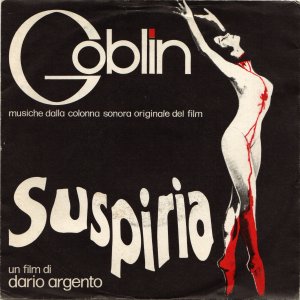
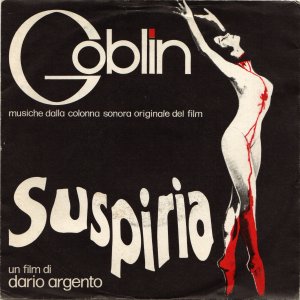
Goblin, Suspiria (Nilblogette)

“Wings of Desire, but that would be the entire SOUND track-- Nick Cave's songs, the orchestral track, voices going in and out, traffic and construction noise. And Being John Malkovich by Carter Burwell, spot-on perfectly suited to the weird, sad, hilarious, wistful film. Oh, and Danny Elfman’s score for Pee Wee's Big Adventure.” - Thom McGregor

And finally, the Mysterious Adrian Betamax: “Pick a favorite musical score from every movie ever made? Take a hike, buster! (The M.A.B. then capitulates- Ed.) I'll pick Casino Royale's score as the most brilliantly insane musical score from any movie. And it's not a great movie.”

10) DESCRIBE THE MOST SCARED YOU’VE EVER BEEN IN A MOVIE THEATER, OR THE SCARIEST MOMENT YOU RECALL SEEING IN A MOVIE
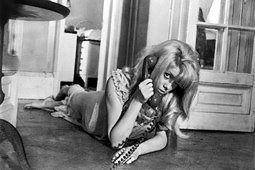
Peter Nellhaus says, “The first time I saw Repulsion,” and if you’ve seen Repulsion not a whole lot more needs to be said. (If you haven’t, it’s on DVD).


Here’s what some of the rest of the class had to say:

“Either sneaking in (underage) to see Alien, and when the creature bursts out of John Hurt's chest, covering my ears, closing my eyes and understanding for the first time what "Rated R" meant. Also, watching Raging Bull in Hollywood, with just a few people in the audience, one of whom went into some kind of testosterone and/or drug-fueled rage of excitement during any bloodletting boxing scene. I thought we were all gonna die.” - Thom McGregor

“In the theater, my scariest moment actually shouldn't have been scary - the ghost flying toward the screen at the beginning of Ghostbusters. I was expecting a comedy! As legitimate scares go, the underwater scene in Argento's Inferno is just behind the old crone in bathtub in The Shining-- both are ghoul/water double threats.” - Nilblogette

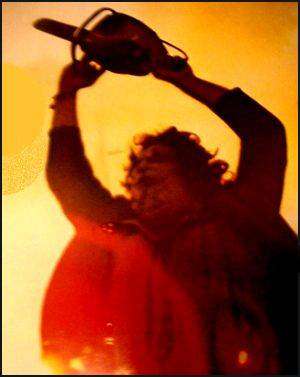
“I was exposed to a great deal of horror films early on in life, so there are quite a few to choose from. I’d seen the original Texas Chainsaw Massacre” when I was but a wee one and it scared the daylights out of me.” - Machine Gun McCain
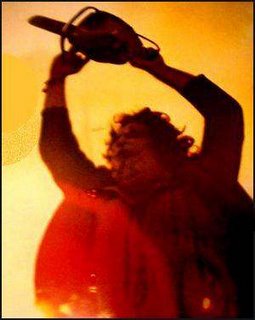
“I was 19 or so and had just moved to a new town (Klamath Falls) where we lived in a tiny apartment complex behind the old Tower Theater. My wife had not yet made the move so I was all by myself. I went to watch The Texas Chainsaw Massacre which just scared the living daylights out of me. I can remember being especially aware of my surroundings after watching that movie and I remember hurrying back to the apartment and locking, double locking, or maybe even triple locking if there is such a thing all the doors and windows of the apartment. It took several hours for me to calm down enough to get some sleep. Since this movie I have not watched but a handful of horror films.” - Murray

“My brother and I went to see Michael Cimino's Year of the Dragon at a multiplex in Monterey Park, CA. We were two of maybe a dozen non-Asians in a packed theater, and we weren't sure if we should leave the movie before the end credit roll or if we sit through all the credits and hope that the theater emptied out. In either case, we were sure we were going to get our butts kicked in the parking lot because a lot of people in the audience were not too happy with what they had just seen on the screen.” - Virgil Hilts

“There is an extremely chilling moment in Ole Bornedal’s Nattevagten (the superior Danish original of the lame Hollywood remake Nightwatch that starred Ewan McGregor), in which a girl investigates the room of somebody who is likely to be the story’s killer, and slowly but surely realizes he’s hiding behind the very door she entered through a minute before. It’s a moment that made all the hairs in my neck stand up, reminiscent to Nancy Allen’s bathroom scene in Dressed to Kill.” - Peet

“I went to see Carrie at the Bagdad Theater in Portland upon its release in 1976 (it was October, as I recall) with some of my buddies, and it was one of the most intensely emotional movies I had seen (funny as that sounds!)--but when her arm popped up out of the grave/pile of charcoal briquets at the end and grabbed hold of Amy Irving, I'm sure I was literally scared out of my seat, and I'm pretty sure I--well, not screamed, but let's say I let out a yell of terror. At least I was hardly the only one who reacted that way in the theater, nor was I alone among my friends in losing all semblance of composure.” - Blaagh

“The most scared I've ever been in a theater: When I was on a date with a young man and he kept putting popcorn in my ears and calling me ‘mom’. *shiver*” - Beege

“The blood-in-the-Petri-dish scene in John Carpenter’s The Thing. I've seen that movie half a dozen times, and that scene never fails to make me crazy with fear and tension. I almost can't take it.” - Snake Plissken

“The TV ads for The Exorcist were enough to give me nightmares as a freshly confirmed Catholic kid. Which might explain my general aversion to horror pics—especially anything satanic.” - Mr. Middlebrow

“The TV movie Dark Night of the Scarecrow (featuring Darkman's Larry Drake in a pre-L.A. Law mentally-challenged role) freaked my mother, brother, and I out so much that we slept in the same bed that night. And get your minds out of the gutter.” - Dave Robidenza

“Watching The Haunting, after coming come from school on an afternoon matinee – Alone. In the house. The sequence with the face in the wall and Julie Harris discovers that Claire Bloom has not been holding her hand. Not something I’d do again” - Robert

“I have a severe detachment from myself while watching a movie so I don’t get scared much, but I will go with the suicidal kid scene in The Sixth Sense.” - Roscoe

“In 1972 I was 11 years old and my father took my little brother and I to a drive-in theater, the old Whittier Drive-in, to see The Legend of Boggy Creek. The scene where one of the characters goes to the bathroom and is sitting on the toilet when suddenly this Bigfoot creature breaks the window in that room really scared the piss outta me.” - Sal (Your first encounter with interactive entertainment?)

"I remember going to a May Fair at my church as a kid. For some reason one of the entertainments there was that they were playing clips from (mostly) recent films on a screen set up in the choir room. I remember sitting through clips from Flash Gordon, a Superman movie and The Three Caballeros before they played a few scenes from Alien. It culminated, of course, with the scene where John Hurt’s chest gets ripped open. Terrified, I ran from the room and don't think I ever set foot in a theater playing a horror movie for at least ten years. The image of the alien coming out of his body haunted me until I finally watched the full movie on video at age 25 or so.” - Brian

************************************************************

Folks, I tried, I really tried to get this wrapped up tonight, but here it is, almost 2:00 am, and I’ve still got about 11 questions to cover. So, in the spirit of delayed gratification, I pray you hold tight for part three. Coming next: “Holidays, Hams, Crushes, Wishes and Everything In-Between.” And coming right after that– get your pencil sharpened for Professor Van Helsing’s Spring Surprise Midterm!

Tuesday, March 28, 2006

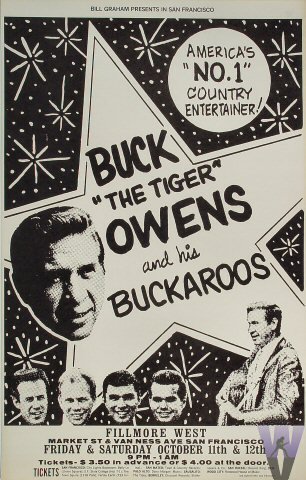
THE FIRST FIVE REASONS WHY I’M GONNA MISS BUCK OWENS 1929-2006


There are a lot of country artists I came to know and love while sitting and drinking coffee with my grandma in her kitchen, listening to her tell stories of how she grew up, how she fell in love, built her house from the ground up with her husband, how they tamed their little corner of the world, how he died tragically, and how she managed to carry on. Those artists, and their subject matter, and their style of playing—roots country, honky-tonk and folk—all became intertwined, the tales of romantic entanglement, heartbreak and loss and religious redemption merging with my grandma’s own stories to provide the soundtrack for my vivid imagining of her life story. Buck Owens was one of those artists, and he died this past Saturday at the age of 76. Here are the first five reasons why I’ll miss him.

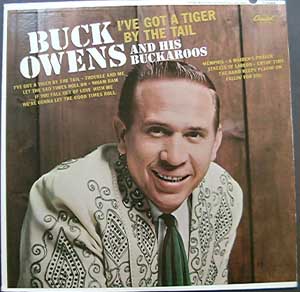
1) “(I’ve Got a) TIGER BY THE TAIL” (1964; Harlan Howard, Buck Owens) from the album I’ve Got a Tiger by the Tail

A classic Bakersfield stomp. My grandma and I used to dance to this one in her living room-- one time we jumped up and down so hard that we loosened the stovepipe from the wall fitting.

I've got a tiger by the tail, it's plain to see
I won't be much when you get through with me
Well, I'm a-losin’ weight and I'm turnin’ mighty pale
Looks like I've got a tiger by the tail

Well, I thought the day I met you, you were meek as a lamb
Just the kind to fit my dreams and plans
Now the pace we're livin' takes the wind from my sails
And it looks like I've got a tiger by the tail

Well, every night you drag me where the bright lights are found
There ain't no way to slow you down
I'm about as helpless as a leaf in a gale, and it looks like I've got a tiger by the tail


2) “PHFFT! YOU WERE GONE” (1966; Susan Heather) from the album Too Old to Cut the Mustard, Buck Owens and Buddy Alan

Buck and Buddy cut this one in 1966, but it went on to greater fame when it was adopted as the signature tune for one of the most enduring comedy bits on Buck’s extremely popular country variety show Hee Haw.

I know that you loved me, here's my way of knowin’
The proofs hangin’ out right there on the line
When I see the snow and feel the wind blowin’
Your nighties huggin’ them long-johns of mine

The noises you made at our supper table
Your habits, my dear, were surely absurd
But how many times do I have to tell you
Soup is a dish to be seen and not heard

Where, oh, where are you tonight?
Why did you leave me here all alone?
I searched the world over and I thought I'd found true love
You met another and—Phfft! You were gone


3) “TALL DARK STRANGER” (1969; Buck Owens) from the album Tall Dark Stranger

Its imagery possibly influenced by the films of Sergio Leone, Clint Eastwood seemingly returned the favor with the tall, dark stranger of his own film, High Plains Drifter. And I don’t remember if Stephen King made specific mention of this song in his novel The Stand, but it’s hard to believe he didn’t at least have Owens’ song rattling in the back of his mind somewhere when he conceived of the terrifying Randall Flagg.

They say a tall dark stranger is a demon
And that a devil rides closely by his side
With no warning he can strike like the thief in the night
Then jump up on his pony and ride, ride, ride
So beware of a tall dark stranger...
So don't let no stranger hang around


4) “CRYIN’ TIME” (1964; Buck Owens) (from the album I’ve Got a Tiger by the Tail

Another classic weeper that my grandma used to spin for me. She used to tell me that she thought Buck Owens looked kind of goofy, but his voice told a different story. I like to think this is one of the songs she was thinking of when she said that.

Oh, it's cryin’ time again
You're gonna leave me
I can see that far-away look in your eyes
I can tell by the way you hold me, darlin’
That it won't be long before it's cryin’ time


5) “ETERNAL VACATION” (1965; Buck Owens) from the album Dust On Mother’s Bible

Buck, like many a great country artist, knew about old-time religion, and it’s hard for me not to hear this one on the wind these days…

Some people are taking vacation traveling both far and near
Never stop and think about Jesus, never say him to have a care
It seems that I cannot be like them while on Earth life's burdens I bear
And I prepare to meet Jesus and rest eternally there
Yes, someday I'll take a vacation one that never will end


And now, thanks to the good folks at YouTube.com, Buck Owens and the Buckaroos, featuring Don Rich on guitar and harmony, Doyle Holly, Willie Cantu and Tom Brumley on the steel, from 1966— a live version of “(I’ve Got a) Tiger by the Tail,” just because.

R.I.P., Mr. Owens.