Posts
Posts




PROFESSOR BRAINERD'S CHRISTMAS QUIZ: THE ANSWERS (PART THREE: HOLIDAYS, HAMS, CRUSHES, WISHES AND EVERYTHING IN BETWEEN
 Okay, this is it— Part Three, the concluding chapter of the roundup of answers to Professor Brainerd’s mind-boggling Christmas Quiz. If you’re looking for a quick (well, not so quick, really) update on the previous two installments, here’s the buttons to push for part one and part two. I’m only throwing in an answer derived from my on list of answers every once in a while, but if you so choose to revisit that logorrheic document, you can do so by clicking here.
*******************************************************
12) YOUR FAVORITE HOLIDAY MOVIE (doesn’t have to be Christmas-oriented)
 Of course, when one thinks of holiday movies, it’s almost inevitable that Christmas films come to mind. Murray, Machine Gun McCain, the Mysterious Adrian Betamax and Mr. Middlebrow all cited It’s a Wonderful Life, as did I.
 Racking up almost as many mentions was Bob Clark’s A Christmas Story, a favorite of Roscoe, Snake Plissken and Nilblogette, who listed, as did Brian and Sal, Die Hard as well (that’s always been one I like to warm my chestnuts by during the Christmas season too).
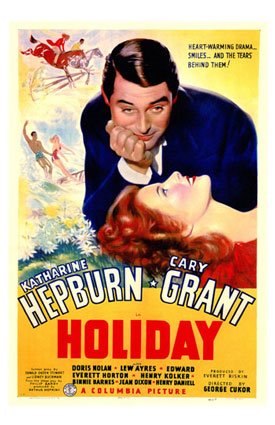
Thom McGregor voted for Groundhog Day, Beege gave up some love for National Lampoon’s Christmas Vacation, Sal points us toward April Love and One Magic Christmas, Dave Robidenza prefers Planes, Trains and Automobiles, Roscoe loves The Nightmare Before Christmas, Mr. Middlebrow cites the original animated version of The Grinch Who Stole Christmas, and he joins Sharon in recommending The Ref (another wonderful monkey wrench in your stocking!), Peter Nellhaus recommends George Cukor’s Holiday, and both Robert and Virgil Hilts think highly of Alastair Sim’s portrayal of Scrooge in the 1951 version of A Christmas Carol directed by Brian Desmond-Hurst. On to some commentary:
Blaaagh: “I'd sure like to see Magoo's Christmas Carol again...my dad could never watch it without crying at the end! But barring that, I'll go with It's a Wonderful Life, which came on some dreary 70s day after Christmas in the midst of my teenage years and acted on me like some sort of tonic. I don't watch it often, so as not to wear it out even more than it has been already, but I still love it.”
 Brian: “Let’s try one for each of five holidays: Halloween: Halloween; Dia de los Muertos: Macario; Christmas: The Shop Around the Corner; Groundhog Day: Groundhog Day; Easter: Monty Python’s Life of Brian”
The Mysterious Adrian Betamax: “Only It's a Wonderful Life springs to mind, and it is a really excellent movie on all levels, so it's okay to pick it. Bonus response: Best SHORT holiday movie-- Laurel and Hardy's Big Business, the one where they go selling Christmas trees door-to-door.”
psaga: “Every Halloween, I force anybody within reach to watch The Frighteners with me. This Christmas, my mum, in a fit of cine-filial pride and enthusiasm, purchased and distributed every copy of Danny Boyle’s Millions found in the Greater Michiana area and forced everyone within reach to watch it, plus the English subtitles I cocreated, with her. (“Forget Jimmy Stewart and that kid with the tongue to the flagpole! This is the new Christmas movie. And my daughter worked on the DVD.”) My favorite explicitly “holiday” movie would have to be the Holly Hunter-starring Home for the Holidays. I’m a sucker for all that alliteration. (How’s that for a rambling stoner non-answer?)”
13) WORST HOLIDAY MOVIE (doesn’t have to be Christmas-oriented)
 The hammer seems to have come down hardest on Ron Howard’s live-action How the Grinch Stole Christmas (Mr. Middlebrow, Dave Robidenza), but, entertainingly enough, there were plenty of offenders to go around.
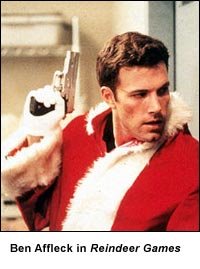
Peet is perplexed by The Polar Express; Virgil Hilts says Surviving Christmas is dreck, although seeing Ben Affleck getting slammed on the head with a shovel has some value; Robert thinks Santa Claus The Motion Picture may have had fatal consequences; Peter Nellhaus holds up Adam Sandler’s Eight Crazy Nights for some hot-buttered scorn; Brian thinks Independence Day stunk loudest; Murray was offended by Kelsey Grammer’s interpretation of Scrooge in the recent TV movie version of A Christmas Carol; Roscoe thinks any holiday movie with Ben Affleck in it is to be avoided (Reindeer Games, anyone?); and Machine Gun McCain would like a tarp dropped on any Christmas TV movie of the last few years.

Nilblogette: “Once Upon A Christmas starring Kathy Ireland as Santa's daughter is dreck, but I've got to go with The Polar Express. I have never been so simultaneously angry and bored during a movie.”
The Mysterious Adrian Betamax: “So many. What was that one with that guy Sinbad?”
Dave Robidenza: “I'd pick the Jim Carrey Grinch on general principles, though I've avoided seeing it.”
Blaaagh: “I love Murray's choice of that terrible, terrible new musical last year with Kelsey Grammer as Scrooge--Jane Krakowski (sp?) as the Ghost of Christmas So-and-So in a slinky dress, singing in a faux English accent, "Do you remembah? Do you remembah?"--but my own choice is National Lampoon's Christmas Vacation. Ugh.”
14) YOUR ALL-TIME FAVORITE HAMMY ACTOR
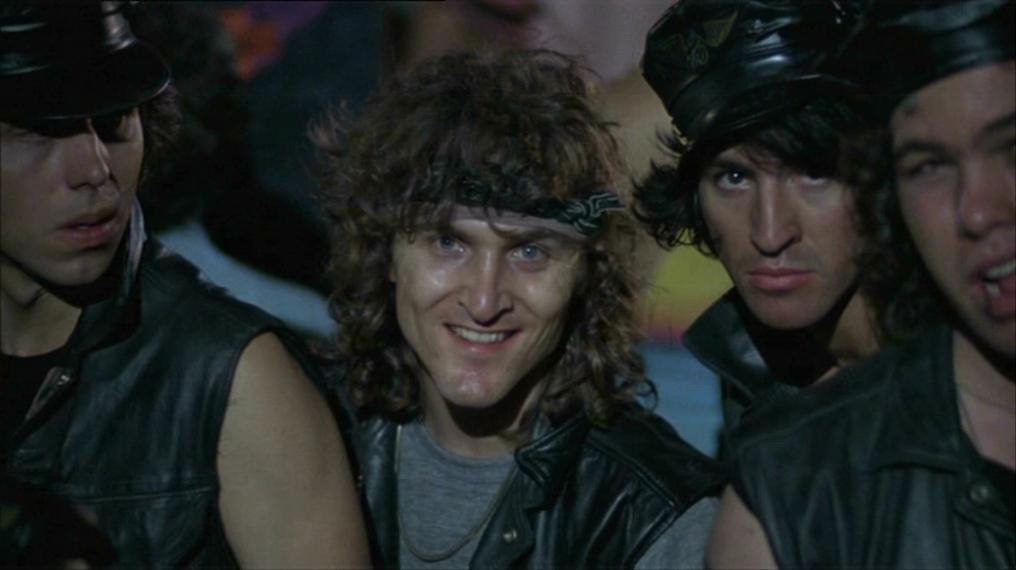 Machine Gun McCain: DAVID PATRICK KELLY
Peter Mellhaus: ORSON WELLES
Roscoe: AL PACINO
Murray: HUGH GRANT
Nilblogette: MICHAEL MORIARTY, specifically Troll and Island of the Alive (It’s Alive III)
Beege: STEVE MARTIN
Blaaagh: CHARLTON HESTON

Brian: TOSHIRO MIFUNE
Robert: WILLIAM SHATNER
Virgil Hilts: ROBERT ARMSTRONG and BASIL RATHBONE
Thom McG: MALCOLM McDOWELL
Psaga: VITTORIO GASSMAN
Dave Robidenza: CHARLES S. DUTTON and HARRISON FORD
Sal: JAMES WOODS
Snake Plissken: WILLIAM SHATNER (“Khaaaaaaaaaaan!”)

Peet: GEORGE C. SCOTT (“Boy, I love it when this guy gets angry!”)
The Mysterious Adrian Betamax: “SHELDON LEONARD, perhaps (if that's fair to him), especially in the film noir Decoy. But he's quite amusingly hammy also in Somewhere in the Night.”
Mr. Middlebrow: “Gary Cooper. Man, what a scene-chewer! Kidding! First blush: William Shatner. Upon consideration: William Shatner."
Dennis: “Some years ago a friend of mine and I put together a patchily-edited (on a VCR) montage of some of Rod Steiger’s wildest moments from movies as diverse as Oklahoma!, In the Heat of the Night, The Loved One, No Way to Treat a Lady and many others (including a scene with Kevin Kline from The January Man where the actor goes so far over the top that it seems the only way out is a full-on aneurysm), and it was an absolute delight to see all that bizarre energy pop off like honey-cured firecrackers, one straight after the other. The cherry on top: I was at a screening of The Passion of Joan of Arc at the John Anson Ford Theater here in Los Angeles several years ago, waiting in line to use the men’s room. A guy emerged from the facility and walked passed me, and the guy waiting behind me made a comment to me along the lines of, ‘Did you see the look on that guy’s face when he came out? I wonder what the hell went on in there?’ I chuckled and turned around to acknowledge the stranger’s vaguely scatological good humor. It was Rod Steiger.”
15) FAVORITE FEDERICO FELLINI MOVIE

8½ (Peter Nellhaus, Snake Plissken, Nilblogette, The Mysterious Adrian Betamax)
NIGHTS OF CABIRIA (Thom McGregor, Blaaagh, Dennis)
I VITTELONI (Machine Gun McCain)
THE WHITE SHEIK (Brian)
JULIET OF THE SPIRITS (Virgil Hilts)
Peet: “Clowns and fat ladies scare me.”
Dave Robidenza: “The only one I ever saw was Satyricon, and I'm still working through it in therapy.”
Psaga: “Hooray! LE NOTTI DI CABIRIA ties with GIULIETTA DEGLI SPIRITI for yin. (Fantasy: Giulietta Masina takes out Mastroianni’s Guido from 8 ½.) ROMA (riveting images of the metro tunnels and of Anna Magnani) makes yang.”
16) YOUR FAVORITE FILM CRITIC
(I’ll probably get scoffed right off the information superhighway for this, but it was not my intention to use this question to go fishing for a bunch of shout-outs. That said, thanks to those silly folk who mentioned my name here. Your copies of Reeling are in the mail.)
 Peter Nellhaus: LISA SCHWARTZBAUM, Entertainment Weekly
Machine Gun McCain: ANDREW SARRIS (but not the Sarris of today)
Nilblogette: All-time: PAULINE KAEL/Current: DAVE KEHR
Blaaagh: PAULINE KAEL
Brian: Tie between RUDOLF ARNHEIM and VERN
Sal: DAVID SPADE
Robert: Likes Kael and Kehr, but his favorite movie critic is HIMSELF
Peet: DANA LINSSEN (though he would now add Matt Zoller Seitz to his short list).
Dave Robidenza: THE THREE BLACK CHICKS
Mr. Middlebrow: ANTHONY LANE
Roscoe: “I’m too much of a cynic and a masochist, I only read bad reviews.”
Snake Plissken: “Dennis Cozzalio, although I don't agree with him a lot of the time. His fawning appreciation of JM J. Bullock is just too far out for me. (Was I supposed to tell anyone, Dennis?)”
Virgil Hilts: “R.D. Cozzalio. Second place is a tie between Kevin Thomas and Linda Gross of the late '70s/early '80s L.A. Times.”
Peet: “I would have said Dennis Cozzalio if he hadn’t faced me with yet another pointless, irresistable movie quiz to waste my precious holiday time. ;-)”
Beege: “Dennis. ;) Actually...that's not so much of a joke.” (Depends on yor perspective—Ed.)
Thom McG: “Fishing for compliments?” (You get TWO copies of Reeling!—Ed.)
The Mysterious Adrian Betamax: “Hans Lucas.”
Psaga: “If I weren’t such a slacker, I’d have been the first to submit Dennis Cozzalio as my favorite critic. Ooh, I just read Thom McGregor’s answers though, and several chortles and exclamations of ‘Man, why didn’t I think of that?’ later, I’m thinking she’s my current favorite. All right, I try to remember to read SALON’s ‘Beyond the Multiplex,’ because Andrew O’Hehir can usually get me all excited by writing something like ‘Cache: Joseph Conrad meets David Lynch in a neighborhood not unlike yours and mine.’ I also try to remember to be amused by the ONION’s AV Clubbers.”
18) BEST USE OF A NATURAL LOCATION SETTING IN A MOVIE
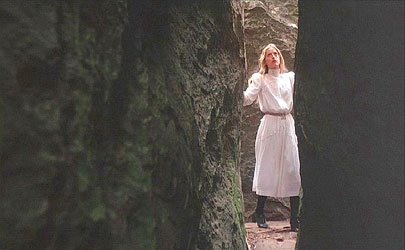
Sal: THE HILLS HAVE EYES (Wes Craven original)
Robert: WALKABOUT, PICNIC AT HANGING ROCK
Thom McGregor: NAKED, MANHATTAN
Nilblogette: FITZCARRALDO
Murray: BEND OF THE RIVER, THE WAY WEST
Peter Mellhaus: John Ford in Monument Valley
Machine Gun McCain: Any of Don Siegel’s San Francisco films
Sharon: “As much as I didn’t care for the movies, I’d have to say that Peter Jackson did right by the glorious New Zealand scenery in the Lord of the Rings trilogy.”
Peet: “Picnic at Hanging Rock You beat me to it, Robert!”
Brian: “Having recently seen Zabriskie Point for the first time, I have to say that Antonioni’s use of Death Valley obliterates the memory of all other comers in my mind right now. And this is only a couple weeks after concluding that he was resting on Antonio Gaudi’s laurels for certain stretches of The Passenger.”
Snake Plissken: “Preston, Idaho, in Napoleon Dynamite. Folks, I've been there, and I'm telling you, that movie was a freaking DOCUMENTARY. Stay far, far away.”

Beege: “Hard to beat Cannon Beach's gigantic rock in The Goonies.”
Blaaagh: “New Zealand in the Lord of the Rings movies...runner-up, the coast of Ireland in Ryan's Daughter (I got to see it at the Paramount in Portland as a kid in 70mm and 6-track stereo).”
Dennis: “I’m obviously not thinking on a very Lean-esque scale here, but I think it’s pretty wonderful what the filmmakers responsible for National Lampoon’s Animal House were able to do to make the campus of the University of Oregon pass for a splendidly atmospheric Eastern college… The location adds a priceless richness and authenticity to the movie, just another element that makes Animal House stand apart from its endless imitators.”
Virgil Hilts: “Alberta, Canada, subbing for the Texas Panhandle in Days of Heaven; the French countryside in The Duellists; and the river in Deliverance. And Robert's choice of "Picnic at Hanging Rock is a real good one.”
Psaga: “Mt. Potts Station as Edoras speaks to my inner lady of Rohan. Matamata as Hobbiton speaks to, well, my inner hobbit. Now please excuse me while I go curl up and cry a puddle over all that beauty.”
Dave Robidenza: “Various North Carolina locations (standing in for colonial-era New York) in Michael Mann's Last of the Mohicans.”

Mr. Middlebrow: “The Last of the Mohicans (four years living in Asheville, NC, near Chimney Rock, where the final showdown with Magua takes place, will do that to you.)”
The Mysterious Adrian Betamax: “Ah, whatever. I don't have to answer your stupid questions. Ask Anthony Mann. How about The Far Country. Yeah, go with that.”
19) WORST SQUANDERING OF A NATURAL LOCATION SETTING IN A MOVIE
 Robert, Machine Gun McCain: THE LAST SAMURAI
Thom McGregor: Lawrence Kasdan's GRAND CANYON
Psaga: FAR AND AWAY
Peter Nellhaus: ISHTAR
Nilblogette: “There was no reason for Troy to shoot on location when nothing in that movie looked, or was, real.”
Mr. Middlebrow: “Oregon City, Oregon, in Bandits. (No falls? No elevator? The hell?)
Also the worst squandering of Cate Blanchett.”
Blaaagh: “Er...I dunno. Probably all the locations in Sidney Sheldon's Bloodline. I don't remember whether any of them were "natural" locations, but I remember how terrible it was and that they traveled to different countries around the world to make this trash.”
Dave Robidenza: “Mount Etna for Star Wars Episode III: Revenge of the Sith, both for providing the background for the great big letdown that was the Anakin/Obi-Wan duel and for once again putting the lie to George Luca$$'s assertion that digital effects can replace practical locations.”
Dennis: “The screenwriter and/or director of The Ring 2 decided to set the movie in one of the most picturesque and haunting locales in the Northwest-- Astoria, Oregon-- and then pissed away any and all opportunity to put that natural beauty to any narrative use to conjure dread or even a strong sense of local geography. The location is relegated to a series of picture postcard establishing shots, each one making obvious the inarguable grandeur and natural beauty of the area… The most frightening thing about The Ring 2 is the film’s blindness to its own setting… The best thing about The Ring 2: those establishing shots.”
Brian: “The shooting of The Beach literally squandered the actual beauty of Ko Phi Phi in real life, so it has to win this contest.”
Sharon: “The splendor of Hawaii was wasted on Waterworld.”
Robert: “Once Upon a Time in the West-- I know I’ll get brickbats for this, but I do feel that better use could’ve been made of iconic locations through the whole movie, not just Jill’s wagon ride.”
Peet: “With pain in my heart, I say: Full Metal Jacket. Not that Kubrick did a poor job of making London and Essex look like Parris Island, mind you, but I still believe he should have gotten over his fear of flying for this one.”
The Mysterious Adrian Betamax: “Was there a natural location in Chain Reaction? 'Cause I'm sure that was probably a bad movie.”
20) FAVORITE SONG FROM A MOVIE
Roscoe: Gary Jules’ cover of Tears for Fears’ “Mad World,” from DONNIE DARKO
Murray: “The Circle of Life” from THE LION KING
Peter Nellhaus: “Beautiful Stranger” by Madonna, from AUSTIN POWERS: THE SPY WHO SHAGGED ME
 Snake Plissken: “All Over the World” by Electric Light Orchestra, from XANADU
Machine Gun McCain: “He Needs Me” sung by Julie Andrews, from 10
Nilblogette: “Memo from Turner,” from PERFORMANCE
Beege: “I’ll Cover You,” from RENT
Blaaagh: “Edelweiss,” from THE SOUND OF MUSIC
Brian: The title track from THE HARDER THEY COME by Jimmy Cliff
Sal: “Skid Row” from LITTLE SHOP OF HORRORS and the title track from THAT THING YOU DO!
Robert: “Love Power” (Dick Shawn’s audition) from THE PRODUCERS; also, “Porpoise Song” and “Daddy’ Song”,” from HEAD.
Peet: “When She Loved Me” by Randy Newman (sung by Sarah MacLachlan), from TOY STORY 2
Dennis: Original to film-- "Until the End of the World," written by Bono and the Edge, from Wim Wenders' Until the End of the World (1991) Non-original to film-- “Move On Up,” written by Curtis Mayfield, as heard in Ken Shapiro's The Groove Tube (1973).
Psaga: “Moving Right Along” by Kermit and Fozzie Bear
Thom McGregor: “Singin’ in the Rain,” from Singin’ in the Rain and Clockwork Orange
Dave Robidenza: “I’m a Neat Kind of Guy” from Todd Solondz’s Fear, Anxiety and Depression
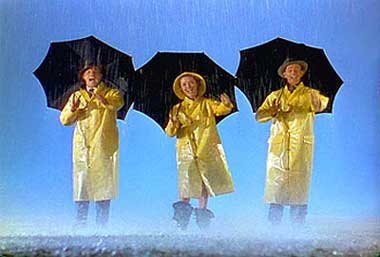
Virgil Hilts: "Singing In The Rain" sung by Gene Kelly; "Town Without Pity" sung by Gene Pitney; Shirley Bassey singing "Goldfinger"; and Jimmy Cliff singing "Many Rivers To Cross," "You Can Get It If You Really Want" and "The Harder They Come."
Mr. Middlebrow: “‘Me Ol’ Bamboo’ from Chitty Chitty Bang Bang. Ah, the ribald subtext of Ian Fleming...”
The Mysterious Adrian Betamax: “????? You are insane if you think I'm going to answer a question this broad.”
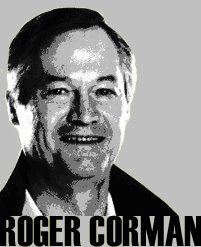
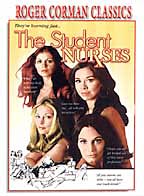
22) FAVORITE ROGER CORMAN MOVIE


Machine Gun McCain, Snake Plissken: X- THE MAN WITH X-RAY EYES
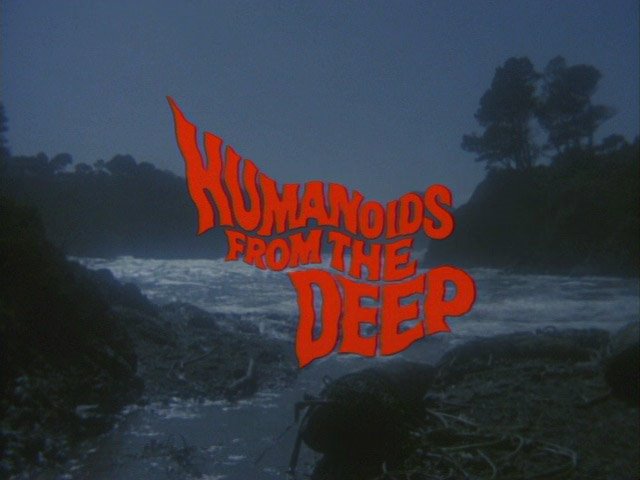
Nilblogette: HUMANOIDS FROM THE DEEP (Any idea what ever happened to Barbara Peeters?—Ed.)
Blaaagh, Peet: THE PIT AND THE PENDULUM
Brian: SUBURBIA (directed by Penelope Spheeris)
Sal: ROCK AND ROLL HIGH SCHOOL
Dennis: THE PREMATURE BURIAL, THE MASQUE OF THE RED DEATH, HOLLYWOOD BOULEVARD
Robert: THE INTRUDER
The Mysterious Adrian Betamax: THE HAUNTED PALACE
Beege: “Too bad M has gone to bed. I bet he'd have one.”
Thom McGregor: “The Silence of the Lambs, where he played, to perfection, FBI Director Hayden Burke. Okay, this was a weird question…”
Dave Robidenza: “The Skateboard Kid (executive producer), but only for the kick-ass opening credits song.”
23) YOUR BIGGEST MOVIE STAR CRUSH
 Mr. Middlebrow: FAYE DUNAWAY as Bonnie and MYRNA LOY in The Thin Man
Sharon:GEORGE CLOONEY
Thom McGregor: Current: EWAN McGREGOR Firsts: RICHARD DREYFUSS, ROBERT REDFORD, AL PACINO, DIANA RIGG (Gentlemen, all questions about this last one can be referred directly to powser2@earthlink.net for a discreet reply in a brown wrapper. –Ed.)
Sal: LINDA BLAIR, SHAWNEE SMITH
Brian: KATE WINSLET
Nilblogette: DONALD SUTHERLAND
DENNIS: CLAUDIA CARDINALE, MICHELLE YEOH
Machine Gun McCain: ISABELLE HUPPERT
Snake Plissken: RAQUEL WELCH
Murray: LINDA PURL, VALERIE BERTINELLI
Roscoe: KEIRA KNIGHTLEY
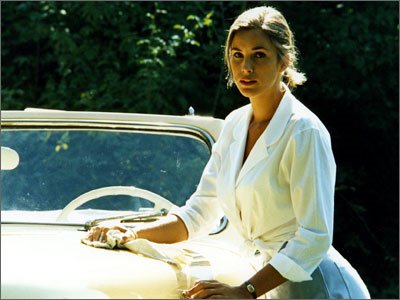 Peter Nellhaus: SANDRA MAJANI. She was only in one film, but God, is she hot!”
Blaaagh: “Crushes through the eons: 1. Julie Christie 2. Julie Newmar 3. Sarah Miles 4. Olivia Hussey (I saw Romeo and Juliet late) 5. Linda Blair (serious). Let's skip over some years, eh?
Currently: Rachel McAdams (I know, I know, she's a young-un, but it's just a movie-star crush).”
Beege: “Zach Braff. There’s just something about those Jewish men…” (Beege, I was coming out of a doctor appointment with my youngest daughter about a month ago, and traffic was stopped right at the street level of the exit to the parking lot. When we creeped up to the top, there was Zach Braff, in hospital blues, sitting in a shopping cart stuffed with garbage, being pushed across the street by an actor dressed as a homeless guy. We’d stumbled onto a location shoot for Scrubs. Life in Los Angeles… -- Ed.)
Psaga: “My heaviest imaginary relationship with a famous person involved a rock star, not a movie star (and you’d have to apply some serious torture—say, marathon screenings of Tom Cruise and Brad Pitt and Billy Zane—to get me to say more.) With movie stars I guess I’m rather promiscuous. Seeing Capra’s You Can’t Take It With You a few years ago had me clipping photos of young James Stewart to hang in my office cubicle and swoon over. Watching Mathieu Kassovitz in Amelie of Montemartre has me omitting regular squeals. (Director Jeunet cheerfully points out at various times in the commentary and bonus features that they don’t have Leonardo DiCrapio in France, but they have Mathieu Kassovitz. And I ask myself again, “Self, when are we defecting?”) This year’s movie-star crush (all Karl-Urban-in-Doom rumors aside) is definitely Romain Duris in De Battre Mon Coeur S’est Arrete (Zut alors! Another French hottie), a scrumptious blend of Daniel Day-Lewis, Ewan McGregor, and Nick Cave.” (I think that’s “zoot alures,” Psaga—Ed.)
Peet: “Remember that mini-series The Thornbirds in the early ’80s? Well, little girl Meggie in the full-grown shape of English goddess Rachel Ward stole my young boy’s heart. The sight of Richard Chamberlain as Father Ralph struggling to hold on to his priest’s collar while this heavenly brunette was practically tearing off his robe with her teeth assured me that atheism was the path laid before me. Those longing brown eyes, that deep husky voice, those glistering beads of sweat dripping down the curves of her naturally tanned body... Damn, is this thing out on DVD?”

Virgil Hilts: “It wouldn't be right to say anyone other than Claudia Cardinale, but Claudia is more than just a crush. Hayley Mills. That's a crush.”
The Mysterious Adrian Betamax: “Ah, I don't know. I really don't obsess about them. (And I'm much healthier for it!)”
Dave Robidenza: “That's between me and a well-hidden folder on my hard drive.”
24) DIRECTOR YOU’VE ALWAYS FELT DESERVED MORE ATTENTION THAN HE/SHE EVER GOT OR HAS GOTTEN UP TO THIS POINT, AND A HIGHLIGHT FOR YOU FROM HIS/HER CAREER
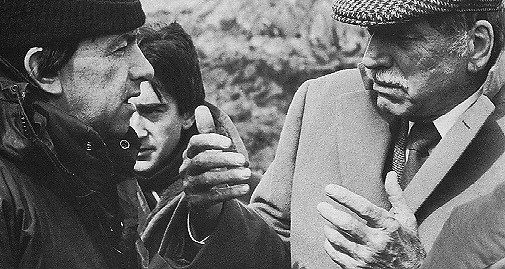 Virgil Hilts: BILL FORSYTH, JOHN SAYLES, GILLIAN ARMSTRONG
Peet: JONATHAN GLAZER
Machine Gun McCain: JOHN LANDIS, especially Into The Night
Dave Robidenza: WHIT STILLMAN, especially Metropolitan
Sharon: JOHN LASSETER (check this out, Sharon… --Ed.)

Sal: TED DEMME
Nilblogette: DONALD CAMMELL
Snake Plissken: “Michael Mann. Manhunter is a far better movie than all that other Anthony Hopkins Lecter piffle, and it effectively bridged the gap between Miami Vice and CSI.”

Mr. Middlebrow: “What the hell happened to Paul Brickman? Risky Business is/was The Graduate of my generation, with the role of “plastics” being performed by “dermatology.”
Then Men Don’t Leave was a really worthwhile, if lower profile, sophomore effort. Then, poof. He’s gone from the radar. Also, I have to second Snake Plissken’s nomination of Michael Mann. You look over his filmography and you can’t help thinking, Wait, these were all done by the same guy? He’s got so much range; the only thing many of his films have in common is a journeyman’s attention to craft and detail. He’s one good romantic/screwball comedy away from being this generation’s Howard Hawks.”
(Speaking as another Michael Mann fan—and I know you have an opinion on this one, Snake—has anyone seen The Keep lately? –Ed.)
The Mysterious Adrian Betamax: “Depends what you mean by "attention" and where, but it seems to me that Bergman, Fellini, Antonioni, Godard et al. are alive and well in the bodies of Theo Angelopoulos, Abbas Kiarostami, Hou Hsiao-Hsien (and Godard is still going strong in his own body!-- Oh, wait, Bergman too!) and many others I can't think of right now. But unlike in the '60s, when people in America had often heard of these people, especially Bergman, these "equivalents" have nowhere near the same visibility at all, despite being equally vital and excellent artists. They do, however, have plenty of attention in the right film magazines and blogs, so it's not like they're unknown, they're just not as well-known as they ought to be in comparison to their '60s counterparts. Angelopoulos - Eternity and a Day, Kiarostami - Homework, Hou Hsiao-Hsien - Good Men/Good Women and The Puppetmaster, Godard the Latter - Soft and Hard and Sauve qui peut (la vie).”
Thom McGregor: “New Zealander Vincent Ward, who directed one of my all-time favorites, Map of the Human Heart, and also the interesting The Navigator. I believe that has been his hightlight so far. Didn't see River Queen from last year, but heard good things about it.”
Robert: “James Frawley should have had more attention as a comedy director – he’s mainly known for The Muppet Movie, but people forget that he started out directing The Monkees television show – looking at those episodes now, they hold up much better than even present day sitcoms. He did a little seen feature, Kid Blue, an adaptation of a Larry McMurtry novel (Leaving Cheyenne) with Blythe Danner, but his breakout SHOULD have been The Big Bus, a parody of disaster movies that didn’t come out at the right time… four years later in 1980, The Zuckers would hit pay dirt with Airplane! that was the same type of parody, but more frenetic and with smuttier humor. The Big Bus did pick up a cult following and was a staple of the CBS Evening Movie in the late 70’s – early 80’s.”
Peter Nellhaus: “The French director Cedric Klapisch should be better appreciated. I saw one of his films on DVD that did not get released in the U.S., a heist film titled Ni Pour, Ni Contre. Dark heist comedy where the young woman who accidentally becomes involved with a criminal gang escapes with the loot.”
Roscoe: “Darren Aronosky, because I'm a huge fan of the new innovated camera effects and he's the only director that seems to make it work to his advantage and not to his detriment (Tony Scott).”
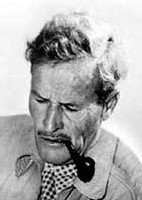 Brian: “William Wellman doesn’t seem to get the respect he deserves from auteurists, who seem to regard him as unquestionably inferior to the likes of Ford, Hawks, Lang, Walsh, etc. while every film I see of his makes me more convinced he belongs near or among their ranks. Beau Geste is a personal fave.”
Blaaagh: “Phil Kaufman has gotten a good deal of attention and acclaim, but considering how great some of his movies are (The Unbearable Lightness of Being, Invasion of the Body Snatchers), I'd expect him to be much busier and more acclaimed...still, he seems a bit off his game these days (though I guess I didn't give Twisted a fair shot that night you and I started watching it after 480 tequila shots).”
Dennis: “Joe Dante. Run his name up the IMDb flagpole, take a look, then rent Gremlins 2, or other "bombs" like Looney Tunes: Back in Action, Explorers, The 'burbs, The Second Civil War, Small Soldiers, Innerspace, the third episode of the ill-fated Twilight Zone movie, Matinee, or earlier Corman-influenced pictures like Hollywood Boulevard, The Howling and Piranha, and see if you don't see a sliver of what I see: a renegade intelligence running wild and loose under the radar across the landscape of American pop culture, leaving a trail of singed ground, felled trees and exploded cultural assumptions behind.”
Beege: “I'll tell you what, Dennis. YOU tell ME what theologian you've always felt deserved more attention than he/she ever got or has gotten up to this point, and a highlight for you from his/her career, and then I'LL come up with an answer for this question. ;) I mean, come on: are directors REALLY so important? ;)” (I gave you my answer a little further down in the comments column of the original post, but you never came through on your end, Beege! Whazzupwit dat?:)—Ed.)
26) IF THE MOVIES WERE TO GIVE YOU A CHRISTMAS GIFT, OR A GIFT FOR 2006,WHAT WOULD IT BE? (I MEAN “THE MOVIES” IN THE MOST GENERAL SENSE—THE FILM INDUSTRY, THE ACTORS, A DIRECTOR MAKING A CERTAIN FILM, WHATEVER)
Blaaagh: “Peter Jackson’s The Hobbit.”
 Sharon: “An Oscar for George Clooney.” (Your wish is my command!—Ed.)
Peter Nellhaus: “Regional coding on DVDs would be a thing of the past.”
Roscoe: “It would be Martin Scorsese recasting The Departed with Jim Carrey and Daniel Day Lewis as the two moles. They are older sure but they both are young enough to pull it off. Leo and Damon seem like the worst fit for that movie.”
Murray: “The best thing the movie industry could give me for Christmas is their continued efforts in making closed captions and subtitles available on as many movies as possible. Wouldn’t it be wonderful if the movie industry could make closed captions available for all movies at the theaters? There are open captions available now on a select few movies, but they are seldom shown in my area. Besides, most movie watchers who are not hearing-impaired prefer no captions. But with today's technology it seems that there should be a way to encode captions to a movie that would be invisible to the naked eye, but could be seen by wearing special glasses, much like the 3D movies. That way only the people that want to watch the movie with captions could.”
Snake Plissken: “A two-hour version of the new King Kong. Terrific effects, truly emotional story, and an exciting tale with a fine cast of actors. But Great Gracious Lord, I could have cut at least 45 minutes out of that thing blindfolded. It's a good thing I got a new Timex INDIGLO(r) for Christmas (which I opened early; don't tell my mother-in-law), because I found myself checking it several times during the film.”
Machine Gun McCain: “A new film from Monte Hellman, which seems like it’ll happen, with the release of the anthology work Trapped Ashes (co-directed by Tobe Hooper and Joe Dante!)”
Nilblogette: “Lower ticket prices, lower budgets, fewer remakes and comic adaptations, actors who were never models, fewer awards shows, less CGI, no blue filters in shots also using shakey-cam, no comedies over 90 minutes long, and a better ratings system, but I think doing away with marketing departments would do the most good.”
Beege: “Better films and a free babysitter so I can actually go out and SEE them.”
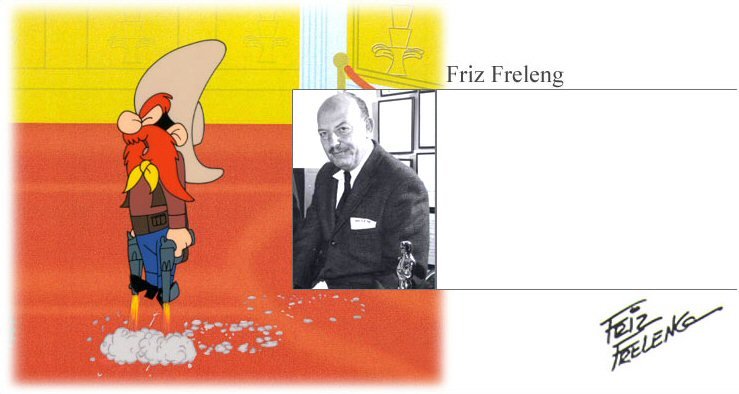
Brian: “A travelling Friz Freleng retrospective for the 100th anniversary of his birth this year.”

Sal: “Well, I'm a big fan of the old movie studio lots and the magic they were able to make within those walls. It saddens me to no end when I think of film fans will never see the famous High Noon western set (bulldozed for a parking lot) or enourmous backlot of 20th Century Fox (sold off to create Century City) or the sin of all sins, the destruction of the treasured sets of the old MGM/RKO backlots of Culver City. So much of film today has relied on technology such as CGI to transport the audience that it has somehow made that trip less fantastical than it once was. The greatest gift I could receive would be to have some group of investors or directors or producers get together and find an area outside of L.A. and construct the next great studio lot that would recreate some of those lost sets and create new ones for the next several decades. God I would love to see that. I remember Debbie Reynolds talking about how she begged and pleaded with Kirk Kirkorian not to sell off and bulldoze the MGM lot. She even offered to stand in from of the main gates and sell tickets so people could see that beautiful place for themselves. It makes me weep!”
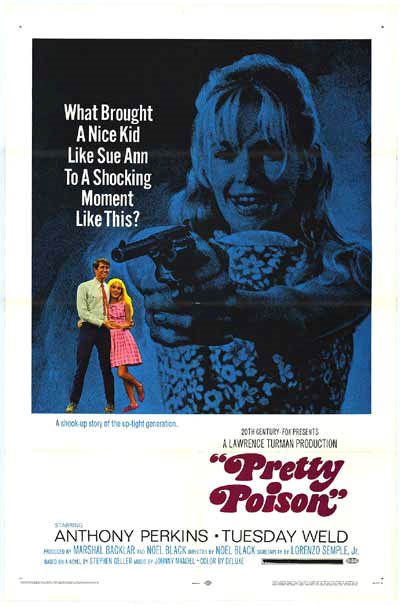 Robert: “An R1 release of Pretty Poison; a strapped-on, blown-out, extras to the max- release of Beyond the Valley of the Dolls, with cast/crew commentaries and/or interviews, tons of stills, deleted scenes, and whatever else they can dredge up related to the production;
 and for The Industry to regain the ability to do simple math: good writing + good actors + imaginative directors = Good Movies.”
Virgil Hilts: “Fewer remakes would be nice. Heck, an original idea for a movie would be really nice.”
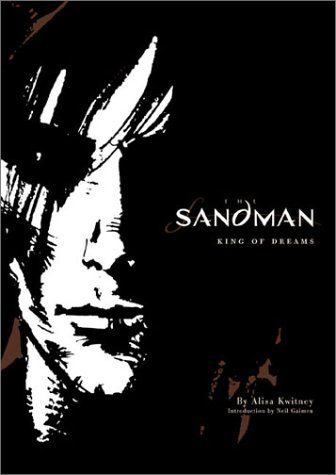 Peet: “Lots of money to make one of my own. And if it isn’t too much to ask: bring Stanley Kubrick back from the dead, or successfully translate Neil Gaiman’s graphic novel epic The Sandman to the small or silver screen (not likely).”
Thom McGregor: “A great Christmas present from Hollywood to me would be to stop making trailers that reveal everything about the movie, stop reporting on the weekly box-office take as if it matters to anyone outside of Beverly Hills, Burbank and Encino, and to give Ewan McGregor and Kate Winslet really, really great roles, but not in Hollywood movies.”
The Mysterious Adrian Betamax: “There is already so much good stuff out there (more than anyone can watch), and it's just that it's unrecognized or unexplored (see response to #24!). So I'd say not a present for me, but that more people would discover these wonderful directors and actors and movies as a present to themselves! (And places like Netflix can help you do that even if you live in the boonies!) And not just those contemporary directors I was mentioning, but all the great classic/silent/classic foreign movies too!”
Psaga: “Man, I just want to hang out and finish this joint and watch blaaagh, Peet, and Thom open their presents. Well, I suppose I could get off my slacker behind and subscribe to Netflix. Do you think that would thaw a chunk of the MAB’s cold, shriveled heart?”
Dave Robidenza: “To understand that movies are at their base level entertainment and that whatever visions or pretensions the director, producer, writer, star, etc. have (to be shocking, to be outrageous, to be lyrical, to be cathartic, to throw in lots of inside jokes) the movie is being made for an audience that just wants to lose themselves in a story for two hours. I have enjoyed movies from nearly every genre but what makes a film truly enjoyable for me is that it feels like the filmmakers know exactly what their film is, know what I want it to be, and don't try to trick me with false sentiment or outlandish effects.
 It's kind of like a stage magician - now, I'm old enough and knowledgeable enough and cynical enough that I know the cards are marked, the box has a trapdoor, and that the coin was palmed when it looked like he was putting it under the cup. But someone who can overcome that "it's all a trick" cynicism and impress me with their banter, dexterity, and skill is someone whose act is going to leave an impression on me. Similarly, a team of filmmakers who recognize that I know the words are fake, the sets are painted muslin, the monsters are latex and the tears are glycerin but who can still put on a show that leaves me feel like I got my money's worth are always going to impress me more than someone who thinks a lot of fast cuts, digital stunts, and screamed dialogue can cover the fact that there's no real substance to their movie. Also, I want more Toblerone at the snack counter.”
Mr. Middlebrow: “Would mild electrocution to or near the genitals of the ass clowns who ruin a movie with their incessant jabbering and cell phone ringing be too much to ask? I went to, like, three movies last year and every one was, to some degree, marred by a basic lack of consideration. Things that used to be the irksome exception seem to have become the rule. I know it’s not really ‘The Movies’ to give, but if they could get the man-cub to sleep through the night and be able to be left with a competent sitter, that would be good, too. Yeah, that and the ‘nad-shockers and we can pretty much call it a day. God bless us, every one!”
Dennis: “I would love to see directors and editors rein in the incredible versatility and endless shuffling possibilities that editing digitally affords them. Back in the days of the Moviola, when editors actually had to touch film, to physically splice sequences together and make cuts with actual blades, assembling and disassembling a sequence was not only cost-prohibitive, it was time-prohibitive, and it was physically degenerative to the film stock on which the editor was working. This, I think, caused directors and editors to be judicious before the fact and actually plan how best to tell their story, through storyboarding or other means of preparation, rather than just leaving it all up to excessive digital improvisation and using 200 cuts when 20 will do, just because the Avid allows them to do so. My wish for 2006 is that The Movies would somehow rediscover the glories of longer takes, of the use of the camera to do something other than whipsaw back and forth and up and down while genuflecting at the altar of simulated documentary verisimilitude, and for modern film editors to go back and take a look at the work of Robert Wise, Albert Akst, Adrienne Fazan, Agnes Guillemot, Dede Allen, Verna Fields, Anne V. Coates, George Tomasini and so many others from the classical period of American and European cinema (many of whom, as you may have noticed from the above, utterly random list, were women). There's a better way to tell a story, one that doesn't shatter a viewer's perceptions into a thousand incoherent shards with every passing minute, and my hope is that more people who work as film editors in modern cinema, and those who aspire to do so, will look to these masters for inspiration and education in the coming year.”
*********************************************************************
That’s it, everyone! Hope you enjoyed the Christmas Quiz as much as I did! And now, everybody go out for a drink of water, sharpen your pencils and return to your seats. The Spring Break Quiz is next…