Tuesday, May 30, 2006

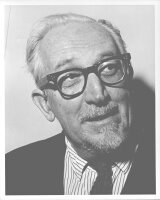
SHOHEI IMAMURA 1926 - 2006


On the day that Howard Hawks would have celebrated his 110th birthday, news comes of the death of the great Japanese filmmaker Shohei Imamura, who won the Cannes Film Festival’s Palme D’Or twice, for The Ballad of Narayama in 1993, and again for The Eel in 1997. David Hudson at Green Cine Daily has compiled an excellent series of links in tribute to Imamura which talk about specific films in the director’s filmography and his place in the history of the Japanese cinema. Shohei Imamura was 79 at the time of his death, which was attributed to liver cancer.

And as for Hawks, here's Sheila O'Malley with a fine appreciation.

SHORT ROUNDS PART 4: DUMBO


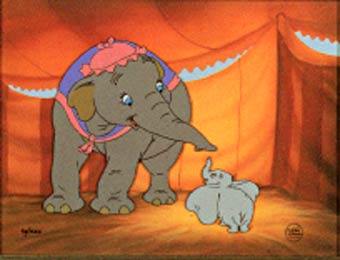
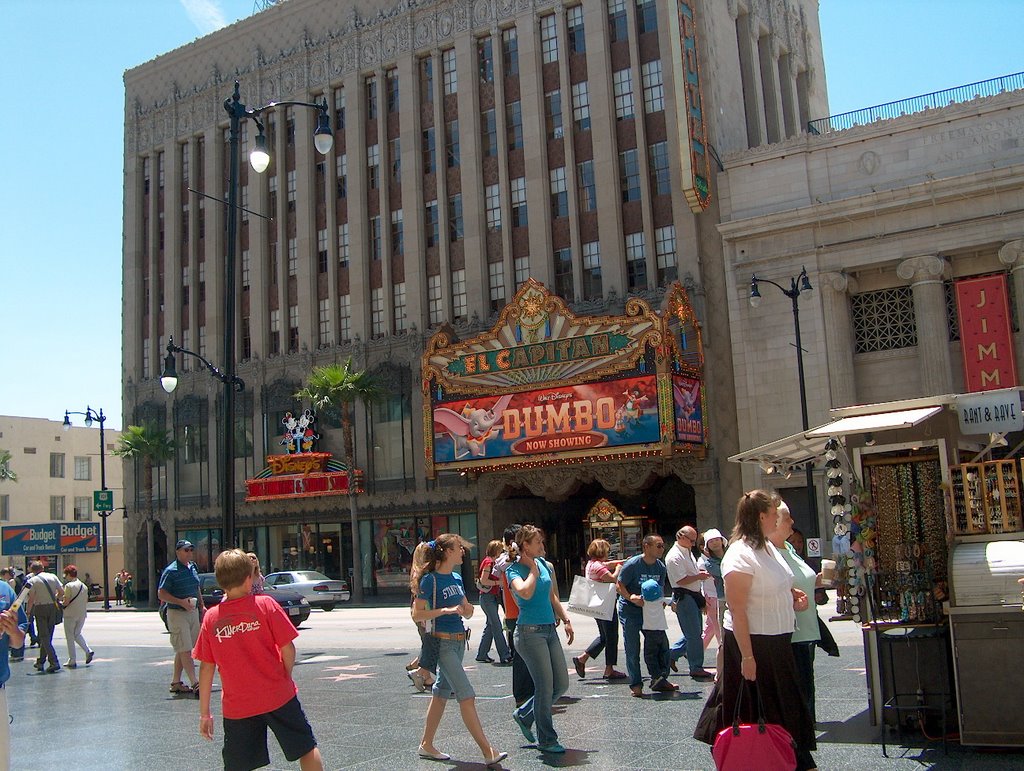
Finally, my family and I were lucky enough to find ourselves at the El Capitan Theater in Hollywood this past Sunday for a rare opportunity to see Walt Disney's Dumbo on the big screen, and I will say that if you've ever only seen Dumbo on VHS or on DVD, you've seen it, all right. But I'd wager it has never washed over you or reached out and grabbed you with its vivid, super-saturated colors, wonderfully subtle visual characterizations, honestly moving character relationships and sharp comedy as it does when it comes trumpeting off that giant screen. (When Timothy J. Mouse describes Dumbo's exile from his circus environs to the crows and says, "Socially, he's all washed up!" I laughed out loud as if I'd never heard the line before.) Disney is presenting this rare screening basically as filler until the release of Pixar's Cars next week. That means that if you're reading this in the greater Los Angeles area, you have until next Wednesday, June 7, to get yourself a ticket and see this genuinely brilliant classic of animation the way it was meant to be seen, and it has probably never been seen to this great an advantage ever before. More than once, while watching it, I was reminded of the great, blubbering joy with which Robert Stack's General Stillwell sat and watched Dumbo while all of Los Angeles, or at least Hollywood Boulevard, crumbled around him in Steven Spielberg's gloriously funny 1941. Though it's difficult to determine from the film, I've always fancied that the El Capitan Theater, which at the time Spielberg's movie took place was known as the Paramount and had only just recently played host to the world premiere of Citizen Kane, was also the theater in which Stack sat watching Dumbo. One of the funniest and most touching images in Spielberg's work is that of the stern General Stillwell watching through uncontrollable tears as Mrs. Jumbo's trunk comes snaking out of the caged cart in which she is imprisoned, groping until it finds the slumping figure of the little elephant with the gigantic ears, her son from whom she has been separated, and then caressing him with gentle assurance and love. Looking at this moment at the El Capitan, it also settled on my mind why this movie, in this place, was the perfect activity for me and my family to experience together on this Memorial Day weekend. It wasn't intentional, and maybe that's why it was perfect. Sometimes life is like that.

SHORT ROUNDS PART 3: OVER THE HEDGE


Every once in a while there are still surprises left in the Hollywood jack-in-the-box. A fatherly obligation-type outing with my daughters to see Over the Hedge, the new animated comedy from Dreamworks, had a most unexpected result-- almost complete delight on my part. Based on the preview and the general tone of some fairly dismissive reviews, I went into expecting not much more than a headache, much like the ones I got out of taking them to see Chicken Little and Robots. But Over the Hedge is different-- while not exactly suffused with poetry, there are images here that popped in my head and made me gasp with happiness.

Based on a comic strip with which I'm not familiar, the movie tells the story of a rummaging squirrel (Bruce Willis) who ends up in debt to a very grumpy bear (Nick Nolte) and must make restitution in the form of as much processed junk food as he, and the various woodland creatures he cons into helping him, can pilfer from a nearby suburban housing project located, yes, over a imposingly tall hedge. The voice work from Willis, Nolte and others like Steve Carell, Garry Shandling, Eugene Levy, Catherine O'Hara, William Shatner, Alison Janney and Thomas Haden Church is among the wittiest of any of the post-Pixar computer-animated movies, and Over the Hedge, unsullied by the increasingly lame pop culture raiding that characterize Shrek and so many other sub-par efforts in this genre, can stand beside the best Pixar has to offer (which is just about their whole output, isn't it?) Hedge has an appealing, manic energy, best exemplified by Carell's characterization of an overstimulated squirrel, whose encounter with a can of super-caffeinated energy drink is probably the funniest sequence I've seen all year, but it has pleasing variances in that pace and tone as well-- it's not a marathon of in-your-face slapstick and incessant screaming on the order of Chicken Little.

And though it's not exactly on the order of incisive satire, the degree to which the movie does engage with the idea of holding a mirror up to our consumer culture and impulsive consumption of junk food should probably be commended, particularly considering the movie's core demographic. (Reconciling that thematic notion with the appearance of Over the Hedge Pez dispensers at my local supermarket was, however, slightly more difficult and troubling.) Over the Hedge has a sharpness that I think the likes of Chuck Jones and Friz Freleng would have approved of, and it reminded me a lot of what those great Warner Brothers animators' work would look like if they were alive and working in pixels instead of with pens and paints. Over the Hedge might just be as much of a happy surprise to anyone else who holds their legacy of fiercely intelligent, playful and bright cartoons with love and admiration as it was to me.

SHORT ROUNDS PART 2: MANIAC


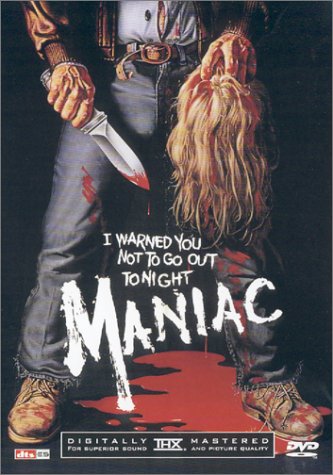
A lifelong fan of horror films, particularly those involving a slate of victims, female and male, being pursued by a masked or otherwise elusive killer, might be moved to reconsider his or her vocation after watching William Lustig's Maniac, the notorious (at least at the time of its 1980 release) grindhouse serial killer opus coscripted by and starring the late, great character actor Joe Spinell, which I caught up with courtesy of the Independent Film Channel last week. Spinell's was, more accurately, a great character face, one that spoke of trials and dramas and difficulties and experiences which he was able to lend to the various unsavory characters which he played throughout his career (which ended with his death by heart failure in 1989).

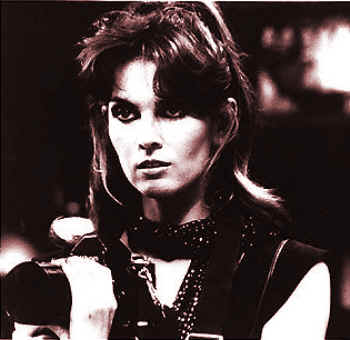
No character he ever played, however, matched the unsavoriness of the one he wrote for himself, a none-too-originally mother-obsessed psycho who, for reasons never made entirely clear, scalps women, rapes them as their life ebbs away, and then takes the bloody hairpieces home to attach to a series of mannequins with which he has a series of whiny conversations meant to convey his twisted inner life. Well, pardon me, but the grimy milieu and the grotesque sequences of gore on display courtesy of makeup maestro Tom Savini (who, in a silly cameo, reserves the movie's most explosively gooey death for himself) do enough to illuminate this maniac's twisted outer life to more than satisfy me. And anyway, any serious look at how this guy's twisted inner life is being represented would be sure to generate plenty of derision from anyone with even a passing familiarity with the work of Sigmund Freud. But such derision would require far more energy than was devoted to the movie itself, which hinges on long, slackly constructed scenes in which frightened women seek out the most depopulated areas of New York City in which to try to escape from our mouth-breathing protagonist, and then inexplicably hang out in these deserted areas until that inevitable moment when Spinnell pops out from behind them and eviscerates them in loving close-up. These scenes are followed either by sequences featuring Spinell groaning and chewing over monologues in which he addresses his long-dead mother, or even more preposterously, ones in which he insinuates himself into a romance with a lovely photographer (who will, of course, eventually become his target) played with surprising stiffness by Hammer horror icon Caroline Munro.

Spinell obviously conceived Maniac as a kind of actor's showcase for himself which he could fold into an exploitable premise, and judging by the high profile this movie had in drive-ins and even indoor theaters in 1980, his strategy for getting his work seen obviously worked. It's too bad that the work itself is so deplorable and rootless and lazily realized. It's easy to see the influence of Taxi Driver at work here in the first-person intimacy Spinell, as writer and performer, forces upon the audience. But Maniac's Frank Zito is no Travis Bickle, and Lustig (who also helmed the three parts of the Maniac Cop series) is certainly no Martin Scorsese. At one point Spinnell even apes Bickle's most famous line-- "Are you talkin' to me?"-- but it's tossed off in a close-up shot from the side, defusing the confrontational stance taken by De Niro and emphasizing the silly self-consciousness of the quote. Maniac has all the grim trappings and coarseness of hard-core exploitation, minus the cold spike of recognition to the heart representing the point of view that a real horror filmmaker, like Tobe Hooper or Larry Cohen, might have brought to the party. As a character study of a man driven mad by abuses showered upon him by society or a long-dead mother, forget Taxi Driver or Psycho-- Maniac is bad enough to make me consider in a whole new light the treasure trove of psychological observations to be mined from careful observance of the mournful saga of Jason Voorhees.

SHORT ROUNDS PART 1: POSEIDON


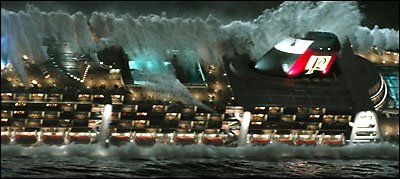
Thanks to Internet buzz, combined with the old-fashioned kind whispered throughout the usual Hollywood infotainment and party circuits, we all knew ahead of time that Wolfgang Petersen's Poseidon was a shamefully dumb and shoddy movie and unlikely to make the truckloads of cash expected by its producers. Of course, when the box office numbers for the first weekend came out and the movie ended up getting trounced by Mission: Impossible 3, which was by then week-old product, it was time for the prognosticators to come out of the shadows and lend credence to the interpretation of a $22 million opening weekend (which was certainly less than what the studio, Warner Bros., was hoping for) as a reflection of audiences' disatisfaction with, or disinterest in the movie, and the die which was cast in the previous weeks was now perceived fact-- Poseidon was a bomb.

Critical reaction was no less savory. Despite good reaction from the likes of Peter Rainer, Lisa Schwarzbaum, William Arnold, David Denby and Sean Burns, the reviews that were paid the most attention were the ones that took the crimes-against-humanity tack, or the ones that insisted, against all evidence in the trailers, that the special effects were terrible, or the ones that allowed the reviewer to trot out his/her worst Das Boot/Perfect Storm-based punnery while making sure we all knew just how much smarter he/she was than the movie under consideration. (Ed Gonzalez writes much more intelligently, if not entirely convincingly, about the film's racial subtext in the virtual pages of Slant.)

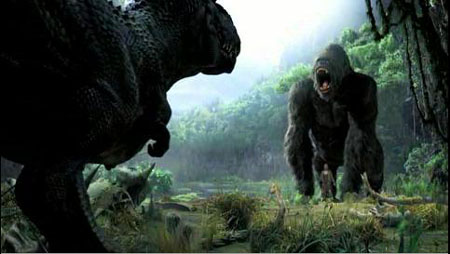
But a funny thing happened on the way to the multiplex, or after arriving there, more precisely: Poseidon turned out to be a brisk and solidly crafted slice of blockbuster entertainment. In a time when some of the most common salvos fired against modern Hollywood epics, like Peter Jackson's King Kong, are accusations of flabbiness and bloat, Petersen's remake is crisp, exciting, well-acted and paced like a 150-foot rogue wave bearing down on its target. In fact, its pace might even be a bit too brisk; the prologue to disaster actually feels underwritten-- there's barely 15 minutes of buildup before the arrival of that wave. And once the ship is fully capsized, the movie skimps on the kind of juicy showboat dramaturgy that comprised the 1972 original's debate between the captain and Gene Hackman's irreverent reverend over whether to climb up or stay put. What we do get, courtesy of screenwriter Mark Protosevich, is some rather inelegant dialogue, the worst of which comes out of the mouth of architect Richard Dreyfuss, a despondent gay man jilted by his lover who rethinks a suicidal jump overboard when he gets a look at that wave. In voicing his support of the idea of climbing up to the hull of the ship, Dreyfuss exclaims, "I'm an architect, and I can tell you, these ships were not made to float upside-down." Admittedly, that's a pretty silly line-- imagine Red Buttons from the 1972 film saying, "I'm a haberdasher, and I can tell you..."-- but I'd be willing to bet it'd be easy to find dumb lines in any randomly chosen big-budget blockbuster of hardier repute than Poseidon-- say, the new installment in X-Men saga, for example. The fact is, the disaster genre is one that is easily condescended to, especially when we're talking about a remake (arguably an unnecessary one at that) of perhaps the most well-liked entry in the entire genre, and dialogue like this does the movie no favors in the eyes of any who are predisposed to despise it.

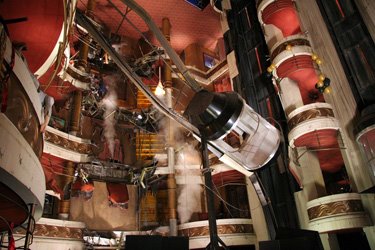
But once this new movie does get down to its real business (assuming that crafting electrifyingly witty bon mots for its cast to toss around while outrunning a rising level of sea water is not its real business), it exploits the claustrophobia of the situation much more efficiently (and perhaps even a touch sadistically, says this claustrophobe) than did director Ronald Neame's film, and there are two or three squirm-inducing action set pieces that are, without debate, exceptionally well directed. The effects, both computer-generated and those old-fashioned live-action stunts and mechanical sequences that comprise the capsizing of the ship and everything else that follows in the wave's wake, are nightmarishly effective-- I honestly don't understand any of the complaints about the film in this department, except on the level that if the movie is bad, then it must all be bad. (None of the reviews I've read that have claimed deficiencies in Poseidon's special effects have offered up much evidence to support this puzzling claim.) And, as if to settle the flabbiness and bloat argument before it even gets started, the whole thing clocks in at around 99 minutes, some 20 minutes shorter than the original. (To be honest, that relative lack of buildup before the wave hits is a bit jarring-- it's as if Petersen succumbed to impatience, either to his own or to the kind inspired by audience testing scores. It should be fairly interesting to see what the inevitable, and inevitably longer director's cut will look and feel like on DVD.)

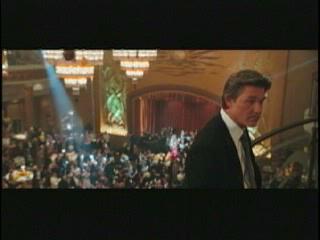
Those who still harbor a fondness for that 1972 original (I do) will also undoubtedly miss the scene chewing provided by Hackman, Ernest Borgnine, Shelley Winters, Arthur O'Connell and Stella Stevens et al (I did), and will note with some dissatisfaction the absence of the Christmas tree that handily provided the group's initial climb out of the ballroom. There's really very little made of that exit in the new film-- just a couple of quick toe-holds to the next level, where Lucas, Dreyfuss, Kurt Russell (fireman and ex-mayor of New York City!), comely single mother Jacinda Barrett, her whiny son (who will make you appreciate the matter-of-fact comic timing of Eric Shea) and doomed galley worker Freddy Rodriguez hook up with Russell's daughter (Emmy Rossum), her boyfriend (Mike Vogel), Rodriguez's stowaway girlfriend (Mia Maestro) and fatally obnoxious comic relief Kevin Dillon as Lucky Larry, a card sharp whose name turns out to be very ironic indeed.(His quick dispatch is another point in favor of Petersen's lean, no-nonsense approach.) And as spectacular as the special effects and set design are, as my friend pointed out afterward, without the accompanying visual wit of wandering into, say, a men's restroom and seeing the urinals hanging from the ceiling, there's little to reinforce the essential disorientation, the indigenous surrealism of the idea of climbing through an upside-down world. The innards of this Poseidon are impressively detailed, but they too often call to mind a bombed-out building rather than the telling details of what one might find in the nightmare of a capsized ship.

Along the way characters are dispatched, some-- like Lucky Larry-- we're glad to see go, and some that create some unexpected heartache and ambivalence to swallow along with our popcorn and Diet Pepsi. For Ed Gonzalez, the recognition of the social strata of the cruise ship-- minorities below decks in roles of servitude, rich folks (of varying colors but, as far as the group we will follow, exclusively white)-- is an understandable source of frustration because the film doesn't explore that schism so much as exploit it with the tried-and-true methods recognizable to anyone who has ever seen a Hollywood genre film. (Was the original's exclusively white casting any less offensive, even as it expressed the egalitarian ethos traceable to Paul Gallico's original novel much more successfully than this new film does?) Poseidon skirts this issue in the relationship of Rodriguez and Maestro's characters to that of Dreyfuss, who is (in the film's most shocking moment) forced to cause the death of one, at Lucas' insistence, in order to stay alive himself. (Gonzalez's characterization of the event aligns it closer to murder than simple survival, which is, I think, wrong.) Then, when Dreyfuss subsequently forms a relationship with the surviving member of the couple, neither of them are aware of how Dreyfuss' previous action colors their own growing closeness. Unfortunately, the movie never really follows through on exploring this relationship and casting light on the intended or subtextual meaning, if any, of so casually disposing of the film's only real representatives of ethnicity. For whatever reason, it is a missed opportunity, and Poseidon opens itself up to charges of crass exploitation and indifference in the process of passing it by.

The movie trades off considerations of race and social standing in favor of focusing on Russell's testy relationship with his daughter and her boyfriend, and Lucas's gradual emergence from his shell of self-interest to be revealed as an empathetic human being as he casts himself as protector of Barrett and her son. These are much more obvious, and much safer waters to tread, and not of much interest as drama. Fortunately, Poseidon is mounted so spectacularly and with such brutal efficiency as a piece of action filmmaking that the only real drama that matters is quickly reduced to a basic set of human fears and the audience’s ability to empathize with the simple impulse to survive. I think I would be much more concerned with Poseidon's deficiencies of script and character if I had any real expectation going in that there would be anything substantive to invest in the characters beyond the recognizable signposts that allow them to read as fellow humans on screen. There is empathy to be had with each and every person on screen, however, because of those signposts, and because of actors like Josh Lucas, Kurt Russell, Richard Dreyfuss, Freddy Rodriguez, Mia Maestro and Jacinda Barrett, who, despite being saddled with some lumpy lines and having not an ounce of the original cast's juiciness and campy appeal, still always project a measure of dignity that is a signpost itself, one of good actors condescending neither to their material nor their audience-- Russell, one of our best and most underrated actors, stands out quite typically in this regard.

The same cannot, unfortunately, be said of Dillon, or Andre Braugher in a rare gaseous mode as the ship's captain, or the creepy Stacy Ferguson-- Fergie, of the pop group Black Eyed Peas-- whose hip-hop flavored "songs" aren't a patch on Carol Lynley and "The Morning After." There is no shame in enjoying seeing these folks meet their fates, watery or otherwise. Nor should there be in enjoying Poseidon warts and all, a stout, often excruciatingly suspenseful, often clunky, certainly imperfect but ultimately very effective example of the kind of expensive high-concept picture that Hollywood often does well, usually with equal measure of conviction and crass, cynical commercialism. It will replace the Irwin Allen production ("Who will survive?!") in precisely no one's affections, and though it does cast an eye toward them-- Allen's widow, Sheila Allen, in a superb example of the fine art of movie crediting, is listed as "executive producer"-- it doesn't ever seriously attempt a raid on those affections. It is, however, as directed by Wolfgang Petersen with his faithfulness to verisimilitude in representing the claustrophobic terrors of disasters at sea, as indicative of the times in which it was made as the 1972 film was in representing a golden cast of Oscar winners, culled largely from the decimated studio system, as a commercial force and a statement of classic Hollywood values (however debased and corrupt) in the face of the emergence of non-star types like Al Pacino, Jack Nicholson, Ellen Burstyn and, yes, Gene Hackman. Only the names have changed to keep the percentage of the budget designated to the talent at a minimum. However, whether created by CGI or in a studio tank, the wave abides.

Friday, May 26, 2006

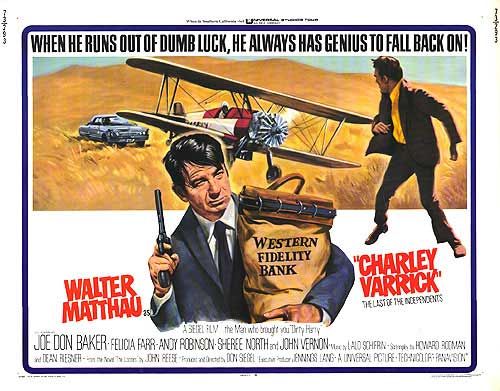
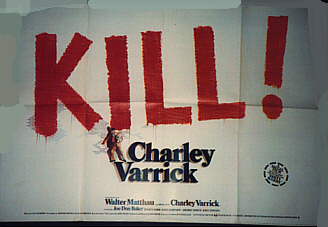
THE DESERT HEART OF CHARLEY VARRICK


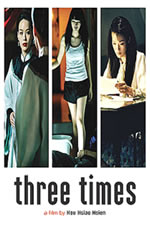
Had I not revisited Don Siegel’s dusty, nail-hard crime thriller Charley Varrick just the night before seeing Hou Hsiao-hsien’s Three Times, it stands to reason that I probably would not have found myself thinking about it midway through the Taiwanese director’s film. After all, Siegel’s tale of morally ambivalent “heroes,” scabrously misanthropic villains, and the various levels of grime and corruption to be waded through and scraped off on the way toward accidentally absconding with three-quarters of a million dollars in laundered mob money would seem to have little in common with Hou’s deliberately paced, exquisitely mounted collection of three love stories, each from a different time, each told in a manner most rewardingly compared to the elliptical style of a short story on the page. And yet, as the first episode of Three Times, “A Time of Love,” began to wrap itself around me, rich in the atmospheric imagery of muggy, rain-soaked days, thick with romantic longing in every image of roadside signs and empty streets and hushed pool parlors alive only with the sounds of clacking balls, I began to marvel at how effortlessly Hou had created such a tactile, living landscape through which his two characters are allowed to move and breathe and touch and feel. That feeling led me to ponder other instances in which a director has so casually, yet so effectively rendered locations in such a manner that they almost feel like they could be breathed in through the lungs, locations reflective of the mood of a given piece and even the rocky, unforgiving landscape that makes up the characters themselves.

Thanks to that lucky proximity of having seen it 24 hours earlier, Charley Varrick leapt to mind as a prime example. When it was released in 1973 by Universal, no one seemed likely to pronounce claims of artistic integrity for what was perceived as an efficient, brutal crime programmer, no more, no less. But seen 33 years later its sturdy, intelligent design couldn’t be more apparent. As a vehicle for Walter Matthau, who would continue the dismantling of his status as strictly a comic actor begun here in films like The Laughing Policeman and The Taking of Pelham 1-2-3, it’s an excellent showcase for the star’s ability to project the electrical charges crackling behind his hangdog personage as Varrick attempts to wiggle out from underneath the greasy, bloody thumb of an increasingly angry and impatient crime syndicate, personified by Joe Don Baker’s grinning hit man and John Vernon’s frighteningly insinuating big boss. And because of Don Siegel’s unblinking camera eye, his sense of graphic continuity, and his insistence that the places where the chase for Charley play out are just as important for the mood that can be drawn out of them naturally, from their simple existence as landscape, as they are in conveying the ineffable sense of the existential net closing in around him, Charley Varrick’s shadow is a long one, particularly for a movie that isn’t talked about any more frequently than it is. Recent efforts like Brian Helgeland’s Payback and Harold Ramis’s The Ice Harvest have reached back through the smoke and wreckage of American action films, films that once crowded American movie houses and have come, as Mission: Impossible 3 most currently evidences, to a creative dead end, back to Siegel’s cold shot to the heart, where they have found a welcome place for their own curdled spirits to set up home.

On this particular viewing last week, the crucial importance of those locations to the realization of the bleak comedy and arid cynicism of the movie’s moral ambiguities hit home particularly hard. The template of the movie is set by Siegel’s attention to the details surrounding the bloody holdup that kicks the movie off, staged within the simple, brick construct of the Las Cruces, New Mexico bank, and outside that bank, along the dusty side streets of the town where children play in the unyielding sun and run for cover once the bullets start to fly. Outside that bank, the heat is palpable within the car that Charley sits and waits outside the bank, along with his partner Harman (Andy Robinson) and their getaway driver, Charley’s wife Nadine (Jacqueline Scott), even as they sit shaded by the trees draped around the bank’s front entrance. And in the aftermath of the getaway chase, which will result in Nadine’s death, Charley and Harman desert the car and don the gear of Charley’s legitimate business— white crop-duster overalls—and make off in Charley’s van, which bears the legend, “Charley Varrick, Last of the Independents.” But they’re stopped by a state trooper on his way to assist in the already-finished chase, and Siegel uses the moment to not only create suspense as to whether Charley and Harman will be recognized, but also to allow us some breathing space after that intense chase, space that we can use to again breathe in the harsh, tactile, literally roadside ambience. I swear I could almost feel the gravel crunching under my feet and the hot air running across my face in this scene. The feel of sagebrush and dust and the foreboding and oppressiveness built into these wide-open spaces is highlighted, subtly, in this sequence, and its methods are carried through the entire film, whether the movie is “luxuriating” in the specifics of Charley’s trailer-park hideaway, a cathouse where Baker chastely spends the night as he moves in for the kill, the stuffy, under-lit interior of a photographer’s shop run by the late Sheree North, who invests an insinuating sexuality into casual betrayal, or in fascinating found-documentary glimpses of the rundown south end of South Virginia Street (specifically, the immediate area surrounding Fitzpatrick’s Casino) in Reno, Nevada, a city which seems forever tied to the seedy vitality in evidence there when this film was shot in 1972.

In Charley Varrick, the prickly, dusty landscape and its ambience of indifference is inescapably tied to the film’s crisp visual sense, its terse rhythms and its unforgiving and illuminating approach to character and storytelling. Dismissed as simple mass entertainment by even its most sympathetic reviewers in 1973, Don Siegel’s movie has emerged as a model of efficiency and expressiveness, through its influence and its vigor, after 33 years of less-talented directors thrashing at the hide, and eventually the skeletal frame, of the modern action film, where money and excess and blind demographic pursuits have yielded fewer and fewer artistic returns. Charley Varrick, surely a masterpiece of sun-bleached, Technicolor film noir, has the desert, its prickliness, its fever, its dusty insistence, in its blood and its soul, and the chill of the nighttime shadow of its influence and its reputation is only likely to grow longer, deeper, more resonant as each year passes and each new hotshot director tries to outdo the kind of terse, economical style in which its playfully perverse and formally profound pleasures are rooted.
Tuesday, May 23, 2006

MOVIE OF THE MOMENT: THREE TIMES

Taiwanese director Hou Hsiao-hsien’s film may be called Three Times, but for Los Angeles filmgoers who’ve actually heard of it and, even more unlikely, actually want to see it, it’s more like two weeks. After a one-week opening engagement at the Laemmle Music Hall in Beverly Hills (whose auditorium was nowhere near full when I saw the movie last Saturday night), it switched over to Laemmle’s second-run Fairfax Cinemas, where it is down to two shows daily for the next three days and not likely to see the light of a projector lamp past this coming Thursday. All that, and Three Times still will double the length of the run of the only other Hou picture to screen commercially in Los Angeles, Millennium Mambo, which had a one-week run in 2004, three years after the movie was originally seen overseas.

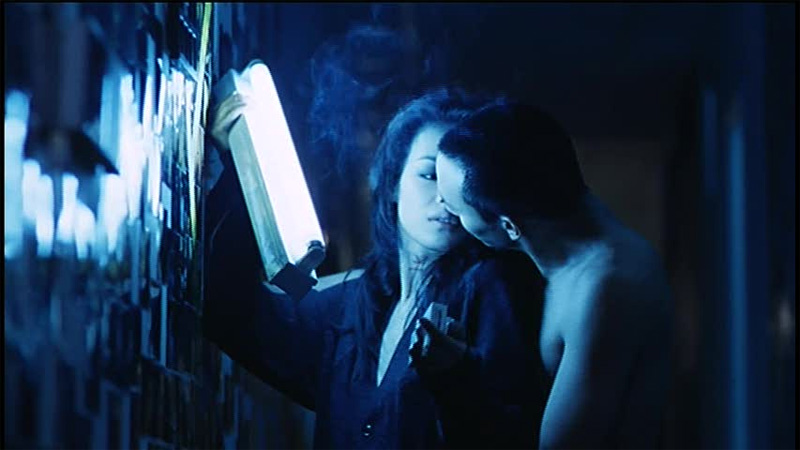
Not being an overly experienced veteran of Hou’s cinema (I’ve seen only Millennium Mambo and Flowers of Shanghai, both on DVD), I wanted to take advantage of a rare opportunity to see one of the director’s unhurried, visually resplendent films on the big screen. Yes, there is a Hong Kong DVD floating around out there, and no doubt one will be available soon through Green Cine, Nicheflix or perhaps even Netflix. These services all have a good selection of other Hou films available as well. But if you can possibly get to the corner of Fairfax and Beverly this week, I highly recommend seeing Three Times in a theatrical setting. This is a movie that is not going to do anything for audiences who define cinematic excitement primarily by summer blockbusters like Mission: Impossible 3. But to surrender to the tactile, emotional and observational pleasures to be had by stepping into the vivid, hushed and cluttered scenes framed by Hou and his brilliantly sensitive cinematographer, Pin Bing Lee, is to experience a kind of excitement that is far removed from a THX Dolby Stereo thrill ride—it is the thrill of feeling the hairs on the back of your neck stand up at the sight of two hands in the moment when they first touch and their fingers tentatively intertwine; the twinge of heartache over a silent, unrequited love; or the dulled charge of erotic fixations and confusion experienced by two lovers lost in and gliding through the chatter and insistent, ambient noise of a modern city. It is the thrill, in other words, of being in the hands of a master director, one who knows that some of life’s (and cinema’s) most moving dramas can be charted among the slightest of seismic shifts in mood, in sound, in the positioning of two beautiful actors as they look into each other’s eyes, or as they look away at a crucial moment, the angle of one glance deflecting off of another, another connection missed.


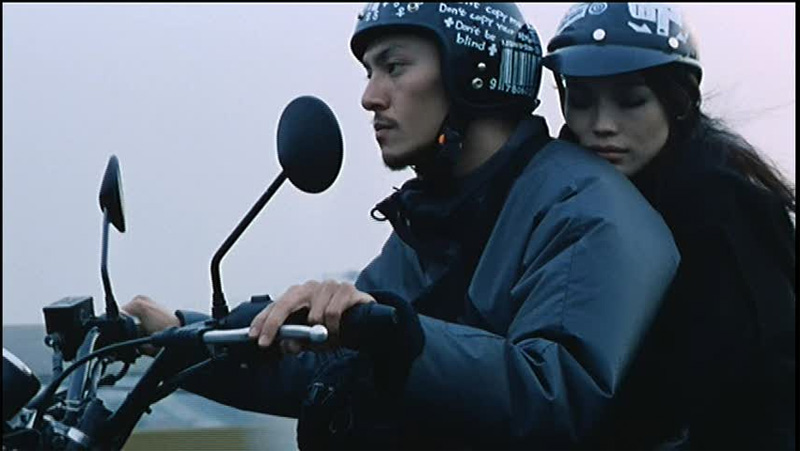
Three Times is structured in three segments—three love stories set in three different eras, each evoking hazy melancholy filtered through pop culture, political oppression reduced down to an abstract reflection at a fundamental human level, and the ways in which communication is thwarted, through the technology that is meant to enhance it, or through the sociological patterns that set people apart and challenge them to span that gap in order to make sense of their own feelings. Hou’s conceit, that the lovers in each segment are played by the same actors—Shu Qi (So Close, The Transporter, Millennium Mambo) and Chang Chen (Crouching Tiger, Hidden Dragon, 2046)—is a transporting one, allowing us to luxuriate in their beauty as mere movie presences and to compare their behavior and responses from one segment to the next as a way of charting our own responses to their characters. The segments are perhaps most simply and resonantly experienced, however, as tales that reflect the many ways in which people experience falling and being in love, and also that slowed-down sensation of perception that often signals when the hook has been set. Each story is set in a different period in Taiwanese history, and each is tonally and stylistically quite different from the next. However, each is still imbued with Hou’s probing long takes, the heightened sense that each edit, each shift in perspective, means something, even if we can’t articulate what while we’re experiencing it, and an alarming sensory sensitivity to the details and pleasures and even slight claustrophobia of the places where the stories unfold.

The first, “A Time of Love,” is set largely in a billiard parlor in 1966-- the jukebox plays “Smoke gets In Your Eyes” more than once, and that is partly a joke, but it also lays the emotional foundation, grounded in the very potent American pop culture seeping into Taiwanese culture at the time, for the understated personal drama that will follow. Shu Qi is a woman who works in the parlor and catches the eye of a conscripted soldier, played by Chang Chen, on the night before he is to report for service. When he returns on a brief pass, he discovers that she has moved on to another parlor in another town and decides to spend the rest of his time before returning to his military assignment tracking her down. Hou’s delicate framing inside the parlor, and the sounds of the balls clacking together and flying apart on the tables (often heard, but not seen), prepare within us a hyperawareness of environmental textures that is then reflected in the soldier’s open gaze as he travels the countryside, drinking in his freedom in search of this woman whom he barely knows, registering every element of his surroundings, taking not a whit nor a whiff of it for granted. The sequence in which we follow the soldier through the various villages is extraordinary in the way Hou’s lush compositions are particularly tactile without seeming overly decorative, obviously or oppressively engineered for effect. There is something of the sense of connection to the concept of place, to the importance of specificity toward place and time, at work that reminds me of Apichatpong Weerasethakul’s Tropical Malady, even though realizing a haunted, fevered, erotically driven piece of folklore is hardly Hou’s aim here. Instead, it is the soldier’s newfound desire that propels him, and it also propels the way that Hou allows us to experience the world—not through the soldier’s eyes, exactly, but certainly informed by his kind of quietly soaring perceptions. When the two finally do meet again, in another parlor, in a steam-filled noodle shop, and then finally, exquisitely, at a quiet bus station, there is a sweetness to the unarticulated joy in their eyes upon seeing each other again and spending time together that is a marvel to behold.

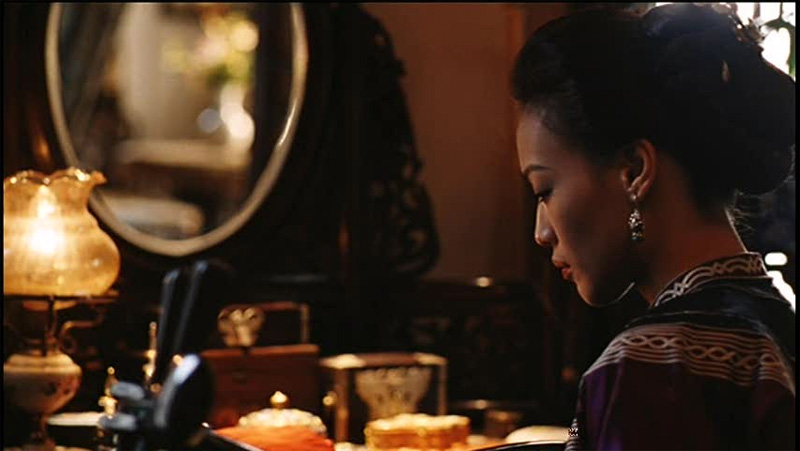
“A Time for Freedom” takes place in 1922, during the Japanese occupation of Taiwan. Perhaps the most unfulfilling of the three segments (by design, certainly, as much as through its lingering emotional residue), Hou revisits the tone and texture of Flowers of Shanghai, only in miniature. Shu is, in this time, a courtesan to a figure of local importance who strikes up a friendship with a man (Chang) who is active is the Taiwanese resistance to the occupation. As her feelings for the man begin to become much stronger, she begins to realize that those feelings of love for him are inextricably bound to a yearning she suspects, as do we, will never be satisfied—the freedom to live life, as this man does, according to one’s beliefs, rather than as a kept woman in a lovely cage. Hou not only reaches back in time for the fundamental elements of his story here, but he also mounts the segments as a true silent film. Dialogue is rendered sparsely, with accompanying intertitles, and the only sound we hear is a piano, not playing accompaniment as one might have heard in a silent cinema at the time, but a concerto that aptly reflects and expands upon the emotional churning that this woman is struggling so hard to suppress. If the first segment was Chang’s to occupy and inform and breathe life into, then “A Time for