Sunday, January 12, 2020

UPSTAIRS/DOWNSTAIRS: THE FILMS OF 2019


Seems to me that only in a very good year for movies could the best film I saw all year and the worst film I saw all year both be called Parasite. Of course, one was the Cannes sensation and sure-to-be-Oscar-nominated South Korean film from Bong Joon Ho. The other was the 1982 3-D “classic” from director Charles Band, starring Demi Moore and Luca Bercovici, a movie which, once I finally caught up with it, or rather once it finally caught up with me (after my having successfully avoided it for almost 40 years), certainly made for an agonizing waste of my time, so I can only imagine what the actors and craftspeople who were involved with making it must have felt, and likely still do. And I consider it a real hallmark of a quality cinema annum when I can say that I saw more movies by near-forgotten Hollywood journeymen Ray Enright and Lloyd Bacon (look ‘em up, kids—that’s what IMDb is for) than I did by Martin Scorsese, who doubles up near the top of my list this year.

Here then, from the heights to the depths (with only the most glancing mention of the depths, really), are the highlights of this past terrific movie year for me, the pictures, performances, and singular achievements that made going to the movies so much more enjoyable than paying attention to real life, even when they opened the sort of revealing window onto real life that is only possible within this art form, reflecting and illuminating the human condition in the most unexpected, welcome and, if we’re really lucky, entertaining of ways.


PARASITE  Bong Joon Ho redefines “upstairs/downstairs” in what is, in my estimation and on its own terms, and if such a thing can even exist, just about as perfect a movie as I’ve ever seen in the modulation of its social satire— acute observations on class and strata are embedded in just about every frame, yet the picture is astonishing fun to watch, the polar opposite of a dry treatise on how humans functioning in webs of economic frustration or privilege feed on each other. It seems also to have hit a nerve with audiences starved for a sense of surprise, for the satisfaction of not knowing where they’re going but being absolutely assured, and with great pleasure and anticipation, that they’ll get there—the movie is thrillingly entertaining and, from moment to moment, genuinely unpredictable. It also has, in the work of actors like Boon Joon Ho veterans Song Kang-ho (The Host) and Lee Jong-un (Okja), as well as Jo Yeo-jeong, Jang Hye-in, and especially Park So-dam, the highest caliber ensemble performance by any cast this year. This movie is what ensemble screen acting awards are made for. Bong (Mother, Memories of Murder) has conjured an exquisitely controlled, fiercely alive work that ought to make just about every other director out there sick with envy, and perhaps even inspired by the surety and humor and brilliantly sustained purpose with which he delivers the goods. This is easily the year’s best, most pleasurable, and ultimately most devastating movie.


DIANE  The Los Angeles Film Critics Circle were wise enough to award Mary Kay Place their best actress honors this year, which gives me hope that she may at least be acknowledged by yet another higher-profile award-bestowing body this coming week. But even if she doesn’t, she’s given a performance for the ages in Kent Jones’s masterful movie, a lovely, unforced, exquisitely realized, formally engaging act of empathy for unsung souls burdened by the shadows of social and familial responsibility, mortality, identity and inescapable guilt. If that sounds like a drag, then please allow yourself to be energized by a film that, though it couldn’t feel more different in tone and approach, can stand right next to Parasite as an exemplar of the absolute best a very good year at the movies has had to offer.


THE IRISHMAN  One of the great common denominators about at least five of the movies among my favorites of 2019 is that they couldn’t have been made by anyone else, and that’s certainly true of the two movies made by Martin Scorsese represented here. The cast, from the rightly celebrated Robert De Niro, Al Pacino and Joe Pesci, through Ray Romano, Harvey Keitel, Anna Paquin, Stephan Graham, and on to Jesse Plemons, Kathrine Narducci, Domenick Lombardozzi and a giant cast of players even less known, are all deserving of praise. But even more fascinating, Scorsese approaches the story of hitman Frank Sheeran, his role in the tumultuous history of American union politics and, perhaps, in the death of Teamsters icon Jimmy Hoffa, with the subdued style of one of his religious epics, eschewing the flash of GoodFellas for an appropriately rueful stylistic meditation on tenuous power, corrupt morality, and the heavy sigh of a soul, perhaps not one even worth saving, in absolute freefall. 


A HIDDEN LIFE  With his gorgeous, agonizing, poetically realized story of a conscientious objector in WWII Austria, Terence Malick not only sums up the stylistic compulsions that have obsessed his work over the last two decades, but he’s also finally fulfilled the promise of Days of Heaven and his presumed status as a great American filmmaker. This is a movie that demands a rigorous attention to philosophical quandaries that clearly alienated several members of the audience with which I saw it, yet it rewards those like myself, who were suspicious of films like The Tree of Life or To The Wonder, with a genuinely haunting, challenging, uniquely introspective experience that is itself based on the introspection of a modest, undeniably heroic man, the sort who chooses to suffer injustice rather than perpetuate it, the sort whose stories often go untold.


ROLLING THUNDER REVUE: A BOB DYLAN STORY BY MARTIN SCORSESE  Scorsese’s second appearance on this list is a long, strange, joyous, darkly comic mix of the factual and the fantastical, a reassessment of Bob Dylan’s famous 1975 tour which contextualizes the music, the personalities and especially the attempts to control the telling of the story of a specific moment in a musical movement, in terms of the shifting landscape of a country and its culture, both then and now. Like Dylan’s music, and Dylan himself (who robustly participates in the blurring of as many lines of truth and fiction as possible here, to fascinating ends), the documentary/mockumentary Scorsese has fashioned is, both in individual moments and in overall philosophy, epic, lyrical, personal, contradictory, nonsensical, and a deliriously fascinating one in which no truth, and perhaps every truth, is arrived at 45 years late and right on time. 
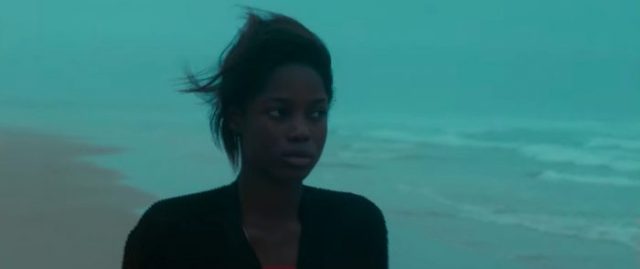

ATLANTICS  A mysterious, gorgeous first feature from director Mati Diop scored to its own ethereal, uniquely untrackable heartbeat, a love story grounded in social reality which floats on longing and pivots on its metaphysical heel to become something… unexpected, expansive, strangely worthy of that longing. Mame Bineta Sane, a first-time actress, holds the screen like a Hollywood veteran as Ada, a young woman bound in a marriage contract whose true boyfriend disappears with a group of fellow construction workers at sea, and the way Diop, with a magnificent assist from Claire Mathon’s swoon-inducing cinematography, tells the story of these two unrequited lovers and the unbreachable gap separating them is satisfying in the elliptical manner of a superbly written short story.   


APOLLO 11  In coincidence with the 50th anniversary of the moon landing, and bereft of narration, talking heads or other grounding devices,  director Todd Douglas Miller uses NASA and television news footage (a generation of viewers will now be privy to the reasons behind the reverence with which their elders infuse the utterance of the name “Walter Cronkite”) to tell the story of Neil Armstrong, Buzz Aldrin, Michael Collins and that truly incredible journey in a way that enhances the reality and the unbearable suspense of a situation we’ve now known the outcome of for several generations. In a year of great documentaries, none was possessed of the sort of historical acuity or grandeur, or the almost hallucinatory clarity that is the lifeblood of Miller’s achievement.  


ONE CHILD NATION  A cross-generational cry of anger from documentarian Nanfu Wang, who explores the awful history of China’s one-child policy, those whose lives were shaped (and sometimes warped) by it, and the dutiful citizens, acting from pride, helplessness, or a grim combination of both, who perpetuated it in the name of national strength. Perhaps the most distinctive element of Wang’s approach, apart from her refusal to look away from even the most personal implications of China’s policy, is the creative and political intelligence she exhibits in observing that though she grew up in a country which for years mandated abortions, and then moved to a country (the United States) where abortions are slowly becoming more difficult to obtain, both governments were about removing the rights of women to make decisions about their own bodies, thus neutering the opportunity for those who might be so inclined to reductively spin One Child Nation into a simple pro-life tract.


HONEYLAND  If the measure of a truly remarkable documentary is to illuminate an aspect of humanity unfamiliar to most audiences, then the work done by directors Tamara Kotevska and Ljubomir Stefanov, in distilling over three years’ worth of footage into this compelling, ultimately heartbreaking nonfiction film, must be considered remarkable, a lovely rendering of a life lived and expressed in balance with the natural world, the world faced as it is with no compromise, which nonetheless is perilously close to falling out of balance. As shot by the intimately calibrated cameras of Fejmi Daut and Samir Ljuma, Honeyland quietly observes, and ultimately celebrates the endurance of a middle-aged beekeeper named Hatidze, who tends to her feeble mother as well as the bees who provide the means of her physical and economic sustenance, and who must also endure the appearance of a vagabond Turkish family who inadvertently come to threaten her ecosystem and her survival. With its equal measures of patience, insistent yet nonjudgmental curiosity about human motivations, and its inevitable sadness, the film stands as a unique wonder, painfully privy to secret moments, expansive, haunting. 


DOLEMITE IS MY NAME   A heartfelt tribute to getting your art (and yourself) on the screen and into movie history, anchored by an arguably career-best performance by Eddie Murphy, alongside stellar support from the likes of Mike Epps, Craig Robinson, Keegan-Michael Key and, most especially, Da’Vine Joy Randolph. Murphy thankfully avoids the mistake of slavishly copying the vocal rhythms and look of Rudy Ray Moore, who brought a generation or two's worth of folklore and coalesced it into a stand-up and movie career as Dolemite, a storyteller styled in the pimp couture of the day. (Moore is also considered by some, based on his musically charged vocal rhythms and how he used them to relate his jokes and stories, as the godfather of rap.) Instead, Murphy makes the character his own, which is his way of carrying on Moore's tradition of passing along urban legends filtered through his own personality. The result is a thoroughly enjoyable, outrageously profane, and not surprisingly honorable movie which joins the ranks of Ed Wood (1994; also written by DIMN's Larry Karaszewski and Scott Alexander) and Allan Arkush and Joe Dante's wonderful Hollywood Boulevard (1976) as perhaps the best movies ever made about making Hollywood outside the box.


HONORABLE MENTION (in alphabetical order):  


 AD ASTRA, AVENGERS: ENDGAME, THE BIGGEST LITTLE FARM, CRAWL, FORD VS. FERRARI, GODZILLA KING OF THE MONSTERS, LINDA RONSTADT: THE SOUND OF MY VOICE, THE LIGHTHOUSE, MARRIAGE STORY, MIDSOMMAR, PAIN AND GLORY, THE PRODIGY, TRANSIT, UNCUT GEMS, US

Still to see in 2019


ASH IS PUREST WHITE, BOOKSMART, BOMBSHELL, CATS, THE CURRENT WAR, DAVID CROSBY: REMEMBER MY NAME, ESCAPE ROOM, THE FANATIC, FIRST LOVE, GLORIA BELL, THE GREAT HACK, HONEY BOY, THE KING, THE KINGMAKER, THE LAST BLACK MAN IN SAN FRANCISCO, LITTLE WOMEN, MAKING WAVES: THE ART OF CINEMATIC SOUND, THE MAN WHO KILLED DON QUIXOTE, MOTHERLESS BROOKLYN, THE NIGHTINGALE, PORTRAIT OF A LADY ON FIRE, RICHARD JEWELL, TIGERS ARE NOT AFRAID, TOY STORY 4, THE TWO POPES, WESTERN STARS, WHERE’D YOU GO, BERNADETTE?, WHERE’S MY ROY COHN?, ZOMBIELAND: DOUBLE TAP


One I Liked Way Better Than Y’all Did

GODZILLA, KING OF THE MONSTERS

Ones Y’all Liked Way Better Than I Did

THE SOUVENIR, ONCE UPON A TIME IN… HOLLYWOOD, HUSTLERS


Least Fulfilled Opportunity Based On Its Excellent Source Material

ZEROVILLE

Biggest (Happy) Surprises

6 UNDERGROUND, SCARY STORIES TO TELL IN THE DARK


Biggest (Unhappy) Surprise (aka The Worst Movie of 2019)


Best Viewing Experiences of 2019

CRAWL (head in popcorn bucket, Regency Academy, Pasadena)
CRY WOLF (1947) (TCM)
DOLEMITE IS MY NAME (with a similarly amused audience, Laemmle Glendale)
GODZILLA, KING OF THE MONSTERS (with Emma, free preview courtesy of the Secret Movie Club, Arclight Cinemas, Hollywood)
THE IRISHMAN (packed house, Studio Movie Grill, Glendale)
LINDA RONSTADT: THE SOUND OF MY VOICE (by myself, sobbing, Laemmle Glendale; with Bruce, sobbing, Hillcrest Cinemas, San Diego)
MERRILY, WE GO TO HELL (inaugural selection TCM Classic Film Festival 2019, with Bruce)
NASHVILLE (TCM Classic Film Festival, with Bruce, Bob Westal, Ronee Blakely, Keith Carradine, Jeff Goldblum, Joan Tewkesbury)
THE PRODIGY (under the seats with Emma, AMC Burbank 16)
ROLLING THUNDER REVUE: A BOB DYLAN STORY (date night, Los Feliz 3)
UNCUT GEMS (second time around, this time on the big screen, with a sparse audience who seemed to get it, AMC Burbank 6)

Actress


Mary Kay Place DIANE 

(Honorable Mention: Lupita Nyong’o US, Scarlet Johansson MARRIAGE STORY, Geraldine Viswanathan HALA, Florence Pugh MIDSOMMAR,
Awkwafina THE FAREWELL, Isabelle Hupert GRETA)

Actor


August Diehl A HIDDEN LIFE 

(Honorable Mention: Eddie Murphy DOLEMITE IS MY NAME, Adam Driver MARRIAGE STORY, Antonio Banderas PAIN AND GLORY, Toni Servillo LORO, Joaquin Phoenix JOKER, Christian Bale FORD V. FERRARI, Brad Pitt AD ASTRA, Robert De Niro THE IRISHMAN, Willem Dafoe THE LIGHTHOUSE, Adam Sandler UNCUT GEMS) 

Supporting Actress(es)


Yeo-jeong Jo, So-dam Park, Jeong-eun Lee, Hye-jin Jang PARASITE

(Honorable Mention:  Da’Vine Joy Randolph DOLEMITE IS MY NAME, Idina Menzel UNCUT GEMS, Shuzhen Zhao THE FAREWELL, Nora Navas PAIN AND GLORY (HM: Laura Dern MARRIAGE STORY, Sienna Miller 21 BRIDGES, Rebecca Ferguson DOCTOR SLEEP, Michaela Watkins BRITTANY RUNS A MARATHON, Marisa Tomei FRANKIE, Dierdre O’Connell DIANE, Anna Paquin THE IRISHMAN)

Supporting Actor

Kang-ho Song PARASITE


(Honorable Mention: Al Pacino THE IRISHMAN, Joe Pesci THE IRISHMAN, Eric Bogosian UNCUT GEMS, Leonardo Sbaraglia PAIN AND GLORY, Lakeith Stanfield UNCUT GEMS, Judd Hirsch UNCUT GEMS, Alan Alda MARRIAGE STORY, Asier Etxeandia PAIN AND GLORY, Tracy Letts FORD V. FERRARI, Tom Hanks A BEAUTIFUL DAY IN THE NEIGHBORHOOD, Alejandro Patino PAPI CHULO)

Director

Bong Joon Ho PARASITE


(Honorable Mention: Kent Jones DIANE, Martin Scorsese THE IRISHMAN/ROLLING THUNDER REVUE: A BOB DYLAN STORY BY MARTIN SCORSESE, Terence Malick A HIDDEN LIFE, Mati Diop ATLANTICS, Ari Aster MIDSOMMAR, Josh & Benny Safdie UNCUT GEMS, Christian Pozold TRANSIT, Pedro Almodovar PAIN AND GLORY, Robert Eggers THE LIGHTHOUSE)

Screenplay


Bong Joon Ho and Jin Won Han PARASITE, Steven Zaillian THE IRISHMAN, Scott Alexander and Larry Karaszewski DOLEMITE IS MY NAME, Ronald Bronstein, Josh Safdie, Benny Safdie UNCUT GEMS, Christian Pozold TRANSIT, Robert Eggers, Max Eggers THE LIGHTHOUSE, Noah Baumbach MARRIAGE STORY

Cinematography


Kyung-pyo Hong PARASITE, Jorg Widmer A HIDDEN LIFE, Claire Mathon ATLANTICS, Pawel Pogorzelski MIDSOMMAR, Darius Khondji UNCUT GEMS, Jarin Blaschke THE LIGHTHOUSE, Roger Deakins 1917

Music (Original Score or Use of Songs)


Score: James Newton Howard A HIDDEN LIFE, Jung Jaeil PARASITE, Thomas Newman 1917, Hildur Guðnadóttir JOKER

Use of Songs: THE IRISHMAN, ROLLING THUNDER REVUE, DOLEMITE IS MY NAME, ONCE UPON A TIME… IN HOLLYWOOD

First Time Seen in 2019

ALL THROUGH THE NIGHT (1942; Vincent Sherman) 
BLACK HAND (1950; Richard Thorpe)
BLONDIE JOHNSON (1933; Ray Enright) 
BLOOD ON THE MOON (1948; Robert Wise)
BLUME IN LOVE (1973; Paul Mazursky) 
BROTHER ORCHID (1940; Lloyd Bacon) 


THE CARS THAT ATE PARIS (1974; Peter Weir) 
CHAMBER OF HORRORS (1966; Hy Averback) 
CHARLIE CHAN IN HONOLULU (1938; H. Bruce Humberstone) 
CHARLIE CHAN AT TREASURE ISLAND (1939;  Norman Foster) 
CHARLIE CHAN AT THE WAX MUSEUM (1940; Lynn Shores) 
CLEO FROM 5 TO 7 (1962; Agnès Varda) 
COLORADO TERRITORY (1949; Raoul Walsh)
THE CROWD ROARS (1932; Howard Hawks) 


CRY WOLF (1947; Peter Godfrey) 
CUBE (1998; Vincenzo Natali) 
A DELICATE BALANCE (1973; Tony Richardson) 
EXPERIMENT IN TERROR (1962; Blake Edwards) 
THE FAMOUS FERGUSON CASE (1932; Lloyd Bacon) 
FAT CITY (1972; John Huston) 
GENOCIDE (WAR OF THE INSECTS) (1968; Kazui Nihonmatsu)
GUN LAW JUSTICE (1948; Lambert Hillyer) 


THE GYPSY MOTHS (1969; John Frankenheimer) 
HOT LEAD (1951; Stuart Gilmore)
THE HOUSE BY THE CEMETERY (1981; Lucio Fulci) 
HYSTERIA (1965; Freddie Francis) 
JASON X (2002; James Isaac) 
JOUR DE FETE (1949; Jacques Tati) 
THE LETTER (1940; William Wyler)  
THE MAN WHO HAUNTED HIMSELF (1970; Basil Dearden) 


THE MAN WHO LAUGHS (1928; Paul Leni) 
MERRILY WE GO TO HELL (1932; Dorothy Arzner) 
MILLIONAIRES IN PRISON (1940; Ray McCarey) 
MISS PINKERTON (1932; Lloyd Bacon)
NIGHT OF DARK SHADOWS (1971; Dan Curtis) 
NIGHT WORLD (1932; Hobart Henley)  
OLD ACQUAINTANCE (1943; Vincent Sherman) 
OPEN SECRET (1948; John Reinhardt) 
PARASITE (1982; Charles Band) 
POSSESSED (1931; Curtis Bernhardt) 
THE RAGING MOON (aka LONG AGO, TOMORROW) (1971; Bryan Forbes) 
THE ROBOT VS. THE AZTEC MUMMY (1958; Rafael Portillo)
SAGEBRUSH LAW (1943; Sam Nelson) 
THE SATANIC RITES OF DRACULA (1973; Alan Gibson)


SAVAGE MESSIAH (1972; Ken Russell)
SEVEN DAYS TO NOON (1950; John Boulting, Roy Boulting)
SHADOW ON THE WALL (1950; Pat Jackson)
TARZAN AND HIS MATE (1934; Cedric Gibbons) 
THE TATTOOED STRANGER (1950; Edward Montagne)
13 WEST STREET (1962; Philip Leacock) 
…tick…tick…tick… (1970; Ralph Nelson) 
TWO-GUN MAN FROM HARLEM (1938; Richard C. Kahn) 
WATERLOO BRIDGE (1931; James Whale) 
WHILE THE PATIENT SLEPT (1935; Ray Enright) 
WHOEVER SLEW AUNTIE ROO? (1971; Curtis Harrington) 
THE YIDDISH KING LEAR (1935; Harry Thomashefsky)


Happy New Year, everybody! Here's to another great year of movies in 2020, and a much improved year from the past few in every other regard!


*********************************

Saturday, December 21, 2019

HEIST FOR THE HOLIDAYS: CASH ON DEMAND (1962)


One could be forgiven for not suspecting that Hammer Films, known for their comparatively lurid and bloody, sometimes pointedly lusty, and otherwise vividly imagined (and reimagined) catalogue of horror classics, would be the first place to look if one were in the market for a low-key yet spirited take on a holiday classic to turn to once the perennial screenings of It’s a Wonderful Life, White Christmas, Die Hard and countless other popular titles have begun to wear out their welcome. Yet the studio delivered just that in Cash on Demand (1962), a dandy and delicious suspense thriller directed by Quentin Lawrence, from a script by David T. Chantler and Lewis Griefer, itself based on a play by Jacques Gillies, which echoes of Charles Dickens’ A Christmas Carol, the book and the countless movie and TV iterations which came before, to fresh and potent purpose.

Lawrence, a British TV veteran whose few feature film credits included The Man Who Finally Died (1963; itself based on a British TV series for which Lawrence shot several episodes), a Hammer follow-up to the infamous WWII potboiler Camp on Blood Island entitled The Secret of Blood Island (1965), and, perhaps most memorably for those of us well-versed in the Hammer output (though it was not itself a Hammer film), 1958’s The Crawling Eye, directs Cash on Demand with crisp efficiency and seductive simplicity that draws the viewer into its wintry setting with ease and assurance. But it is the players who populate this intense chamber piece—it takes place entirely within a small community bank located an hour or so outside London—who create the film’s most lasting impression.


One of the best things about Cash on Demand is the relative subtlety with which it references the Dickens classic—it’s possible to not even notice the resemblance until you’re snared in the movie’s novel web. But even though it’s not ultimately a full-fledged refashioning of Dickens’ familiar tale, this film most certainly has its own Ebenezer Scrooge, its own Bob Cratchit, and even a personification of a specter with less than honorable intentions who nonetheless nudges the Scrooge figure toward a self-realization that is entirely in line with the original story’s emotional denouement.  

The movie opens on a snowbound scene just outside the bank, where a man in a Santa suit is collecting for a local hospital charity, with the familiar carol “The First Noel” lilting on the soundtrack. But as the camera moves in on the metal placard just outside the bank’s door which identifies it as the City and Colonial Bank of Haversham, a musical strain is introduced that sounds at first as if it might be an orchestral ornament to the carol but which quickly evolves into a minor-key evocation of uncertain dread as the camera goes inside and moves through the empty spaces soon to be filled with employees and the occasional customer. 


Soon those employees begin to populate their workstations, led by Mr. Pearson, the head clerk who stands in for Cratchit. Pearson is essayed with palpable empathy by veteran character actor Richard Vernon (Goldfinger, The Satanic Rites of Dracula, The Pink Panther Strikes Again). The head clerk’s vaguely worn countenance bespeaks the weariness of a man stuck in a professional position which offers little reward other than vague security, yet also of a kindness that has probably carried him further with his own subordinates than it does with his immediate superior. 


That immediate superior is, of course, Cash on Demand’s Scrooge figure, the bank’s detail-obsessed, meticulously efficient manager Harry Fordyce, played with imperious reserve by one of Hammer’s greatest stars, Peter Cushing. When Fordyce enters the bank the already wintry atmosphere chills a few degrees further, each employee registering the degree of their boss’s daily, surely countless demands on their performance, and none more so than Pearson, whose professional competence and morality Fordyce calls into question almost immediately over a discovered imbalance in the daily books, the result of a charitable loan to a customer proffered by another clerk, which Pearson signed off on and which Fordyce inflates into a career-threatening charge of embezzlement.

Cushing, at least initially, offers no quarter against the impenetrable air of superiority Fordyce is able to indulge within his little realm. But unlike Scrooge, Fordyce appears to have no large wealth to claim as his own, which might make lording his power over his employees an easier path to take. Fordyce is, it’s fairly clear, a small man in his own right, without friends or connections apart from his immediate family, and embodying his pettiness is a task perfectly suited to Cushing’s wheelhouse. But as Fordyce is forced to confront the limits of his own worldview, and to come to understand how he has so frequently come up short in the humanity department, the shades of desperation, of isolation, of helplessness that are encased beneath Fordyce’s icy exterior begin to rise to the fore, and it’s here that Cushing, an actor able to imbue even his most extreme and ideologically entrenched characters with welcome shadings of understanding and clarity, begins to breathes real life into Fordyce and craft what I, as an unrepentant Cushing devotee, consider to be one of his two or three best, most compelling performances. (For another one of those, please see, if you haven’t already, his fanatical Gustav Weil in Hammer’s magnificent Twins of Evil, in which he gifts the religious zealot given charge over voluptuous twins who come under the influence of a vampire lord with a similar and unexpected sympathy.)


But what of Dickens’s ghosts? Fordyce himself first appears as an eerie reflection in that City and Colonial placard, an apparition which eventually takes human form and begins tending to an unoffending smudge on the placard’s shiny surface with a handkerchief. But in Cash on Demand, the real analog to those chain-rattling specters Dickens used to compel his protagonist into self-awareness takes corporeal shape as Colonel Gore-Hepburn, a cordial, if officious and perhaps overly self-assured gentleman who initially presents himself to the bank staff as an insurance inspector in order to get an audience with their boss and eventually reveals a more sinister purpose once ensconced within the confines of Fordyce’s office. 


Gore-Hepburn is played by the terrific and always-welcome André Morell, veteran of scores of Hammer productions as well as mainstream classics like Ben-Hur and The Bridge on the River Kwai, whose most indelible impression upon genre aficionados may have come as the persistently enquiring Professor Bernard Quatermass, who literally uncovers evidence of extraterrestrial life in a London Underground excavation in the original British TV production of Nigel Kneale’s Quatermass and the Pit (1958). As the ex-military man, Morell deals in unctuous insinuation as if casually breathing the icy Haversham air, and he relishes his power over Fordyce from his first words, when Fordyce still believes him to be who he represents himself to be. But when Gore-Hepburn pulls back the curtain and reveals his actual identity and agenda, the charm Morell has exuded, and which he will be required to occasionally tap into again through a more threatening veil, disappears in favor of a decidedly less welcoming persona. Gore-Hepburn is actually a career criminal who has been casing the bank for over a year and has begun executing a well-thought-out plan to relieve the City and Colonial of its holiday reserve of over 90,000 pounds, a plan which includes holding Fordyce’s wife and son hostage under threat of torture and execution if the bank manager does not acquiesce to his every demand. It’s a great role for Morell, who clearly is having the time of his life playing the greater evil against Cushing’s misguided man of appearances and procedures, and together they deliver one of the most formidable one-two acting punches in the history of Hammer Studios.


Through the procession of events in which Fordyce is forced to squirm and betray his own principled stature as a banker of apparently peerless standards at Gore-Hepburn’s relentless insistence, the dramatic twists and turns which propel Cash on Demand never seem only like overwrought dramatic contrivances, and much credit for that has to go to these wonderful actors. The push-pull between Gore-Hepburn’s dominion of the situation and Fordyce‘s increasing desperation play with theatrical artifice, to be sure, but then so do Dickens’s. However, within the framework in which those conventions and artifices have been refashioned, the Cash on Demand company artfully deliver on their conceit with palpable relish, and with awareness of just how to deliver Fordyce to his particular personal and professional epiphanies (which, for Fordyce, are most certainly and inevitably intertwined) in a satisfying minor key befitting the resolution of an otherwise nerve-racking cat-and-mouse scenario which must echo, but never blatantly ape, the Dickensian formula in order to arrival at its own particular destination.

The resolution that Cash on Demand does come to I daresay will satisfy connoisseurs of crime and suspense as well as those in search of the restorative holiday balm that Dickens’s tale has delivered for generations, yet without the need to insist upon itself within the trappings of a traditional holiday classic. Maybe that’s one of the main reasons why it has become exactly that for me.  


***********************************

Saturday, December 14, 2019

SAD/GLAD TIDINGS: BILL FORSYTH’S COMFORT AND JOY (1984)


Scottish director Bill Forsyth has a strange way, one for which audiences should be eternally grateful, of delivering a symphony of melancholy notes which register in his movies with a sort of blithe exhilaration instead of the customary patina of hopelessness they perhaps might otherwise be subject to in the hands of another filmmaker. One senses the discomfort, the confusion, the weariness some of Forsyth’s characters experience without feeling overwhelmed by them, and he infuses his best films with such lyrical, unexpected, transformative beauty that it’d be almost impossible to leave them with anything other than an entirely bearable lightness of being; suffocating ennui is not on this filmmaker’s palette. 

Pauline Kael said of Forsyth’s much-beloved Local Hero (1983) that the picture was “like one of those lovely Elizabethan songs that are full of tra-la-la-la-la-las,” a quality that most appreciate about the film but that some use as a way of ticking down the picture’s overall worth into a somewhat more trivial margin. (Kael herself seemed to slightly discount the picture, after spending her review accounting for its offbeat charm and perspective, by claiming that it wasn’t “any major achievement… but it’s true to itself.”) And beneath those tra-la-las, beneath the fog of contentment that the protagonist of the film, the local hero, experiences upon arriving in the strangely magical Scottish coastal village and subjecting himself to its casually odd cadences, one senses Forsyth’s melancholy, the tinge of regret that the whole world can’t be as special as this place, which only fully emerges over the film’s final shot.


Kael also said of the Scottish director in that review that “Forsyth seems to go where impulse and instinct guide him; he's an entertainer-filmmaker who gives free play to his own sense of the ridiculous and his own sense of beauty.” This may be even more true of Forsyth’s follow-up to Local Hero, 1984’s Comfort and Joy, than it is of its more-celebrated predecessor. Comfort and Joy tracks a complacent Glaswegian radio personality, Alan “Dicky” Bird, played by Scottish character actor and national treasure Bill Paterson (The Singing Detective, Traffik, The Adventures of Baron Munchausen, The Witches), who is quite suddenly unmoored from his complacent life when his kleptomaniac girlfriend decides to leave him in the midst of decorating their apartment for Christmas.

Disoriented, saddened, longing for the pleasures of his lost love, yet constantly casting an eye toward possible rebound romances, he catches the eye of a lovely lass in an ice-cream truck one day while caught in heavy city traffic and decides to follow the van, buy a sweet treat and perhaps strike up a conversation with the entrancing young woman.  Up to this point the viewer, especially one unfamiliar with Forsyth’s other films, might have a sense of what’s coming next. But of course, as Kael observed, this director is rarely beholden to anything beyond his own curiosity and impulses, and in pursuit of a fresh perspective on midlife crisis Forsyth lands Dicky Bird, who being the host of a popular light-information morning radio program is beginning to rankle at the triviality of his own contributions to the societal good, in the middle of a violent (but persistently silly) confrontation between two rival ice-cream companies. 


Forsyth took inspiration from an actual, and far more seriously violent and criminal conflict that had been in Glasgow headlines for years, but though allusions are made as to the underworld influences present amongst the soft-serve butting heads in Comfort and Joy, the scuffles depicted in the film are more easily remedied by recipes, or a wry, quizzical comment, than a hail of bullets or crowbars applied to kneecaps. In one big fight scene, some of the assailants wield large wooden mallets that wouldn’t be out of place in a Wile E. Coyote escapade. And there’s that the incessant, inescapable jingle emanating from the Mr. Bunny ice cream van. It’s a musical joke, on Alan and on the audience, of course, that approaches earworm levels of pleasing madness and tempers the real-world consequences of vendor-on-vendor violence with the assaultive capabilities of a lighter-than-air melody. But that joke is topped when Alan finally makes his way into the Mr. Bunny stronghold and we see (though he barely notes it) the hilarious origins of its recording, which are themselves incessant and sublimely ridiculous— in the midst of a chaotic warehouse filled with damaged ice cream vans and the autobody specialists repairing them, a man stands hunched over a xlyophone, repeatedly picking out the jingle’s melody, while another man stands with a microphone recording the sounds, interjecting a never-less-than-jolly “Hello, Folks!” over and over again at exactly the right interval. There you have the perfect Bill Forsyth trajectory—where you think you’re going is never quite where you arrive. 


The film is shot by Chris Menges, who also conjured the visual poetry of Local Hero. And here Menges delivers what might be the most quietly, unexpectedly lovely visual portrait of a city that I’ve ever seen in a movie— his Glasgow is dazzling in its softness, in its ephemeral curiosity; in the compression of buzzing cars and hilly roads that are flattened against one another and yet somehow expanded free of traditional physical constraints; in the glow of distant lights illuminating structures and interiors in ways that emphasize an intangible mystery about what might be going on inside, as if they were Christmas ornaments in a diorama of a city which displays all indication of existing in the real world yet seems almost supernaturally beautiful; in the gray gloaming that seems to have settled over that cityscape and its old and ascendant buildings, not like gloom but instead a blessing. This brilliant cinematographer-magician’s dexterity and sensitivity with light imbues Dicky Bird’s wanderings through man-made constructs with mournful beauty; he distinguishes Glasgow in the same way he did the Scottish coast, not with picture-postcard platitudes, but with gorgeously integrated notes of solemnity and lightness that seem to leap directly from the discombobulated disc jockey’s modesty-scaled crisis of identity and purpose.


And in the modulation of their particular contributions, both Forsyth and Menges crystallize the humanity that descends on Comfort and Joy like a light snowfall, or the expressive, oddly cheering gray fog in which the city seems perpetually enveloped here. As writer-director Forsyth characteristically zeroes in and, abetted by Menges’s poetic expressiveness, encapsulates the absurdity of conducting dire business over diary-based sweets, he manages to never forget that absurdity has a human scale. When Alan scoffs at grown men fighting over something as inconsequential as ice cream, the almost offhand way the observation is redirected to him (“And what business are you in that’s so important?”) has an unexpected sting. Alan’s rediscovery of himself as someone other than Dicky Bird, besotted partner to a woman who finds him disposable, and his emergence from his cloud of depression over the dissonance between his sense of purpose and the simple human need set in relief by the lyrically decorative trappings of the holiday season, is compelled by his reluctant involvement as mediator between the two rival confectioners. But it’s in integral element to the film’s decidedly odd tone, its odd humor, its raison d’etre, that even though Alan may be moving toward an actual state of happiness, the melancholy he feels, and that we viewers sense throughout, is part of his nature-- yes, perhaps as a Scotsman, but also simply as a man-- a realization with which he eventually comes to terms. 

Happily, in the film’s final shot, as Alan settles into his radio station studio, with all of Glasgow floating just outside the window, to take the Christmas morning shift and accompany his listeners in his familiar way, one truly understands how that alchemic mix of melancholy and lightness is in the spiritual and visual DNA of the film too. Which makes Comfort and Joy, for me, an almost perfect Christmas holiday movie. 


***************************
Comfort and Joy looks to be a bit difficult to find in the usual streaming places, though Netflix or Amazon could probably set you up with a DVD for rent. However, I found it last night in a surprisingly robust 720p transfer on, of all places, YouTube. Click this link and you can see it for yourself for the holidays.
**************************

Sunday, November 24, 2019

CINEMATIC GRATITUDE v.2019


During a year in which the world finds itself increasingly in the throes of totalitarianism and corruption, when institutions, traditions and good old common sense seems to be crumbling before our very eyes, when the world itself appears to be catching fire, a spirit of thanksgiving may be one that is hard to come by. But there are reasons to give thanks even in light of those realities, ones even directly to those realities, and I encourage you to seek out those reasons, be as grateful as is warranted, and find ways to express that gratitude. In other words, don’t let the bastards get you down.

And in the world of cinema, there was the usual degree of lousy movies, some franchise-related, of course, but some that were pretty shitty of their own accord. Yet at the same time, there were lots of reasons to justify gratitude. Here are some of my reasons to give thanks for the treasures that the movies offered audiences in 2019.

I am thankful…


…that it was possible to see the trailer for what’s gonna be the best movie of the year three or four times before actually seeing the movie and still have no idea going in where this wonderful creation was going to go.


…that there’s still a place in Los Angeles to see first-run films in a premier presentation for less than $10.


…that the fascination with the de-aging process used in The Irishman fades about a minute after you first become aware of it and is overtaken by a more seductive fascination with the story and the acting and how the director adapts his energetic style to telling the tale of men growing older and finding themselves increasingly impotent in a world of their own making.


...that I can watch TCM again, stress-free, now that I’ve dumped my rip-off cable provider.


…for the live version of “Isis” seen and heard in Rolling Thunder Revue: A Bob Dylan Story by Martin Scorsese.


…that documentarian Nanfu Wang had the creative and political intelligence to observe that though she grew up in a country (China) that for years mandated abortions, and then moved to a country (the United States) where abortions are slowly becoming more difficult to obtain, both governments were about removing the rights of women to make decisions about their own bodies, thus neutering the opportunity for certain factions which might have tried to reductively spin One Child Nation into a pro-life tract.


…for the glory of Linda Ronstadt’s voice as heard again in Linda Ronstadt: The Sound of My Voice, but also for the look in Ronstadt’s eyes, one of pleasure mixed with trepidation and outright fear, as she attempts to harmonize with her relatives in the present day, with her Parkinson’s disease continuing to take its toll.


…for the discipline, wit and insight of the script for Dolemite Is My Name, written by Scott Alexander and Larry Karaszewski. 


...that two Martin Scorsese movies will be in my top 10, perhaps my top five for the year.


…that it’s possible to actually tour Apricot Lane Farms, aka The Biggest Little Farm.


…that 2019 was such a good year for horror film, with Us, The Prodigy, Crawl, Midsommar, The Field Guide to Evil, Scary Stories to Tell in the Dark and Happy Death Day 2 U already in the bag, and the possible addition of In Fabric to the list in the couple of weeks.


…for the folks you sometimes meet in line at the movies in Los Angeles.


…that even butchered and hobbled, Brian De Palma’s Domino was still clearly an improvement over his last movie, which was closer to the De Palma formula but seemed like it might be the last draining of any real passion the director might still have in reserve.


…and for the actors:


Kang-ho Song, Sun-kyun Lee, Yeo-jeong Jo, Woo-sik Choi, Hye-jin Jang, and especially So-dam Park (Parasite); Mary Kay Place, Estelle Parsons, Andrea Martin, Diedre O’Connell, Joyce Van Patten, Phyllis Somerville, Jake Lacy (Diane); Robert De Niro, Al Pacino, Joe Pesci, Anna Paquin, Stephen Graham, Bobby Cannavale, Harvey Keitel, Katherine Narducci, Ray Romano, Lucy Gallina (The Irishman); Flotence Pugh, Vilhelm Blomgren (Midsommar); Kaya Scodelario, Barry Pepper (Crawl); Robert Downey Jr., Chris Evans and, really, the entire cast of Avengers: Endgame; Willem Dafoe, Robert Pattinson (The Lighthouse); Eddie Murphy, Keegan-Michael Key, Mike Epps, Craig Robinson, Tituss Burgess, Kodi Smit-McPhee, and especially Da’Vine Joy Randolph (Dolemite Is My Name); Matt Damon, Christian Bale, Tracy Letts, Jon Bernthal, Ray McKinnon (Ford v Ferrari); Antonio Banderas, Asier Etxeandia, Leonardo Sbaraglia, Nora Navas, Julietta Serrano, Cesar Vicente, Asier Flores, Cecila Roth and Penelope Cruz (Pain and Glory); Brad Pitt, Tommy lee Jones, Donald Sutherland, Ruth Negga, Loren Dean (Ad Astra); Taylor Schilling, Jackson Robert Scott (The Prodigy); Lupita Nyong’o, Winston Duke, Shahadi Wright Joseph, Evan Alex, Madison Curry (Us); Kyle Chandler, Vera Farmiga, Ken Watanabe, Ziyi Zhang, Sally Hawkins (Godzilla, King of the Monsters); Gary Oldman, Antonio Banderas, Meryl Streep (The Laundromat); Adam Driver, Annette Bening (The Report); Adam Sandler, Eric Bogosian, Idina Menzel (Uncut Gems); 


Geraldine Viswanathan (Hala); Toni Servillo (Loro); Jillian Bell, Michaela Watkins, Lil Rel Howery (Brittany Runs a Marathon); Taylor Russel, Kelvin Harrison Jr., Sterling K. Brown, Lucas Hedges (Waves); Zoe Margaret Colletti, Michael Garza, Gabriel Rush, Austin Abrams, Dean Norris, Gil Bellows, Austin Zajur (Scary Stories to Tell in the Dark); Kristen Stewart, Jack O’Connell, Anthony Mackie (Seberg); Michelle Dockery, Maggie Smith (Downton Abbey); Tom Hanks, Matthew Rhys (A Beautiful Day in the Neighborhood); Isabelle Huppert (Greta); Marisa Tomei (Frankie); Olivia Wilde (A Vigilante); Aldis Hodge (Brian Banks); Joaquin Phoenix (Joker); Ewan McGregor, Rebecca Ferguson, Kyliegh Curran (Doctor Sleep).

Happy Thanksgiving, everyone.


**************************************

Sunday, November 10, 2019

PEACHES: PARASITE, DIANE, IMAGE MAKERS


As we inch toward end-of-the-year awards and ten-best lists, I feel like it’s already game over in terms of picking what will end up at the top of my own rankings. I haven't seen too many movies for which I would even entertain the descriptive "perfect"... but I'm entertaining that word as I continue to think, after two viewings now, about just how perfectly modulated a social satire on class resentment Parasite is, not to mention how thrillingly entertaining and moment-to-moment unpredictable. It also has, in the work of actors like Boon Joon Ho veterans Song Kang-ho (The Host) and Lee Jong-un (Okja), as well as Jo Yeo-jeong, Jang Hye-in, and especially Park So-dam, the highest caliber ensemble performance by any cast this year. Do yourself a favor-- keep yourself in the dark about the details and rush to see this on the big screen as soon as you can. Bong Joon Ho (Mother, Memories of Murder) has made an exquisitely controlled, fiercely alive movie that ought to make just about every other director out there sick with envy and at the same time excited again for the possibilities when a great movie is realized. And this is most definitely a great movie.


The only movie I think even comes close to Parasite in 2019, at least as far as I’ve seen, couldn’t feel any more different than Bong’s masterful suspense comedy. It’s called Diane, and chances are good you’ve never heard of it. Mary Kay Place, as the sincere, and sincerely beleaguered title character, is in every scene, and no better news about movies in 2019 could be delivered. I came away from Diane wondering where I had to go to sign the Mary Kay Place Deserves an Oscar petition. She will be a revelation to those who haven’t known or loved her work for 40-some years, but it’s no surprise to me that she is as magnificent as she is in this, a movie that finally gives her a chance to shine in a great, still-waters-run-deep sort of role. And she’s surrounded by actresses like Dierdre O’Connell, Andrea Martin, Estelle Parsons, Joyce Van Patten, Glynnis O’Connor and Phyliss Somerville who match her every lived-in move with grace and humor. The movie itself is a masterful piece of unforced, beautifully modulated, formally engaging storytelling without an ounce of fat, written and directed by documentarian and former film critic Kent Jones, whose tone and confidence is so assured you’d think he had five or six narrative features under his belt already. (He directed the marvelous documentary Hitchcock/Truffaut from 2015.)
As a friend said to me before I saw this, there’s really no way to speak about what Diane is up to, it’s themes of social and familial responsibility, mortality, identity and inescapable guilt, without making it sound hopelessly depressing, or a chore of well-intentioned, kitchen-sink humanism. But if you’re like me, the movie will energize you instead of bring you down simply because it is such a rare example of unostentatious, yet intelligent style married to a whole raft of great acting, headed up by Place, of course. Such occasions are, as my friend also said, thrilling, and not a reason in themselves to adopt the despair and frustrations of the characters in the film’s purview. Try to see Diane, like Parasite, as I did, knowing as little as possible, and see if you don’t settle pleasurably into its beautifully rendered, sharply observed world of actual people and familiar textures with eyes that feel wide awake and open, your empathy sharpened and your sensibility heightened by actors and filmmakers at the top of their game.
(Diane is currently streaming on Hulu.)


If you’ve ever marveled at the way a movie looks—hell, if you’ve ever seen a movie—then the sublime and fascinating documentary Image Makers: The Adventures of America’s Pioneer Cinematographers, now screening on Turner Classic Movies, ought to be a must-see. Directed by Daniel Raim (Harold and Lillian: A Hollywood Love Story) and written by the esteemed film critic Michael Sragow, the movie deftly chronicles the literally visionary work of men like Billy Bitzer (The Birth of a Nation, Intolerance), Roland Totheroh (City Lights), Charles Rosher and Karl Struss (Sunrise: A Song of Two Humans), William Daniels (Anna Christie, Grand Hotel), Gregg Toland (Citizen Kane, The Best Years of Our Lives) and James Wong Howe (The Thin Man, Hud), as they create poetic imagery, forge new paths in technique and technology, and virtually define the possibilities of American and world cinema going forward from its earliest forms. It’s the sort of nuanced, intelligent documentary that ought to, if there’s to be any real education in film history perpetuated for future filmmaking generations, become an essential text. You’ll find it at various times throughout the month on TCM. Consult their monthly schedule to find out just when.

***************************************

GHOSTS OF THE PAST: DOCTOR SLEEP


I’ve spent the last 39 years trying to love, or even like, Stanley Kubrick’s 1980 film version of Stephen King’s The Shining, but my perhaps heretical confession must be that I haven’t had much success. I don’t, as King himself does, have issues with the fact that the movie differs in significant ways from the novel—they are, after all, two different entities produced from the minds of two very different artists. But the movie has always felt like an intellectual exercise undertaken by someone who isn’t engaged by the genre he’s chosen to play with, the product of a director who is profoundly bored and needs to create an elaborate landscape of puzzles and design to distract from his fundamental disinterest. (Before the comments start, it could very well be that The Shining meant the world to Kubrick; my response is based not on some insider dope, but the vibe that I personally feel from the movie itself.) I think the movie’s deliberateness masks a certain listlessness as Kubrick pokes around the edges of the story; what registers as a profound rumination on haunted house tropes for some feels to me like a hodgepodge of perspectives, as if Kubrick himself hadn’t quite decided what was really going on, only that he wasn’t buying King’s version.  And it doesn’t help that Jack Nicholson’s Jack Torrance starts at nuts and has nowhere to go but through the Overlook roof. He’s surpassed by Shelley Duvall’s all-too-believable despair and exhaustion as Torrance’s terrified wife Wendy-- her every gasp and scream cut mighty close to some very real bones.

I haven’t read Doctor Sleep, the novel King brought forth some 40 years after The Shining was published, but it’s hard not to suspect that the new(er) book, which chronicles the trials of young Danny Torrance as he becomes an adult still haunted by ghosts and ghastly pursuers, exists in some respects as an attempt to wrestle The Shining back from Kubrick’s dominant influence. And that’s the way writer-director Mike Flanagan’s film of Doctor Sleep feels too, up to a point. Flanagan, who directed competent, occasionally inspired horror pictures like Hush, Oculus and Ouija: Origin of Evil  before making a terrific film out of King’s ostensibly unfilmable, interior-based nightmare Gerald’s Game, has an unhurried style that gives Doctor Sleep a weird mix of urgency and, if not outright somnambulism, then at least a deliberate pace that might, for some, be as off-putting as Kubrick’s intellectual dithering is for me. 

The movie establishes the Kubrick connection early on in scenes with Wendy (Alex Essoe, the lead in 2014’s Starry Eyes, who is made to resemble and sound like Shelley Duvall’s Wendy to an almost disturbing degree) and young Danny in the days and months immediately following their traumatic escape from the Overlook Hotel. But young, traumatized Danny becomes older, still traumatized, still shining Danny (Ewan McGregor), who soaks his adulthood in alcohol-and-drug-fueled fury as he attempts to flee the supernatural demons still nipping at his heels, and Flanagan’s movie begins to find its own , oddly inflected rhythms and timber. 


Danny eventually establishes a connection with a young girl, Abra Stone (Kyliegh Curran), who shines brighter and stronger than Danny ever did, and the two of them end up the focus of a cult of psychic energy-absorbing vampires led by the seductive Rose the Hat (Rebecca Ferguson, in top form), a pursuit which will ultimately end at the entrance to a dark, forbidding place that Danny would rather remain in his past. In what is probably Doctor Sleep’s most impressive and lyrically sustained set piece, Rose projects herself across the country in search of signs of Abra’s supernaturally potent psychic signal, and Flanagan visualizes that projection as an eerily beautiful nocturnal journey through the clouds along the visible curve of the planet’s surface, until Rose finds what she came for and ends up hurtling backward toward her original point of departure, dazed and confused and genuinely threatened, and more furious at Abra’s superior power over her own than ever before. It’s a genuinely unsettling moment in the middle of a picture which has no shortage of rhythmically distinct sequences capable of producing the sort of pleasurable dread found wanting in the average modern American horror film.

The first two-thirds of Doctor Sleep feel like the product of an original sensibility, which in this day and age might be enough to land it in murky waters, commercially speaking. But in the final third, Flanagan, apparently pursued by the sinister pull of the Overlook Hotel himself, can no longer avoid Kubrick’s influence and, as if by either studio mandate or a crushing sense of inevitability, the movie becomes a sort of greatest-hits recap of the 1980 film’s designs, strategies and visual motifs, with all your favorite weirdo Overlook party guests popping in to repeat their most famous quips. If, in 1980, you loved the man in the tux hoisting a drink and intoning “Great party, isn’t it?” while blood from his forehead threatens to drip into his tumbler, Flanagan is hoping you’ll love it again here. And, yes, the little girl twins, that bleedin’ elevator, and especially the old naked crone from Room 237 all appear and reappear to ever diminishing effect. Even Jack Torrance himself pops in for some fun, though this time from the other side of the Gold Room bar—no, Nicholson doesn’t make a digitally de-aged cameo, but you might be surprised, as I was, about who has been recruited to step into his loafers. (Check the end credits.) They all add up to a whole bunch of stunts that ended up throwing me out of the movie emotionally, even if the narrative hadn’t already begun to fizzle, as King’s climactic confrontations often do, all on its own.

There’s a lot to like in Doctor Sleep, and for a 151-minute movie that hasn’t been edited and assembled to current industry standards of predictable beats and jump scares, it doesn’t feel flabby or overstuffed… until that third act, when the ritual bowing and genuflecting to Kubrick’s entirely arguable “masterpiece” replaces the clever nods to its enduring presence that have populated its shivers up to that point. Clearly, in the universe of the movies it’s Kubrick’s vision that holds dominion over King’s, whether the original author or the audience likes it or not. It’s just a shame that in the pursuit of something more original, Mike Flanagan’s Doctor Sleep takes a path not unlike that of a nightclub performer doing an impression of, say, 1980-vintage Jack Nicholson, and along the way ends up losing its own voice.

*********************************

Sunday, October 27, 2019

MAURY THE MISERABLE VAMPIRE


“One of us! One of us!”

That three-word mantra is, of course, the perversely welcoming chant offered by Tod Browning’s Freaks (1932) as the titular group of circus performers, trodden-on by fate and circumstances but also proud and protective of their community, bring a distinctly unwilling new member into their fold. The movie is perhaps the most singular declaration of unity in the history of the horror film, and over the years that chant has become shorthand among horror aficionados, perhaps popularized during the generational influence of Forrest J. Ackerman and his labor of love, Famous Monsters of Filmland magazine, for identifying and accepting not only those who were different, who were misfits, but specifically those who grew up loving the world of monsters and classic horror and felt they were, at least initially, alone in that love.

A significantly more benign frequency of that cry can be heard at the beating heart of a new children’s book, Maury the Miserable Vampire, written by Jeff Roland and illustrated by Adamah Vanarsdale, a delightful allegorical tome for tots and their parents who would seek entrance into the world of classic monsters in the most inclusionary and empathetic manner possible.

Maury is a vampire whose experience with being undead, despite the outward appearances (fangs, cape, a coffin for a bed, an eerie castle on the hill for a home), has, in Roland’s conception, less to do with leeching the life from unsuspecting victims a la Lugosi and Lee and more to do with the existential isolation of the vampires in Jim Jarmusch’s exquisite Only Lovers Left Alive, in which those cursed by immortality must face a future of endless time essentially alone, carried by the tide of time while all else inevitably becomes history, tethered to mortality. If that sounds a bit heady for a book aimed at kids just learning to read, well, it probably is. But in Maury, Roland envisions a vampire whose perpetual existence is defined not by his desire for blood, but by his at first latent desire for a connection to others who might understand his feelings, his interests, his needs—someone, in other words, to talk to, to share with. The author assumes, and rightly so, that an age-appropriate introduction to all the other good stuff that turned him and countless others into fans of the horror genre will all come in good time.

But for now, what Maury really needs more than a plasma cocktail is a friend, and he finds one in Barry the bat, who comes to the window of Maury’s castle one dark night (presumably invited in) and becomes a friend, caretaker, and especially a sounding board for our pessimistic protagonist. Barry has, it seems, an inexhaustible capacity for listening to Maury’s complaints about his life and the world; he is, as Roland writes, “exactly the kind of friend most people would want,” even if Maury himself doesn’t exactly return the favor.


One evening Maury, expecting Barry to lift his coffin lid and greet him into another dark night, finds that his companion is nowhere to be found. Once again faced with the prospect of wandering through a dank and vast castle of loneliness all by himself, the agoraphobically inclined vampire reluctantly leaves his home in search of his only pal. Upon exit from behind the castle walls, he is of course greeted by a mob outside his door. But this mob isn’t bearing torches and demanding justice. Instead, they’re a group of children who can always be found parked at the foot of the hill beneath Maury’s gothic digs, offering an imploring message of friendship which Maury has always fearfully ignored. He trips down the steps, humiliating himself in front of the gathering of mortals, and flees, thus beginning a globetrotting adventure in which Maury hopes to find Barry, to be reunited with the one soul who seems to understand him, to really care about him.

Roland and illustrator Vanarsdale provide plenty of evocative, but pleasingly rounded and kid-friendly images of the monsterverse through which the miserable vampire will travel, and they approach Maury’s quest with lots of good humor and empathy. As Maury searches for his pal, he discovers a world he had no idea existed, one populated by mummies, werewolves and witches, all of whom help him in his purpose and guide him toward a better understanding of cooperation, empathy and, perhaps most importantly, how not alone in the world he really is. This is a message that will resonate with anyone, but perhaps especially young, nascent horror fans, as well as those of us who started out believing our love of monsters and horror was what separated us from all the “normal” folks and who discovered an entire world of kindred spirits through the auspices of Ackerman, Famous Monsters, favorite horror movie TV hosts and, later, Fangoria and other dedicated periodicals and websites worshipped by self-proclaimed weirdos.

And the author and artist quite literally provide maps detailing Maury’s discovery of that world which punctuate the tale with wit as the distraught vampire crisscrosses the globe in pursuit of his lost buddy. The maps begin by marking the continents with relief descriptors of some of the more earthbound horrors one might encounter on a journey around the world—“PIRANHAS” tattooed on the South American jungle, “SCORPIONS” over Eastern Europe, “UNCLE VLAD” set upon Romania and, presumably in a nod to the Silent Night, Deadly Night franchise, “SANTA CLAUS” over the North Pole. 

But as each new map appears, the locations of more transcendent monsters begin dotting Vanarsdale’s global landscape, detailing where one might encounter “NESSIE,” “YETI,” “SASQUATCH,” “SEWER GATORS,” and “MOVIE MONSTERS” (in the Southwestern portion of the United States, of course). The effect of these maps, beyond their comedic value, of course, is to unify Maury’s world and illustrate it as more far-reaching in its capacity for containing monsters, benign and otherwise, than a cloistered denizen of the land of the undead might have previously imagined. And it bolsters Roland’s point that for those looking for unity and companionship within the world of horror fandom, and in the world at large, one need not feel for long like a freakish outcast, that sympathetic souls (and even the soulless) are out there waiting for those who might be seeking them.

It will comes as no surprise that Maury’s nocturnal pursuit of his missing friend works out for the best—Roland, as many horror dads and moms I know, eventually found his own way toward the community of like-minded genre aficionados, and he infuses that spirit of the fulfillment of discovery into the conclusion of his tale. It all ends with a big monster party, one that includes even the aforementioned and decidedly non-monsterish mob gathered outside Maury’s castle digs, that will look like a top-notch Halloween party to the old as well as the young. The long-shot celebratory illustration in Maury even rather reminded me of a similar and cherished image from one of my own childhood favorites, the climactic party scene from P.D. Eastman’s Go, Dog, Go, and Vanarsdale’s teeming tableau is packed with similarly delightful details, of mortal and undead guests intermingling with glee and humor.

There’s even a cameo appearance by Roland’s toddler daughter at that monster party—my daughter and I met them both for the first time this past summer while standing in line to see King Kong vs. Godzilla at the Vista, a storied Los Angeles movie theater. Little Ms. Roland was dressed as a tiny Godzilla and approached us with warmth and eagerness, proving that Roland, like a genuinely good horror dad, practices what he preaches and can see it blossoming in the way his own child embraces not only the world of monsters, but the world as a whole.

Just in time for Halloween, and for all seasons beyond, Maury, the Miserable Vampire is a charming tale that will satisfy toddlers, young readers, and even the parents who will likely find themselves reading it to their children before bedtime. In fact, the only solid complaint I have about this lovely little volume is that Roland didn’t concoct it 15 or so years earlier, so I might have read it to my own kids before sleep on a dark and stormy night. 

******************************

(Maury the Miserable Vampire is on its fourth printing as a traditionally bound book, and this Monday, Oct. 28, Roland is launching the digital e-book version, usable on any device that can display a PDF. That digital version, as well as the physical book and a whole coffin-load of Maurymerch (T-shirts in kids and adult sizes, shopping bags, coffee cups, et al) are available now at the Maury the Miserable Vampire website.)  

********************************