When next you visit Chavez Ravine, raise a mustard, relish and onion-covered masterpiece in remembrance of Thomas Arthur, the creator of the Dodger Dog, perhaps the most recognizable baseball park food item in the game’s history, who passed away in St. Louis on June 8. And though many debate just how good the Dodger Dog is, especially in comparison to dogs and sausages available at other stadiums around the country (not me—I love ‘em), at least one person of exceptional taste championed them, and in print, no less-- horror star/gourmand Vincent Price was a big fan of Mr. Arthur’s creation and included the Dodger Dog in his very own, very popular cookbook.
I’m going to the Wiltern Theater tonight to see Zappa Plays Zappa, in which son Dweezil assembles a band to pay tribute to the musical legacy of his brilliant father, Frank. In case there’s a ticket or two left and you’re a Zappa fan who’s let an awful lot of years pass since last hearing his music live, here’s an article from Thursday’s Los Angeles Times that will tell you everything you need to know about Dweezil’s methods and motivations, and a review from last week’s New York Times of the actual show.
And if you can’t go, but all this Zappa talk has got you wanting to hear a little “Cosmic Debris,” just press play:
And here’s Frank Zappa on CNN’s Crossfire I would have voted for Frank Zappa for president.
TLRHB, I’ll be thinking of you and our porevious close calls with FZ tonight. And I’ll definitely let you know how it goes!
I’m in awe on a daily basis over just how much good writing about film and all its related cultural tributaries there is available to me, to us all. I’ve said it before and I’ll say it again: Green Cine Daily, the one-stop lifeline for everything that’s important (and a whole lot that isn’t, but is still a lot of fun), goes so far beyond invaluable every single day that settling for descriptions like “indispensable” or “exhaustive” is to absurdly underrate its true value, which approaches the immeasurable. I applaud the work turned in every day by David Hudson, Craig Phillips and all the contributors at Green Cine Daily. Not only do they connect readers from all over the world with vital, timely, passionate writing on film, but they’ve created a sense of community among those readers that is unique. And not only that, they even throw the spotlight on this blog every once in a while, which I appreciate immensely, not only for the increased traffic that inevitably results, but for the sense that some very smart people have taken note of what’s going on here, which makes me think that every once in a while I do something at least in the realm of right. So, when a weekend like this one approaches, at the tail end of an exhausting work week, a week in which I’ve discovered, through Green Cine Daily and my own adventures in Web surfing, so much good stuff to read, I’m inclined to pay tribute to GCD by aping their source-gathering acumen and pointing the way toward my own list of stuff that I think deserves your attention. So if you want some interesting stuff to read this weekend and beyond, look no further than the following links, click and print. You’ll be glad you did.
Right off the bat, here’s a link to a brand-new blog written by Jami Bernard, who was, until recently, the resident film critic for the New York Daily News. Jami’s site, entitled The Incredible Shrinking Critic, will be a place for her to continue writing about film, and also to continuing exploring her adventures in weight loss (hence the “shrinking” part—she lost 75 lbs.), which she chronicled in a popular series of columns for the paper as well. She’s a smart, snappy writer, and she’s already on the SLIFR sidebar, so I hope she’ll become a good friend of the site and all of you as well. Check it out—her very first post is still up, and I’ll bet she’d love to hear for you in the comments column. (By the way, her book, The Incredible Shrinking Critic : 75 Pounds and Counting- My Excellent Adventure in Weight Loss will be out in September. Sounds like she’s got some good advice for a “husky” gentleman such as myself. Hopefully, with Jami’s advice in hand, shedding those extra 50 will be a lot easier. It’s sure to be a lot more entertaining…)
Brian Darr, proprietor extraordinaire of Hell on Frisco Bay, anticipates a forthcoming post on SLIFR with his excellent piece ”Fear of the Dark, highlighting some well-known and not so well-known exercises in cinematic horror that have caught his attention recently on the San Francisco festival and revival circuit. I’ll be linking to this piece again when I publish my own post. But why not have a look at it now and wish, along with me, that you were up in the Bay Area going to the movies with someone as knowledgeable and open to new filmic experiences as Brian?
A few months ago I began to dip my toes into the work of Robert Bresson. And much more recently, Girish Shambu posted some fascinating thoughts on Bresson and the experience of watching his films:
“What I probably love best about Bresson is that for me, his films are projective surfaces. We don’t want a film to give us, all tied up with ribbons and bows, pre-digested and completely determined, an experience that does not include us or ask anything of us. An artwork should provide a place for the viewer to project herself into it, constructing meaning in a process of collaboration with the artist. (E.H. Gombrich in Art and Illusion calls this the “beholder’s share” of the aesthetic experience.) Bresson creates this projective surface, for one, by means of an aesthetic of withholding. He creates absences which draw us into the work; we find ourselves filling these absences for ourselves by projection.”
As always, with Girish’s posts, the insights don’t just stop with the post itself. He has a wonderful way of extending the thrust of his writing into the comments column, where a whole host of compelling writers from throughout the blogosphere tend to gather luxuriate in the glow of Girish’s welcoming spirit and offer potent, probing and insightful comments of their own. This column is no exception. Check it out, and then take the opportunity to discover all the other treasures Girish’s blog has to offer.
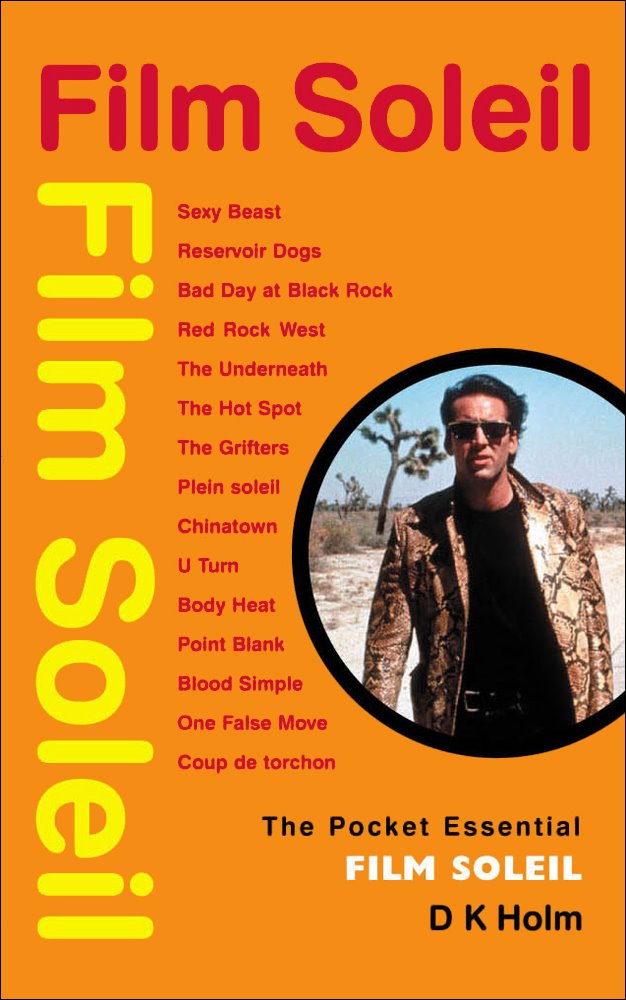
On the subject of the current state of film criticism, one of the best sources for insight, as well as gathering further sources on the subject, has been Andy Horbal on his blog No More Marriages. And “(one) of the best regular movie critics in North America”, D.K. Holm, stays down on the farm and interviews himself in his terrific piece entitled ”Something New Under the Sun”, which originally appeared on GreenCine’s main Web page. Holm also provides a fascinating glimpse into a story which is continuing to unfold in Portland, Oregon:
”In the latest chapter of a long and evolving business tale that might make an interesting movie in itself, Nike co-founder (and current chairman of the board) Phil Knight announced on Wednesday that he plans to build an animation movie studio on a 30-acre "campus" in Tualatin, an upscale suburban area outside of Portland, Oregon. In his Oregonian story on the announcement, Mike Rogoway notes that the move underscores "the scale of Knight's filmmaking ambitions as Nike's founder tries to leverage the fortune he built in footwear into a movie studio that can hold its own against the established animation brands at Pixar and Dreamworks.”
You can read the entirety of Holm’s piece here and link to those Oregonian stories as well.
Green Cine Daily recently provided pointers to two fascinating pieces on one of the most controversial movies ever made (a title somehow left out of Entertainment Weekly’s recent survey), both appearing in the latest issue of the online film journal Light Sleeper. According to Light Sleeper editor Saul Symonds:
“The first article is a roundtable between myself, David Ehrenstein, and Noel Vera. The second article, , was written a few months after this roundtable and picks up on several issues that were forming in my mind by the end of that discussion. I initially submitted this article to POSITIF whose editors’ replied, “We got to the conclusion that the subject of your text really doesn’t fit POSITIF tastes. Almost everyone here hates Salò, and not many are keen on Pasolini's last films in general.” I fully understand their position and their lack of fondness for Salò. I have to admit that I’m not particularly fond of it either. But in the end, I believe that a critic has a responsibility to discuss films by directors’ of Pasolini’s stature, regardless of their personal misgivings or opinions as to the film’s ultimate value.”
Also in the new issue of Light Sleeper is Aaron W. Graham’s review of Manoel de Oliveira’s A Talking Picture. Aaron is a good friend of SLIFR and one of its earliest regular readers and supporters, as well as heart and soul of his own blog, More Than Meets the Mogwai, and it’s my pleasure to lead you to a sample of his fine writing and observations about Oliviera’s newest film which, even at the director’s age (96), might not be his last. (Robert Altman, take note.)
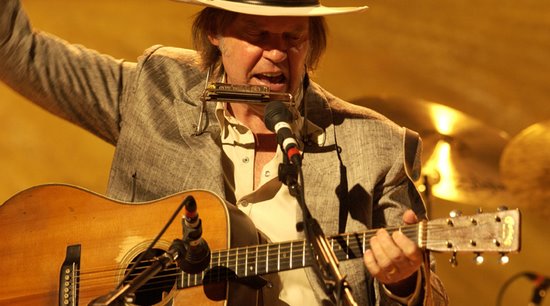
Speaking of friends of SLIFR, one of the best and brightest is That Little Roundheaded Boy who, on his eponymous site, has been on a bit of a creative tear of late. He’s already got a lengthy consideration of Tony Scott posted since I last checked in, which I haven’t had the chance to check out yet. But TLRHB has some greatstuff that I Have read which I just gotta let you know about. On the very day I bought the DVD, he posted thoughts on Jonathan Demme’s concert film Neil Young: Heart of Gold, which he calls “the most moving and surprising film experience I've had so far this year.” And when TLRHB says it, I tend to believe it. Also near and dear to my heart is a recent post of his on the cult film extraordinaire Two-Lane Blacktop, in which he makes a sobering observation that really hit home for me:
“Why is this movie so good, yet so limited in its appeal? On the surface, it cer tainly fits J. Hoberman's summation of it as a film constricted by "aching landscapes and inert characters." I wouldn't argue with that, but I think it plays to the type of viewer who enjoys the challenge of filling in a filmmaker's intentionally blank spaces. And one who enjoys the feel and texture of '70s genre romanticism, a time when the audience for the drive-in and the art house were practically interchangeable. The movie is clearly an attempt to rip off Easy Rider with cars instead of bikes, and to capitalize on the "alienated youth" market (A side note: I was thunderstruck again by the difference in what youth film culture meant then as opposed to today. Today, the youth market is practically infantile in its enthusiasms, while youth then was assumed to be much more nuanced and sophisticated.)”
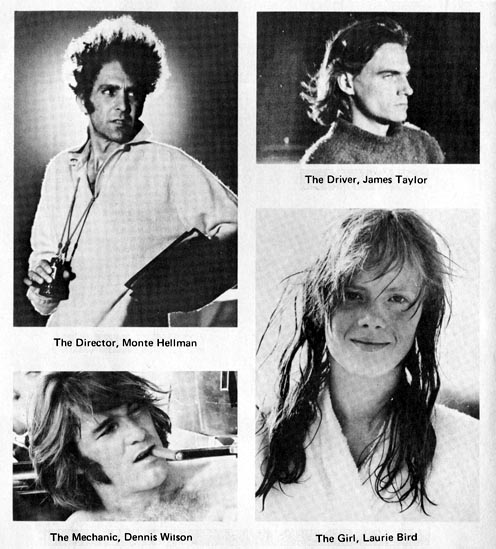
(On another side note, to add to TLRHB’s typically fine consideration of Monte Hellman’s movie, here’s a reprint of an article I remember reading in a free magazine I picked up in a theater in 1971 that talked about Two-Lane Blacktop in some detail.. This was the first time I’d ever heard of the film. It would be years between reading this and my actually seeing the movie, a period of time during which the movie attained a sort of mythology in my mind that, because it was the kind of movie is was, did not necessarily deflate when I finally encounter the actual thing.)
And that’s not at all. That Little Roundheaded Boy also recently posted a thoughtful appreciation of the forgotten Raider of the Lost Ark, actress Karen Allen, that will snap into focus all those fuzzy, half-remembered reasons why you loved her in Raiders of the Lost Ark and National Lampoon’s Animal House and The Wanderers, and will get you wondering all over again why she never became a big star.
I think That Little Roundheaded Boy has got one of the best movie and pop culture blogs going right now, and I have a feeling he’s just hitting his stride. Stop waiting for articles like these from me to get over and find out what he’s got cooking. Just click him, bookmark him, and drink deep on a regular basis. It’ll be good for you. Trust me.
And finally, for those interested in the Chatsworth School of Filmmaking, writer Rodger Jacobs, who once made his living penning screenplays in the none-too-cozy world of hard-core cinema, offers a suitably raunchy and jaw-dropping take on a day in the life of shooting a porn film in his short piece entitled (and it’s called this for a very good reason) ”She’s Not Clean.” (Seriously, if you lack a taste and/or tolerance for graphic imagery, you might want to think twice about clicking on this link. But then think again three times, because Rodger is a really good writer and the story is agonizing, pretty damn funny, and full of the kind of observational nuance that can only be provided by somebody who’s been there and has the eyes and the ears to tell it the way it should be told.)
So goes this edition of the SLIFR Weekend Reading List. I hope your printer has lots of paper ready to go. Have a grand weekend. Lots of good stuff on the horizon for these pages—hopefully a goodly portion of it will go from distant silhouette to sharp, bright relief next week! Stay tuned!
Before too much more time passes, I’d just like to say thank you to Vanity Fair contributing editor and cultural critic James Wolcott for being so kind as to feature this blog not once, but twice in recent weeks. Not only is it nice to be noticed by such a talented writer, but the link on his blog has directed some awfully well-spoken and interesting folks to these parts, many of whom have left some terrific comments beneath the twoarticles under consideration. I only wish that the e-mail address on Mr. Wolcott’s blog was functioning. I’ve got a very appreciative letter I’d like to send his way. One more post like the other two and I’m gonna have to start believing he’s really paying attention to what’s going on here!
Over at Scanners, Jim Emerson has so much good stuff posted just in the last week that the blog virtually defines “embarrassment of riches.” (And I’m not saying that just because he had kind words to say about both my and That Little Round-Headed Boy’s adventures when we both recently headed Beyond the Valley of the Dolls.)
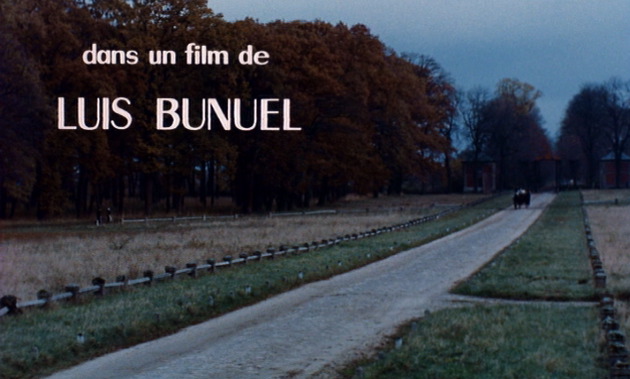
For example, a few days ago Jim posted a spectacular visual argument for the connection between Jonathan Glaser’s brilliant film Birth and the Luis Bunuel masterpieces Un Chien Andalou and Belle de Jour.
Then, right on the heels of that meaty and nutritious exercise, came Movies 101: Opening Shots Project, in which Jim runs down his philosophy of the important of the opening shot of a movie and delivers a brilliant exegesis of Barry Lyndon’s opener as his primary example:
"Any good movie -- heck, even the occasional bad one -- teaches you how to watch it. And that lesson usually starts with the very first image. I'm not talking necessarily about titles or opening sequences (they're worth discussing, too -- but that's another article); I'm talking about opening shots. As those who have been reading Scanners (and my Editor's Notes on RogerEbert.com) know, two of my cardinal rules for movie-watching are:
1) The movie is about what happens to you while you watch it. So, pay attention -- to both the movie and your response. If you have reactions to, or questions about, what you're seeing, chances are they'll tell you something about what the movie is doing. Be aware of your questions, emotions, apprehensions, expectations.
2) The opening shot (or opening sequence) is the most important part of the movie... at least until you get to the final shot. (And in good movies, the two are often related.)
I think my favorite opening shot of all time is probably from Stanley Kubrick's masterpiece, Barry Lyndon. Why? Because it is gorgeous, it's preternaturally funny, and it tells you everything you need to know about how to watch Barry Lyndon, one of the greatest movies ever to grace our planet."
The opening shot of Stanley Kubrick's Barry Lyndon
Not only has he got me clamoring to see Barry Lyndon again, at the end of the piece he throws down the gauntlet and asks for submissions of brief descriptions of other opening shots, the best ones to be published on his blog probably beginning sometime next week. (Remember, if you submit an opening shot description, it has to be of the opening shot only, not of an opening sequence—I was all ready to send in a take on the opening sequence of P.T. Anderson’s Punch-drunk Love until I caught myself. It’s back to the drawing board for me. But fear not-- I’ve got a couple of other lively candidates…)
And as if that isn’t enough, Jim’s latest post is a very challenging Opening Shots Pop Quiz which is guaranteed to shine up all the cogs in your moviebrain by getting them all whirring and meshing at top speed. At first glance, I’m only sure of about two out of 15, and I’m not at all sure I’m willing to risk humiliation by being able to guess only two correctly. I may have to spend a lot more time this weekend staring at those screen grabs. My guess is, if you check out Jim’s quiz, you will too.
"Please do not adjust your set. The white bars at the top and bottom of your screen are necessary to present Rod Steiger's tattoos in the aspect ratio originally intended by the director of the film."
Warner Home Video has done it in the past, and they’re at it again. They’ve got another DVD Decision campaign underway, in which you can cast your vote among a “select” group of films, the votes getting the most votes being the ones to next be released from the massive Burbank vaults and get the Warner Home Video treatment, which has come to be known, with good reason, as second only to the Criterion Collection in terms of excellence in the presentation of its classic titles. DVD Decision 2006 is a joint promotion from Warner Home Video and Amazon.com in which movie fans can vote online for 30 catalog candidates from the Warner Bros. Studios library, 10 of which will then be released on DVD. Voting will occur at Amazon.com during the month of June 2006.
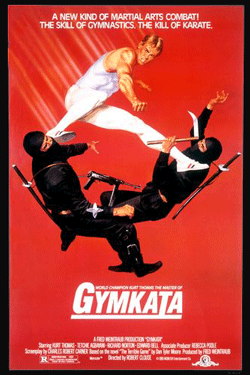
I cast my votes for: Gymkata, a patently ridiculous action picture that I remember being about 50 times as entertaining as I had any right to expect; The Illustrated Man, which I’ve never seen outside of the CBS Friday Night Late Movie back in the mid ‘70s; Band of Angels-- the more Raoul Walsh the better;Angels in the Outfield, a much better movie than it’s smelly Disney remake would ever lead you to believe; April in Paris, a Doris Day-Ray Bolger musical which I’ve never seen, but voted for on the strength of the E.Y. Harburg/Vernon Duke title song alone; James Bridges’ much-maligned, definitely flawed but fascinating Debra Winger vehicle Mike’s Murder; and the one that has got me most excited, though it’s probably one of the lowest vote-getters, Tommy Smothers, Orson Welles, John Astin and Katharine Ross in the well-regarded but very rarely seen < a href=http://www.imdb.com/title/tt0068637/>Get to Know Your Rabbit, directed by Brian De Palma.
The voting continues through the end of June, so head over to Amazon.com and cast cast your ballot for the Warner Home Video titles you most want to see on DVD. And since there’s no limit to how many titles you can vote for, click off a vote for Get to Know Your Rabbit for me, would you? I bet my friends Blaaagh, Don, Peet and Jim would tip their hat to you if you did too!
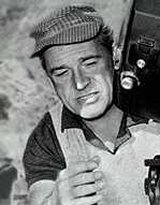
After a hard work week, I think we all deserve a little down time. I decided to spend a little of mine bringing to you what will hopefully be a continuing series, taking the corner of a page by my friend Tom Sutpen, with not a molecule's worth of his inspiration, but with an eye toward the faces, in movies and wherever I might find them, that always find fascination with me. Here then are some faces I love.
The great film critic Pauline Kael was born on this day in 1919.
And so much of who I am as a filmgoer and someone who attempts to write about movies, particularly from a personal perspective, can be directly traced back to a Saturday night in Eugene, Oregon, 1977, perhaps 1978, when I entered the Koobdooga Bookstore on 13th Street and picked up the paperback edition of Reeling. I was just looking for something fun to read, and I was certainly aware of Pauline Kael, but I had never actually read anything she wrote. That was quite a collection to start with—it covered the end of the Nixon era, from September 1972 to May 1975. As you may be well aware, an awful lot of good movies came out within that period of time, and not all of them, I would be shocked to discover, were American. For this neophyte seer and thinker, Kael provided as enthralling and infuriating a guide down the bramble-bush path of seeing and thinking about movies as anyone could have hoped for. And the joy of her writing is that, so many years later, she still does.
I remember reading her assessment of two popular actresses of the early ‘70s and thinking I’d died and gone to heaven (you’ll have to forgive me for paraphrasing, but I’m at work and the volume is unavailable to me; I’ll replace the following with the precise quote later tonight):
“Whenever I see Candice Bergen, I’m convinced she’s the worst actress I’ve ever seen. But then I’ll come across an Ali MacGraw performance, and I’ll think she’s the worst actress I’ve ever seen. Perhaps it just comes down to who you happen to be watching at the time.”
A couple of other great quotes from Pauline Kael strung together seem to say a lot about her approach, her sensibility, and the ones (like mine) she helped to cultivate:
“Trash has given us an appetite for art,” and “Movies are so rarely great art that if we cannot appreciate great trash we have very little reason to be interested in them.”
And yet she remained passionate about writing about them, even when they fell short, only ever feeling perfunctory in her task, in her colloquial art, when the movies themselves, in the mid-to-late ‘80s, became perfunctory, less and less fun to think about, let alone write about. Tonight, for her birthday, I may just pick up Reeling again and refresh myself as to just why she was so important, so vital, such a good read, and how she helped make film criticism an art.
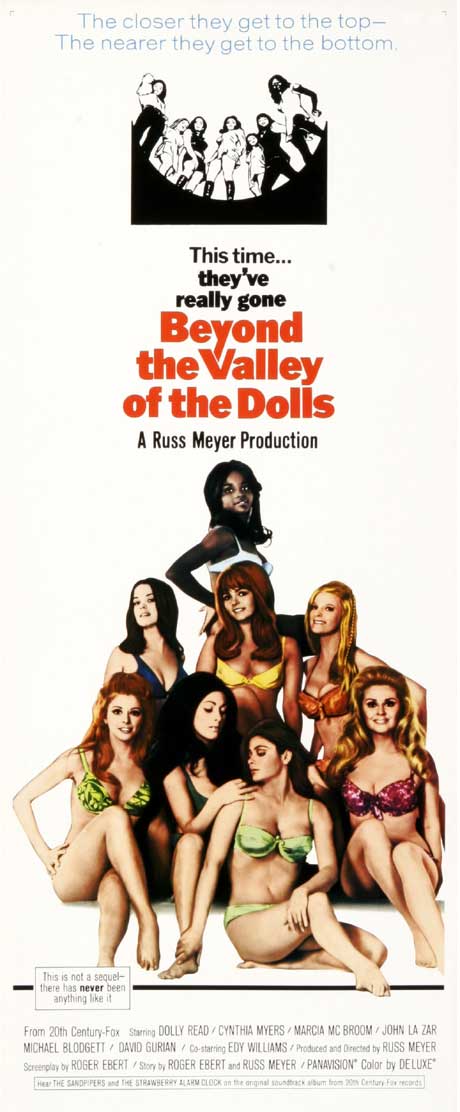
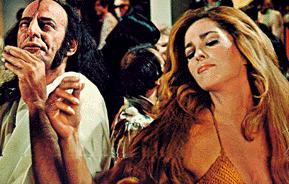
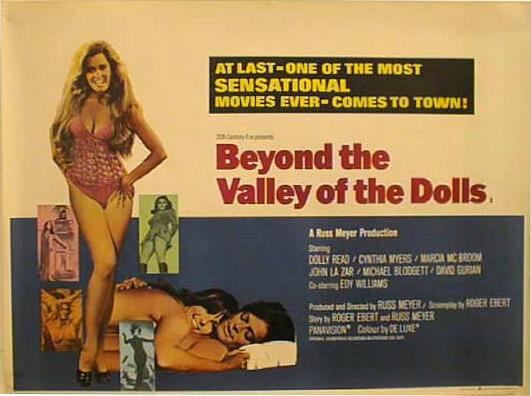
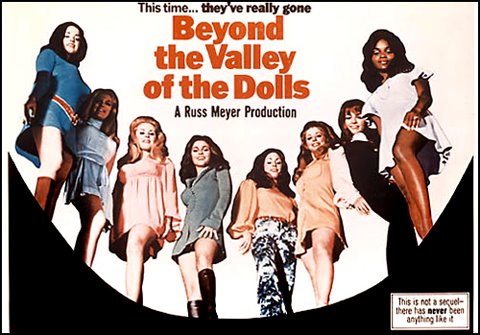
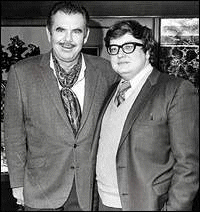
For film critic Roger Ebert, to his everlasting credit, being the screenwriter of Russ Meyer’s Beyond the Valley of the Dolls has never been anything but a badge of honor. The young film reviewer had been writing a year or so for the Chicago Sun-Times when he read an article in the Wall Street Journal which considered at length, and with some degree of seriousness, Meyer’s career and stature as a pop artist. Ebert wrote a letter to the paper praising them for their effort, a letter which was read by Meyer. Soon after, the director contacted Ebert and they became friends. After rejecting two attempts by Jacqueline Susann to sequelize the hit movie Valley of the Dolls, spun from her own best-seller, 20th-Century Fox turned the project over to Meyer, whose sensibility they thought might creatively spark the process of squeezing another movie out of Susann’s tempest-in-a-teapot. Meyer, in turn, asked his friend Ebert to write the screenplay, figuring that no legitimate screenwriter would ever be able to work with him. But when the movie was released in the summer of 1970, though it ultimately made back its $900,000 budget ten times, audiences, who might have been expecting a more straightforward follow-up to the creaky, self-serious 1967 original, seemed confused and put off by Beyond the Valley of the Dolls. (Imagine the level of their confusion when the movie started out with a title card that spelled out, in no uncertain terms, that what they were about to see was emphatically not a sequel to Valley of the Dolls, but instead an original work connected to the first film in name only.) And though the movie did receive the occasional favorable review, the mainstream press was largely dismissive. In fact, one of the most caustic reviews Beyond the Valley of the Dolls received came from none other than Gene Siskel of the Chicago Tribune, who made a point of roasting the work of the movie’s neophyte screenwriter. In the late ‘70s and mid ‘80s, Siskel would even, on occasion, use the film’s supposed substandard quality as a club with which to bludgeon his colleague’s taste on their televised movie review program.
None of which ever seemed to bother Roger Ebert. He’s always stood by the film he created with Russ Meyer, either good-naturedly joking about it or relaying with enthusiasm stories about its production and increasing stature as a cult phenomenon, and as an unsung artifact of genuine artistic achievement mined from the early ‘70s, the “golden age” of American cinema. And now it seems that time, and film critics and film audiences, may finally have caught up with Ebert and Meyer. Last week’s DVD release of Beyond the Valley of the Dolls (in tandem with the straightforward Mark Robson-directed 1967 adaptation of Valley of the Dolls) provides a chance to see the candy-colored Panavision psychedelia, the free-associative montage, and the unbridled energy that powers Meyer and Ebert’s play(boy/Pent)house sensibility to greater advantage than it has probably ever been seen. The movie, which truly is no sequel at all to Valley of the Dolls, takes the previous film’s story of sex, drugs and stardom (and the inevitable crash that follows) as its template, adds the crucial element of rock and roll, and uses it to gently (and sometimes not so gently) satirize the whole idea of seeking fame and fortune in Hollywood, not to mention movies about seeking fame and fortune in Hollywood. The plot reads deliberately familiar. A girl rock-and-roll group on the prom-and-wedding circuit (Dolly Read on lead guitar and vocals, Cynthia Meyers on bass, and Marcia McBroom on drums) hit the road to Los Angeles and are taken under the hedonistic wing of the creepy, vainglorious record producer Ronnie “Z-Man” Barzell (John La Zar). He dubs them the the Carrie Nations, and soon the girls are at the center of a giddy and increasingly dizzying roundelay of sexual pairings, betrayals, jealousy and, eventually, murder. But the plot, though played very straight by the actors (and not so much by the director and writer), serves mainly as an excuse to ride the cultural wave that was cresting even as the film was being made for all the comic-satiric juice that could be squeezed from it, and for showcasing a plentiful array of Meyer-ifically busty women, all dominating, visually and in every manner otherwise, the cast of either bland, overly sincere or irredeemably corrupt males circling them in a dazed orbit.
The transfer rendered for this release by Fox Home Video is superlative—the colors pop off the screen and overwhelm you with their audacity just the way they’re supposed to, courtesy of cinematography by the usually workmanlike and stodgy Fred Koenekamp, fresh off of Patton ( !!! ), with an occasional assist from former wartime photographer Meyer himself. And if you watch any part of the movie, or all of it, with the sound off—either to listen to one of the two commentary tracks included on the main feature, or to watch the French subtitles or English SDH titles— Meyer’s fairly radical editing techniques become more apparent and appreciable. For instance, during the movie’s first big Hollywood party set piece (the one in which Z-Man delightedly exclaims, to no one in particular, “This is my scene, and it’s freaking me out!”), you might not notice, underneath the mad cacophony of squealing, shouting partygoers, the only slightly exaggerated fashions, and the driving beat of the Strawberry Alarm Clock, the razor-sharp, insistent, almost metronomic montage that Meyer uses to carve the scene up into strobe-light flashes of overwhelming experience, mirroring the disorientation that the Carrie Nations are themselves experiencing as they jump into the Hollywood scene for the first time. The whole movie is edited in a similar fashion, and although Meyer necessarily alternates the rhythms for different scenes, no one scene is ever edited in a precisely classical manner—shots never last too long, but they sometimes don’t last as long as we expect they might, and the Panavision frame is always subject to the intrusion of an unexpected flurry of evocative, and sometimes not entirely thematically connected imagery which keeps us laughing, but also serves to keep us slightly on edge. Perversely, however, when the movie takes us up to and over that edge during the bizarre horror-film denouement staged at Z-Man’s isolated estate, Meyer shifts into a much more rhythmically smooth and familiar style of editing, as if to say the sudden assurances of his style are no assurances at all up against the lurid, unmoored and genuinely shocking horrors that lie in wait for the characters, and for us.
The second disc in the two-disc set has lots of delicious extras, including an above-average “making of” documentary entitled “Above, Beneath and Beyond the Valley: The Making of a Musical-Horror-Sex Comedy,” an excellent piece on the music of the film, featuring interviews with songwriter Stu Phillips and the original singer who dubbed Dolly Read’s vocals, Lynn Carey, original screen tests, two other original featurettes, and an exhaustive set of photo galleries. The behind-the-scenes material is well-populated with many of the participants in the film, including Read, Myers and McBroom (to all of whom, it must be said, nature and time have been very kind), Harrison Page (McBroom’s straight-arrow boyfriend in the film), La Zar (who also provides an unsettling introduction to the bonus materials section) and B-movie queen Erica Gavin, who gained a measure of fame and notoriety as the star of Meyer’s popular hit Vixen (1968) and whose last film was Jonathan Demme’s Caged Heat (1974).
(Meyer himself died in 2004, and the disc also suffers from the absence of Edy Williams, the statuesque sex queen/self-promoter who Meyer married just after production on BVD wrapped, and who also starred in Meyer’s ill-fated adaptation of Irving Wallace’s The Seven Minutes, as well as about 20 years’ worth of photos from the Cannes Film Festival, where her nude frolicking was a fixture for many years.)
There are two audio commentaries on the feature disc, one of them a very entertaining, party-atmosphere type affair which reunites Read, Meyers, McBroom, Page, La Zar and Gavin. But the real treasure of the Beyond the Valley of the Dolls DVD, aside from the movie itself, is the other audio commentary, recorded by Roger Ebert. The track is one of the best I’ve ever heard— Ebert neither denigrates the film or his contributions to it, nor does he inflate the experience and the film beyond recognition. It is, first and foremost, an excellent opportunity for a learned observer of film to relate his own firsthand experience in making a Hollywood film (even one as relatively outré as this) and to shed some personal light on the public image of one of cinema’s most notoriously ribald and unrepentant filmmakers.
Ebert’s account of his relationship with Meyer and his observations about his character—he often extols Meyer’s professional loyalty and romantic monogamy during the 109-minute running time of the commentary—are fascinating insofar as they run counter to the perceived image of the man from interviews and, of course, the films themselves. They are also unexpectedly moving, and Ebert’s genuine sense of loss in the shadow of Meyer’s death, one not yet two years in the past, runs silently underneath his comments as a mournful subtext. But lest it be portrayed as some sort of wake, the commentary is more readily exuberant in Ebert’s many stories of his adventures with Meyer making the movie, and his sincere appreciation of what Meyer brought to the table in terms of film craft, artistic acumen and, yes, even feminist sensibility.
Ebert reminds those who were unaware (and those who insist on Meyer as a purveyor of zeppelin-centered misogyny) that it was the feminist film critic B. Ruby Rich who first stepped to the plate and defended Meyer on feminist grounds, stating that, despite the obviously pleasing and curvaceous graphic qualities with which they imbued Meyer’s films (and for which they were most likely hired), the fact is that, from Tura Satana to Erica Gavin to Edy Williams to Kitten Natividad, Meyer’s films were almost always about the power of aggressive women over their equally caricatured male counterparts, who were usually represented as sincere but dull-witted beefcake, clueless, weak-kneed milquetoasts or sometimes even misanthropic murderers. (However you feel about the increasingly worn argument about women owning their sexuality in films, it has its roots in Rich’s observations about Meyer’s films, and it’s an observation that came from a time when the notion of owning one’s sexuality as a means to power had some real sociological meaning and was not so conveniently used by some pretty powerful women-- and men-- as a rationalization for their own tendencies toward exhibitionism.)
Meyer and his films were, according to Ebert, “in the sex genre, but not of it.” He makes the revealing observation here that sex in a Meyer film is less erotic than it is more like the roaring and crashing of a destruction derby, as likely to be interrupted by incongruous imagery or bizarre camera angles than enhanced by sexy lighting or mood music. (At one point Read and Michael Blodgett are seen lying on a bed from a low angle through a transparent mattress—their naked bodies visible through bare bed springs upon which they are apparently, for this shot only, laying in assumed discomfort.) Ebert believes that it was this famous breast obsession and his boundless taste for sexual subject matter that kept Meyer alive and flourishing as one of the premier and genuine American independent filmmakers. Sex was a primary Meyer field of interest, but it was also a vehicle for approaching social satire. And sex sold. The fact that the returns on Meyer’s inexpensive films were always far greater than their budgets insured that he could keep control of what it was he wanted to do and make sure the film reflected exactly what it was he wanted it to be. And even though the ratio of nudity and lovemaking scenes in Beyond the Valley of the Dolls is relatively low compared to some of the director’s other films, it could be the work of no other director and serves as a giddy compendium of his concerns.
However, Meyer did not operate in a vacuum. Ebert explains that Meyer was, as a director-writer, probably most influenced by the rampant pneumatic exaggeration and corny humor loose in the universe of Al Capp— in fact, the critic cites Li’l Abner as a direct influence on the only other completed Meyer-Ebert collaboration, Beneath the Valley of the Ultra-Vixens. But even more than the spirit of Al Capp (which was, in Ultra-Vixens, mixed-up to great effect with a spirited take on Thornton Wilder as well), Ebert points out several times during the commentary just how old-fashioned and pictorially simple, yet not simpleminded, Meyer’s visual grammar is, and he compares it (while terrific examples of what he’s saying run past on the screen) and the performances in the film to those of the silent cinema. Ebert doesn’t use this evidence—lap dissolves, contrapuntal imagery existing within the same frame to establish character relationships outside of the narrative, exaggerated movement and very straight line delivery, or even that montage style, which Ebert says positions Meyer in his mind as the logical heir to Sergei Eisenstein— to somehow inflate Meyer to the status of an Eisenstein or a D.W. Griffith. Instead, he merely points it out to emphasize how enraptured Meyer was by the simplicity of pure storytelling techniques, regardless of whether they were “hip” or not, and leaves us to discover on our own just how much more than single-minded, raucous soft-core pornography Meyer’s films could be because of those techniques.
Ebert’s audio commentary on Beyond the Valley of the Dolls is extraordinarily relaxed. It achieves with apparent ease the kind of intimacy that you just know others who attempt this format would be exceedingly jealous of; this is undoubtedly due to Ebert’s level of comfort with speaking and his ability to arrange his thoughts coherently and with momentum. But he also brings to the track that elusive just-you-and-me-sitting-around-talking vibe to the proceedings—not a slight achievement, considering the commentary is a solo act—and he is remarkably unguarded when it comes to some of his personal observations. He says he always wondered whether Fox wasn’t ashamed of the movie, not only during its theatrical run, but in the time since that release (the movie has never, until now, been very easy to see), and he admits he always thought it might make a good Broadway musical. (Stranger things have happened on this front, like the stage musical version of Carrie.) And the tunes performed (lip-synched) by the Carrie Nations are genuinely terrific pop gems-- even my four and six-year-old daughters love to sing along with "Come with the Gentle People," "In The Long Run" and "Look On Up From the Bottom." (No, they haven't seen the movie. I play the soundtrack CD for them in the minivan. Please reconsider calling Children's Services.)
Press play to see the "Come With the Gentle People" montage from Russ Meyer's Beyond the Valley of the Dolls
He also reacts with bemusement over inserting the 20th-Century Fox theme music over the graphic beheading of one of the film’s main characters (“How we got away with that is something I’ll never understand”) and addresses one of the mysteries surrounding Beyond the Valley of the Dolls that has always concerned me—the credited appearance, but apparent absence, of Pam Grier. BVD is, according to IMDb, the first movie in which the celebrated star of Coffy, Foxy Brown and Jackie Brown ever appeared—she’s credited during the final roll as “Fourth Woman” and is supposedly roaming about somewhere in the first big party scene. But being the Pam Grier enthusiast that I am, it’s always been a point of frustration for me that I’ve never been able to spot her in the film. And Ebert, bless his heart, can’t figure out where the hell she is either! He’s even concerned enough about not knowing where to look for her that he mentions it more than once. More than likely she was the victim of that familiar cutting-room-floor syndrome, but it is odd that even someone as closely connected to the movie as Ebert, who was on the set, has no idea how Pam (here Pamela) Grier fits into the enduring mystique of Beyond the Valley of the Dolls. (Of course, if anyone knows the whereabouts of Ms. Grier on this DVD, I’d love to know about it, and so would Mr. Ebert, I’d wager.)
Finally, the commentary track fills in some space within the mythology surrounding the infamous Meyer/Ebert film that never was, a collaboration with the Sex Pistols on a little number called Who Killed Bambi?. Ebert is brimming over with entertaining stories here regarding the film’s conception, Meyer’s and his interactions with Johnny Rotten and Sid Vicious, and the ultimate fate of the film, some of which can be seen in Julien Temple’s subsequent Sex Pistols films The Great Rock and Roll Swindle and, more extensively, The Filth and the Fury. The stories titillate curiosity about what such a collaboration might have looked like, and it’s interesting to imagine what those who thought Beyond the Valley of the Dolls was as low as pop culture could stoop might have thought about seeing Sid Vicious shooting up on screen and rendered in Russ Meyer’s vivid, lurid stylizations. But for Ebert they are also opportunities to revisit Meyer’s memory in a way that a lot of people, even those intimately acquainted with his work, might not have to capacity with which to imagine him—that is, as a creative force beyond the world of exaggerated zaftig beauties and impudent social satire, a world entirely of his own making.
Ebert ends the commentary, appropriately enough, on an even more personal note, one which reinforces his admiration for Meyer as well as pride in his own creative involvement in Beyond the Valley of the Dolls. He says that when people ask him about the movie, about what he thinks of it—the underlying subtext of the question being, how can he possibly defend such trash—he always responds that it would be inappropriate, since he is, after all, the writer, for him to review it. “But,” he says, “I will say this—unlike a lot of movies, it doesn’t bore me!” Taken out of context, that comment could be read as a coy dodge, an attempt to avoid dealing with the legacy of a director who trafficked in (some would say) sexually exploitive imagery depicting an unrealistic and degrading portrayal of female beauty and attitudes. But coming as it does at the end of Roger Ebert’s excellent, informative and entertaining audio commentary on the Beyond the Valley of the Dolls DVD, it can really only be read as an honest tribute, an expression of amazement at being involved with a movie that was once seen only as a work of ill repute and slim justification, but that has blossomed with the passage of time and actually superseded the original Valley of the Dolls, which remains a stodgy, silly and uninteresting movie, in critical estimation and cultural value. (Richard Corliss, film critic for Time magazine once called Beyond the Valley of the Dolls one of the 10 best films from 1968 to 1978, and all indications are he stands by that assessment.)
The audio commentary on the DVD for the 1967 original film features star Barbara Parkins and the E channel’s Ted Casablanca chatting cattily about the dull fashions (Parkins is saddled, as is the whole film, with a dreadful beige color palette), Mark Robson’s unimaginative, “technical” direction, and, of course, the other actors—Sharon Tate is commented upon with reverence, while Parkins greets the first appearance of Patty Duke with, literally, a hiss and a feline yowl, while Casablanca laughs. It’s a commentary that reflects the singular value of the 1967 film— that as a camp object to be denigrated and revered simultaneously—and it grows tiresome very quickly. Ebert’s commentary, however, and that of the actors on the second commentary track, reflects the richer vein of cinematic value to be tapped, and added to, in considering the historical context and significance, as a film and pop culture signpost, of Beyond the Valley of the Dolls, as well as Russ Meyer’s inventive directorial style. These are subjects worth taking notice of, and this splashy and happily indulgent new DVD package from Fox gives aficionados and virgins to the Meyer experience plenty of opportunity to indulge in them. It’s Z-Man Barzell’s line, but Meyer might have said it too, had he lived to see this digital monument to one of his most enjoyable, well-regarded movies: “Glad to see my audience in such happy dalliance. Pray, let them joust in peace!”
For further reading on Beyond the Valley of the Dolls, Cinebeats features some links to interviews with some of the movie’s stars, as well as information on a Beyond the Valley of the Dolls road tour via Erica Gavin’s official website. Meanwhile, Eric Henderson has written a informative review of the movie and the DVD on the virtual pages of Slant, and That Little Round-Headed Boy tells the story of the movie’s music in a terrific post entitled ”All Hail the Original Riot Grrrrls: The Carrie Nations”.
(Both Russ Meyer's Beyond the Valley of the Dolls (1970) and Mark Robson's Valley of the Dolls (1967) are now available on DVD at all the usual places in gorgeous two-disc Cinema Classics editions from 20th-Century Fox Home Video.)
1) I recognize the brilliance and lasting influence of certain films in the oeuvres of great directors like Jean-Luc Godard, F.W. Murnau, Hou Hsiao-hsien, Wong Kar-wai, Ingmar Bergman, Federico Fellini, Rainer Werner Fassbinder, Akira Kurosawa, Sergio Leone, Michael Powell and Emeric Pressburger, Luis Bunuel, Alexander Dovzhenko, Roberto Rossellini, Fritz Lang, Sergei Eisenstein, Bernardo Bertolucci and Werner Herzog, among many others.
2) I understand the auteur theory as a principle and see how it works to shed light on the films of some great Hollywood masters like Howard Hawks, John Ford, Billy Wilder, William Wyler, Alfred Hitchcock, Andre De Toth, Don Siegel among many others, while also accepting the fundamental truth of movies as a collaborative art form.
3) I appreciate film criticism as an art unto itself, to be cultivated and practiced in response to works of art, commerce, and those that are both, and I place high value on the writing of its most renowned practitioners, including Pauline Kael, Andrew Sarris, J. Hoberman and Manny Farber, among many others.
4) I think a great work of cinematic art, and sometimes even movies that fall far short of that high-water mark, can speak to the soul as well as to the mind and the heart.
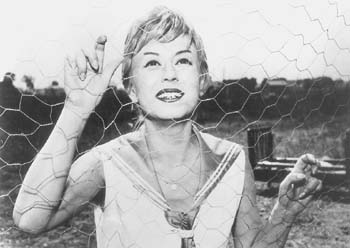
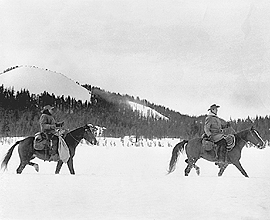
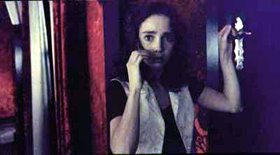
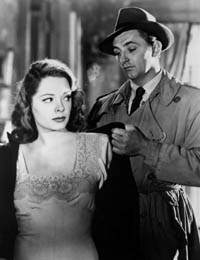
5) And I think in genre filmmaking-- westerns (like Andre De Toth's Day of the Outlaw), film noir (like Jacques Tourneur's Out of the Past), horror films (like Dario Argento's Suspiria) and comedies (like Bertrand Blier's Buffet Froid)-- we can find some of the greatest movies, not only in American cinema but in world cinema as well.
The assertions seen above are not the basis of some belated and unnecessary mission statement for this blog, nor will they be used as the foundation for making me sound smarter than I am or for any ridiculous rogue theorizing on my part that would shame the memory of the work of the great artists whose names I have invoked.
No, actually, it’s all just some proactive reassurance from me to you designed to calm your understandable desire to perhaps flee this blog forever, never, ever to return, when I reveal that I’m really looking forward to seeing this— yes, I’ll say it— this film:
God help me, but September 22 just can’t get here fast enough.
Well, hell, the month of June is almost halfway over already, but there’s still enough happening wherever Turner Classic Movies shows up on your cable or digital satellite system to take a belated stab at looking at some highlights. For instance, there's a 100th-birthday celebration for Billy Wilder scheduled on June 22 that will definitely be of interest to Wilder scholars as well as more casual fans of the great writer-director. But more on that later. There are plenty of other gems to keep us all occupied until then, and for several days after too.
The rather wonderful network has its “Leading Ladies” programming running Monday nights this month, a 50-film tribute celebrating the likes of Lana Turner, Bette Davis, Joan Crawford, Katharine Hepburn, Grace Kelly and several others—a tidy little repackaging, in other words, of TCM standards like The Postman Always Rings Twice, Jezebel, Mildred Pierce, Bringing Up Baby and other titles, all well and good, but none too rare in the channel’s rotation. The series is also conveniently tied to a new book entitled Leading Ladies: The 50 Most Unforgettable Actresses of the Studio Era, with a foreword by TCM’s Robert Osborne and an introduction by esteemed critic Molly Haskell.
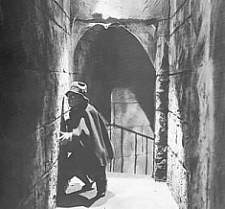
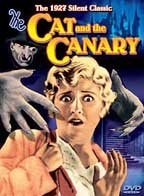
TCM gets more interesting in June the further traveled off the rails you get. In the unlikely event that the only Charlie Chaplin you’ve been exposed to was courtesy of Sir Richard Attenborough, first of all, tsk-tsk,tsk, and second of all, the channel’s “Silent Sunday Nights” series has the actor-director’s classic The Gold Rush (1925) on tap for this coming Sunday night, June 18. I prefer Chaplin’s sublime City Lights to this one, but The Gold Rush really should be on the list of movies you’ve seen before you die, so use this screening as a chance to get a leg up on the Grim Reaper while laughing, and perhaps even sniffling the evening away. (Yes, this is the one where the Tramp cooks his own boot and eats it.) But there is another silent movie on tap this month that is worth exceptional note. Once a renowned art director for the legendary and massive Ufa Studios, Paul Leni also directed the influential 1924 anthology film Waxworks (Das Wachsfigurenkabinett) under the Ufa umbrella, detailing the crimes of some of history’s most notorious murderers and monsters. Soon after Waxworks was released, Leni came to America under the patronage of Carl Laemmle and Universal Studios and began a short-lived career directing high-profile films for the studio, the first of which, The Cat and the Canary (1927) gets the “Silent Movie Series” spotlight on June 25. Writer Bret Wood, on the TCM Web site, calls The Cat and the Canary “one of the finest examples of what has come to be known as the ‘old dark house’ film, a forerunner to the modern horror movie” and goes on to say:
“In films of this subgenre, a group of people are menaced by one or more shadowy figures within the confines of a gloomy mansion. Unrelenting horror was not fashionable, and the mounting suspense is occasionally spritzed with comic relief, to calm the nerves of the more delicate viewers. As chilling as they often are, the films ultimately bow to convention and negate the supernatural premises that made them so fascinating. In what might be termed the ‘Scooby-Doo Device,’ these silent thrillers almost always revealed -- in the final moments -- that the monstrous stalker is not a supernatural being at all, but a man-made hoax. Tod Browning's London After Midnight (1927) and Roland West's The Bat (1926) are two of the best-known examples.
The supernatural barrier would be broken by Browning's Dracula in 1931. Derived from a stage play (as most "old dark house" films were), Dracula followed the formula of the innocent maiden being menaced by an otherworldly ghoul, but refused to rip the mask off the villain in the final reel. This horror film was revolutionized but, as an unfortunate consequence, the more traditional "old dark house" films were rendered quaint and old-fashioned.”
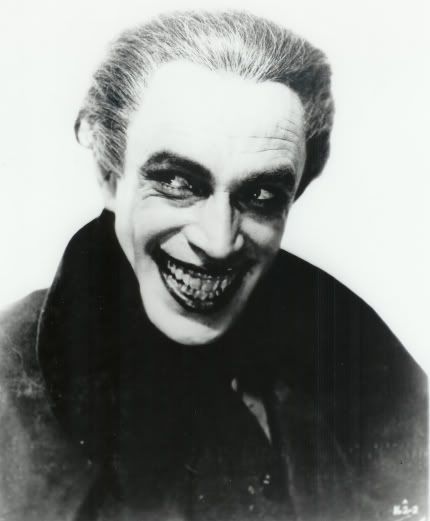
Leni was, not surprisingly, given his background in art direction and set design, a supremely confident as a director developing his own personal visual style, but he would only direct three more films, including the Conrad Veidt chiller The Man Who Laughs (a title well known to horror fans who grew up reading Famous Monsters of Filmland), before dying of blood poisoning in 1929. His output, however relatively small or truncated by disease, is worthy of more than just the passing familiarity with which most film fans, particular those of the horror genre, have with it. On Sunday, June 25, Turner Classic Movies is giving us all a chance to rectify that vague sense of Leni’s contributions to early cinema history-- The Cat and the Canary is as much of a can’t-miss as anything the channel has offered in months.
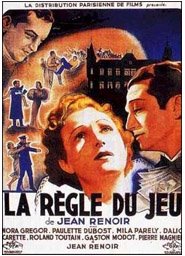
For those without access to the stunning Criterion DVD of Jean Renoir’s masterwork The Rules of the Game (1939), Turner Classic Movies offers it on Friday, June 16, at 11:00 p.m. PST as part of their “TCM Imports” series, on a double feature with Renoir’s Grand Illusion (1937) which follows at 1:00 a.m. PST. And on successive Friday nights in the same series, June 23 and June 30, you can see Sergei Eisenstein’s dense and ambitious Ivan the Terrible Part 1 and Ivan the Terrible Part 2.
This month’s selection of “Cult Movies” on TCM is about as eclectic a mix as you can get from the Turner programmers. 13-year-old Skippy Homeier recreates his Broadway performance as an Aryan youth introduced to, and bristling against some good old-fashioned American family values in director Leslie Benton’s film version of Tomorrow, the World! (Friday, June 16, 3:00 a.m.), also starring Fredric March and Agnes Moorehead. Abbott and Costello raid the Universal vaults two more times on June 18 with Abbott and Costello Meet the Invisible Man (1951) at 11:00 p.m., followed by Abbott and Costello Meet the Mummy (1955) at 12:30 a.m. Wednesday, June 21 you can catch the admittedly unspectacular Howard Hughes production The Las Vegas Story (1952). The film, directed by Robert Stevenson and featuring Victor Mature, Jane Russell and Vincent Price, has some good musical numbers, but is probably more interesting for the history of its production and its role in the history of Hollywood vs. the House Un-American Activities Committee, as described on the TCM Web site by writer John M. Miller, than its value as a piece of storytelling. You can also get up early Saturday morning, June 24 (6:30 a.m. PST), for one of my all-time favorites, Vincent Price in the colorful, campy and unapologetically gory The Abominable Doctor Phibes, in which the titular doctor (of musicology!) invites the plagues of Egypt (which he himself administers) upon the nine surgeons he holds responsible for the death of his wife. Directed by Robert Fuest, a frequent contributor to TV’s The Avengers, this is a top-drawer, droll and delicious British horror comedy which nonetheless cared the shit out of me when I was 11 and still does manage a chill or two mixed in with the black, black comedy. Finally, the month tops off with Humphrey Bogart in a screwball comedy about the movies-- Stand-in (1937), directed by Tay Garnett. This little number is an unknown quantity to me, and one that I don’t want to let slip by. There’s another juicy article, this one by writer Brian Cady, that should fill in the blanks on this fascinating-sounding title. Co-starring Leslie Howard and Joan Blondell, Stand-in shows June 30 at 3:15 a.m. PST.
Finally, two major directors are the focus of the white-hot spotlight this month on Turner Classic Movies. Twenty-two films from director Anthony Mann are spread out over the Tuesday nights of the month. So if you’re depending on me for to be your sole guiding light (a mistake!), that means that just tonight you (and I) missed The Great Flamarion (1945), Desperate (1947), the first of Mann’s celebrated series of film noir classics, Side Street (1950), Sing Your Way Home (1945), He Walked by Night (1948), a crime thriller with a distinct documentary edge that, though officially directed by Alfred Werker, is typically credited by film scholars to Mann, and Frances Langford as The Bamboo Blonde (1946).
But that means there’s still two Tuesdays left in June to soak in the vision of this director, who started out creating some of the bleakest of film noirs, then moved to his most popular incarnation as the director of a series of equally bleak psychological westerns starring the likes of James Stewart, Gary Cooper and Robert Taylor in the 1950s. The latter is featured on June 20 in one of the director’s early westerns, Devil’s Doorway (1950); that same Tuesday TCM offers Mann’s masterpiece Man of the West (1958), just as fundamental and exploratory a look at the Western mythology as its rather sweeping and yet specific title suggests; Glenn Ford and Maria Schell in Cimarron (1960); The Fall of the Roman Empire (1964); and The Black Book (1949).
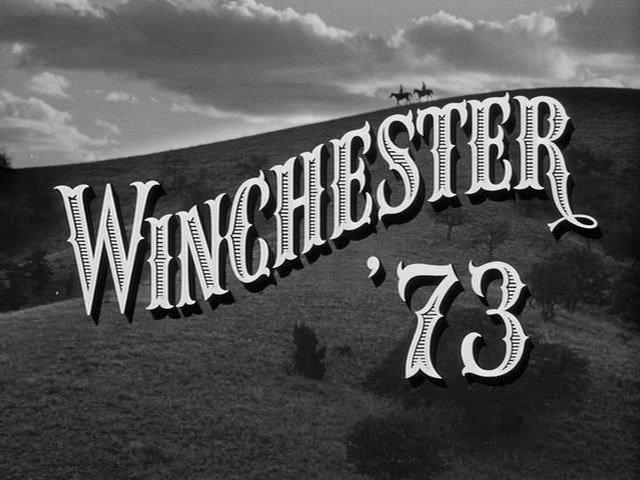
And on June 27 TCM brings out the big guns, the Anthony Mann/James Stewart collaborations. Personally, I would have traded the broader strokes of The Far Country (1955) for the more precise characterizations and spectacular visuals of Bend of the River, the Anthony Mann masterpiece not on Turner’s bill, for some reason. However, there is the sublime progression of Winchester ‘73 (1950) and the rage of The Naked Spur to distract from that particular (and rather large) void. Not to mention Thunder Bay (1953) and the last Mann/Stewart western (of a sort), 1957’s Night Passage, the directorial reins of which were handed over from Mann to director James Neilson after Mann and Stewart disagreed about the quality of the script (guess which one disliked it). The next two Tuesdays are a virtual film school in powerful, yet unassuming directorial style, courtesy of the films of Anthony Mann and TCM—I hope we can all manage to match as many of these pictures as we can. Most of them are familiar ones in the Turner rotation, but to have them all in a bunch for once, the better for comparing and contrasting and simmering in Mann’s bitter, brutal sensibility, is a rare treat indeed.
Finally, I imagine it’s probably never occurred to anyone to ask, either casually or academically, but what do directors Volker Schlondorff (The Tin Drum) and Cameron Crowe (Almost Famous) have in common? On the surface of it, it wouldn’t appear to be much. But it turns out they both have a vested and close to obsessive interest in and appreciation of the films of Billy Wilder. Several years ago Crowe published his extensive book of interviews with the director, detailing his own stubborn efforts to ingratiate himself to Wilder and gain his confidence as well as their lengthy, fascinating talks. Now director Schlondorff’s documentary, Billy Wilder Speaks, edited down to feature length from a three-part German TV series, is ready to reveal its makers own interests in and obsessions with Wilder’s work. The documentary will bow on Turner Classic Movies on June 22, the day Wilder would have celebrated his 100th birthday, and it should be fascinating to those familiar with Crowe’s book to contrast the approaches of these two radically dissimilar students to the legacy and the presence of the master Wilder. Schlondorff’s documentary is part of a mini-retrospective of Wilder’s films programmed all day on June 22 to celebrate the director’s birthday-- it kicks off the series at 5:00 p.m. PST, and it will show again at 8:00 p.m., immediately after Double Indemnity (1944) a 6:30 p.m. Ray Milland’s Oscar-winning performance in The Lost Weekend (1945) screens at 10:00 p.m., followed by Sabrina (1954) at midnight, A Foreign Affair (1948) at 2:00 a.m., Sunset Boulevard at 4:00 a.m., and a real treat at dawn—the astringently wonderful, weird and rarely seen The Private Life of Sherlock Holmes (1970), showing at 6:00 a.m. Friday morning, June 23. Happy birthday, Billy Wilder!


 Posts
Posts




 When next you visit Chavez Ravine, raise a mustard, relish and onion-covered masterpiece in remembrance of Thomas Arthur, the creator of the Dodger Dog, perhaps the most recognizable baseball park food item in the game’s history, who passed away in St. Louis on June 8. And though many debate just how good the Dodger Dog is, especially in comparison to dogs and sausages available at other stadiums around the country (not me—I love ‘em), at least one person of exceptional taste championed them, and in print, no less-- horror star/gourmand
 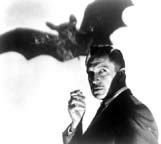 Vincent Price was a big fan of Mr. Arthur’s creation and included the Dodger Dog in his very own, very popular cookbook.