Posts
Posts




IT’S MY TOP TEN HORROR MOVIES LIST, AND I’LL VIOLATE MY OWN NUMERICAL RESTRICTIONS IF I WANT TO (with apologies to Leslie Gore)
 In the spirit of the holiday, these are the top horror movies that I think of when I want to face the demons within, flirt with the idea of teetering on the precipice of madness, or just maximize the acreage of goose flesh upon my arms and legs and get as many cheap, dirty scares as my fragile brainpan can process. Here, then, are 10 (14) sure to churn you and burn you, my favorite horror films, laced with enough asides to get you thinking about other movies that might inspire just as many frights, should these not sate your need for nightmares…
AUDITION (2001; Takeshi Miike)
 Many of the films on this list made an impression on me in my formative years, when I was discovering the various pleasures of getting scared out of my skin. Seeing them as an adult requires a certain leap of nostalgic faith that somehow I’ll be transported, or at least vividly remember, the states of shock the individual movies were once able to put me in. But being reduced to a shuddering, gelatinous puddle is a tougher condition to slide into when you’re a rational 43-year-old grown-up. Enter Audition. A gentle, decent widower, who is also a TV producer, contrives a fake audition in order to meet a woman who can drag him out of his depression and back into romantic fulfillment. But the shy, demure young thing he falls for may or may not be holding some awful secrets that may or may not lead to a pretty grisly session on the floor of his apartment involving a hypodermic needle, some piano wire and—Well, a good portion of the art house crowd with which I saw this movie, folks who presumably knew of at least some of what they were in for when they paid to get through the front doors of the theater, never made it that far. I’ve never seen so many grown, presumably well-adjusted people flee for the exits before a movie was finished. Part domestic drama, part treatise on sexual relations (particularly as they exist in modern-day Japan), part feminist revenge fantasy, part psychosexual fantasia, this movie rattled me more than any other in recent memory. The midnight walk from the theater lobby to the potentially deadly parking lot after the screening never seemed so long…
THE BRIDE OF FRANKENSTEIN (1935; James Whale)
 A sequel that both satisfies expectations for a follow-up, yet simultaneously and subtly subverts them, adding sly commentary and mordant wit to the mix and expanding gloriously upon the minimalist poeticism of the original Frankenstein (1931; also directed by Whale). Young horror fans reveling in Universal Studio’s grandiose monster visions may have experienced, as I did, an extra frisson of familiar terror when the bride, on first laying eyes upon her intended, unleashes her infamous hiss, sending Karloff's pitiable creature into a spiral of rejection that ultimately results in the destruction of the castle and (until Son of Frankenstein anyway) an end to the grotesque manipulations of nature that were Dr. Frankenstein’s specialty. No, I never brought down the house over it, but I sure felt a strange empathy for that rejected monster at the end of this movie, one that made me realize how much more this movie had added to what could have been just another saga of a rampaging creature on the loose.
THE BROOD (1979; David Cronenberg)
 When I first saw this movie, alone, late at night, alone in an old country house, watching on a rented Beta tape back in 1984, I thought it was almost unbearably frightening. Now, in 2005, as a parent of two, I don’t know if I’ve got the nerve to see it again. Psychoplasmics… Oliver Reed… rage made flesh… and Samantha Eggar as an essential element of some of the most disturbing body horror imagery ever put on film. This is Cronenberg’s first masterpiece, and in it are the seeds of some great work to come ( The Fly, Dead Ringers, and his adaptations of The Dead Zone and Naked Lunch). An essential nightmare.
CARRIE (1976; Brian De Palma)
 Speaking strictly as an interested observer, this could be the greatest movie (the only movie) about the horrors of menstruation ever made. De Palma also intertwines Stephen King’s somewhat crude text with deft high school satire, a heart-stopping empathy with Carrie White’s fear of rejection, soft-core pornography, perversely entertaining cross-breeding of Christian iconography (gothic Catholicism gets all twisted up with Pentecostal frenzy) and the most teasing, agonizingly drawn-out climax ever filmed. All this, and Piper Laurie too!
DEAD ALIVE (1992; Peter Jackson)

These aren’t your father’s zombies (or George Romero’s either), that’s for sure. Amazing, this literally breakneck romp of the undead hasn’t a mean-spirited bone in any of its dismembered parts, despite the incredibly high body count and creative torso dispatchment quotient. Credit for that particular high-wire act must go to writer-director Jackson, who never met a mutant baby or a disintegrating, pus-pumping zombie mom he didn’t on some level, like. Careful with that lawn mower, Eugene!
THE DEVILS (1971; Ken Russell)
 When I think of a Ken Russell movie, this is the one that sums him up for me. Based on Aldous Huxley’s The Devils of Loudon, it’s a bizarre mixture political and religious satire, history, black comedy and surrealistic flights of sexual and religious hysteria chronicling the clash between a Catholic priest, himself the object of worship by a convent of frenzied nuns, and the powerful forces of political and sexual oppression/suppression in 17th-century France. Oliver Reed is the priest who is sacrificed (over and over again) in some of the most gruesome, presumably historically accurate rituals of torture ever put on film, and Vanessa Redgrave is the hunchbacked nun who loves him blindly, irrationally, helplessly. It’s virtually impossible to see this film and think that Russell was anything less than unhinged, yet it’s strangely compelling—and serious—stuff.
FRANKENSTEIN MUST BE DESTROYED (1969; Terence Fisher)
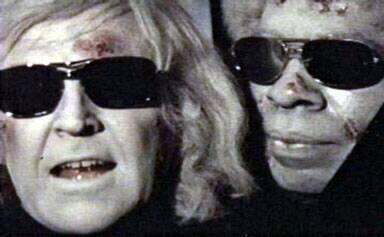
 I couldn’t go without mentioning the particular delights of the Hammer horror film, highlighted for me by Plague of the Zombies (1966; John Gilling), The Vampire Lovers (1970; Roy Ward Baker) and Frankenstein Must Be Destroyed. A midpoint entry in Hammer’s Frankenstein series, Peter Cushing’s titular doctor really started to spin off his nut in this one, and Freddie Jones was probably the series’ most sympathetically psychotic monster. But most important of all, this movie marked the first time I ever saw a decapitation on screen, at the tender age of 11, in that mecca of my childhood cinema, the Alger Theater in Lakeview, Oregon, this laying the groundwork for decades of excesses yet to be experienced.
THE HAUNTING (1963; Robert Wise)
 The quintessential haunted house movie. Every terror is overheard, insinuated, intangible, ethereal, but never seen, and director Wise gives the audience’s imagination spectacular leeway to turn the fear factor even higher. Everything this movie gets perfectly right was inverted and destroyed by Jan de Bont’s ham-handed, overly literal remake. Wise also co-directed another beautiful ghost story fantasy early in his directorial career, the ostensible sequel to Jacques Tourneur’s Cat People (1942), entitled Curse of the Cat People (1944). It’s just become available on a beautiful Warner’s disc with Cat People, or as part of Warner’s Val Lewton Horror Collection, and I recommend it highly. And while we’re on the subject of ghosts, if you’ve never seen Kenji Mizoguchi’s plaintively creepy Ugetsu monogatari, now would be a good time because, as my wife so succinctly puts it, there’s nothing like Japanese ghosts.
M (1931; Fritz Lang)
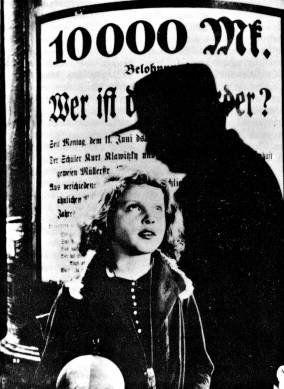 Ever wondered why the whistled theme from Grieg’s “Peer Gynt Suite” sounds so ominous and full of dread? It’s because of this movie. Frightening and complex, the movie has at its center a psychotic child molester, played unforgettably by Peter Lorre, who whistles the aforementioned tune as a come-on to his prey and a prelude to his crimes. Hunted by the Berlin underworld, the murderer is trapped by his criminal pursuers and lets loose a howl of rage upon finally being cornered that is both bone-chilling and eerily sympathetic (“I can’t help what I do. This evil thing inside me—the fire, the voices, the torment!”) Lang’s direction is dazzling, pointing the way toward the future of cinematic psychological character study, while at the same time assuring that this particular achievement would probably never be equaled.
THE PREMATURE BURIAL (1962; Roger Corman)
 One of the most neglected entries in Corman’s Poe series for American International Pictures. It can’t quite compare with the elegant, imposing terror of The Masque of the Red Death, with which it shares the bill on a terrific MGM Midnite Movies double feature DVD, but it does embrace its seminally horrifying subject matter with appropriate dread and brio. I first saw this film in junior high, around 1971—it was a treat given to my homeroom class as a reward for registering a perfect attendance record. Here we were, a bunch of 11-year-olds shepherded into a school auditorium, many of whom may have never even turned the notion of death around in our tiny little minds before, watching the most grisly, suffocating scenario imaginable play out before our innocent eyes. And this was for good behavior? What were those teachers thinking? Is it such a reach to imagine that the same teaching staff might punish serial absenteeism with a screening of The Sound of Music?
SUSPIRIA (1977; Dario Argento)
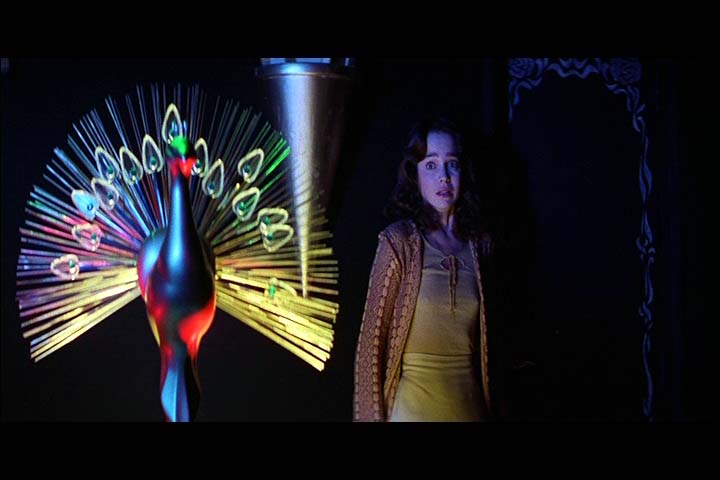 I’m not sure how I could have forgotten to include Dario Argento’s masterwork in this original post, but my buddy Steve was absolutely right to point out its glaring absence. Argento’s hellishly, garishly beautiful horror owes its effectiveness not to its standard-issue plot— wide-eyed (literally, given that Jessica Harper is the lead) innocent plunked down in the midst of a ballet school where a series of horrendous murders are plaguing the students and faculty—but to Argento’s absolute mastery of mood and visual seduction. The hypnotic musical theme burrows its way into your brain and lays the groundwork for some of the most profoundly bone-chilling moments in any horror film. This is giallo rendered with uncommon confidence, and Argento is far and away its most accomplished practitioner. Any decent director can summon fright from things that go bump in the night down dark hallways. But when Argento sets you down in the middle of a deserted piazza, with no one but a man and his seeing-eye dog anywhere within 200 yards, and convinces you you’re safe, then proceeds to grab you by the throat and tear, you know you’ve been grabbed.
 TALES FROM THE CRYPT (1972; Freddie Francis)
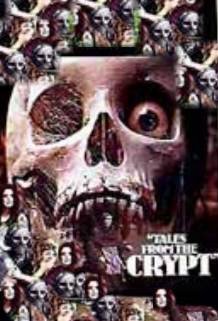 October 31, 1973. The Alger Theater, Lakeview, Oregon. My first real experience in interactive entertainment. About 25 minutes into this zesty anthology based on the E.C. Comics series, the projector stopped, the lights came up, and the rowdy crowd quieted and was subjected to the dry ire of Donald R. “Bob” Alger himself, unleashed from directly in front of the now-lifeless screen (“We have here before me, on the floor of the auditorium, a fresh egg…”) After the brief lecture’s end, 65 minutes and many more decibels of audience screaming later, came the topper. The Cryptkeeper, essayed by the late Sir Ralph Richardson, turned to the camera as the last of the unsuspecting victims lured into his chambers plummeted down the rabbit hole to hell, and intoned: “Who will be next?” One of Mr. Alger’s ushers, a high school junior by the name of Annette Winer, sarcastically replied aloud as she shuffled down the aisle, flashlight in hand: “Me!” With the timing of a precisely rehearsed comedian came Richardson’s reply: “Perhaps… you?!” The aptly named Ms. Winer let out a shriek and bolted from the auditorium in fright and, I’m sure, embarrassment, and a legend of hometown cinema was born.
THE TEXAS CHAINSAW MASSACRE (1974; Tobe Hooper)
 How can you have a nightmare centered on a movie you haven’t yet seen? Well, some two years before I actually saw this notorious shocker, I did just that—Leatherface was pursuing me down a dirt road, his Husqvarna raging and spewing noxious fumes, and I was barely able to keep two steps ahead of that lunging blade. And then I tripped… When I finally saw the movie at a drive-in in 1977, I was floored by how much the actual movie resembled my nightmare, in look, in feel… and in sound. Hooper’s movie is an amazing feat of tapping into veins of primal horror (and comedy), and the low-budget integrity of the proceedings cast a long, imposing shadow over all of its endless and shameless copies.
THE THING (aka John Carpenter’s The Thing) (1982; John Carpenter)
 Carpenter’s remake of The Thing (From Another World) hews closer to the paranoia of John W. Campbell’s original short story, “Who Goes There?”, the basis of both films. It also provides makeup maestro Rob Bottin another opportunity to break new ground with special effects, and some of his creations rank among the most Daliesque ever to be featured in a mainstream horror film. The movie itself is terrifying and appropriately downbeat, and it ranks as Carpenter’s best work. But it had the misfortune of being released during the same summer that a happier tale of alien visitation took over American movie houses, and Carpenter’s malignant vision of planetary and corporeal invasion was consequently ignored. However, time has been kinder to the movie than ticket buyers were in 1982, and its reputation as a fright classic has caught up with the enthusiasm some of us had for it back in the summer of E.T.
THE VANISHING (1988; George Sluzier)
 Sometimes the most banal face is horror is the most profoundly frightening. A couple makes a routine roadside stop at a convenience store, where the woman disappears, sending her lover on an obsessive journey to uncover her fate. Director Sluzier
 Remade thios for Hollywood with Jeff Bridges, Kiefer Sutherland and Sandra Bullock a couple of years later, but it’s the unfamiliarity of the Dutch actors in the original version that plays so brilliantly into the everyday nightmarish quality of this undertaking. The ending is a marvel of palm-sweating panic that would have caused Edgar Allan Poe to seal himself alive behind a brick wall out of sheer envy.