Sunday, January 17, 2016

THE 2015 SLIFR MOVIE TREEHOUSE #15: WHAT CAN BE DONE ABOUT OSCAR? (DIVERSITY PT 2)

And another thing! I think deep soul-level acting might not be sustainable. Maybe you need to take shortcuts to spare yourself.
I made a couple of romantic efforts this fall, both of which left me reeling, incapacitated. Just taking the lid off my emotions for a brief time seems to be something I’m less and less able to recover from. (I recently self-defined as strong, but not tough. Like a bleeding anvil.) Acting is the same thing. Here’s my heart and soul. I can’t just turn it off again when I’m done and go back to pivot tables and analyzing market trends.
Safer to be more of a Maggie Smith. Smart, edgy, self-aware. She’ll never stop being brilliant. She’s got it together. I think Saoirse Ronan could maintain a long and brilliant career, intelligent, intentional, emotional, but not unmoored. I fear Jennifer Lawrence will burn out. But I could be wrong on that count. She’s powerful in her emotion, not fragile. She reminds me of seeing Angelina Jolie in Girl, Interrupted, where I felt like Jolie might stride right off the screen and beat the crap out of me. Whereas Brittany Murphy, in that same film, so fragile and raw, felt fated to disintegrate.
I love directing actors. I love directing instinctual actors. The actors you have to approach like wild animals. Put them in front of a camera and see what happens. These are also the people who have trouble maintaining an adult life. Their genius is their in-the-moment-ness. I also love directing the intellectual actors, who know what they’re doing. Who will show up and give you not just what you think you want, but something extra they came up with in the shower. Steve Voldseth springs to mind. Directing, for the films I’ve made, comes mostly in the editing. In taking what works and creating something out of it. Not getting tied to the original concept. I love editing scenes I know nothing about going in, without knowledge of how it was written, how it was cast, how it was set up, what mistakes were made, what seemed magical in real life. Because none of that matters when you’re editing: you have to see what’s there and build what you can of it. If I have any real skill in life, it’s making do with little. Editing limits you to what was actually captured, and the original intentions are irrelevant. Where was I going with this? Hell if I know. I do know that I fall in love with every actor I edit. You can’t gaze at someone that intimately for hours and hours without finding the beauty and the humanity in them. And those people who volunteer to have their souls captured on film (okay, hard drive) are exquisite. Anyway…
I appreciated Philip’s nods to Kyle Chandler in Carol (his quiet explosion trying to fix the sink was the most-- possibly the only-- human moment in the film), and Oscar Isaac (he came out of nowhere for me, in Star Wars and Ex Machina, bursting fully-formed, charismatic and powerful), and Michael Caine (another actor who has maintained his genius remarkably well - he was beautiful in Youth).
My favorite 2015 movie-going experience was probably Welcome to Happiness, the only true festival fare I saw. Plus, OMG, Keegan-Michael Key was there, inches from me, and I’m certainly guilty of star-struckery. (My daughter’s reading over my shoulder, questioning “star-struckery,” but she appreciates, “fated to disintegrate.”) Anyway, the premise of Welcome to Happiness is a lovely one, and it’s handled with only a trace of quirk. Well, okay, the quirk gets pretty thick at times, but it’s such a hopeful film I give it a lot of slack. Brendan Sexton III is marvelous - another actor one fears will dissolve in emotion. The young director handled the opening scene with marvelous confidence, and though the film did not maintain that early strength, I’m eager to see what this guy will do next.
I miss festivals. I miss seeing strange little films I wouldn’t ordinarily see. I will make a concerted effort to seek these out more diligently this year. Or I may just read a lot of novels in the bath. (That cracked my daughter up. She knows me well.)
Other favorite experiences: Inside Out with my two favorite kids. This film destroyed me. My kids sweetly tried to comfort me as I sobbed. My daughter is 10 and on the verge of changes like my grandmother described my 13th year: “When Mawa stopped smiling.” I’m terrified of the end of childhood. This Christmas had a melancholy tinge as my daughter tried and failed to muster the magic feeling she’d had in years past. We both cried, mourning this, and I told her this is one of the reasons we have kids: to get that feeling back. Where magic is real and everything is possible. Where joy is the undisputed leader.
Disappointments? Carol. Sumptuous, yes. But flat, emotionless. It made me want to rewatch Velvet Goldmine, which was so visceral and tender. (Brian finds it ahistorical and infuriating, but I’m blissfully unaware of any possible reality attached to it, other than the general Bowie/Iggyness.) Aloha. Emma Stone is delightful, but making her Asian was hurtful. Painful. Offensive. The film angered me. Not least because of the careless way it treated the paternity of the daughter. Made me want to punch things. I did enjoy the nonverbal conversation between Cooper and Krasinski. Minions. Argh.
Favorite moments on screen? Creed: motorcycle run and Tessa Thompson removing her hearing aids as Don pounds on her door. The Big Short: “Why are they confessing?” “They’re not. They’re bragging.” Star Wars: The Force Awakens: Rey and Finn taking the time to congratulate themselves on their coolness; Rey with Han in the Millennium Falcon. Love & Mercy: Recording Pet Sounds. Brooklyn: The marriage proposal; the return to Ireland and the temptation of forgetting.
So. The Oscars. Oh, man, you guys. I love the Oscars in all their absurdity. Of course I want my favorite actors and films to be nominated and to win. But what other awards in the world do we feel like we have so much stake in? The movies are ours. We own them. Actors and directors belong to us. They are our royalty and our property. Who won Best Advancement in Cancer Research in 2006? I dunno. Probably some old white guy. But The New World was freakin’ robbed. Crash? Seriously?
I hope the Oscars will eventually go the way of most professional sports. It’ll be only black people who win anything or are nominated. Because, dude, come on. Who wants to see pasty white people emoting? But, nah, as long as we are a mostly white establishment we’ll want to see people like us and we’ll appreciate the performances of people like us and stories like ours. Actual talent be damned. The world is rigged. It is getting better. Maybe. It’s just sooooo goddamned slow. And when the black, brown, gay, female talents come along, well… there’s only room for one at a time. Look, guys, we gave that Hurt Locker chick some awards, like, just a couple of years ago. We often nominate one or two black people. What more do you want from us? Now you’re just trying to take away spots from the nice white men who deserve them. Maybe we can split up the awards. We have actor and actress. How about director and directress? Director and Directress of Color? LGBT special consideration awards. The Special Oscars. Honestly, the entertainment industry is better for non-white people than most industries in this silly planet. I work for a law firm with 65 partners. About 55 of them are, yeah, you know-- straight, white men. I want this conversation to be louder and broader. We are a racist, sexist, homophobic, classist, able-ist species. Let’s try to be better.
Odie’s call (and Meryl’s) for diversity in film criticism is heeded. People ask me to write occasionally, or encourage me to write, or ask where they can read what I’ve written. (HA!) And it’s flattering because I like to think of myself as a smarty-pants wit with Things to Say. But my writing is like my chess playing. All defense, no end game. I’m weak, and I’m lazy. (But I always will love you, Marie.) When my first treehouse post went up I was drenched in sweat. I’m a coward. If I never try, I’ll never fail. My potential remains intact.
So thank you, Dennis, for persuading me to do this thing in a safe, padded-walled treehouse. I’ve enjoyed your writing and Odie’s for some years now, but Philip and Brian were new to me, and I find them delightful, thoughtful, warm, funny and passionate. Thanks for letting me be the token welfare mom in your little salon. I am encouraged and roused to start writing regularly. And I’ve been inspired this past year by Amy Schumer, Tina Fey, Amy Poehler, Lena Dunham and Mallory Ortberg, all writing unapologetically feminine and feminist and funny stuff. Of course I’ll still read a lot of novels in the bath. Shut up.
******************************************
Marya Murphy has been called "a less-effeminate Oscar Wilde," and "a Twitter personality," neither of which has yet to lead to a lucrative job offering, though she has scored a free computer and opera tickets. She has produced several critically-acclaimed films (CanaryAround the BayBabnik and Amity) and continues to act, write, edit and generally film-make when her selfish eight- and 10-year-old aren’t demanding to be fed, clothed and educated. Marya hails from Redwood City, CA.
*****************************************


********************************

Saturday, January 16, 2016

THE 2015 SLIFR MOVIE TREEHOUSE #14: CRITICAL DIVERSITY AND DRUNKEN OWLS

I was in a treehouse exactly once. My grandmother’s neighbor’s kids built it in their backyard. On the day I was invited up, we were visited by an owl. This owl lived in the tree in front of my grandmother’s, and from her attic window we could see the hole where the bird resided. Now, owls have this rep for being wise, but this was the stupidest owl I’ve ever seen. It was always colliding with its tree like it was intoxicated, for starters, and it kept bringing home trash instead of food. (We watched this thing religiously.) It flew with the clumsiness of William Katt in The Greatest American Hero.
Anyway, it’s the middle of the damn day, and who should visit us in the treehouse but this owl. I assume he was on his way home from some bender, because he made a crooked beeline for yours truly. In an attempt to duck the owl, I fell out of the tree. Drunk-ass owl continued to fly home, where I guarantee you, he crashed.
I tell this story because I am about to free fall from the SLIFR Treehouse. Time is the owl, and this post marks my sudden exit. Let’s get started!
My mother used to tell me that you know you’re getting old when people—friends, mentors, idols and relatives—started dying all around you. As of late, cancer has ravaged my family; I will soon be without at least 2 of the four people who are suffering, people who have influenced me, nurtured me, guided me and raised me. Previously, I got to watch a beloved aunt slowly destroyed by cancer, and my mentor, friend, boss and idol Roger Ebert also succumbed. I am so beaten down by all this that I haven’t had much of an emotional response to the deaths of David Bowie, Alan Rickman and Grizzly Adams’ Dan Haggerty. Cancer got all of them too, and it almost feels like the universe is taunting me. But I’m all cried out and have gone comfortably numb in a valiant attempt to save my own sanity.
Sanity, however, was in short supply at AMPAS. I don’t know why anybody’s wringing their hands over the complete lack of color in the Oscar nominations. There’s a great article over at the Unexplained Cinema website that does a better job detailing the why’s of this phenomenon than I can. The only person of color I had in my Oscar nominations contest predictions (by the way, I won!) was Benicio Del Toro for Sicario. I guess he split the “minorities in scary places of brown Otherness and/or suffering” votes with Idris Elba. Sorry, Benny of the Bull.
Gone With the Wind was on the same day as these colorless Oscar nods! I joked about how Gone With the Wind was counterprogramming for Republicans who didn't want to watch the GOP debate. Was it a coincidence that TCM did this or were they being funny? I’m sure it was coincidence, as GWTW is on TCM as much as Robert Osborne is. Gone With the Wind is to TCM what The Beastmaster was to 80’s era HBO.
That scroll at the beginning of Gone With the Wind sounds exactly like the sentiment I heard when I bravely attended a Tea Party rally in Cincinnati back when I lived in that hellhole (sorry, Brian, for being mean to your state). And Rhett and Scarlett represent those sentiments better, and in more entertaining fashion, than a debate whose biggest star is the color of Tang. But the far bigger irony of Gone With the Wind being run yesterday was that it coldly reminded us that an Academy far Whiter and more outwardly racist than the one that exists today somehow found a way to nominate Hattie McDaniel, a person of color! And she won, too! Today’s Oscar should be ashamed by this; he should beat his own naked ass with that sword he’s holding in front of his cock.
It’s funny how The Revenant, a movie where right wingers saw Leonardo DiCaprio get raped by a bear (he wasn’t!) and which twisted the hell out of its true story can get a pass on accuracy, and 12 Oscar nominations, but Straight Outta Compton gets scrutinized. All movies lie—they used to call it “dramatic license”—but only certain ones field the complaints. I’m resigned to The Revenant winning Best Picture, but I hope the ghost of Davy Crockett shows up at the ceremony to call Leo a pussy when he accepts his Best Actor Oscar. “I killed me a bear when I was only three, bitch!” Davy will yell. “How old are you? 50?”
As for Compton, I gave it four stars not because it was perfect (it ain’t remotely perfect) but because I admired its craft and I was stunned by how unapologetically angry it was despite it being in the biopic genre. One of my favorite scenes of the year was when Paul Giamatti yelled at the cops who were arresting NWA in front of his studio. The movie plays this moment so well, because I bet every Black person watching this was thinking “Shut up, Paul Giamatti! You’re going to get NWA SHOT!” The movie knows you’re thinking it, too.
Yes, you can tell who produced this movie, but I still don’t think it makes these guys saints. There’s some ugly stuff here. Yes, there was a lot of ugly stuff they didn’t put in, but this was no full whitewash. The amorality of it was refreshing. “Calibrate your own anger” about it, I wrote in my review.
Dennis, I think Carter Burwell’s going to win the Score Oscar over Morricone. The Hateful Eight overture was indeed great, but that’s all I remembered about his score! Burwell’s music stuck with me, even if Carol didn’t.
To answer the questions you posed, Dennis:
Four of my favorite moments of 2015 were in Creed:
1. The one-take boxing match.
2. Michael B. Jordan vs. the motorcycle guys in his montage.
3. That moment “Gonna Fly Now” kicks in.
4. The last shot of the movie, which is a thing of beauty.
I dug the Chi-Lites scene in Chi-Raq, as well as any time Sam Jackson opened his mouth.
Three of my favorite moments of 2015 had to do with songs.
1. Tom Noonan’s song over the end credits of Anomalisa, “None of Them Are You” was fantastic! I suppose I liked it so much because it meant Team America: Arthouse Edition was over, but never mind that.
2. Martin “Gilfoyle on Silicon ValleyStarr’s singing of “I’ll See You in My Dreams” to Blythe Danner, and her reaction to it. I wrote about this at Roger’s site.
3. Meryl Streep, whose attire in Ricki and the Flash weighed more, and was more metallic, than Aunty Entity’s in Mad Max: Beyond Thunderdome, singing “Cold One”. All three of these songs deserved Oscar consideration in the “Should be Nuked” Best Song category. Instead, we’ve got OSCAR NOMINEE Fifty Shades of Grey.
My least favorite movie of the year was Me and Earl and the Dying Girl, a racist, sexist piece of shit that far too many critics loved. In another movie club I won’t mention, it was Whitesplained and mansplained to those of us who were critical about its treatment of its minority and female characters. It won two awards at Sundance, which is why I’ll never go to Sundance. (Runner up: Irrational Man, Woody’s worst movie ever.)
My biggest disappointment was The Hateful Eight, but I was also disappointed by Tomorrowland (which made my ten worst list) and Dope. Dope and Compton have similar problems, but where I think Compton overcomes its tonal problems, Dope does not. Any scene with Roger G. Smith in Dope is a great one (and when he’s in Chi-raq also), but Dope hops on a soapbox that felt like an incredible pander to its audience. It made me give the film a negative grade.
My favorite 2015 moviegoing experiences were both at festivals. In January, I went to San Francisco’s Noir City (which I’ve done for the past 7 years and will do again next week). This is my favorite film festival, 11 nights of noir at the Castro Theater, watching movies with an appreciative audience. I get dressed up in my suit and my world-famous hat, drink bourbon and pretend I’m a tough guy.
The other experience was a new one. In September, I went to the Gdynia Film Festival, whose artistic director is my Ebert site colleague and friend Dr. MichaÅ‚ Oleszczyk. It was fascinating to experience a festival that catered to its country’s films specifically. I met some famous people and I learned a lot about Polish films and got to see how Polish audiences responded to them. And I saw some good stuff! One film, called The Lure is playing at Sundance this year. Dennis, you’d love it as much as I did—it’s a horror musical about man-eating mermaids who come on shore to find love! Shot in garish color!
The one movie on my ten best list I’d ask people to look at is Call Me Lucky, Bobcat Goldthwait’s powerful documentary about comedian/political satirist Barry Crimmins. It’s not an easy film to watch (it dredged up a lot of old trauma for me—Crimmins and I have something in common). But it is an essential documentary, superbly done.
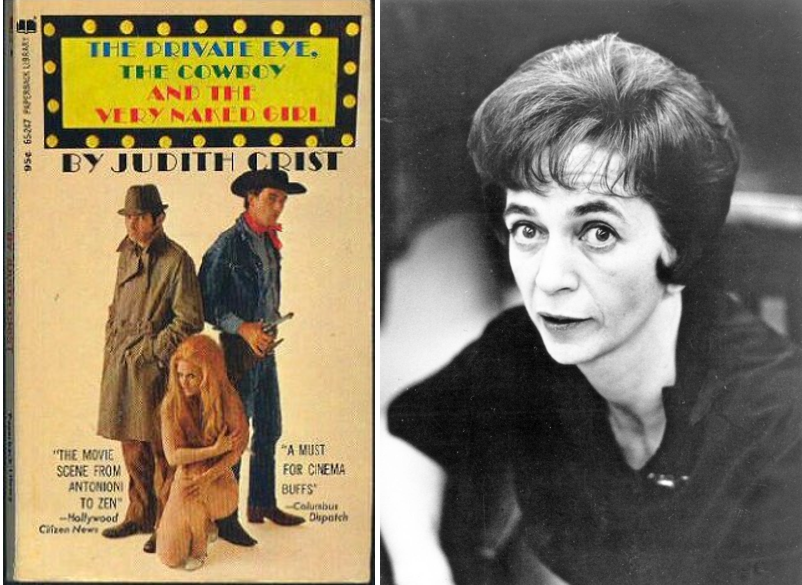
I’ll bring back La Meryl for my closer. Ms. Streep said that today’s film criticism was sorely lacking in female voices, which is true. In my younger days, I read so many female critics: Pauline Kael, Judith Crist, Kathleen Carroll, Susan Wloszczyna, Sheila Benson, etc., in addition to Roger and Archer Winsten and even Sexy Rexy. I hadn’t even realized that the universe had changed and become so male. So I agree with Meryl.
But in addition to this, I add that we need more diverse voices of color in film criticism as well. We’re both pretty fucked, unfortunately: The consensus is that women will only give good reviews to Nancy Meyers movies and can’t sit through The Revenant (my mother watches Lucio Fulci movies, so fuck whoever thinks this about women). And I can’t tell you how often people are surprised that I know about things besides Black movies. I was talking about at a party and someone said “GASP! You know about Fellini?” I responded, “You do know Fellini was Black, right? Billy Wilder too! He was passing!”
When that’s not happening, people mistake me for the only Black critic they’ve heard of, Armond White. Now, I’ve met Armond, and he’s probably far more insulted that I’m being mistaken for him than the other way around.
My point here is that diversity matters in the arts and in criticism, and not the fake-ass diversity bullshit I keep getting fed that’s been manufactured by the same PR firm that created “post-racial America.” True diversity, because the current "diverse" situation is predominantly White, predominantly male and totally bullshit. I like exploring the viewpoints of those who aren’t like me, because I may learn something I didn’t know. Why shouldn’t readers or viewers also experience the viewpoints of LGBT people, or women, or people of color?
Just like Dope, I ended with a soapbox lecture and a question! I did that shit on purpose!! NYAAH!
Dennis, thanks for having me in the Treehouse with such wonderful co-conspirators. You have all taught me and entertained me. Let’s do this again sometime!
Uh-oh! Here comes that fucking drunk owl to knock me out of here. Peace out!
***********************************
Odie Henderson is based in Clifton, New Jersey and makes his living writing computer code, but is better known in online circles as a film critic for RogerEbert.com who also writes extensively for his own sites, Big Media Vandalism and Tales of Odienary Madness. In 2013 he programmed a film series at the Off Plus Camera Film festival in Krakow, Poland and has been known to perform a karaoke version of EU’s ”Da Butt” upon request.
***********************************
#13: WANDERING OFF THE RED CARPET (Phil Dyess-Nugent)

********************************

Friday, January 15, 2016

THE 2015 SLIFR MOVIE TREEHOUSE #13: WANDERING OFF THE RED CARPET

The best thing about not getting paid to write about movies is that I don’t have to discuss the Oscars. I lost all interest in the Oscars a long time ago; if I had to pinpoint the exact moment, I would probably go with the day the nominations were announced in 1987, the year that Blue Velvet, the major breakthrough movie event of my twenties, failed to score a Best Picture nomination. Dennis Hopper, who had been out of action for years due to a combination of drugs, drink, and bad karma, gave the performance of his career in that movie, and the Academy, unable to resist a comeback story, gave him a Best Supporting Actor nomination—for Hoosiers. A crew from Entertainment Tonight had a camera pointed at his face the moment he heard the announcement. Steven Rea didn’t look that surprised in the bedroom scene in The Crying Game.
I do remember when the nominations were announced in 2013, because I was paid to write a paragraph about them that year. The premise must have been something like “Which Academy Awards Nomination Is the Happiest Surprise?” because I remember writing that I was happy to see Jennifer Lawrence nominated for Silver Linings Playbook. I wrote that it was nice to see someone get an Oscar nomination for being so funny and sexy and emotionally alive in an entertaining light comedy, though of course there was no way in hell she would win. I quickly got an email from my editor advising me that if they ran this, I’d look pretty stupid, because “everybody” knew that she was a lead pipe cinch to take the little gold nudist. She did win, though I swear it wasn’t until the morning after the ceremony that I learned, from reading the stories about who won and why, that both the movie and her performance in it were desperate pleas that we as a society do more to address the plight of the mentally ill. The upshot is that not only do the Academy and I have drastically different priorities and opinions regarding what is important and deserving of acclaim in movies, when we do appear to agree on something, it’s usually for different reasons.
I just saw a TV commercial in which the voice of God (i.e. Morgan Freeman) proclaims that there is “one night when we all dream in gold.” This did make me throw up in my mouth a little. It’s the “we” that bugs me; I don’t mind the Oscars existing and don’t want them to change to suit my tastes and interests. That would be like trying to change who gets elected Prom King. But I do mind the shared assumption that the Academy’s values are those of America, are at least those who really care about movies in the right way, and I’d rather not even bitch about them, because treating them as something worth complaining about just confirms their power. It’s not as if there won’t be plenty of people eager to show that they not only disagree with the Academy’s values and priorities but are prepared to spend the next month screaming about them online. I’ve already seen enough tweets and Facebook posts today to know that the Academy still really doesn’t give a shit if people on social media don’t think it honors diversity. I’ve also heard that Ryan Coogler, Michael B. Jordan, and Tessa Thompson didn’t get nominated for Creed but that Sylvester Stallone did, and I’m assuming that’s a typo that’s on its way to becoming an urban legend. The Oscars are full of shit, but nobody’s that full of shit.
The Oscar nominees who are easiest to slip and care about, however briefly, are the actors, because in narrative movies, actors are still the human material onscreen (and, in most animated movies, on the soundtrack) who do so much of the heavy lifting in involving the audience emotionally. A great director can use every element of moviemaking to draw us in and communicate with and even move the viewer, but a director who concentrates on perfecting a visual style or establishing total control at the expense of using the actors as full collaborators—I would name cite Kubrick and recent Malick as cautionary examples—does so at his peril. And in movies by lesser talents, the actors are the elements most likely to keep a viewer engaged, which is no small thing, given that those of us who watch a lot of movies are fated to spend most of our time in the theater watching movies that were not made by great directors. Like Marya, I find acting an especially mysterious art and tend to cut the people who perform it with honesty and imagination a certain amount of slack.
Part of the fascination of the documentary Listen to Me, Marlon is hearing Brando, in his own words spoken in his own voice, spend an adult lifetime failing to adequately explain to himself just how it is he does what he did better than any American of his generation, which seems to have made it harder for him to take any pride in it. You also get to hear Bernardo Bertolucci describe Brando as “shocked” when he saw himself in Last Tango in Paris. In that movie, Brando is not “being himself.” He is playing a character named Paul who is different than him in many ways. But Bertolucci clearly guided him to use as much of himself as he dared in the process of constructing the character, which in turn caused him to connect with Paul’s emotions with special, exciting force. The fact that Brando didn’t realize how nakedly exposed he would look in that movie—which in turn would leave many ticket-buying chowderheads to take it on faith that this charged portrait of a sometimes repellent character was a bare self-portrait—until he saw the finished product, and realized what Bertolucci had done, says a lot about the power differential between actors and directors. It also says a lot about Brando’s disengagement from his profession for much of the rest of his life. There will always be people who see the Brando of the post-1972 period as a lazy, slumming whore. But few enough people could have given anything like the performance he did in Last Tango; how many of us are qualified to imagine what it must have felt like to even consider what it might have taken to keep working at that level, especially if it meant going that deep inside himself again?
I didn’t see any Brando-level performances this year, but I do think that Jennifer Lawrence, more supernaturally alive than just about anybody onscreen, has shown an amazing gift for playing clear-eyed, passionate heroes who won’t back down, whether they’re bent on toppling a dictatorship or selling a mop, and this year she’ll turn the same age Brando was when he made his first movie. There were, as they say on the infomercials, some amazing discoveries: Daisy Ridley in you-know-what, Britt Robertson in Brad Bird’s overly maligned epic bomb Tomorrowland, Kitana Kiki Rodriguez and Mya Taylor in Tangerine, Shameik Moore and the other young performers in Rick Famuyiwa’s Dope. Alicia Vikander in Ex Machina and The Man from UNCLE, Rebecca Ferguson in Mission Impossible: Rogue Nation, Nadia Hilker in Justin Benson and Aaron Moorhead’s genre-bending horror romance Spring, which also boasts a wonderful performance by Lou Taylor Pucci as an American in Italy whose emotional state shades gratefully from PYSD to lovestruck. (It’s sort of like Before Sunrise with tentacles.) In Brooklyn, Saorise Ronan grows up onscreen, transforming herself from a painfully shy fish out of water into a confident woman of the world; she made me feel as if I were finally seeing the performance I read about whenever Jessica Chastain plays a young earth mother. Dakota Johnson gives an irresistible star performance in Fifty Shades of Grey, without a shred of help from her material, director, or co-star. (The fact that she’s right there with them on the list of Razzies nominees is a terrible indictment of what indulging in kneejerk, unreflective mockery of officially certified bad movies does to the brain.)
In Carol, Kyle Chandler plays a character who could easily have been the mustache-twirling villain of the piece—the straight ex-husband who’d like to “cure” his wife of her desire for other women and isn’t above using their daughter as a weapon against her—and illuminates the man’s mixture of humiliation, anger, and romantic despair in a way that makes it hard not to feel for him. Emotionally, he’s the least opaque thing about the movie. John Cena is hilarious as Amy Schumer’s fuck buddy who thinks they might be something more in Trainwreck, and he manages to make the character’s dimness and sexual confusion funny without any winks to the audience to distance himself from this jerk. (He’s so good he partly derails the movie; I didn’t want the heroine to marry him, but I was disappointed that, after he got fed up and walked out with plenty of movie left to go, he stayed gone.) Rose Byrne is almost as good in Spy, playing straight woman to Melissa McCarthy without ever turning to stone.
Oscar Isaac surprised me in Star Wars: The Force Awakens. I’ve seen a lot of terrific performances from him, but most of them—like his work earlier this year in Ex Machina—have been variations on the basic template of a dislikable but strangely charismatic asshole. I would not have guessed that he could do the smart-mouth hero who does his best to sass the bad guys to death as if he were to the flight suit born. Jeremy Strong’s Sahara-level dryness as one of Steve Carell’s minions really shines in the context of all the hand-waving and meticulously enacted neurotic tics of The Big Short. I always cheer up whenever Ben Mendelsohn shows up, in movies like Slow West and Mississippi Grind or the Netflix series Bloodline, and starts magnetically spraying seediness around as if he were trying to pollinate the screen. Somewhere, in a world that is much like our own but that makes better sense, he and Walton Goggins have already played brothers, twice. (He has an especially lovely duet in a diner with Alfre Woodard, playing his bookie as if she were his social worker, in Mississippi Grind.)
S. Craig Zahler’s Bone Tomahawk gave me more of the epic-Western-with-grindhouse-proclivities that I was expecting from The Hateful Eight—which was, hands, the big disappointment of the year for me, and a movie that, with its static, prolix self-indulgence and undistinguished visuals, did more to set back the cause of “classic” filmmaking technology than a thousand straphangers watching Lawrence of Arabia on their phones—and Zahler’s movie also makes better use of Kurt Russell. (It gives him a character to play, rather than just asking him to reheat his John Wayne impression. Amusingly, as his sidekick in Bone Tomahawk, Richard Jenkins appears to be doing Walter Brennan.) At a time when movies in general look as young as ever, Blythe Danner (I’ll See You in My Dreams) and Michael Caine (Youth) and Ian McKellen (Mr. Holmes) managed to claim big roles for themselves and shine as brightly in them as ever.
Of course, 2015 was, first and foremost the fortieth anniversary of Jaws, the movie gave me my first hints that movies were a form with their own syntax that, when deployed with real smarts and brio, could offer something more enthralling than a couple of hours killed watching Dean Jones get his ass saved by a sentient Volkswagen. I spent one afternoon last summer watching it on a big screen again, courtesy TCM’s reissue program, and I’m here to tell you, forty years on, that son of a bitch still works like gangbusters. I would be very happy to spend another thousand words or so expounding on the reasons for that picture’s greatness, but if any of you don’t already know about it, I suppose it’s too late to talk sense to you. I would rather look to the future and imagine all the nine-year-olds who are about to have their minds blown by some thundercat who has a story to tell (or, like Spielberg at the time, at least a job to do and an ambition to show the world that no one could do it better) in such a way that the fever takes full possession of their hearts and minds. They live in a world that is better positioned than ever to feed the fever, in as many international flavors as their eager little appetites can stand. Friends, you and I may disagree on many things, and as Neil Young is reputed to have said (in a line that he may have stolen from one of the lesser ‘70s works of Robert Altman), if you and I agreed on everything, one of us would not be necessary. But I hope we can agree that however daunting the work ahead may seem, movies are too important to be left to people who would even threaten to give an acting award to Sylvester Stallone. Seriously, can I get a fucking amen!?
***********************************************
Phil Dyess-Nugent was a freelance writer and film critic. His work has appeared in Nerve, Hi-Lobrow,  The A.V. Club, Global Rhythm, The High Hat, The New Orleans Times-Picayune, and the University of New Orleans Press anthology Please Forward: How Blogging Reconnected New Orleans After Katrina, as well as numerous personal blogs with deceptively clever titles. He is currently either retired or unemployable, depending on whether you ask him about it before he's had his coffee. 
 *****************************************

PREVIOUS TREEHOUSE ENTRIES

THE 2015 SLIFR MOVIE TREEHOUSE #12: MEASURING THE QUALITY OF THE HIGH


See that image Dennis has on his blog-roll column to the right, the one titled "The Accidental Deletion"? That gif of the stick-man slowly bashing his hands and head to a pulp on his monitor and keyboard is an apt representation of how I feel logging on to the Internet, at the end of this week of bad pop cultural news. David Bowie is dead (and I've listened to almost nothing but his music since Monday). Alan Rickman is dead (on the same day that Hollywood--which never deigned to give Mr. Rickman even an Academy nomination for any of his work in Die Hard, Sense & Sensibility, Truly, Madly, Deeply, Robin Hood: Prince of Thieves, Dogma or the Harry Potter films he elevated with his mordant wit and melancholy--once again decided to define "acting" as acting via more feting of Eddie Redmayne-- they should have read Marya's passionate and wonderful definition of acting in her previous post, instead). No performers of color were nominated for Oscars, the day after Elle magazine-- never a Black Lives Matter bastion, exactly-- published a piece decrying the hashtag "BlackGirlMagic" as somehow dangerous and regressive. The Revenant is showered with nominations for its inexplicable wide-angle fetish and masochism-as-performance choices, because "showing the work" is more important than the quality of that work.
What can I say? I've spent the day feeling a little blue.
On her excellent, must-read Twitter, novelist and blogger Farran Smith Nehme (aka, "The Self-Styled Siren") asked if it was just her, or were the Academy's choices getting worse each year? I think, at the very least, we can say they have been operating more and more from a crouch position in recent years-- desperate to appear cool, yet terrified of making choices (12 Years a Slave excepted) that might cause them to appear less-than-correctly in line with whatever the middlebrow tenor of the moment is. Heaven forbid Redmayne not be nominated for a part that feels less performance than press release: "Look how *brave* he is! (Don't you want to reward him? Huh? C'mon, let him have the trophy. Just let him have it.)". It's the kind of aesthetic nomination that only Parks & Recreation's Bobby Newport could love: puppy-dog begging at the service of power.
Maybe that explains why The Revenant did so well, since the film is nothing if not a bullying assault on its audience, a macho dare to dislike it and therefore be out of the loop (I know people--wrongly--talk about the Fast & Furious franchise as an exercise in dudebro-ism, but Furious 7 looks like a Lubitschian model of grace and play compared to The Revenant's grunting antics). The much-praised camerawork of the film is actually its biggest deterrent: the obsession with wide-angle framing and close-ups makes it look less like a film than a first-person shooter game, literally pushing the audience's eye out of the frame even as it longs to use cheaply moralistic violence to drag you in. The whole film operates on this single entendre reading of its cinematic legacy (it's art-house porn for people who wouldn't be caught dead at a Peckinpah or Don Siegel retrospective). 
To paraphrase Red Grant's line to James Bond in From Russia With Love: "A dolly back and symbolic linger on a crow overlooking death and destruction. That should have told me something." The excellent Tom Hardy aside (and it does say something about the range and shape of Hardy's talents that he could give interesting performances in Fury Road and The Revenant in the same year, as if wanting to corner both the good and bad ends of the movie spectrum), this is a ponderous slog of a film, perfect for people who loved the trite Native American essentialism of Dances With Wolves, but just wished it had some of the childish will-to-power of The Deer Hunter and a dash of The Piano's dreamy obtuseness. By the end, I was so battered by the movie's tumescent blend of glee and pretension at its incoherent violence that I thought they should have just called the whole thing Jeremiah’s Johnson.
But Inarritu was hardly alone in 2015 in confusing the blunt hammer of the single entendre with epic scope or depth. On the opposite end of The Revenant's Pummelvision (but very much in line with its condescending, "you don't get my dude-bro thing, man" chuckles at the expense of its audience) is something like The End of the Tour. There are many, many people on Film Twitter who found fault with the film's portrayal of David Foster Wallace (I will not name them because I suspect they don't want to be dragged back into the discussion, but I think we know who they are, and it's easy enough for curious readers to Google). I have no dog in that fight-- I've read little Wallace, never met him, and while I remember the hype around Infinite Jest, never got invested in the literary battles about it.
No, my problems with it are just as a movie: it's so hermetically sealed in its own hipster hyperbaric pod that there's no room for anyone else's sensibility. Take a Judd Apatow film, remove all of its humor and playful raunch, and I think this kind of Navel-Gazing Serious Caucasian Man movie is what you would have left: it's pseudo-intellectual posturing, Rohmer for Dummies, except it deigns to offer simplistic solutions to the philosophical questions the French master would smartly leave unanswered. I liked its feel for midwestern college towns (as the product of several of them), and I thought both Jason Segel and Jesse Eisenberg gave it what they could (as much as I generally cringe at his media presence, Eisenberg has a real gift for essaying passive-aggressive social cilmbers). But I wish they'd let the whole thing breathe, or even let Segel toss in some jokes-- his own screenwriting work in The Five-Year Engagement showed a far more nuanced and human take on the trade-offs of research and success. He might also have had a better idea of what to do with Mamie Gummer, whose character shows up halfway through, is on the screen for only a few minutes, but is easily the most compelling thing amidst the movie's feverish pounding away at its, um, thesis.
(A moment of praise here, too, for Gummer in general-- she was superb in Ricki and the Flash and is becoming one of those actors-- like Stanley Tucci, Parker Posey, or Patricia Clarkson--whose name makes me smile when I see it in the credits. "If nothing else," I think, "the movie has that.")
As The End of the Tour's last bit of misused R.E.M. music fades from memory (oh, how I wish!), it seems only right to turn to another disappointment, Straight Outta Compton. This one hurts, because I really wanted to like it, and there's a lot to like, from F. Gary Gray's vigorous direction to the charismatic turn by Corey Hawkins as Dr. Dre (he's the one element of the movie I would have nominated). I think my problem is the opposite of that I had with The End of the Tour: here, I *did* have investments in the art and people under discussion, and all the film-making skill in the world couldn't mask the sinking feeling I had of, in the words of James Agee, "being subtly hornswoggled."
The early stuff about Dr. Dre and the formation of the group, the material with Ice Cube and his solo career, the insights into the business side of their lives-- I thought that stuff was fascinating. The recording scenes were great, and so were the recreations of live performances. But the tendency in any biopic to say "...and nothing was ever the same again," especially when it works to isolate the group as a singularity (rather than part of a broader moment of hip-hop's flourishing, increased politicization, and growing stylistic diversity) felt wrong to me. I know it's about one group, in one period (just as Love & Mercy, which has its own fraught relationship to the biopic, also is), but the larger claims it wants to make might have worked better for me if we got more acknowledgement of musical context than one scene of Ice Cube recording with the Bomb Squad.
It's actually a movie that got smaller in my imagination the more time passed, because as I turned it over in my head, I couldn't buy into the movie's paradoxical braggadocio about NWA's political stances, and its repeated insistence that "no one else is doing this" (which, having grown up with Public Enemy, the Native Tongues collective, and Boogie Down Productions, all of whom were also doing varied and genuinely radical work contemporaneous/near-contemporaneous with the 1988 Straight Outta Compton album, clearly ain't so; it works as a character aside, but the film also wants it as its motto, even placing Chuck D's famous line about rap as a black CNN in the group's collective mouth). I also wasn't sure what to do with its ambivalent take on the group's relationship to violence, which I thought it could never decide if it was celebrating or condemning (although, in fairness, The Chronic itself--which we see the genesis of in the film's second half--also wrestles with this kind of ambivalence).
In his excellent Ebert review, my fellow Treehouser Odie Henderson has some pertinent things to say about the film's politics vis-a-vis this contemporary moment, and re-reading his 4-star review tonight after an online exchange, it made me want to go back and re-watch the film with fresh eyes (although I suspect that's more a product of Odie's superb critical poetry, what he brings to and draws out the film with such careful grace, as much as the film itself). It's also possible--even probable!-- that there are a million things I'm missing, and/or struggling with in an obtuse-if-earnest way. But as a certain Chicago critic was fond of writing (quoting Robert Warshow), "A man watches a movie, and the critic must acknowledge that he is that man," and my mounting sense of despair when watching the movie was real, and similar to my response (as we think about Bowie this week) to Todd Haynes' Velvet Goldmine, a gorgeous, technically brilliant and often thrilling film--just as Compton is--but one whose ahistorical vision of its Bowie avatar (and by extension, Bowie himself) as some kind of sell-out to the director's adolescent dreams about what his icon should have been, is really fucking infuriating.
(Writing, re-writing, and thinking about all this for the past 90 minutes, I'm realizing that it's entirely possible I take my pop music too seriously).
Still, even if it fumbled for me, at least Compton's technical virtuosity was at the service of a set of ideas. Victoria's "I'm not giving up my shot" insistence on the single take is in the service of nothing, except a pathetically anachronistic loyalty to a sub-Tarantinoism that I thought Killing Zoe had gotten out of cinema's system. I can't say I was never interested in Victoria's formal play, especially in its first half, when there's a kind of loose, improvisational feel to the acting that makes you think the story could go anywhere. But by the time we reach the movie's bloody conclusion, I just wanted the whole thing to end.
Maybe Victoria’s director, Sebastian Schipper, should have been given the reigns on Mr. Holmes-- at least then this somnambulant take on the great detective might have had some kind of spirit. I like Ian McKellen a lot; I think Bill Condon did great work on Dreamgirls and Kinsey. I think they are not a great pairing: Gods & Monsters offered a smug moralism and a criminal take on the great George Cukor that makes it a slice of Peak ‘90s Sundance, and Mr. Holmes doesn't even have that misfire's ambitions: it sits there flat, proper, full of Laura Linney's aggrieved pantomime and a turn from McKellen whose exhaustion suggests a man waiting for his turn on Downton Abbey.
No one would accuse either Kingsman: The Secret Service or Sicario of flatness, I suspect, but it seems a shame that both drown two appealing stars-- Colin Firth and Emily Blunt, respectively--in shock-for-shock's sake effects that would be laughed at if they turned up late one night on Starz or SyFy. Blunt is transforming into one of our great action stars, and any enjoyment in Sicario comes from the pained empathy of her response to what she (and we) are seeing; Firth seems to be having a ball finding the more sadistic side of Mr. Darcy, and balancing it out with a dandy wit. But putting those talents at the service of Denis Villeneuve and Mark Millar/Matthew Vaughn is as wasteful as placing a Bose stereo in a Yugo (and a lot less comfortable a ride). I thought Vaughn's X-Men: First Class was terrific fun, but here his work is so dominated by the machinations of Millar's plot (similar in its trite heavy-handedness to his comic book work) that any joy derived from the Bond pastiche is smothered. I've managed to skip Villeneuve's other features, but Sicario really makes me worry for my beloved Amy Adams, who's shooting Story of Your Life with Villeneuve as we speak.
What's missing from all of these movies is even a spark of grace, a willingness to let the screen breathe (laugh or let up for a moment, and their respective card houses collapse). But that doesn't mean such moments were missing from the movies in 2015. In honor of that great feature Film Comment runs on "favorite movie moments", here are some of mine from the past year:
--The soccer-without-a-ball in Timbuktu;
--Nicole (the great Julianne Coté) being told that standing close to the microwave could damage her fertility, and then edging closer to it, in Tu Dors Nicole
--Blythe Danner on the karaoke stage in I’ll See You in My Dreams;
--The "Oh, Girl" number in Chi-raq (which might be my favorite moment in any film last year);
--John Cusack's heartbreaking admission of wanting someone to say "I love you" to, in Love & Mercy;
--Hugh Grant's meta-dismissiveness of his expository role--throwing the lines away like they were shit he was trying to politely shake off his fingers--in the helicopter in The Man from U.N.CL.E.;
--The eerie, ambiguous laughter from Elizabeth Moss that closes Queen of Earth
--Cate Blanchett's recounting of her stepmotherly origins in CInderella (the only version of that story to ever make sense of that character for me, and to allow her a smidgen of humanity);
--Hugh Bonneville having a face-off with the title bear, in the railway station cafe, in Paddington
--Harrison Ford's quietly shocked expression of revelation in The Age of Adeline
--And speaking of Mr. Ford: "Chewie...We're home.";
--The pain of Danny not singing his new song on stage, and how it registers on Annette Benning's face, in Danny Colllins;
--The brilliant Silver Age gee-whizness of the first 15 minutes of Tomorrowland
--The elevator nightmare in Horse Money
--The off-hand way Kristen Stewart balances a cell-phone, an in-person conversation, and a narrow train hallway, in the opening moments of Clouds of Sils Maria
--Tom Cruise's "What are ya gonna do?" shrug to his opponent, just before being pulled out of an aircraft transport, in the pre-credits scene of Mission: Impossible—Rogue Nation
--The way Chris Hemsworth--half tough-guy, half movie-star--strides across the post-prison release tarmac in Blackhat, framed by Michael Mann at a low angle, with the sun beating off him like he's Sonny Crockett; 
--The slow, sad, hilarious realization that overtakes the face of Allie (Claire McNulty) when she realizes the age of her beach companions, in Fort Tilden;
--The brilliant closing credits to both Dope and Eden.
Did I have a favorite movie-going experience of 2015? Besides wondering what the chatty elderly couple behind me in The Revenant yesterday would end up thinking of its gruesomeness? (For the record, I heard many "ohhh"s and "oh myyy"s). It wasn't my favorite film of the year, but I think it was hard to top the sheer joy I felt coming out of The Force Awakens. Of course, part of it was nostalgia (the initial Lucas trilogy occupies the same place in my heart that Disney or Hammer horror films did for earlier generations, and that perhaps Harry Potter movies do for kids today). But it wasn't *just* nostalgia, but a pleasure at the movie's willingness to give pleasure, and to do it with such grace and fullness. Like it or not, there's no half-assedry on the part of J.J. Abrams and his team: they know what they are making, and they do it with blissful skill.
Bliss, mercy, grace, discovery-- when I stare at the list(s) I posted to Dennis's blog earlier this week, I realize those are keywords that stretch across everything, in varied ways, in my Top 30 (even if the films are about the loss--or the danger of losing--any of the above). And "bliss" is the defining quality of Paul Thomas Anderson's Junun, a 30-minute documentary that streamed in the fall on MUBI. Documenting the making of the Junun album in Rajasthan, India, by a collective that includes Radiohead's Johnny Greenwood (and the band's longtime producer Nigel Godrich), Israeli composer Shye Ben Tzur, and the Indian musical collective the Rajasthan Express, Junun is slow, hypnotic, and utterly riveting, with one foot in the messiness of the everyday details of recording, and the other in the magical chemical effects of the sounds being created. There's no narration in Junun, no introduction, and no real conclusion: it's a slice of a larger recording moment that we're given access to, and it closes with as many of its mysteries unsettled as solved. We just get the chance to peek in the room (sometimes, from a visual perspective, almost literally peek), but it's enough. It gives us everything we need, and I came out of the experience with a real high.
Is that quality of the high the secret behind Trainwreck? It was tagged as romantic comedy, and it is, but what I treasured about it was how it used the genre to actually tell a stealth tale about addiction. Had the marketing been framed differently (had it been released by the Weinsteins, or Lifetime, or A24), the movie's ties to a long tradition of such films—The Lost Weekend, Clean & Sober, and above all Days of Wine and Roses-- might have been more apparent, and it was what I kept thinking of watching the film.
Amy (Amy Schumer) is set up as a freewheeling, sexually active young woman, and it is this quality the film takes as its purported target (of both celebration and condemnation). But watch the film again, and note how often she has a drink in her hands. Note how often the recourse to a drink is her solution to anything. Notice how often that's what her arguments with her sister and her boyfriend (the invaluable and underrated Bill Hader, here building on his fine work in The Skeleton Twins) settle on. Notice how she defends her father (a surprisingly great Colin Quinn) and his own self-destructive tendencies. And then remember how many of those past addiction films mercilessly, counter-intuitively deployed the charms of actors (Ray Milland, Jack Lemmon, Michael Keaton) known for their comedic chops. I want to give Amy Schumer the 2015 award Dennis asks about, for taking her considerable wit and slapstick gifts, and using them in her screenplay to get at stuff that's not really that funny, while still making us laugh like a motherfucker.
The movie Amy may end up resolving her relationship anxieties, but the movie leaves unresolved whether or not her other, larger, more pressing problems will still be lurking somewhere in the shadows. “I hope this love montage ends like Jonestown,” our heroine narrates at one point, and the movie's fearlessness suggests that she just might, someday, still get her wish.

*****************************************
Brian Doan is an Affiliate Scholar in Cinema Studies at Oberlin College, where he taught courses in film and popular culture from 2006-2011. In addition to academic research and publications on film, comics, TV and advertising, he is a contributor at RogerEbert.com and blogs at Bubblegum Aesthetics. Brian also enjoys the music of Prince and is actively annoyed by the work of Seth MacFarlane. 

*****************************************

PREVIOUS TREEHOUSE ENTRIES