Sunday, February 02, 2020

SYBIL THE SOOTHSAYER'S OSCAR PREDIX!


Well, the most wonderful time of the year is upon us yet again, and if you’re thinking I’m about 30-days-and-change late in going on about Christmas, well, you obviously don’t live in Los Angeles. For around these parts, the time in between the announcement of the Academy Award nominations and the awards ceremony itself—this year a much shorter gauntlet of days for campaigning nominees and their studio backers to run—is Christmas redux, a month-long-or-so orgy of adulation when everyone loves everyone else’s work (except all the stuff they forgot about, naturally) and the spirit of lavishing career-honoring praise and statues permeates the air like thick, throat-thrashing smoke from a nearby wildfire.

This year is no different, of course, but maybe the usual sense of inevitability about who’s gonna win what is a bit more pronounced, simply because for awards show after awards show the same handful of winners have been seen trotting to the stage to accept the acting, directing and technical achievement awards. This is encouraging a dangerous sense of security among office Oscar pool participants (and by office Oscar pool participants I am referring, of course, to myself) who may think they’ve got a better handle on what whims Oscar will indulge next weekend than usual. That know-it-all-and-then-overthink-it impulse sinks my Oscar pool chances almost every year.

And if you’ve read this column over the years, you’ll have a sense of just why my Oscar pool ballot typically takes on water pretty early in the show. There’s no need to provide links to my doomed Oscar predix of the past—just trust me, I don’t know what the fuck I’m talking about when it comes to second-guessing the nebulous and fickle AMPAS voting body. Of course, that shocking admission shall be no hindrance to my carrying on as usual and making public my guesses as to what might transpire next Sunday night at the Dolby Theater in beautiful downtown Hollywood. 

But this year I’ve recruited some help.

With a great expenditure of time, effort and a goodly percentage of my savings account, I went in search of the one person whose psychic energy might actually enhance my odds of reigning supreme at my Oscar party, the woman whose predictive powers and all-around acumen with the crystal ball would shame Sylvia Browne and Jeane Dixon, both of whom have sloughed off this mortal coil anyway, so it’s not like they’d do me any good— I’m even worse at contacting the dead via séance than I am at picking Oscar winners. No, the woman I’m referring to is, perhaps surprisingly, still alive. I discovered that she’s been living in a convalescent home just outside Chicago, Illinois, which caters to fringe TV personalities, for the past 26 years and, after several long telephone conversations which were scattered in their subject matter, to say the least, I convinced her to help me in my quest to win this year’s Oscar pool.

Her name is Gladys Meyerowitz, and you will be forgiven if that name doesn’t quite ring a bell, because you probably only know her from the name by which she appeared briefly on the UBN Television  Network in 1976, on the roster of regular contributors to that network’s wildly popular (until it suddenly wasn’t) The Howard Beale Show. I’m referring, of course, to Sybil the Soothsayer. 

During our conversations, Gladys made me call her Sybil. She says that hearing herself referred to by that name again helped focus the psychic energy which, she admits, has been a little spottier in her old age. But Sybil remained supremely confident in her ability to interpret that energy and accurately prognosticate about what’s going to happen when all of Hollywood gathers together next Sunday night. Even though she claims she hasn’t been out to a movie since 1986 (“That Blue Velvet put me off watching pictures in public for good!”), she’s still got a DVD player and, of course, her own feisty, sometimes spiritually enhanced opinions, which I have included alongside her picks in each category. And since this is my spot behind the velvet curtain and not hers, I have indicated who I believe should win from all the nominees in each category, as well as who I would pick if I were not restricted to just the five or so choices winnowed down by the Academy.

So, let’s get to it. Straight from The Howard Beale Show, via the Bob Bell and Beverly Braun Convalescent Home for the Semi-Famous, here are Sybil the Soothsayer’s picks to win big at this year’s Academy Awards. Adjust your expectations and your Oscar pool ballot choices accordingly.


PICTURE

SYBIL SAYS: 1917 (“I picked this over Parasite because I don’t like to think about maggots and leeches and things like that.”)

DESERVED WINNER: Parasite

MY PICK: Parasite


ACTRESS

SYBIL SAYS: Renee Zellweger, Judy (“I knew Judy Garland, and lemme tell ya, Renee’s no Judy Garland, but Vincente Minnelli told me a couple weeks ago she was gonna win, so…”)

DESERVED WINNER:  Um… Scarlett Johansson?

MY PICK: Mary Kay Place, Diane


ACTOR

SYBIL SAYS: Joaquin Phoenix, Joker (“The Academy likes a comedian.”)

DESERVED WINNER: Antonio Banderas, Pain and Glory

MY PICK: Antonio Banderas


SUPPORTING ACTRESS

SYBIL SAYS: Laura Dern, Marriage Story (“That young lady has a coltish charm about her, don’t ya think? She’s gonna go places.”)

DESERVED WINNER: Laura Dern

MY PICK: Yeo-jeong Jo, So-dam Park, Hye-jin Jang, Jeon-eun Lee, Parasite (so sue me)


SUPPORTING ACTOR

SYBIL SAYS: Brad Pitt, Once Upon a Time… in Hollywood (“He should’ve won for Oceans’ Twelve. This will be a make-up win for that.”)

DESERVED WINNER: Joe Pesci, The Irishman

MY PICK: Joe Pesci


DIRECTOR

SYBIL SAYS: Sam Mendes, 1917 (“Such a good boy, making a movie about his grandpa like that. And I have it on very good authority that the old man liked the picture a lot, though he did say he thought Benedict Cumberbatch sucked.”)

DESERVED WINNER: Bong Joon Ho, Parasite

MY PICK: Bong Joon Ho


ORIGINAL SCREENPLAY

SYBIL SAYS: Quentin Tarantino, Once Upon a Time.. in Hollywood  (“Hasn’t he won before? Who does he think he is? Woody Allen?)

DESERVED WINNER: Bong Joon Ho, Han Jin Won, Parasite

MY PICK: Bong Joon Ho, Han Jin Won


ADAPTED SCREENPLAY

SYBIL SAYS: Taika Waititi, Jojo Rabbit (“How could the academy vote against an anti-Nazi bunny?”)

DESERVED WINNER: Steven Zaillian, The Irishman

MY PICK: Steven Zaillian


ANIMATED FEATURE

SYBIL SAYS: I Lost My Body (“I can relate, and have several times.”)

DESERVED WINNER: I Lost My Body

MY PICK: I Lost My Body


CINEMATOGRAPHY

SYBIL SAYS: Roger Deakins, 1917 (“At my age, I prefer long takes. Plus, how the hell did he do that?!”)

DESERVED WINNER: Jarin Blascke, The Lighthouse

MY PICK: Kyung-pyo Hong, Parasite


COSTUME DESIGN 

SYBIL SAYS: Jacqueline Durran, Little Women (“Don’t you think I should have won one in 1976 for my STS garb in Network?! They would’ve had to give it to me and not Theoni V. Aldredge too, ‘cause that sucker came right out of my closet!”)

DESERVED WINNER: Sandy Powell, Christopher Peterson, The Irishman

MY PICK: Ruth Carter, Dolemite Is My Name


DOCUMENTARY FEATURE

SYBIL SAYS: American Factory (“Maybe Michelle Obama will show up!”)

DESERVED WINNER: Honeyland

MY PICK: Honeyland


FILM EDITING

SYBIL SAYS: Yang Jinmo, Parasite (“I heard just now they apparently edited all the actual parasites out of the final cut, and that’s good enough for me, so…”)

DESERVED WINNER: Thelma Schoonmaker, The Irishman

MY PICK: The Irishman


INTERNATIONAL FILM

SYBIL SAYS: Parasite (“Enough already!”)

DESERVED WINNER: Parasite

MY PICK: Parasite


MAKEUP AND HAIRSTYLING

SYBIL SAYS: Joker (“They give an Oscar for this, but not for stunt people? Jeez…”)

DESERVED WINNER: Bombshell (better a win here for prosthetics than a Best Actress win for prosthetics)

MY PICK: N/A


MUSICAL SCORE

SYBIL SAYS: Hildur Gudnadottir, Joker (“Give it to the kid from Iceland. Everybody else sounds like they’re stealing from themselves.”)

DESERVED WINNER: Thomas Newman, 1917

MY PICK: James Newton Howard, A Hidden Life


ORIGINAL SONG

SYBIL SAYS: “(I’m Gonna) Love Me Again”, Rocketman (“They wanna see Elton John on stage more than they do Michelle Obama even!”)

DESERVED WINNER: None

MY PICK: “Love Theme from Uncut Gems


PRODUCTION DESIGN

SYBIL SAYS: Barbara Ling, Once Upon a Time… in Hollywood (“Production design so good, why, the made Hollywood look like it was a real place!”)

DESERVED WINNER: Lee Ha Jun, Chon Won Woo, Parasite

MY PICK: Parasite


SOUND EDITING

SYBIL SAYS: Donald Sylvester, Ford v Ferrari (“Those cars are goddamn loud!”)

DESERVED WINNER: Wylie Stateman, Once Upon a Time… in Hollywood

MY PICK: Once Upon a Time… in Hollywood


SOUND MIXING

SYBIL SAYS: Paul Massey, David Giammarco, Steven A. Morrow, Ford v Ferrari (“Goddamn, those cars are loud!”)

DESERVED WINNER: Michael Minkler, Christian P. Minkler, Mark Ulano, Once Upon a Time… in Hollywood

MY PICK: Once Upon a Time… in Hollywood


VISUAL EFFECTS

SYBIL SAYS: Dan DeLeeuw, Russell Earl, Matt Aitken, Dan Sudick, Avengers: Endgame (“Volume counts in this category, plus I have a bit of a crush on Thanos. No, not Josh Brolin. Thanos.”)

DESERVED WINNER: Pablo Helman, Leandro Estebecorena, Nelson Sepulveda-Fauser, Stephane Grabli, The Irishman

MY PICK: The Irishman


Thanks to Sybil for soothsaying her way onto that rickety Oscar predix limb for me this year. If you use her picks as your own and you lose, well, I predict… you won’t ever do that again! Good luck, and happy Academy Awards!

**********************************

Sunday, January 12, 2020

UPSTAIRS/DOWNSTAIRS: THE FILMS OF 2019


Seems to me that only in a very good year for movies could the best film I saw all year and the worst film I saw all year both be called Parasite. Of course, one was the Cannes sensation and sure-to-be-Oscar-nominated South Korean film from Bong Joon Ho. The other was the 1982 3-D “classic” from director Charles Band, starring Demi Moore and Luca Bercovici, a movie which, once I finally caught up with it, or rather once it finally caught up with me (after my having successfully avoided it for almost 40 years), certainly made for an agonizing waste of my time, so I can only imagine what the actors and craftspeople who were involved with making it must have felt, and likely still do. And I consider it a real hallmark of a quality cinema annum when I can say that I saw more movies by near-forgotten Hollywood journeymen Ray Enright and Lloyd Bacon (look ‘em up, kids—that’s what IMDb is for) than I did by Martin Scorsese, who doubles up near the top of my list this year.

Here then, from the heights to the depths (with only the most glancing mention of the depths, really), are the highlights of this past terrific movie year for me, the pictures, performances, and singular achievements that made going to the movies so much more enjoyable than paying attention to real life, even when they opened the sort of revealing window onto real life that is only possible within this art form, reflecting and illuminating the human condition in the most unexpected, welcome and, if we’re really lucky, entertaining of ways.


PARASITE  Bong Joon Ho redefines “upstairs/downstairs” in what is, in my estimation and on its own terms, and if such a thing can even exist, just about as perfect a movie as I’ve ever seen in the modulation of its social satire— acute observations on class and strata are embedded in just about every frame, yet the picture is astonishing fun to watch, the polar opposite of a dry treatise on how humans functioning in webs of economic frustration or privilege feed on each other. It seems also to have hit a nerve with audiences starved for a sense of surprise, for the satisfaction of not knowing where they’re going but being absolutely assured, and with great pleasure and anticipation, that they’ll get there—the movie is thrillingly entertaining and, from moment to moment, genuinely unpredictable. It also has, in the work of actors like Boon Joon Ho veterans Song Kang-ho (The Host) and Lee Jong-un (Okja), as well as Jo Yeo-jeong, Jang Hye-in, and especially Park So-dam, the highest caliber ensemble performance by any cast this year. This movie is what ensemble screen acting awards are made for. Bong (Mother, Memories of Murder) has conjured an exquisitely controlled, fiercely alive work that ought to make just about every other director out there sick with envy, and perhaps even inspired by the surety and humor and brilliantly sustained purpose with which he delivers the goods. This is easily the year’s best, most pleasurable, and ultimately most devastating movie.


DIANE  The Los Angeles Film Critics Circle were wise enough to award Mary Kay Place their best actress honors this year, which gives me hope that she may at least be acknowledged by yet another higher-profile award-bestowing body this coming week. But even if she doesn’t, she’s given a performance for the ages in Kent Jones’s masterful movie, a lovely, unforced, exquisitely realized, formally engaging act of empathy for unsung souls burdened by the shadows of social and familial responsibility, mortality, identity and inescapable guilt. If that sounds like a drag, then please allow yourself to be energized by a film that, though it couldn’t feel more different in tone and approach, can stand right next to Parasite as an exemplar of the absolute best a very good year at the movies has had to offer.


THE IRISHMAN  One of the great common denominators about at least five of the movies among my favorites of 2019 is that they couldn’t have been made by anyone else, and that’s certainly true of the two movies made by Martin Scorsese represented here. The cast, from the rightly celebrated Robert De Niro, Al Pacino and Joe Pesci, through Ray Romano, Harvey Keitel, Anna Paquin, Stephan Graham, and on to Jesse Plemons, Kathrine Narducci, Domenick Lombardozzi and a giant cast of players even less known, are all deserving of praise. But even more fascinating, Scorsese approaches the story of hitman Frank Sheeran, his role in the tumultuous history of American union politics and, perhaps, in the death of Teamsters icon Jimmy Hoffa, with the subdued style of one of his religious epics, eschewing the flash of GoodFellas for an appropriately rueful stylistic meditation on tenuous power, corrupt morality, and the heavy sigh of a soul, perhaps not one even worth saving, in absolute freefall. 


A HIDDEN LIFE  With his gorgeous, agonizing, poetically realized story of a conscientious objector in WWII Austria, Terence Malick not only sums up the stylistic compulsions that have obsessed his work over the last two decades, but he’s also finally fulfilled the promise of Days of Heaven and his presumed status as a great American filmmaker. This is a movie that demands a rigorous attention to philosophical quandaries that clearly alienated several members of the audience with which I saw it, yet it rewards those like myself, who were suspicious of films like The Tree of Life or To The Wonder, with a genuinely haunting, challenging, uniquely introspective experience that is itself based on the introspection of a modest, undeniably heroic man, the sort who chooses to suffer injustice rather than perpetuate it, the sort whose stories often go untold.


ROLLING THUNDER REVUE: A BOB DYLAN STORY BY MARTIN SCORSESE  Scorsese’s second appearance on this list is a long, strange, joyous, darkly comic mix of the factual and the fantastical, a reassessment of Bob Dylan’s famous 1975 tour which contextualizes the music, the personalities and especially the attempts to control the telling of the story of a specific moment in a musical movement, in terms of the shifting landscape of a country and its culture, both then and now. Like Dylan’s music, and Dylan himself (who robustly participates in the blurring of as many lines of truth and fiction as possible here, to fascinating ends), the documentary/mockumentary Scorsese has fashioned is, both in individual moments and in overall philosophy, epic, lyrical, personal, contradictory, nonsensical, and a deliriously fascinating one in which no truth, and perhaps every truth, is arrived at 45 years late and right on time. 


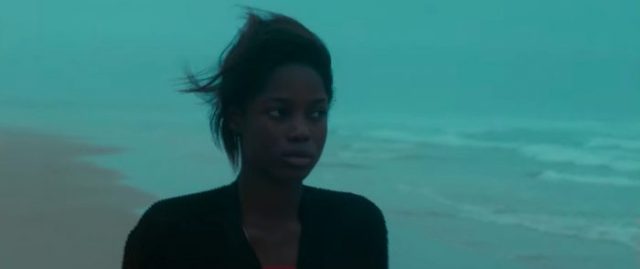
ATLANTICS  A mysterious, gorgeous first feature from director Mati Diop scored to its own ethereal, uniquely untrackable heartbeat, a love story grounded in social reality which floats on longing and pivots on its metaphysical heel to become something… unexpected, expansive, strangely worthy of that longing. Mame Bineta Sane, a first-time actress, holds the screen like a Hollywood veteran as Ada, a young woman bound in a marriage contract whose true boyfriend disappears with a group of fellow construction workers at sea, and the way Diop, with a magnificent assist from Claire Mathon’s swoon-inducing cinematography, tells the story of these two unrequited lovers and the unbreachable gap separating them is satisfying in the elliptical manner of a superbly written short story.   


APOLLO 11  In coincidence with the 50th anniversary of the moon landing, and bereft of narration, talking heads or other grounding devices,  director Todd Douglas Miller uses NASA and television news footage (a generation of viewers will now be privy to the reasons behind the reverence with which their elders infuse the utterance of the name “Walter Cronkite”) to tell the story of Neil Armstrong, Buzz Aldrin, Michael Collins and that truly incredible journey in a way that enhances the reality and the unbearable suspense of a situation we’ve now known the outcome of for several generations. In a year of great documentaries, none was possessed of the sort of historical acuity or grandeur, or the almost hallucinatory clarity that is the lifeblood of Miller’s achievement.  


ONE CHILD NATION  A cross-generational cry of anger from documentarian Nanfu Wang, who explores the awful history of China’s one-child policy, those whose lives were shaped (and sometimes warped) by it, and the dutiful citizens, acting from pride, helplessness, or a grim combination of both, who perpetuated it in the name of national strength. Perhaps the most distinctive element of Wang’s approach, apart from her refusal to look away from even the most personal implications of China’s policy, is the creative and political intelligence she exhibits in observing that though she grew up in a country which for years mandated abortions, and then moved to a country (the United States) where abortions are slowly becoming more difficult to obtain, both governments were about removing the rights of women to make decisions about their own bodies, thus neutering the opportunity for those who might be so inclined to reductively spin One Child Nation into a simple pro-life tract.


HONEYLAND  If the measure of a truly remarkable documentary is to illuminate an aspect of humanity unfamiliar to most audiences, then the work done by directors Tamara Kotevska and Ljubomir Stefanov, in distilling over three years’ worth of footage into this compelling, ultimately heartbreaking nonfiction film, must be considered remarkable, a lovely rendering of a life lived and expressed in balance with the natural world, the world faced as it is with no compromise, which nonetheless is perilously close to falling out of balance. As shot by the intimately calibrated cameras of Fejmi Daut and Samir Ljuma, Honeyland quietly observes, and ultimately celebrates the endurance of a middle-aged beekeeper named Hatidze, who tends to her feeble mother as well as the bees who provide the means of her physical and economic sustenance, and who must also endure the appearance of a vagabond Turkish family who inadvertently come to threaten her ecosystem and her survival. With its equal measures of patience, insistent yet nonjudgmental curiosity about human motivations, and its inevitable sadness, the film stands as a unique wonder, painfully privy to secret moments, expansive, haunting. 


DOLEMITE IS MY NAME   A heartfelt tribute to getting your art (and yourself) on the screen and into movie history, anchored by an arguably career-best performance by Eddie Murphy, alongside stellar support from the likes of Mike Epps, Craig Robinson, Keegan-Michael Key and, most especially, Da’Vine Joy Randolph. Murphy thankfully avoids the mistake of slavishly copying the vocal rhythms and look of Rudy Ray Moore, who brought a generation or two's worth of folklore and coalesced it into a stand-up and movie career as Dolemite, a storyteller styled in the pimp couture of the day. (Moore is also considered by some, based on his musically charged vocal rhythms and how he used them to relate his jokes and stories, as the godfather of rap.) Instead, Murphy makes the character his own, which is his way of carrying on Moore's tradition of passing along urban legends filtered through his own personality. The result is a thoroughly enjoyable, outrageously profane, and not surprisingly honorable movie which joins the ranks of Ed Wood (1994; also written by DIMN's Larry Karaszewski and Scott Alexander) and Allan Arkush and Joe Dante's wonderful Hollywood Boulevard (1976) as perhaps the best movies ever made about making Hollywood outside the box.


HONORABLE MENTION (in alphabetical order):  


 AD ASTRA, AVENGERS: ENDGAME, THE BIGGEST LITTLE FARM, CRAWL, FORD VS. FERRARI, GODZILLA KING OF THE MONSTERS, LINDA RONSTADT: THE SOUND OF MY VOICE, THE LIGHTHOUSE, MARRIAGE STORY, MIDSOMMAR, PAIN AND GLORY, THE PRODIGY, TRANSIT, UNCUT GEMS, US

Still to see in 2019


ASH IS PUREST WHITE, BOOKSMART, BOMBSHELL, CATS, THE CURRENT WAR, DAVID CROSBY: REMEMBER MY NAME, ESCAPE ROOM, THE FANATIC, FIRST LOVE, GLORIA BELL, THE GREAT HACK, HONEY BOY, THE KING, THE KINGMAKER, THE LAST BLACK MAN IN SAN FRANCISCO, LITTLE WOMEN, MAKING WAVES: THE ART OF CINEMATIC SOUND, THE MAN WHO KILLED DON QUIXOTE, MOTHERLESS BROOKLYN, THE NIGHTINGALE, PORTRAIT OF A LADY ON FIRE, RICHARD JEWELL, TIGERS ARE NOT AFRAID, TOY STORY 4, THE TWO POPES, WESTERN STARS, WHERE’D YOU GO, BERNADETTE?, WHERE’S MY ROY COHN?, ZOMBIELAND: DOUBLE TAP


One I Liked Way Better Than Y’all Did

GODZILLA, KING OF THE MONSTERS

Ones Y’all Liked Way Better Than I Did

THE SOUVENIR, ONCE UPON A TIME IN… HOLLYWOOD, HUSTLERS


Least Fulfilled Opportunity Based On Its Excellent Source Material

ZEROVILLE

Biggest (Happy) Surprises

6 UNDERGROUND, SCARY STORIES TO TELL IN THE DARK


Biggest (Unhappy) Surprise (aka The Worst Movie of 2019)


Best Viewing Experiences of 2019

CRAWL (head in popcorn bucket, Regency Academy, Pasadena)
CRY WOLF (1947) (TCM)
DOLEMITE IS MY NAME (with a similarly amused audience, Laemmle Glendale)
GODZILLA, KING OF THE MONSTERS (with Emma, free preview courtesy of the Secret Movie Club, Arclight Cinemas, Hollywood)
THE IRISHMAN (packed house, Studio Movie Grill, Glendale)
LINDA RONSTADT: THE SOUND OF MY VOICE (by myself, sobbing, Laemmle Glendale; with Bruce, sobbing, Hillcrest Cinemas, San Diego)
MERRILY, WE GO TO HELL (inaugural selection TCM Classic Film Festival 2019, with Bruce)
NASHVILLE (TCM Classic Film Festival, with Bruce, Bob Westal, Ronee Blakely, Keith Carradine, Jeff Goldblum, Joan Tewkesbury)
THE PRODIGY (under the seats with Emma, AMC Burbank 16)
ROLLING THUNDER REVUE: A BOB DYLAN STORY (date night, Los Feliz 3)
UNCUT GEMS (second time around, this time on the big screen, with a sparse audience who seemed to get it, AMC Burbank 6)

Actress


Mary Kay Place DIANE 

(Honorable Mention: Lupita Nyong’o US, Scarlet Johansson MARRIAGE STORY, Geraldine Viswanathan HALA, Florence Pugh MIDSOMMAR,
Awkwafina THE FAREWELL, Isabelle Hupert GRETA)

Actor


August Diehl A HIDDEN LIFE 

(Honorable Mention: Eddie Murphy DOLEMITE IS MY NAME, Adam Driver MARRIAGE STORY, Antonio Banderas PAIN AND GLORY, Toni Servillo LORO, Joaquin Phoenix JOKER, Christian Bale FORD V. FERRARI, Brad Pitt AD ASTRA, Robert De Niro THE IRISHMAN, Willem Dafoe THE LIGHTHOUSE, Adam Sandler UNCUT GEMS

Supporting Actress(es)


Yeo-jeong Jo, So-dam Park, Jeong-eun Lee, Hye-jin Jang PARASITE

(Honorable Mention:  Da’Vine Joy Randolph DOLEMITE IS MY NAME, Idina Menzel UNCUT GEMS, Shuzhen Zhao THE FAREWELL, Nora Navas PAIN AND GLORY (HM: Laura Dern MARRIAGE STORY, Sienna Miller 21 BRIDGES, Rebecca Ferguson DOCTOR SLEEP, Michaela Watkins BRITTANY RUNS A MARATHON, Marisa Tomei FRANKIE, Dierdre O’Connell DIANE, Anna Paquin THE IRISHMAN)

Supporting Actor

Kang-ho Song PARASITE


(Honorable Mention: Al Pacino THE IRISHMAN, Joe Pesci THE IRISHMAN, Eric Bogosian UNCUT GEMS, Leonardo Sbaraglia PAIN AND GLORY, Lakeith Stanfield UNCUT GEMS, Judd Hirsch UNCUT GEMS, Alan Alda MARRIAGE STORY, Asier Etxeandia PAIN AND GLORY, Tracy Letts FORD V. FERRARI, Tom Hanks A BEAUTIFUL DAY IN THE NEIGHBORHOOD, Alejandro Patino PAPI CHULO)

Director

Bong Joon Ho PARASITE


(Honorable Mention: Kent Jones DIANE, Martin Scorsese THE IRISHMAN/ROLLING THUNDER REVUE: A BOB DYLAN STORY BY MARTIN SCORSESE, Terence Malick A HIDDEN LIFE, Mati Diop ATLANTICS, Ari Aster MIDSOMMAR, Josh & Benny Safdie UNCUT GEMS, Christian Pozold TRANSIT, Pedro Almodovar PAIN AND GLORY, Robert Eggers THE LIGHTHOUSE)

Screenplay


Bong Joon Ho and Jin Won Han PARASITE, Steven Zaillian THE IRISHMAN, Scott Alexander and Larry Karaszewski DOLEMITE IS MY NAME, Ronald Bronstein, Josh Safdie, Benny Safdie UNCUT GEMS, Christian Pozold TRANSIT, Robert Eggers, Max Eggers THE LIGHTHOUSE, Noah Baumbach MARRIAGE STORY

Cinematography


Kyung-pyo Hong PARASITE, Jorg Widmer A HIDDEN LIFE, Claire Mathon ATLANTICS, Pawel Pogorzelski MIDSOMMAR, Darius Khondji UNCUT GEMS, Jarin Blaschke THE LIGHTHOUSE, Roger Deakins 1917

Music (Original Score or Use of Songs)


Score: James Newton Howard A HIDDEN LIFE, Jung Jaeil PARASITE, Thomas Newman 1917, Hildur Guðnadóttir JOKER

Use of Songs: THE IRISHMAN, ROLLING THUNDER REVUE, DOLEMITE IS MY NAME, ONCE UPON A TIME… IN HOLLYWOOD

First Time Seen in 2019

ALL THROUGH THE NIGHT (1942; Vincent Sherman) 
BLACK HAND (1950; Richard Thorpe)
BLONDIE JOHNSON (1933; Ray Enright) 
BLOOD ON THE MOON (1948; Robert Wise)
BLUME IN LOVE (1973; Paul Mazursky) 
BROTHER ORCHID (1940; Lloyd Bacon) 


THE CARS THAT ATE PARIS (1974; Peter Weir) 
CHAMBER OF HORRORS (1966; Hy Averback) 
CHARLIE CHAN IN HONOLULU (1938; H. Bruce Humberstone) 
CHARLIE CHAN AT TREASURE ISLAND (1939;  Norman Foster) 
CHARLIE CHAN AT THE WAX MUSEUM (1940; Lynn Shores) 
CLEO FROM 5 TO 7 (1962; Agnès Varda
COLORADO TERRITORY (1949; Raoul Walsh)
THE CROWD ROARS (1932; Howard Hawks) 


CRY WOLF (1947; Peter Godfrey) 
CUBE (1998; Vincenzo Natali) 
A DELICATE BALANCE (1973; Tony Richardson) 
EXPERIMENT IN TERROR (1962; Blake Edwards) 
THE FAMOUS FERGUSON CASE (1932; Lloyd Bacon) 
FAT CITY (1972; John Huston) 
GENOCIDE (WAR OF THE INSECTS) (1968; Kazui Nihonmatsu)
GUN LAW JUSTICE (1948; Lambert Hillyer) 


THE GYPSY MOTHS (1969; John Frankenheimer) 
HOT LEAD (1951; Stuart Gilmore)
THE HOUSE BY THE CEMETERY (1981; Lucio Fulci) 
HYSTERIA (1965; Freddie Francis) 
JASON X (2002; James Isaac) 
JOUR DE FETE (1949; Jacques Tati) 
THE LETTER (1940; William Wyler)  
THE MAN WHO HAUNTED HIMSELF (1970; Basil Dearden) 


THE MAN WHO LAUGHS (1928; Paul Leni) 
MERRILY WE GO TO HELL (1932; Dorothy Arzner) 
MILLIONAIRES IN PRISON (1940; Ray McCarey) 
MISS PINKERTON (1932; Lloyd Bacon)
NIGHT OF DARK SHADOWS (1971; Dan Curtis) 
NIGHT WORLD (1932; Hobart Henley)  
OLD ACQUAINTANCE (1943; Vincent Sherman) 
OPEN SECRET (1948; John Reinhardt) 
PARASITE (1982; Charles Band) 
POSSESSED (1931; Curtis Bernhardt) 
THE RAGING MOON (aka LONG AGO, TOMORROW) (1971; Bryan Forbes) 
THE ROBOT VS. THE AZTEC MUMMY (1958; Rafael Portillo)
SAGEBRUSH LAW (1943; Sam Nelson) 
THE SATANIC RITES OF DRACULA (1973; Alan Gibson)


SAVAGE MESSIAH (1972; Ken Russell)
SEVEN DAYS TO NOON (1950; John Boulting, Roy Boulting)
SHADOW ON THE WALL (1950; Pat Jackson)
TARZAN AND HIS MATE (1934; Cedric Gibbons) 
THE TATTOOED STRANGER (1950; Edward Montagne)
13 WEST STREET (1962; Philip Leacock) 
…tick…tick…tick… (1970; Ralph Nelson) 
TWO-GUN MAN FROM HARLEM (1938; Richard C. Kahn) 
WATERLOO BRIDGE (1931; James Whale) 
WHILE THE PATIENT SLEPT (1935; Ray Enright) 
WHOEVER SLEW AUNTIE ROO? (1971; Curtis Harrington) 
THE YIDDISH KING LEAR (1935; Harry Thomashefsky)


Happy New Year, everybody! Here's to another great year of movies in 2020, and a much improved year from the past few in every other regard!


*********************************

Saturday, December 21, 2019

HEIST FOR THE HOLIDAYS: CASH ON DEMAND (1962)


One could be forgiven for not suspecting that Hammer Films, known for their comparatively lurid and bloody, sometimes pointedly lusty, and otherwise vividly imagined (and reimagined) catalogue of horror classics, would be the first place to look if one were in the market for a low-key yet spirited take on a holiday classic to turn to once the perennial screenings of It’s a Wonderful Life, White Christmas, Die Hard and countless other popular titles have begun to wear out their welcome. Yet the studio delivered just that in Cash on Demand (1962), a dandy and delicious suspense thriller directed by Quentin Lawrence, from a script by David T. Chantler and Lewis Griefer, itself based on a play by Jacques Gillies, which echoes of Charles Dickens’ A Christmas Carol, the book and the countless movie and TV iterations which came before, to fresh and potent purpose.

Lawrence, a British TV veteran whose few feature film credits included The Man Who Finally Died (1963; itself based on a British TV series for which Lawrence shot several episodes), a Hammer follow-up to the infamous WWII potboiler Camp on Blood Island entitled The Secret of Blood Island (1965), and, perhaps most memorably for those of us well-versed in the Hammer output (though it was not itself a Hammer film), 1958’s The Crawling Eye, directs Cash on Demand with crisp efficiency and seductive simplicity that draws the viewer into its wintry setting with ease and assurance. But it is the players who populate this intense chamber piece—it takes place entirely within a small community bank located an hour or so outside London—who create the film’s most lasting impression.


One of the best things about Cash on Demand is the relative subtlety with which it references the Dickens classic—it’s possible to not even notice the resemblance until you’re snared in the movie’s novel web. But even though it’s not ultimately a full-fledged refashioning of Dickens’ familiar tale, this film most certainly has its own Ebenezer Scrooge, its own Bob Cratchit, and even a personification of a specter with less than honorable intentions who nonetheless nudges the Scrooge figure toward a self-realization that is entirely in line with the original story’s emotional denouement.  

The movie opens on a snowbound scene just outside the bank, where a man in a Santa suit is collecting for a local hospital charity, with the familiar carol “The First Noel” lilting on the soundtrack. But as the camera moves in on the metal placard just outside the bank’s door which identifies it as the City and Colonial Bank of Haversham, a musical strain is introduced that sounds at first as if it might be an orchestral ornament to the carol but which quickly evolves into a minor-key evocation of uncertain dread as the camera goes inside and moves through the empty spaces soon to be filled with employees and the occasional customer. 


Soon those employees begin to populate their workstations, led by Mr. Pearson, the head clerk who stands in for Cratchit. Pearson is essayed with palpable empathy by veteran character actor Richard Vernon (Goldfinger, The Satanic Rites of Dracula, The Pink Panther Strikes Again). The head clerk’s vaguely worn countenance bespeaks the weariness of a man stuck in a professional position which offers little reward other than vague security, yet also of a kindness that has probably carried him further with his own subordinates than it does with his immediate superior. 


That immediate superior is, of course, Cash on Demand’s Scrooge figure, the bank’s detail-obsessed, meticulously efficient manager Harry Fordyce, played with imperious reserve by one of Hammer’s greatest stars, Peter Cushing. When Fordyce enters the bank the already wintry atmosphere chills a few degrees further, each employee registering the degree of their boss’s daily, surely countless demands on their performance, and none more so than Pearson, whose professional competence and morality Fordyce calls into question almost immediately over a discovered imbalance in the daily books, the result of a charitable loan to a customer proffered by another clerk, which Pearson signed off on and which Fordyce inflates into a career-threatening charge of embezzlement.

Cushing, at least initially, offers no quarter against the impenetrable air of superiority Fordyce is able to indulge within his little realm. But unlike Scrooge, Fordyce appears to have no large wealth to claim as his own, which might make lording his power over his employees an easier path to take. Fordyce is, it’s fairly clear, a small man in his own right, without friends or connections apart from his immediate family, and embodying his pettiness is a task perfectly suited to Cushing’s wheelhouse. But as Fordyce is forced to confront the limits of his own worldview, and to come to understand how he has so frequently come up short in the humanity department, the shades of desperation, of isolation, of helplessness that are encased beneath Fordyce’s icy exterior begin to rise to the fore, and it’s here that Cushing, an actor able to imbue even his most extreme and ideologically entrenched characters with welcome shadings of understanding and clarity, begins to breathes real life into Fordyce and craft what I, as an unrepentant Cushing devotee, consider to be one of his two or three best, most compelling performances. (For another one of those, please see, if you haven’t already, his fanatical Gustav Weil in Hammer’s magnificent Twins of Evil, in which he gifts the religious zealot given charge over voluptuous twins who come under the influence of a vampire lord with a similar and unexpected sympathy.)


But what of Dickens’s ghosts? Fordyce himself first appears as an eerie reflection in that City and Colonial placard, an apparition which eventually takes human form and begins tending to an unoffending smudge on the placard’s shiny surface with a handkerchief. But in Cash on Demand, the real analog to those chain-rattling specters Dickens used to compel his protagonist into self-awareness takes corporeal shape as Colonel Gore-Hepburn, a cordial, if officious and perhaps overly self-assured gentleman who initially presents himself to the bank staff as an insurance inspector in order to get an audience with their boss and eventually reveals a more sinister purpose once ensconced within the confines of Fordyce’s office. 


Gore-Hepburn is played by the terrific and always-welcome André Morell, veteran of scores of Hammer productions as well as mainstream classics like Ben-Hur and The Bridge on the River Kwai, whose most indelible impression upon genre aficionados may have come as the persistently enquiring Professor Bernard Quatermass, who literally uncovers evidence of extraterrestrial life in a London Underground excavation in the original British TV production of Nigel Kneale’s Quatermass and the Pit (1958). As the ex-military man, Morell deals in unctuous insinuation as if casually breathing the icy Haversham air, and he relishes his power over Fordyce from his first words, when Fordyce still believes him to be who he represents himself to be. But when Gore-Hepburn pulls back the curtain and reveals his actual identity and agenda, the charm Morell has exuded, and which he will be required to occasionally tap into again through a more threatening veil, disappears in favor of a decidedly less welcoming persona. Gore-Hepburn is actually a career criminal who has been casing the bank for over a year and has begun executing a well-thought-out plan to relieve the City and Colonial of its holiday reserve of over 90,000 pounds, a plan which includes holding Fordyce’s wife and son hostage under threat of torture and execution if the bank manager does not acquiesce to his every demand. It’s a great role for Morell, who clearly is having the time of his life playing the greater evil against Cushing’s misguided man of appearances and procedures, and together they deliver one of the most formidable one-two acting punches in the history of Hammer Studios.


Through the procession of events in which Fordyce is forced to squirm and betray his own principled stature as a banker of apparently peerless standards at Gore-Hepburn’s relentless insistence, the dramatic twists and turns which propel Cash on Demand never seem only like overwrought dramatic contrivances, and much credit for that has to go to these wonderful actors. The push-pull between Gore-Hepburn’s dominion of the situation and Fordyce‘s increasing desperation play with theatrical artifice, to be sure, but then so do Dickens’s. However, within the framework in which those conventions and artifices have been refashioned, the Cash on Demand company artfully deliver on their conceit with palpable relish, and with awareness of just how to deliver Fordyce to his particular personal and professional epiphanies (which, for Fordyce, are most certainly and inevitably intertwined) in a satisfying minor key befitting the resolution of an otherwise nerve-racking cat-and-mouse scenario which must echo, but never blatantly ape, the Dickensian formula in order to arrival at its own particular destination.

The resolution that Cash on Demand does come to I daresay will satisfy connoisseurs of crime and suspense as well as those in search of the restorative holiday balm that Dickens’s tale has delivered for generations, yet without the need to insist upon itself within the trappings of a traditional holiday classic. Maybe that’s one of the main reasons why it has become exactly that for me.  


***********************************