Sunday, January 07, 2018

SINGING PRAISES: THE MOVIES OF 2017


I don’t get out as much as I used to, and notice of that fact is certainly meant to include the frequency with which I make it out to the theater to see a movie. I think it’s because we find ourselves in what I’ll call, for lack of a better term, the Netflix Age of streaming and immediate access of some very high-profile releases, as well as a lot of “buried “treasures that aren’t quite as magazine- and newspaper-profile friendly, that my list this year is weighted so heavily toward movies I saw at home.

There are 11 movies that I placed at the very top of my list of favorites. Of those 11 I saw exactly one of them in a theater, and it wasn’t the one I now, with retroactive desperation, wish I’d seen in a theater. (Just before putting this piece to bed, I did see Pixar’s exceedingly gorgeous and emotionally overwhelming Coco on the big screen, and I’m really glad I did—if I’d made room for 12 movies on my list instead of just the arbitrary 11, it might well have been on it.) My Movie Pass card just came in the mail today, so maybe that watershed event will signal a restoration of the balance back toward attending more traditional exhibitions in 2018.

Of the many movies I included on my honorable mentions list, there are 22 that I saw theatrically; those are mostly the sort of top-notch blockbuster fare that turned out to be a whole lot better than maybe even my highest expectations, yet not quite good enough to think about in terms of the year’s peachiest highlights.

Finally, as if to insist that the theatrical experience is no guarantor of quality (either in presentation or the movie’s achievement), my candidate for worst movie of the year is one I took in with my family on a Saturday night in multiplexland, and the movie itself is the furthest thing from the sort of superhero-sci-fi-blockbuster mind-melt so often fretted over by those culture mavens who insist they know better.

While we’re at it, please note the phrase “my favorite.” If only to clarify the obvious, I have in no way traveled the completist road of the professional critic, this year or most any other. I haven’t come close to seeing the number of movies it would require for me to declare with any sort of confidence (most likely false, whatever sort) that the movies on my list were “the best.” Frankly, I don’t even see how professional critics could use the term “best,” or why they’d even want to. Year-end lists are confetti parties of subjective summation, the culling together of one’s experience and, hopefully, a soupcon of observation that serves as an autobiography of taste as much as it does any sort of cumulative movie culture reckoning. Lists of year-end movie favorites are arbitrary, subjective, often illogical, maddening and maybe even surprising; I certainly think mine is probably one or all of those things, and if it’s surprising, then maybe that means I’m at least pointing the way toward a movie the reader may not have considered before.

I published this list on Facebook earlier this year and it was pointed out to me with frequency and relish just how much good stuff I have yet to see. So then, in order to forefront my deficiencies, let me note that I have yet to experience such year-end forces of nature as The Florida Project (next week, maybe), Phantom Thread, Faces Places, BPM, In the Fade, Columbus, The Disaster Artist, Ex Libris: The New York Public Library, Marjorie Prime, Last flag Flying, Molly’s Game, I, Tonya and All the Money in the World. And may I further note the realization that with the inclusion of one title in particular in my top 11 I have likely lost a shit-ton of credibility within my own house, to say nothing of the respect for the many folks (some of whom are  professional film critics) whose opinions and process of thought I trust and admire, here are the movies of 2017 I liked best, from tippity-top-toppest to least-of-the-tippity-top:


Wormwood (Errol Morris)
In every way possible, the heightening and summation of everything Errol Morris has achieved as an investigative documentarian, this is a complex, unsettling, frightening, totally mesmerizing experience—the layers of truth and deception that are revealed as a son tries to make sense of the death of his father, who plunged to his death from a New York city hotel room after being unwittingly administered LSD as part of a behavioral experiment, is devastating in its portrayal of how obsession can never be fully satisfied, and how it subsumes and displaces the life of the obsessed. No movie I saw this year, of any length (it runs 241 minutes, plus intermission, in its theatrical incarnation) held me as rapt; no other cinematic journey was this absorbing; no other single work in 2018 did so much to redefine the parameters and possibilities within its chosen genre as did Wormwood. (Netflix)


Slack Bay (Bruno Dumont)
One of the few movies I saw this year for which I was able to go in totally blind, absolutely unsure of what I was getting myself into, and a better state for receiving Dumont’s absurdly beautiful, sometimes mean-spirited and often transcendent farce there is not. The sense of not knowing where a movie is going, and being completely thrilled at the prospect of finding out, is a rarity; by the end I felt like I was floating. (Netflix)


Three Billboards Outside Ebbing, Missouri (Martin McDonagh)
Besides offering a showcase for Frances McDormand’s dominating, yet at times surprisingly subtle performance, McDonagh’s most significant achievement  with his latest, a superb comedy of agony and varying shades of anger which is very much the work of the man who made In Bruges and Seven Psychopaths, is its absolute conviction that no fury is ever thoroughly righteous, and that those we’ve decided are monsters may have surprising, if not redeeming, dimension. (General release)


Personal Shopper (Olivier Assayas)
A ghost story for audiences who enjoy the tease of the tale, the interruptions of mundane, pseudo-glamorous reality into realms of spectral speculation and, conversely, the subtle assertion of the spiritual into the material. The movie eschews big set pieces for subdued subversion and as a result it is deliberately and unfailingly unsettling all the way. Assayas’ new muse, Kristen Stewart, is terrific while displaying almost no distracting fireworks of “technique.” (Streaming and Criterion Blu-ray)
 

Spettacolo (Jeff Malmberg, Chris Shellen)
A Tuscan village defines and discusses its history and its present concerns through an annual theatrical production, and the movie made of the endeavor raises sobering questions of tradition, representation, and the value of art for audiences and performers far removed from any elite. It’s hard to remember seeing a movie that made the act of creation seem like such a vital, desperate, necessary thing. (Streaming)


Jim & Andy: The Great Beyond—Featuring a Very Special, Contractually Obligated Mention of Tony Clifton (Chris Smith)
The last movie I saw in 2017, one preceded immediately by Spettacolo, and the two seem to me entwined through their engagement with the idea of the ineffable,sometimes uncontrollable impulses that inspire artists to do what they do. Carrey's method-deranged submersion into the character of Andy Kaufman (and Tony Clifton), as documented in never-before-seen footage shot on the set of the Kaufman biopic Man in the Moon  is at turns fascinating, frightening, befuddling and possibly dangerous, and the actor commenting on his own apparent flirtation with madness carries with it its own deep wells of melancholy. If only Man in the Moon had been this adept at exploring the harsh, unknowable genius of its protagonist. (Netflix) 


The Meyerowitz Stories (New and Selected) (Noah Baumbach)
Anchored by career-best performances from Ben Stiller and Adam Sandler, and a real eye-opener from Elizabeth Marvel (she was the 40-year-old Mattie in the Coen Brother’s True Grit), Baumbach’s slice-of-New York family comedy works much of the same territory as his The Squid and the Whale, but it’s not frozen by its cynicism and it ends up cutting far deeper. And it’s a hell of a lot more fun to watch; the family dynamics revolving around entitled Meyerowitz paterfamilias Dustin Hoffman, a sculptor harboring resentment at being largely set aside by the art world, are superbly realized, and Baumbach and his editor, Jennifer Lame, deserve some sort of award for their deftness in cutting away from characters (particularly Sandler’s) in mid-rage. The funniest movie of the year. (Netflix)


Dawson City: Frozen Time (Bill Morrison)
The history of a small town in the Yukon, and the early history of the movies themselves, as told through 35mm footage of silent films thought forever lost, then found buried in permafrost. Viewing Morrison’s assemblage of ghosts, their stories told largely without spoken words, takes on the quality of peering through glass into another vaguely recognizable dimension, one made even more delicate, like the remnants of a disturbing dream, by being embellished with and sealed in varying degrees of disintegrating celluloid. (Streaming)


Kedi (Ceyda Torun)
One could spend a lot of time, if one was inclined, arguing about whether this jaw-dropping documentary is more about the cats who rule the streets of Istanbul or, like Morris’ great Gates of Heaven, more about the people who care for them, who are cared for by them. That both answers are correct indicates the degree of emotional and empathetic depth Torun has managed to tap. Kedi might be one of those movies you judge relationships by—if he/she doesn’t like it, well… One thing’s for sure-- That Darn Cat this ain’t. (Streaming)


Detroit (Kathryn Bigelow)
Bigelow’s harrowing docudrama takes the infamous Algiers Motel incident as a microcosm of horror from which to expand on the agony and righteous frustration that fueled the Detroit riots of 1967. The immediate experience of Detroit is almost suffocating in its brutality, which is perhaps why it wasn’t a big Saturday night date draw when it briefly surfaced at the beginning of August before disappearing from theaters. But you should steel up and take a look on Blu-ray—it’s a surprisingly expansive work, emotionally speaking, full of unexpected grace notes amidst the unfolding nightmare. Were it less one-note in the depiction of the Detroit officers who perpetuated the torture, it might well have been a sickening masterpiece. (Streaming)


Valerian and the City of a Thousand Planets (Luc Besson)
Every ostensibly eye-popping CGI blockbuster promises to show you things you’ve never seen in ways you’ve never seen them. Valerian is one of the only ones, certainly this year, to actually come through on that pledge. All the rest probably have better acting (I spent at least a few minutes thinking about my own recasting of the leads), and maybe even more coherent storytelling. (Maybe). But none sported more “Oh, my God!” moments of visual beauty, hell, poetry, than Besson’s loony masterwork, more breathtaking, delirium-inducing, disorientingly exhilarating action sequences. And no other movie featured a cabaret number by a shape-shifting Rihanna. I know why you skipped it in theaters—for the same reason I did. But why are you waiting now? (Streaming, Blu-ray)

Other movies of 2017 I thought were, to one degree or another, perfectly keen (in alphabetical order):


Alien: Covenant, All I See is You, Beach Rats, Beatriz at Dinner, The Beguiled, Blade of the Immortal, Blade Runner 2049, The Breadwinner, Bugs, Buster’s Mal Heart, Call Me By Your Name, Coco, Dunkirk, Gerald’s Game, Get Out, Ghost in the Shell, A Ghost Story, Graduation, I Called Him Morgan, Icarus, Ingrid Goes West, It, It Comes at Night, John Wick: Chapter 2, Jumanji: Welcome to the Jungle, Justice League, Kong: Skull Island, Lady Bird, Life, Logan, Logan Lucky, The Lost City of Z, Mudbound, My Cousin Rachel, Nocturama, Okja, The Post, Shadowman, The Shape of Water, Spider-Man: Homecoming, Star Wars: The Last Jedi, T2: Trainspotting, Their Finest, Thor: Ragnarock, Trophy, War of the Planet of the Apes, Wind River, Wonder Woman, Your Name.

Worst of the year (runners-up):

Good Time (Josh and Benny Safrie)
I Do… Until I Don’t (Lake Bell)
Mark Felt: The Man Who Brought Down the White House (Peter Landesman)

Worst of the year, a movie that absolutely earned its lower-case representation:


mother! (Darren Aronofsky)
When I “saw” mother! on its theatrical release, I said that I would suggest it was “one of the silliest, most masochistic, self-aggrandizing allegories/fantasies ever committed to film (or pixels, or whatever)—the Artist as All-Demanding, Relentlessly Punishing Deity and Universe-Sized Megalomaniacal Creator Whose Supplicants Are Not Worthy of Him-- but unfortunately, beyond the general hysteria and cacophony and gooey vaginal floorboard gouges and piles of bloody-pulp-rendered sacrificial lambs, I can’t be entirely sure of what I even saw.” And that kicked off an account of one of the worst nights I've ever spent in a movie theater. So before deciding to cement Darren Aronofsky’s ludicrous vanity puzzle at the bottom of my list, I decided to watch it again on Blu-ray. Let’s just say, a second helping did not help.

MOVIES I CAUGHT UP WITH FOR THE VERY FIRST TIME IN 2017

Alibi Ike (1935; Ray Enright)
All Screwed Up (1974; Lina Wertmuller)
Anatahan (1953; Josef von Sternberg)
The Bandit Trail (1941; Edward Killy)
The Band Wagon (1953; Vincente Minnelli)


Beyond the Poseidon Adventure (1979; Irwin Allen)
The Breaking Point (1950; Michael Curtiz)
Chisum (1970; Andrew V. McLaglen)
A Christmas Carol (1938; Edwin L. Marin)


Countdown (1967; Robert Altman)
Crossfire (1947; Edward Dmytryk)
Curse of the Faceless Man (1958; Edward L. Cahn)
Dames (1934; Ray Enright, Busby Berkeley)
Daughter of Dracula (Le Fille de Dracula) (1972; Jess Franco)
A Day in the Country (1936; Jean Renoir)


Downhill Racer (1969; Michael Ritchie)
Dynamite Pass (1950; Lew Landers)
The Earth Dies Screaming (1964; Terence Fisher)
The Effect of Gamma Rays on Man-in-the-moon Marigolds (1972; Paul Newman)
Fallen Angel (1945; Otto Preminger)
Five Came Back (1939; John Farrow)


High Wall (1947; Curtis Bernhardt)
Hit Man (1972; George Armitage)
How to Steal a Million (1966; William Wyler)
Island of Lost Women (1959; Frank Tuttle)
Jigoku (1960; Nobuo Nakagawa)
Kill, Baby… Kill! (1966; Mario Bava)


King of Jazz (1930; John Murray Anderson)
The L-Shaped Room (1962; Bryan Forbes)
Leo the Last (1970; John Boorman)
Love Crazy (1941; Jack Conway)
The Lusty Men (1952; Nicholas Ray)
Miranda (1948; Ken Annakin)
Murder Ahoy (1964; George Pollock)
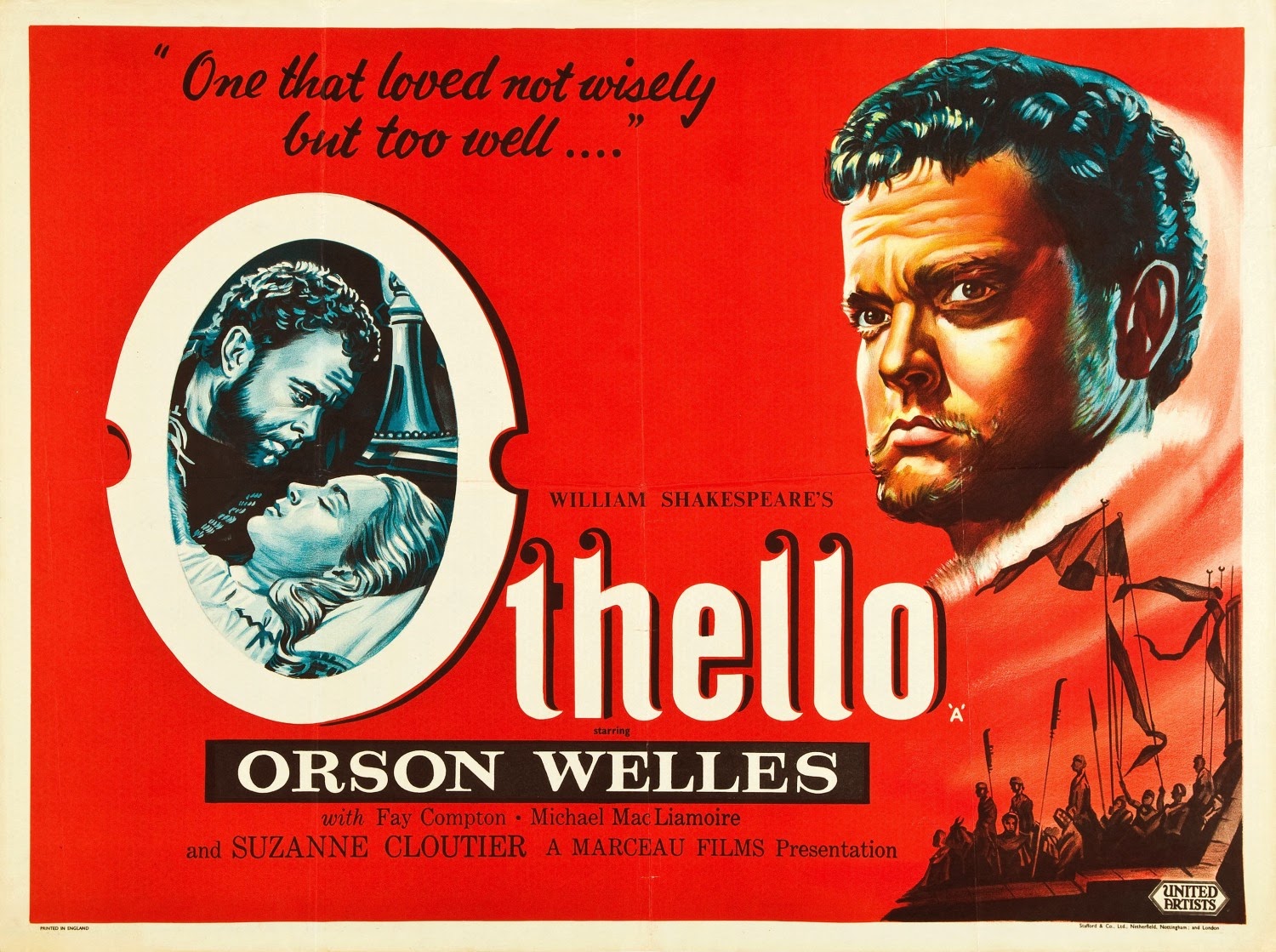

Othello (1951; Orson Welles)
Outrage (1950; Ida Lupino)
Panique (1946; Julien Duvivier)


The Reptile (1966; John Gilling)
Robin and Marian (1974; Richard Lester)
Run for the Sun (1956; Roy Boulting)
Rustlers (1949; Lesley Selander)
Scream, Blacula, Scream (1973; Bob Kelljan)
Son of Godzilla (1967; Jun Fukuda)
The Stone Killer (1973; Michael Winner)
Summer Night with Greek Profile, Almond Eyes and Scent of Basil (1986; Lina Wertmuller)
Those Redheads from Seattle (1953; Lewis R. Foster)
Terminal Island (1973; Stephanie Rothman)
Unholy Rollers (1972; Vernon Zimmerman)
The Underworld Story (1950; Cy Endfield)


Villain (1971; Michael Tuchner)
Visions of Eight (1973; Milos Forman, Kon Ichikawa, Claude Lelouch,
        Yuriy Ozerov; Arthur Penn, Michael Pfleghar; John Schlesinger, Mai Zetterling)
Wagon Train (1940; Edward Killy)
Way Out West (1937; James W. Horne)
While the City Sleeps (1956; Fritz Lang)
Woman of the Year (1942; George Stevens)
The World’s Greatest Sinner (1962; Timothy Carey)

MY BEST MOVIEGOING EXPERIENCES OF THE YEAR


As almost always of late, my favorite moviegoing experiences usually involve my oldest daughter Emma, who will turn 18 in a couple of months. She’s turned out to be the big movie fan of my two, ensuring that I will never have to go through the near-complete rejection of values that I put my own outdoorsman dad through when I was a bookish, nerdy teen. And she is always up for adventure. We took in the opening weekend of Wonder Woman together in our favorite seats at the Vista Theater in Hollywood—it was quite a thrill to watch the movie with her, and to watch her watch the movie and appreciate the pleasures of superhero gender turnabout that the movie had to offer. For all the heroics and assertion of female empowerment, I think our favorite scene was Diana making her way through the streets of London, discovering ice cream for the first time and gushing over it to the modest vendor— "You should be very proud!")

We also thrilled memorably to Thor: Ragnarok, The Shape of Water and, on a particularly dreary post-holiday evening when we were both feeling a little down, Jumanji: Welcome to the Jungle, an evening out with a silly movie that did us both a universe of good. We also tread the darkest part of the night together for a packed-house midnight screening of Akira, which may have impressed me even more than it did her.
Chucky, everyone’s favorite diminutive, quite plastic, and thoroughly deadly doll gave us perhaps our most unforgettable moviegoing evenings together this year, however. Joined by my best friend Bruce and little sister Nonie, we took in Don Mancini’s brand-new dose of mayhem, Cult of Chucky, together, a one-time-only theatrical screening hosted by Maestro Mancini himself. C of C is, to my mind anyway, the horror movie of the year, and it was a thrill to be one of the few, along with my daughters and my best pal, to get to see it this way.
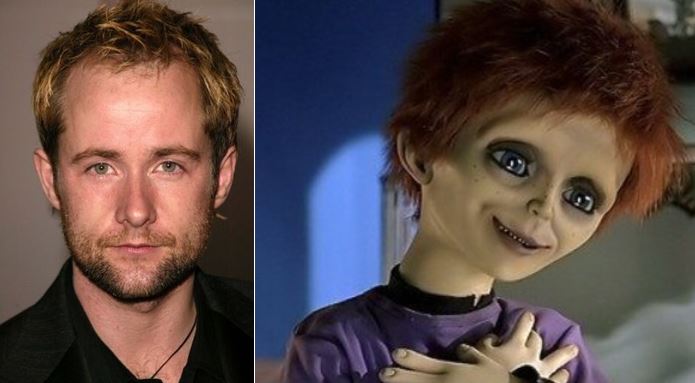

But even better than that was the Bride of Chucky/Seed of Chucky screening we attended a month or so before that, which had as its centerpiece a bawdy and hilarious Q&A featuring, among others, Mancini, Jennifer Tilly and Billy Boyd, the actor who memorably portrayed Pippin in The Lord of the Rings’ trilogy and, more importantly for Emma, voiced the character of Chucky and Tiffany’s gender-confused son, Glen (or Glenda). Glen (or Glenda) is easily Emma’s favorite character in her favorite Chucky movie, and she was abashed with excitement at just being able to see him on stage. But when beforehand I hinted to Don just how excited she was, he went the extra mile and introduced Billy to Emma from the stage! She was as thrilled as any mortified teen could possibly be, and even more so when, upon leaving the stage before the movie began, the infectiously friendly actor stopped by our seat to personally say hello again. And I got it all on my trusty phone. What a night!

Two great theatrical screenings stand out for me over the course of the year: the first is seeing Michael Ritchie’s Prime Cut as the opening night salvo of UCLA Film & Television Archive’s August series of films culled from critic Charles Taylor’s book of essays entitled Opening Wednesday at a Theater or Drive-in Near You. Taylor was there at the screening, interviewed by Los Angeles Times film critic extraordinaire Justin Chang, and in addition to seeing Ritchie’s terrific pulp artifact on the big screen, I got to meet both Taylor and Chang for the first time. Memorable, indeed.


The second came during the opening weekend of AFI Fest 2017-- a rare screening of a pristine 35mm print of McCabe and Mrs. Miller, which I’d never seen projected before (except in 16mm, which, believe me, I don’t count). It was an evening made even nicer by the attendance of Rene Auberjoinois, Altman stock player from the early ‘70s who plays squirrelly local businessman Sheehan in the film. During the brief Q&A that followed the screening, I even got to engage with Auberjoinois re another favorite Altman appearance, his bizarre turn as a professor who, over the course of the movie, morphs into a bird in Brewster McCloud, one of the Altman that, upon encountering in early in my college career, turned me from a merely interested observer into a genuine budding Altmanophile.

As for me on my own, the most thrilling discovery of a classic film had to be experiencing Nicholas Ray’s The Lusty Men for the first time. The year’s best rediscovery came via Criterion’s exceptionally lovely Blu-ray of Martin Scorsese’s The Age of Innocence (bonus: English subtitles provided by myself and my dear wife!), which seems now clearly, if it wasn’t before, to be one of the director’s finest works. At home my eyes popped, for completely different reasons in all three cases, to the Blu-ray of Valerian and the City of a Thousand Planets, Walter Hill’s magnificently outrageous The Assignment, and my first late-night encounter with the utterly deranged, demonically inspired The World’s Greatest Sinner, a career-defining showcase like no other for writer-director-star Timothy Carey. (Thanks, TCM Underground!)


But by far the best came one evening when, left to my own devices when the women went out for the evening, I made up a big bowl of popcorn, a homemade dinner and a tall glass of Diet Coke and luxuriated in the five-hour version of Wim Wenders’ gorgeously indulgent science-fiction obsession Until the End of the World, a movie made in 1991 which locates with unnerving prescience our current addiction to imagery and theories of connection. Wenders is the director who may have most precisely defined (or redefined) the road movie with his German New Wave masterpiece Kings of the Road and, later, his film (based on Sam Shepard’s screenplay) Paris, Texas, and Until the End of the World is probably, among many other things, his most piercing, technologically infused engagement with the themes of haunted wanderlust. In it’s five-hour version it’s unlike any movie I’ve ever seen, one to be absorbed into, to be approached on its own unhurried, exploratory terms. Seeing it was a revelation, one that may end up forcing me to extend my satellite subscription for fear of the moment of having to give up the DVR on which it is recorded. Seek it out, if you can.

Okay, that’s 2017 for me. Here’s to better fortunes for us all in 2018, including a wealth of new movies by which to be enriched and enthralled. Now I’m off to continue reading, along with everybody else, Fire and Fury, one book to which I hope there will never be a need for a sequel. Cheers!


*****************************************

Monday, December 25, 2017

MERRY CHRISTMAS, BABY! (THE ANTIDOTE)


And a happy, peaceful new year to us, every one!

***************************************

MERRY CHRISTMAS, BABY!


*****************************************

Wednesday, December 20, 2017

BRIAN DOAN IN HIS OWN WORDS


A couple of years ago I convened another session of the SLIFR Treehouse over at my blog, “SLIFR Treehouse” being just a clever way of not saying “The Slate Movie Club” or the name of any other gathering of critical minds for the purpose of assessing the year in movies from which I stole the concept. To the 2015 edition of the Treehouse I invited three of my favorite smart people, Marya Murphy, Phillip Dyess-Nugent and Odie Henderson, to join me in the fun. (Here’s a link to the final chapter of our week-long  party, which itself has links to all the other chapters.)  I knew it would be a good, sassy, intelligent, livewire group and that a lot of smart insights and good writing would come of it, and I was right—everybody kept everybody else on their game, and it was a ton of fun, for us, and I hope for the relative few who read it.

Yesterday we got the awful news that one of the members of our treehouse club, the good-natured and generous Brian Doan, passed away from a heart attack—I almost said “unexpectedly,” but for a 44-year-old man as gregarious and vital as Brian was, could such a loss be anything but unexpected? Even in just the short amount of time since we found out there has been so much testimony put forth by those who knew him, in the flesh and, as many of us did, only virtually, about Brian’s spirit, his optimism, the fertility of his mind and he boundless enthusiasm as a teacher. (Brian was, as his bio on SLIFR attests, an Affiliate Scholar in Cinema Studies at Oberlin College, where he taught courses in film and popular culture.) But I wanted to highlight Brian the way I knew him best, as a cogent and open-minded thinker about the movies, one who could write about movies that were roundly dismissed or overpraised without a hint of self-conscious contrarianism. The joy he felt about seeing cinema came through whether he liked the movie or not.

So I wanted to give you just three excerpts from Brian’s contributions to the 2015 SLIFR Treehouse in the hopes of highlighting just why I held him in such high regard as a writer, and why I was so honored that he assented to be a part of our little gathering.

****************************************

The first is Brian on the last James Bond movie, Spectre, which he knew going in was not held in too lofty a position by many critics, including some of us in the Treehouse.


“This bizarrely-maligned entry into the Bond canon was a delight--I loved the way it balanced the more humorous/extravagant feel of the Moore years with empty landscapes and a weirdly obsessive track-down narrative that both captured the existential tone of Ian Fleming's You Only Live Twice more than any other Bond movie (and I mean the book here, with its digressive travelogues and haunted Japanese poison flower gardens and all that, not the movie with Donald Pleasance as Dr. Evil). I've often thought of the Craig years as a Voltronesque experience in rebuilding a character-- that Casino Royale was about stripping the character of his armor to restore his humanity, and Skyfall about returning the lush style of the sixties Bonds to the franchise (the less said about Quantum of Solace, the better). Letting Craig enjoy the more comedic aspects of the franchise (because those Connery Bonds were many things, but they were *never* "gritty") feels like it completes the franchise rebuild-- he now seems capable of going almost anywhere with the character (so of course, he's making sounds about leaving him behind).

If comparing franchise movie-making to an 80s cartoon robot seems like a put-down, I don't mean it to be. This might the result of being born into the Spielberg/Lucas era (the first Star Wars was the first movie I saw, at the age of four), but one of the things I love about good, serialized storytelling is tracing out how it shifts and changes, how it absorbs from and adds to the pop culture around it, how it can be the best kind of bricolage. Sometimes you get horrors like current cycle of "No, watching overwhelmingly white groups of teens being chased through a torture park really *is* feminist!!" YA adaptations, to be sure. But I applaud the Bond films, and their 53-year ability to adapt, survive, and even occasionally surprise (let's say I was not expecting a reference to Fleming's offbeat character study, The Hildebrand Rarity, to pop up amidst Spectre’s exploding airplanes, even if its melancholy emotional tenor makes it the skeleton key to all of Craig's Bond films).

Anyway, as film scholar David Bordwell taught us all those years ago, "art house" cinema can be just as much a set of formulas as any kind of mass culture studio product, with its own strict formal and ideological precepts and rules for audience response (given the current cultural economics of film writing, it might be no accident that hipster enclave Pitchfork funded its own site for awhile). And if a movie, however well-made, doesn't set off the right bells, then I guess it's Spotlight? I'm fascinated by what Dennis, Odie and Marya note as the growing backlash to the film, which seems based precisely on a condescension to what they describe as its straight-ahead style (conversely, I'd argue the recent David O. Russell cycle gets a pass due to its general incoherence: "That sure was a big, convoluted mess-- so there must've been something going on in there!").”

*************************************

Next, here’s Brian on a big critical end-of-year critical fave, Straight Outta Compton, which he went into expecting to love:

"It's actually a movie that got smaller in my imagination the more time passed, because as I turned it over in my head, I couldn't buy into the movie's paradoxical braggadocio about NWA's political stances, and its repeated insistence that "no one else is doing this" (which, having grown up with Public Enemy, the Native Tongues collective, and Boogie Down Productions, all of whom were also doing varied and genuinely radical work
contemporaneous/near-contemporaneous with the 1988 Straight Outta Compton album, clearly ain't so; it works as a character aside, but the film also wants it as its motto, even placing Chuck D's famous line about rap as a black CNN in the group's collective mouth). I also wasn't sure what to do with its ambivalent take on the group's relationship to violence, which I thought it could never decide if it was celebrating or condemning (although, in fairness, The Chronic itself--which we see the genesis of in the film's second half--also wrestles with this kind of ambivalence).

In his excellent Ebert review,, my fellow Treehouser Odie Henderson has some pertinent things to say about the film's politics vis-a-vis this contemporary moment, and re-reading his 4-star review tonight after an online exchange, it made me want to go back and re-watch the film with fresh eyes (although I suspect that's more a product of Odie's superb critical poetry, what he brings to and draws out the film with such careful grace, as much as the film itself). It's also possible--even probable!-- that there are a million things I'm missing, and/or struggling with in an obtuse-if-earnest way. But as a certain Chicago critic was fond of writing (quoting Robert Warshow), "A man watches a movie, and the critic must acknowledge that he is that man," and my mounting sense of despair when watching the movie was real, and similar to my response (as we think about Bowie this week) to Todd Haynes' Velvet Goldmine, a gorgeous, technically brilliant and often thrilling film--just as Compton is--but one whose ahistorical vision of its Bowie avatar (and by extension, Bowie himself) as some kind of sell-out to the director's adolescent dreams about what his icon should have been, is really fucking infuriating.

(Writing, re-writing, and thinking about all this for the past 90 minutes, I'm realizing that it's entirely possible I take my pop music too seriously)."

**********************************************

Finally, Brian’s most personal entry into the Treehouse, a moment on seeing movies in Oberlin, Ohio, where he lived, and having to stand outside the circle of conversation until the movies of the moment finally got to his neck of the woods. Even living in Los Angeles I could relate to Brian’s embracing of his situation, and these couple of paragraphs remain, outside of the countless contributions to my comments column, to RogerEbert.com, and to his own cracking-good blog Bubblegum Aesthetics, my most favorite of Brian’s words, especially the concluding sentence:

I live in Oberlin, a small Ohio college town that's about an hour or so (weather and traffic depending) from art-houses in Cleveland and 30 minutes or so from multiplexes in nearby towns. We have one theater, with two screens, which alternate out films about every two weeks or so (give or take—The Force Awakens is in its third week, while Sisters had the good sense to slink out of town after seven days). While it's not quite Jeff Bridges and Timothy Bottoms hanging out at the Royal in The Last Picture Show, this isolation, combined with the limited viewing time created by day jobs, does mean that I'm often behind on things my big-city friends are chatting about on Twitter.

When the Ebert site asked its contributors for their Top Ten lists, I prefaced mine by addressing this supposed quandary; I guess I felt like it was something that needed to be addressed (a social/cinephile anxiety which certainly says something about me, and maybe about current trends/pressures of talking about films in a tiered movie economy whose discourses are shaped by geography as much as anything). Here's what I said, shared to give y'all (and those who read it at the blog) a sense of where I'm coming from:


'There was a long period when I was bothered by the difficulties that my geographic location presented to my staying in touch with current films; I think I even felt weirdly “guilty” about it, as if being out of the loop meant being away from my “real” movie-going self. But now, I think of it as an odd advantage: it gives me a lot to look forward to, freedom from whatever suffocating cliquishness might exist in bigger cities, and a perspective whose skewed nature (relative to everyone else’s) means that whatever else my viewing habits are, they are mine to take responsibility for and enjoy. As Roland Barthes said, “My body is different than yours.” Or, in the words of Malcolm, the lead character of Dope (one of my favorite films of the year): “ 'I don’t fit in. I used to think that was a curse, but I’m slowly starting to see, that maybe, it is a blessing.' "

***************************************

Blessings received, Brian. Thank you.

**************************************

Saturday, December 16, 2017

REVISITING A LETTER TO RIAN JOHNSON


It feels a little bit like Christmas morning around the house this a.m., even though we’ve still got a week and change to go before the actual day, and that’s undoubtedly because all the women here are rousing themselves a bit early to get ready for what amounts to Christmas 2017, Hollywood style. (The cats have been up for some time already, and they too are very excited, but you know, that’s just their way.) You see, in a couple hours we’re all piling into the car and making the pilgrimage up the hill to Universal City to see Star Wars: The Last Jedi. When it comes to buying advance tickets for a big movie for the whole family to see together my dear wife knows no restraints, and if the movie is prefixed with the words “Star Wars,” then all bets are most assuredly off. So, today’s show will come enhanced with the very best in IMAX and 3D, just so we won’t feel gypped in any way. Merry Christmas, kids!

The Cozzalio women would see Star Wars: The Last Jedi no matter what, of course, regardless of whether Alec Guinness himself reappeared as a hologram next to their morning bacon, eggs and cinnamon rolls (now warming in the oven!) and warned them that the Force was definitely not with this one and that this was not the movie we were looking for. But this Force agnostic has been very encouraged by enthusiastic advance word pretty much across the board, especially from the likes of the Los Angeles TimesJustin Chang and New York magazine’s David Edelstein.


What’s more, the new movie has been directed not by talented serial copycat JJ Abrams, but instead one Rian Johnson, who has been, with his three previous features, nothing if not all about tracing his own path. His first movie was the bizarrely captivating Brick, in which he imagines a world where echoes of Dashiell Hammett and Raymond Chandler infuse not only the atmosphere but also the attitudes and even the style of everyday speech as a disaffected high school student attempts to piece together the circumstances surrounding a murder among the student body.  Johnson followed Brick with The Brothers Bloom, a quirky comedy of deception and romance starring Adrian Brody, Rachel Weisz, Mark Ruffalo and Rinko Kikuchi. And most recently, Johnson offered up Looper, a mind-bending science fiction thriller in which a time-traveling assassin (Brick’s Joseph Gordon Levitt) finds out his latest target is the aged version of himself (Bruce Willis). Surely the dexterous and dynamic Looper played a big role in convincing the powers that be at Disney of Johnson’s ability to successful take the conn of their biggest interstellar cash machine. The combination of all the good notices, plus the involvement of a good, strong-willed director in the Star Wars franchise, for the first time since Irvin Kershner made magic with The Empire Strikes Back, has indeed made me feel a little like it’s Christmas morning too. 

And if the movie is as good as advertised, it won’t be the first time Rian Johnson has delighted my family on a very personal level. You see, way back in 2009, just before her ninth birthday, I took my oldest daughter Emma to see a double feature of The Lady Eve and The Adventures of Baron Munchausen, a strange double bill you might think, as I did at first. But there was an overriding intelligence behind the pairing. The program was curated by Rian Johnson as part of a brief series he hosted at the New Beverly Cinema here in Los Angeles called "Rian Johnson's Festival of Fakery," and I’m sure you can now see the connection Johnson drew between the two ostensibly mismatched films by placing them together in this context. Johnson not only introduced the films, he did magic tricks, enthused about Los Angeles' Museum of Jurassic Technology, and even showed some mind-boggling George Méliès shorts. It was a superb night out for us, and it really helped to seal Emma's fate as a true appreciator of the fantastic and the classic elements of movie history. I was so happy about being able to attend, and about what the evening meant both for her and for me, that I wrote Johnson a letter thanking him for the experience. He sent me a personal response (very nice!) which I’ve kept for myself and Emma.and it really helped to seal Emma's fate as a appreciator of the fantastic and the classic elements of movie history. I was so happy about being able to attend that I wrote Johnson a letter about it, which I turned into an SLIFR post. He sent me a personal response (very nice!), which I kept for myself and Emma. But if you want to read the letter I sent, an account of our evening with Rian Johnson's Festival of Fakery, it's available right here. But in anticipation of seeing his new movie, I’d like to share with you the letter I wrote to Johnson.

********************************

Mr. Johnson,

There are many occasions we have as moviegoers to experience regret, about as many as there are opportunities to opt for special, even once-in-a-lifetime screenings over the average multiplex fare, because we most certainly can never see all there is to see on any given night, especially in cities like New York, Los Angeles, Austin, Seattle or anywhere else a moviegoer might be tempted. I can say with certainty that I regret having had to miss the recent “Festival of Fakery” you programmed at the New Beverly Cinema here in Los Angeles, a series of films all thematically linked by the notion of cons and fraud and the familiar idea of things not being what they seem. The festival was a clever way to prepare your audience for your upcoming movie The Brothers Bloom, but more importantly within this theme you were able to introduce other films and continue what has fast become a bit of a tradition at the New Beverly-- turning over the calendar to a filmmaker who can now share a love of films not only through the ones he or she makes, but also by programming and talking about the ones that formed his or her sensibility as a creative artist.


The movies in your “Festival of Fakery” series that I regret having missed included Dirty Rotten Scoundrels, The Spanish Prisoner, The Sting, The Man Who Would Be King, 8½ and F for Fake, all of which were undoubtedly made even more vivid and rich on the big screen through your introductions. But I cannot fully mourn missing the festival, because I did indeed make it out for the first night of the closing program, a delightful double feature of The Lady Eve (1941) and The Adventures of Baron Munchausen (1988), a pairing I can’t imagine would have been likely to have come up in any other context. It was the pairing, however, and not the festival that brought me and my oldest daughter to the New Beverly last Friday. I wanted her to experience the giddy joy of Preston Sturges’ very best movie at my side and open up to her a new element of classic Hollywood—the screwball comedy—to ride shotgun with her burgeoning appreciation of westerns like Bend of the River and Buchanan Rides Alone. And I knew she would dig the demented dioramas and perverse gigantism of Gilliam’s movie—I’d shown her the first 20 minutes on DVD and so when we saw it would be playing at the New Beverly it instantly became a must-see event. I expected that she would find two new films to love that night.


What I didn’t expect was that you would treat my daughter to not only these great movies, but also to what was surely the most elaborate and well-thought-out presentation in the short history of these New Bev filmmaker series. The essential ambience of the evening’s musical accompaniment was performed on pedal steel guitar instead of house organ, and it was a real treat. My daughter and I were sitting four rows from the front and had a great view of the card trick you performed (with the help of New Bev institution Clu Gulager) to warm up the crowd before the first film, and the look of amazement on her face, even so early on in the evening’s entertainment, was alone worth the price of admission. Nor did I expect that, perfectly in tune with another shot at exposing my daughter to classic cinema, you would essentially be putting on for the lucky audience a brief film school lecture, complete with projected slide show, anecdotes and directorial history, to lay the groundwork for seeing The Lady Eve. My daughter listened with great interest as you explained a little background on Preston Sturges and his position in the food chain of the studio system of 1940s Hollywood. She was even more fascinated when talk turned to Gilliam’s movie, its history, and even your experience viewing it for the first time. (I added my own little dimension of fascination when I revealed to her that Munchausen was, in fact, the very first movie her mother and I saw together, on the night we first met back in 1988, at the old Century Plaza Cinemas on the night the movie opened.) Again, the slide presentation really opened up what could have been a dry little talk and helped make it sing with your own enthusiasm.


And in between films I was caught up with a bit of emotion when you unexpectedly screened the two George Méliès shorts, which so clearly demonstrated Méliès’ fascination with motion picture photography and the endless possibilities for cinema trickery. Some of the tricks he employed in the first short, The Wizard, were precisely the same stunts my friends and I concocted on Super 8 back in the ‘70s, with minimal awareness of Méliès or his significance. (The visual magic on display in MélièsFour Heads, which you also screened, was and ever remained far more sophisticated, with its hilarious self-decapitations, than anything we could have ever come up with.) I was struck by that connection between Méliès and young filmmakers feeling their way through this new (to them) medium, how we movie-geek kids were funneling creativity in our own way, virtually unaware that the same tricks had been discovered nearly a century earlier by a pioneer of film who was in his way as seduced by the movies as we were. I thrilled to the opportunity to explain why these old films were so important, and she laughed her head off at the crude, eye-popping slapstick, a fresh audience for hundred-year-old tricks who looked at them as if they’d never been seen before.

Finally, I couldn’t have appreciated more your sidebar discussion of those Renaissance cabinets of curiosity whose tradition is carried on by The Museum of Jurassic Technology, a funky collective of oddities and wonders that my daughter found very mysterious and fascinating from your description. We are planning our first excursion there very soon, and we will be thinking of you during our tour, to be sure.

All this for the very reasonable price of a New Beverly ticket and no expectation other than the enjoyment of the two grand movies we initially came to see. We both are very thankful that we were treated to so much more, courtesy of your genial and informative presentation, which made a simple night out at the movies for dad and daughter into what will certainly be one of the most memorable and enjoyable outings for us to the movies this year. I look forward to attending The Brothers Bloom during its theatrical run at the Arclight Cinemas here in Los Angeles beginning May 15.

And right now, after I post this, I’m going to return to Brick. I tried seeing it last night, on about two and a half hours sleep, and I became mystified by the dialogue after about an hour—I literally couldn’t keep up with what the characters were saying in this strange but rewarding mystery where everyone in high school speaks Dashiell Hammett instead of John Hughes. I look forward to rejoining the movie tonight with a fresh set of ears and eyeballs. And I look forward to anything else you might have up your sleeve in the future as well. But most of all, I will always hold dear the memory of being in your New Beverly Cinema film class last Friday night with my daughter. If she develops a serious interest in the movies you will surely have played an important part in that, and even if she doesn’t she still laughed at your tricks, and at Henry Fonda’s elegant pratfalls, and Barbara Stanwyck’s supernatural turns of phrase, and the King of the Moon (head only) chasing Baron Munchausen around the Sea of Tranquility. For that you have my utmost appreciation and my best wishes for all the stories you choose to tell.

********************************

Back to the future, in 2017, I hope Rian Johnson has more stories to tell than just those of a galaxy far, far away. It would be a shame to see him absorbed by the star(wars)-making machinery. But in the meantime, a tip of the cap to this gifted and enthusiastic young director who might just be the guy to expand the many worlds of Luke Skywalker, Princess Leia, Rey, Poe, Finn and the grandiose and galactic emo-osity of Kylo Ren into genuine fun and surprise once again. And now, it’s show time!

********************************

Sunday, December 03, 2017

NOTES ON THE LANDLORD AND LEE GRANT


Hal Ashby’s The Landlord, made in 1970, is probably the best movie of the 1970s not to be widely known by younger audiences, and even by some older audiences whose appreciation of the last great era of American moviemaking needs to be expanded beyond go-to classics like The Godfather and Chinatown and Taxi Driver.

It’s Ashby’s first directorial effort, after work as assistant editor and chief film editor on The Diary of Anne Frank, The Cincinnati Kid and In the Heat of the Night, and it finds Ashby delighting in the freedom of fashioning experimental rules of editorial and visual expression in the process of translating a script from Bill Gunn (Ganja and Hess), based on Kristin Hunter’s novel, into what stands today as one of the funniest, most honest, cogent and probing explorations of race and American race relations in movie history. We had it on during dinner at my house last week when it aired on Turner Classic Movies, and several times my daughters sat up, listened, and even expressed shock at some of the things the movie was talking about, and especially the way it was talking about them. As kids in 2017 they’re not used to seeing movies with a true measure of frankness about any subject that’s not meant primarily as simple shock value, but then I’d wager most adults, conditioned to respond to a constant barrage of multiplex stimuli over the course of 30 or more years, might find The Landlord sort of shocking too. Which is one vital reason why it should be more well-known.

The Landlord is also notable for its cast, with great turns from undervalued character actors like Walter Brooke, Mel Stewart, Will MacKenzie, Susan Anspach, Marki Bey, and Beau Bridges in the titular role as Elgar, a clueless rich kid who, at 29 years old, rejects the influence of his moneyed parents and decides to turn a Park Slope, Brooklyn tenement into his personal reclamation project. But as good as Bridges is—and he’s terrific-- three women in particular form the beating heart of The Landlord’s satiric and socially conscious heart. 


The pain and longing at the foundation of Diana Sands’s performance as Fanny, the young and very married mother whose prickly attraction to Bridges forms the nexus of the movie’s push-pull commentary on social and cultural reality. Sands is achingly good here, not only for the dimension she brings to her role and the movie at large, but also because of the knowledge that her own life and the potential within it for more great work on this level would be cut short by cancer three years after The Landlord was released. 


Then there’s Pearl Bailey as Marge, the tenement’s central matriarchal figure who, after a significant measure of resistance, helps Elgar establish his presence among the naturally suspicious tenants and who treats him with unexpected respect, like the mother he wishes he had. Bailey was at the time, and today remains more well-known for her talents as a singer, but The Landlord underlines her great comedic timing and force. She was a master of the raised eyebrow, a talent which really gets a workout in a scene with Elgar’s actual mother, Mrs. Enders, played with customary insouciance and comic flair by Lee Grant, in which the two of them trade decorating ideas while getting sloshed on Marge’s pot liquor, that is a genuine comedy classic. 


Grant enjoyed a wonderful period here as a near-peerless American character actress, which would peak with an Oscar for her work in Ashby’s Shampoo. In The Landlord she’s screamingly funny as well as entirely likable and empathetic in her desire to understand her son’s wayward impulses, which makes the gradual takeover of her prejudicial anger and wounded pride all the more powerful.


Lee Grant is one of those actresses who has always made me sit up and take notice. She could be relied on to send a signal that her arrival in a scene meant that the fun was about to start, that something, anything, could happen, and whatever it ended up being was probably going to be well worth watching. Consequently, I’ve always been a little bit in love with her unique mix of sweetness, brashness and potential fury, and when I was lucky enough to meet her at a screening of The Landlord and Shampoo a couple of years ago it was something of a nerve-wracking occasion for me, at least at first. As I nervously approached her bearing a copy of her autobiography, I Said Yes to Everything, I fumbled slightly and told her, "I have to confess something to you."

She put down the pen with which she was getting ready to autograph my book, looked at me and with a good-natured smile and said, "Uh-oh." Strangely, that made me feel slightly more comfortable, and I proceeded to tell her, "As much as I love you in these two movies, and so many others, I have to admit I have a real soft spot for you in Airport 1977." And I do, even though she is super-mean to Christopher Lee, who, in a rare good-guy turn, plays the husband whose spine she has softened over years of besotted sarcasm and betrayal. It’s a terrific, bitchy performance and she, along with Jack Lemmon and a couple of others, really work to elevate this third Airport disaster into the realm of a genuine good show. I finished my gushing, and without breaking my gaze she grabbed my shoulder and laughed. "Oh, that piece of shit!" she said. "It's so tacky! But fun!" We both laughed, and I got a little giddy at how open she was—some celebrities can embrace a book-signing as the potentially desultory and deadening experience it can be and consequently make their boredom all too clear—and headed to my seat. When I got there, I opened up the cover to peek at what she'd written in my book. This is what it said: "To Dennis. We'll always have Airport 1977! Love, Lee."

Have I mentioned that Lee Grant is the greatest actress of all time?!

***********************************