Sunday, April 21, 2019

10 YEARS OF THE TCM CLASSIC FILM FESTIVAL


The 10th annual TCM Classic Film Festival is finally in the books, yet another fabulous, frustrating and altogether delirium-inducing gathering in the heart of Hollywood to designed to revel in the history of movies and encourage the continued appreciation of the value of understanding where the movies have come from, how they’ve come to the place they are, and even a moment or two to consider possible futures, both for the path on which the movies find themselves and for the future of the festival itself. As always, I have filed my report on this year's activities—movies watched, schedules contemplated, favorite people visited—for Slant magazine’s blog The House Next Door—and if I come off in that report a little crankier than usual, that dissatisfaction is borne from love for what TCMFF does so well every year and concern for some of the more commerce-oriented choices that seem to get in the way of the festival’s main thrust. Each year it seems more and more like a good idea to keep in mind, as a fellow festivalgoer and friend frequently reminds me, this festival is, more than ever, not for “us,” the more all-consuming cinema addicts and historians, but more for the general audience of film buffs and fans who don’t have as many opportunities to indulge in the wealth of classic, independent, repertory and international cinema that hose of us who live in urban centers like Los Angeles and New York routinely do. And if one can keep that sentiment in mind, the TCM Classic Film Festival will continue to be a place where fans, fanatics and more serious denizens of film culture can co-exist and enjoy the chance to see the familiar and the forgotten in the best possible venues.

As I said, this was the festival’s tenth year, and I have been privileged, through the good graces of TCMFF and my editor at Slant, Ed Gonzalez, to attend all ten. That adds up to a lot of movies--141 so far, on average about 15 movies a festival—and a lot of Vizine. You can read my annual coverage for Slant by clicking here, but for SLIFR I thought it might be fun to take a look back and point out the highlights of my festival experiences from each year, from the very beginning straight through last weekend. So, let’s delay no longer. Take a trip back with me over ten years of moviemaking and moviegoing magic, and while we cast a glance over our shoulder we can also begin the process of looking forward to what TCMFF may have in store as they begin their second decade of this unique film festival.

As P.P. Arnold, Cat Stevens and Rod Stewart have been wont to remind us, the first cut is the deepest, and so it was with the inaugural TCM Classic Film Festival in 2010. And though during this festival I saw Juanita Moore and Susan Kohner introduce Imitation of Life,  as well as spectacular screenings of Playtime, Leave Her to Heaven, North by Northwest, The Good, the Bad and the Ugly and the restored Metropolis, the absolute highlight, and one of my favorite festival memories of all came right out of the gate, poolside at the Hollywood Roosevelt Hotel:


As I trailed into the open poolside area, I observed there must have been a couple hundred people buzzing around the edges of the pool, many more than I thought could have fit comfortably. All the seats near the screen were of course snapped up, and the only place I could find to settle in was at the corner of the pool furthest from the screen, which was barely visible to these weary eyes from that distance. But I was just glad to be inside, and so I plopped down on the nicely padded chair and made fast pals with my chaise mates, Roger and Joe, two very excited gentlemen from Atlanta who were staying at the Roosevelt. (Talk about splurging for the full experience.) We traded small talk about the festival, the places we lived, and of course our lousy position re the evening’s events. But as the lights dimmed and the spotlight landed on TCM host Ben Mankiewicz, who would introduce and interview the honored guests of the evening, our attitude began to change. Mankiewicz was positioned about 10 feet from where we were sitting, and as he made his way through his genial introductory repartee I turned to Roger and said, ‘I think we lucked out in a big way’—the understatement of the evening, as it turned out. We heard Mankiewicz say, ‘Ladies and gentlemen, Esther Williams and Betty Garrett!’ and a few seconds later Betty Garrett, 89, with the help of a cane and a lovely escort, and Esther Williams, 87, wheelchair-bound but lively as hell, made their way right past Roger and Joe and I in our now not-so-crummy seats.

(You can read more about Esther and Betty and me, and everything else 2010 TCMFF-related, by clicking here.)

2011 at TCMFF was the year that I got to see one of my favorite films, Billy Wilder’s One Two Three (1961), projected in front of an audience for the very first time. And with expert context provided by film historian Michael Schlesinger, it was a home run before a single frame of the film was shown:


Schlesinger… delivered, with Wilderian brio and delightful deadpan wit, several wonderful anecdotes centered on the director’s personal style and personality related to the making of the movie. He explained to those virgins in the audience who had little idea what they were in for a bit about the pace of the movie, including the indications in Wilder and Diamond’s script (based on an already brisk Ferenc Molnar play) that the movie be relentlessly, breathlessly paced. (Kevin Lally’s biography of the director, Wilder Times, quotes the screenplay as demanding a rapid-fire ‘molto furioso’ tempo—'Suggested speed: 100 miles an hour—on the curves—140 miles an hour on the straightaway.’) And Schlesinger was at his best in piquing the audience’s anticipation in relating a story in which James Cagney as C. R. MacNamara, head of the Berlin branch of the Coca-Cola company, rattles off a manic swath of dialogue during a scene in which he evaluates various pieces of wardrobe central to the makeover of his boss’s new son-in-law, Otto Ludwig Piffl (Horst Bucholz), from youthfully zealous commie to a faux European count worthy of marrying into decadent American capitalism. Cagney applied every ounce of a dancer’s agility and energy to the scene (which, finished, is a marvel of explosive, relentless speed, the essence of molto furioso) but was, not surprisingly, having difficulty with some of the tongue-twisting verbiage. Fifty-two takes later, one perfect run-through of which was ruined by a bit player’s miscue, and Wilder had the scene the way he wanted it, but Cagney was spent, physically and psychologically; his experience on One Two Three led to his 20-year retirement from the movies.”
(Get the full story on Schlesinger and One Two Three,  and the entirety of the 2011 TCMFF, right here.)

My writing about TCMFF 2012 has gone missing, but in lieu of verbiage, here’s a list of the films I saw, in the order that I saw them: Cover Girl (Charles Vidor; 1944), I’m No Angel (Wesley Ruggles; 1933), Baby Peggy: The Elephant in the Room (Vera Iwerebor; 2012), Son of Frankenstein (Rowland V. Lee; 1939); Letter from an Unknown Woman (Max Ophuls; 1948), Phase IV (Saul Bass; 1974), Who Done It? (Erle C. Kenton; 1942), Dr. No (Terence Young; 1962), The Black Cat (Edgar G. Ulmer; 1934), Lonesome (Paul Fejos; 1928), Call Her Savage (John Francis Dillon; 1932), Black Narcissus (Michael Powell, Emeric Pressburger; 1947), Trouble in Paradise (Ernst Lubitsch; 1932), Rio Bravo (Howard Hawks; 1959), and Black Sunday (John Frankenheimer; 1977). The best of the lot, seeing Black Narcissus and Rio Bravo in the presence of, respectively, Thelma Schoonmaker and Angie Dickinson—but with a lineup like that no complaints could be possibly be either credible or tolerated.

The Friday of 2013 TCMFF was perhaps the most “movie” I’ve ever crammed into a single day, and probably one of the most rewarding. My coverage came in four parts here at the blog that year, and all four days were crammed with moments to last a lifetime, including a reunion of the cast and director of Deliverance before a grand screening of the film itself. But that came on Saturday. Let me give you a taste of how that glorious Friday ended, and perhaps you’ll want to read more after that. 

“The coffee I gulped eight hours earlier was still working its magic, so Richard Harland Smith and I made our way into the TCM Underground-sponsored midnight show, a very rare 35mm presentation, in its proper 1.85:1 aspect ratio, of Edward D. Wood, Jr.’s Plan Nine from Outer Space (1958). Richard, in his own piece for TCM, rightly pointed out, with no small amount of ‘take that!’ satisfaction, that though this movie gained much of its notoriety from the Golden Turkey phenomenon spearheaded by Harry and Michael Medved, who dubbed it the worst movie ever made, it’s the Medved books that now languish in indifference while Ed Wood’s movie is screening at the TCM Film Festival! That ‘Worst Movie Ever’ moniker has stuck like a piece of used gum to Wood’s movie, but, as comedian-writer Dana Gould (The Simpsons) pointed out in his hilarious introduction to the film, it’s one that the movie doesn’t really deserve. No movie that’s as entertaining as this one, inept as it most assuredly is, could possibly be the worst ever made. (I offer the somnambulant Lily Tomlin-John Travolta romance Moment by Moment as one possible replacement for this dishonor.) The key to Wood’s ‘failure’ is, of course, the many well-documented ways in which the movie falls short of even the basest standards of production value and acting discipline, but lording it over such an obviously impaired picture on those grounds is really only part of the fun. As suggested by Tim Burton’s great Ed Wood, what’s fascinating about looking at Plan Nine from Outer Space, especially in a print that probably looks better than the movie has ever been seen by even its most snarkily ardent followers, is its sincerity. He may have been a terrible writer and an insufficient storyteller, but Wood was most definitely a believer. Even as it builds to its gloriously incoherent climax, I was hard-pressed to detect so much as a single frame of cynicism in his demented mise-en-scene. And seeing it at midnight, the capper to a day which saw six films before it, was the perfect, delirious way to end what I’d wager was the single greatest day of movie-watching I’ve ever experienced over my four-year history with the TCM Classic Film Festival, and maybe even of my entire movie-watching life.”

(Read all about TCMFF 2013 here: PART 1 PART 2 PART 3 PART 4)


The great beyond seemed to loom large at TCMFF 2014, as a recurring theme in the programming I gravitated toward, and also in the spirit of the festival itself, as exemplified by a chance to see Maureen O’Hara interviewed just a few months before her passing, at a screening of How Green Was My Valley:

In the shadow of the recent death of Hollywood icon Mickey Rooney, who passed away just four days before the festival opened, the actors who could be glimpsed at various TCMFF functions and on stage before the films they starred in were especially appreciative of the attention lavished on them. But one legendary Hollywood actress interviewed by TCM’s own iconic headmaster, Robert Osborne, seemed to be looking as much forward as back toward the past, openly acknowledging and even embracing her own slow approach to the end of the line. Maureen O’Hara, wheelchair-bound at 93, joined Osborne on stage before the screening of How Green Was My Valley (1941), and she, too, was somewhat awed by all the reverence and love directed her way. The Queen of Technicolor, a sobriquet bestowed upon her for her many appearances in splashy, intensely hued swashbucklers like Flame of Araby (1951), At Sword’s Point (1952), and Against All Flags (1952), was feisty right out of the gate too. When Osborne began with a question about John Ford, she played the audience like a well-tuned fiddle by responding with mock indignation: “I thought this was supposed to be about me!”

But further sincere inquiry from the host was more often politely sidelined by the actress, who seemed far more interested in conveying to the audience her deep satisfaction with a life well-lived and also, more importantly, her acceptance of its close and inevitable end. She frequently implored the audience to take stock of their own paths and assured us that this known life was not the last stop, even singling out one woman whose cough O’Hara, a good Irish Catholic with a lovely brogue to match, insisted with seriousness and delight was a happy noise that was floating directly up to God. In such a pristine, digitally restored state as we would witness, How Green Was My Valley itself would even add a bit of convincing evidence to O’Hara’s conviction. As O’Hara’s unspeakably lovely Angharad, daughter of the Morgan clan, leaves the chapel after her wedding to a man she does not love, the wind picks up the train of her veil, causing it to dance and reach skyward with such gorgeous, fortuitous choreography that one could be forgiven for imagining its movement providential, as if God himself was laying the groundwork for the actress’s own heavenly assurance with an invitation that would only be accepted some 50 or so years later.

(The entirety of my coverage of TCMFF 2014 is available here.)

All great films aside, the best thing about TCMFF 2015 was attending it with my best pal, and TCMFF served up another great poolside screening (and a surprise after the fest was over) which seemed pitched just for the two of us:


You might initially wonder, as many undoubtedly did (myself included), what the hell a trashy epic like Earthquake was doing among the finery of TCMFF presentations. After all, even those of us who savor it would be hard-pressed to consider it a classic. My favorite comment about the movie came from Pauline Kael’s review, in which she compared it to the studio’s other disaster picture, Airport 1975, which was released only a month earlier: “The picture is swill, but at least it’s not cut-rate swill.” Not exactly a ringing endorsement. Years later, Kael’s comment was used as a pull quote on the DVD, and a single misplaced vowel turned her wisecracking condemnation into a rave: “The picture is swell!” Earthquake’s status as a classic is completely arguable, but as rich opportunities for indulging in all manner of Hollywood decadence go, this event was a doozy. My very first experience with TCMFF in 2010 was taken in beside this same pool, listening to Esther Williams being interviewed, then watching her take in a special presentation of aquatic choreography performed right there in the water, all leading up to a screening of her delightful Neptune’s Daughter from 1947. But I think seeing Earthquake last Saturday night may have eclipsed even that wonderful bit of Hollywood happiness. There was nothing on the four-day schedule to match the welcome relaxation of kicking back in a chaise lounge under palm trees at the edge of a pool in the center of a history-soaked hotel, sipping complimentary gin and tonics like they were soda pop (and they weren’t, as the bartender was in a very generous mood) and tempting fate in the most casually ironic manner. There was a definite sense that any temblor coinciding with the screening would have drawn screams, and then applause even louder than that which greeted star Richard Roundtree, who was interviewed before the show by TCM stalwart and actress Illeana Douglas, granddaughter of actor Melvyn Douglas.”


And that surprise I mentioned? A TCM photographer caught a great image of the silhouettes of myself and my pal relaxing by the water while Douglas and Roundtree gabbed on in the background, surely the best TCMFF souvenir I or anyone could have asked for. (Read all about the rest of the best of the fest right here.)

What of TCMFF 2016, you ask? A chance to see Anna Karina talk before a screening of Band of Outsiders was most definitely a highlight, one that sparked an unexpected train of thought about the nature of nostalgia:


Early on (in Band of Outsiders), our heroes sit for an English class in which their teacher, readying them for a lesson in Romeo and Juliet, emphasizes T.S. Eliot’s observation that “Everything that is new is thereby automatically traditional” as a way of softening her students’ resistance to material that might seem musty or forbidding in any language. The quote suggests not only the teacher’s belief that new texts can reorganize tradition, but also ways in which classic texts can achieve modernity, not just through themselves, but through constant recontextualization over time. Always one to recognize a movie convention, Godard uses the classroom scene to establish his modus operandi in much the same way as hundreds of films before and since have done. The teacher even spells it out on the chalkboard: to be classic is to be modern.

As Band of Outsiders washed over me, I thought about the apparent swelling of interest in TCMFF among young people, who were noticeably out in droves at this year’s festival and coming close to matching in numbers the relatively elderly population of movie fans who might be expected to most ardently embrace the festival’s riches. If Nora Fiore, a.k.a. Nitrate Diva, a 25-year-old blogger and TCMFF enthusiast is to be believed, it’s possible that classic movie fare of the ‘30s and ‘40s may resonate with millennials more than anyone may have previously understood. ‘I think my generation responds to the subversive sides of old Hollywood, especially pre-Code films and film noir,’ Fiore said in a recent L.A. Weekly piece, ‘Why Young People Go Nuts for the TCM Classic Film Festival,’ adding that ‘studio-era films were often thrilling, shocking and, in some ways, ahead of where Hollywood is now.’

Even if young fans like Fiore are more niche than norm (most young people I know still have an allergic aversion to black-and-white film stock and anything that predates the Marvel Cinematic Universe), it’s hard not to take some degree of encouragement from seeing so many millennials wallowing in so much cinematic history, even if it’s primarily Hollywood-oriented. In fact, what ended up being most exciting for me at TCMFF 2016 was the realization of just how much modernity there was in that wallow, even if some of the more fascinating films in that light had to fight to be noticed over some of the more ostentatious attractions.” 
And speaking of unexpected modernity, there was a nearly forgotten pre-Code western that sparked the biggest flame for me at the festival that year:
Another presumably musty relic, this one from the pre-Code vaults of Universal Pictures and producer Carl Laemmle Jr., was Edward L. Cahn’s excellent, surprisingly moving 1932 western Law and Order, which belies the dominantly jaunty disposable tone that characterized most pre-Stagecoach B-movie westerns and makes unexpected moves forward toward a depth of feeling and technique which links it, however improbably, to The Wild Bunch. The film, essentially the Gunfight at the OK Corral with the names changed (to protect the mythological?), stars Walter Huston as notorious gunslinger-turned-marshal Frame “Saint” Johnson, née Wyatt Earp, and Cahn, who would eventually become a prolific but often mediocre director of agreeable schlock (Dragstrip Girl) and the occasionally noteworthy genre effort (It! The Terror From Beyond Space), lends Law and Order a somber, elegiac attitude toward death. The numerous killings here have a gravitas absent from the average horse opera of the day, and the film’s final shootout set piece has been choreographed and edited with a surprising degree of poetry that made me think of Sam Peckinpah more than once.
(More on TCMFF 2016 here.)
At TCMFF 2017, I was thinking a lot about the spirits of the dead:


“Almost by definition, any festival dedicated exclusively to the treasures, glories, and the occasional folly of the past is likely to be visited by ghosts, and the spirits of the dead are practically a staple at the TCM Classic Film Festival, which held its eighth gathering in the heart of Hollywood this past weekend. The memory of the late Debbie Reynolds, who had made several in-person appearances at TCMFF over the past eight years, was invoked through yet another screening (the festival’s third) of the indisputable classic Singin’ in the Rain, in which Reynolds made her first big Hollywood splash back in 1952, and at a screening of Postcards from the Edge (classic status somewhat more disputable), before which Reynolds and her daughter, Carrie Fisher, were remembered fondly by Todd Fisher, Reynolds’s son.
Even though he wasn’t represented at the festival on screen, Don Rickles, who passed away on April 6, the festival’s opening day, couldn’t be ignored. Rickles’s star on the Hollywood Walk of Fame is located on Hollywood Boulevard across the street from the Chinese Theater complex, and as I made my way through the usual crush of tourists, desperadoes, and TCMFF pass holders toward my first screening on Thursday afternoon I wasn’t surprised to see the little square of sidewalk devoted to Rickles surrounded by flowers, curious bystanders, and entertainment reporters trolling for soundbites, and even adorned by one fan’s thoughtful memorial: a brand-new hockey puck.
The ghost that made its presence felt at almost every turn of this year’s festival belonged, of course, to TCM’s beloved host Robert Osborne, who died one month to the day before the launch of this year’s festival.

(More on TCMFF 2017 can be found here.)

TCMFF 2018 was all about the power of words, which made a certain film loom large, perhaps larger than all the others:
TCMFF 2018 did offer various opportunities to celebrate talented, perhaps less zingy writer-directors such as Gillian Armstrong (My Brilliant Career); James Ivory (Maurice); Robert Benton (Kramer vs. Kramer); Melvin van Peebles (Sweet Sweetback’s Baadasssss Song, a salute which makes me happy even though my mind remains boggled that it ever managed to happen); and Ron Shelton (Bull Durham), whose gem-laden career bears an inordinate degree of dedication to making sports movies the way Hollywood doesn’t like to make ’em—raunchy, unpredictable, often melancholy—and then proving that audiences would come to see them anyway.

One filmmaker who couldn’t be in attendance was highlighted with a feature so strong and bracing you could practically feel the one-two punches smashing against your torso and smell the cigar smoke from his ever-present stogie wafting down the back of your neck. Sam Fuller, who died in 1997, would have been thrilled with the festival showcase afforded his favorite film, 1952’s Park Row. Fuller’s urgency isn’t an empty exercise designed to get an audience’s collective pulse racing. His own experiences as a newspaper copy boy, coupled with his passion for the primacy and importance of the fourth estate, inform this gloriously claustrophobic, booze-soaked, relentlessly forceful tale of how one (fictional) editor, played by Gene Evans, a veteran of Fuller’s The Steel Helmet, flies in the face of corruption and illegal influence, and against the baser instincts of a rival publisher once his boss (Mary Welch), in the pursuit of journalistic standards to honor the statues of Horace Greeley and Benjamin Franklin which anchor Park Row itself.

Another writer-director who was himself, like Fuller, at the forefront of a particularly important moment in the history of American independent film, John Sayles, used his time introducing Park Row to eloquently characterize the film, in one of the overall best, most informed, beautifully delivered speaker presentations I’ve ever seen at TCMFF, as ‘Citizen Kane printed on butcher paper.’ You could almost hear Fuller chuckle with approval.”

(Extra! Extra! Read all about the rest of TCMFF 2018 right here.)

And then there’s 2019, year 10 of TCMFF, when I complained perhaps more openly than ever before, about the festival’s turn toward those audience pictures that haven’t got as much classics credibility:


While its focus remains on putting classic films in front of appreciative audiences and encouraging the restoration and preservation of widely recognized and relatively obscure films, the festival’s shift toward popular hits and the folks attached to them seems to be in full swing. And from a commercial point of view, who could credibly argue against feting 1980s and ‘90s-era celebrities who can still bring the glitz and glamour, especially as it becomes increasingly more difficult to secure appearances from anyone directly involved in the production of 60-to-80-year-old films? One has to believe that the numbers would favor booking films which could afford “sexier” in-person attendees like Billy Crystal, Meg Ryan, and Rob Reiner, and maybe for a good portion of the TCMFF crowd that showed up to celebrate the festival’s 10th anniversary this year, that sort of thinking is perfectly in line with what they expect for their money.

Of course, the flip side of that coin is an opening-night gala devoted to the celebration ofWhen Harry Met Sally, which isn’t the first film I would think of to announce to the world that TCMFF is celebrating a milestone. It’s been 10 years since the festival launched, and its mother channel is celebrating 25 years on the air this year—and, okay, the Rob Reiner-helmed, Nora Ephron-scripted comedy is now 30 years young. But I really wonder, beyondWhen Harry Met Sally’s most famous scene, which is all but stolen by the director’s mother and her delivery of the memorable zinger ‘I’ll have what she’s having,’ if this dated rom-com really means enough to audiences to be included among a TCMFF schedule of films ostensibly more qualified to be considered as classics.”

(The rest of my TCMFF 2019 experience is right here. See you in 2020!)


(My favorite photo from TCMFF 2019: me and my best pal Bruce, who attended with me again this year, in the company of TCM programmer Millie De Chirico and film critic Michael Sragow.)


****************************

Monday, April 01, 2019

CHRISTIAN ZIKA (1969-2019)


I saw Steven Spielberg’s 1941 three times in the theater in 1979 before I ever allowed myself to admit that I liked it, that I was responding to it despite the tidal wave of bad reviews it had racked up. (It has, of course, in the time since ascended to the status of one of my favorite movies.) But even when I was telling myself it wasn’t my cup of gargantuan chaotic comedy, I still got a really big laugh from the movie right out of the gate courtesy if the young actor Christian Zika. Zika plays one of the sons of Ned Beatty and Lorraine Gary, and when he comes crashing through the ceiling on his bed, after Beatty destroys his own house with a badly positioned artillery ordnance, spits out a mouthful of dust and shouts, “Boy, that was fun!”, all before beating his chest in triumph, I surprised myself by letting loose a sincere and most unexpected belly laugh. And just moments before, as Beatty wheels the giant gun through the living room, Zika got me with yet another great throwaway line: “Dad! You’re ruining Christmas!”
I like to think this kid-scaled performance was a key gateway for me toward appreciating this giant, gorgeous, hilarious movie, and I was lucky enough to be able to express that sentiment to Christian himself when I ended up working with the kid, now a man, 15 years or so after seeing the movie for the first time. He was, as it turned out, the stepson of another coworker who himself would, over the course of the next 25 years, become one of my closest friends. And though I never got to know Christian well, I was always happy that I got to let him know how cool I thought it was that he appeared in this wonderful film, and that he would occasionally talk to me about what it was like for him to be on the set, shooting a Steven Spielberg movie.
I worked with Christian’s mom Lynne too, and I want to express all my sympathy to her, to his stepfather Andy, Andy and Lynne’s son Will, and all of their family at the news of Christian’s death last month. There is no silver lining to the loss of someone who was still so relatively young— there’s room only for sadness and for remembering the good things, and there are a lot of those for Andy and Lynne and Will and the rest of those who knew and loved Christian well. But for me, though I met him in life, I’ll always be grateful for the laughs he brought me before I ever knew who he really was. Thanks, Christian, and may your rest be a peaceful one.

******************************************

Saturday, March 30, 2019

GRIM FAIRY TALES: THE FIELD GUIDE TO EVIL


Anthology films are almost by definition a mixed bag, and even when one of their sort garners strong critical acclaim, as the Coen Brothers’ The Ballad of Buster Scruggs did last November, most reactions end up settling into a “this story is better than this story” sort of comparison game. Horror anthologies tend to be even more wildly variant in quality within their individual films, and British production company Amicus Films released a string of them in the ‘60s to mid ‘70s-- titles like Dr. Terror’s House of Horrors, And Now the Screaming Starts, The House That Dripped Blood, Asylum and Tales That Witness Madness were a real hit-or-miss selection, with Amicus scoring highest when they adapted EC Comics stories into their big hits Tales from the Crypt (1972) and the follow-up Vault of Horror (1973).

But probably the best horror anthologies—Dead of Night (1945), an atypically creepy release from Britain’s Ealing Studios, which was much better known for only slightly macabre comedies like The Ladykillers and Kind Hearts and Coronets, and Spirits of the Dead (1968), which gathered three stories by Edgar Allan Poe under its umbrella—are ones that actually capitalize on the potential for variances in tone and approach by employing directors whose styles themselves vary wildly from each other, all the better to see how different shades of oil and vinegar can stick or miss the mark in an attempt to send a shiver down the audience’s spine. 

Ealing employed the prolific Alberto Cavalcanti, relatively fresh off the making of the riveting war drama Went the Day Well?, to helm Dead of Night’s most famous sequence, in which ventriloquist Michael Redgrave is tortured and then psychologically consumed by his wooden second half, and house stylists Charles Chricton (The Lavender Hill Mob), Basil Dearden (The League of Gentlemen) and Robert Hamer (Kind Hearts and Coronets) to fill out the rest of the bill. Twenty-three years later, producers Raymond Eger and Alberto Grimaldi gathered three independently identifiable directors of the time for Spirits of the Dead—Roger Vadim adapted Poe’s “Metzengerstein” with his then-wife Jane Fonda, Louis Malle worked magic with Alain Delon and Brigitte Bardot to fashion Poe’s “William Wilson” for the project, and Federico Fellini turned Poe’s “Never Bet the Devil Your Head” into Fellini’s “Toby Dammit,” with considerable assistance from a bravura turn by Terence Stamp. Of course, both Dead of Night and Spirits of the Dead are classics of the genre, and both are completely susceptible to individual audience member rankings of their favorite segments within each film, just as the Amicus films are.


And now comes The Field Guide to Evil, probably the most ambitious entry into the horror anthology field since Spirits of the Dead, with which it shares an essential characteristic. Like Spirits, the new Field Guide represents a gathering of disparate and geographically far-flung horror visionaries, ostensible directorial  specialists in cinematic fear who, in the new collection, bring those visions to bear on eight stories of folkloric demon spirits and evil influences from countries like India, Poland, Greece, Turkey and others. In this regard, Field Guide would seem to have an advantage in that these directors, all known to one degree on another for their achievements in horror films, are well invested in the genre, whereas Vadim, Malle and Fellini were not exactly names one associated with filmed fear, at least as American International Pictures was used to marketing it.
But as worthy as it is of your time, especially if you enjoy seeing modern horror sensibilities employed to tell age-old tales which, depending on what part of the world you reside in, may still seem fresh and freshly horrifying, The Field Guide to Evil is still very much that classical mixed bag horror anthology, only done up with international DNA, a relatively consistent downbeat pulse, and a very European penchant for thwarting the genre fan’s expectation of how a horror tale should be told and concluded with satisfaction. Don’t expect definitive end-of-tale punctuation, or even for the sun to be shining, at the end of any of these storytelling journeys.
Austrian writer/directors Veronika Franz and Severin Fiala, who teamed up for the electrifying Goodnight Mommy five years ago, start things off with an elliptical bang with “The Sinful Woman of Hollifal,” a tale of religious repression and retribution in which a young peasant woman’s Sapphic initiation is countered with terrifying late-night visits by a grunting, none-too-seductive succubus. The directors know how to conjure a suffocating atmosphere of fear, but also how to subtly deflate the horror—the ambiguous ending of their tale provides perhaps the only ray of hope for the preservation of an individual character’s humanity to be found on this relatively grim omnibus’s menu.
Turkey’s Can Evrenol (Baskin) serves up rather more conventional torment, albeit with interesting filigrees of movement and fright around the edges and in the backgrounds of his frames, in “Al Karisi, the Childbirth Djinn,” in which a young woman is tormented by a demon determined to take possession of her newborn child. The story is capable of generating a shiver or two, but it also feels a little too familiar as realized here.

More successful, and also more deliberately frustrating in its dream logic and ambiguous resolution, is Polish director Agnieszka Smoczynska’s take on a grim tale of feral, bloodthirsty ambition entitled “The Kindler and the Virgin.” Anyone who has seen and appreciated Smoczynska’s bizarre musical The Lure, in which two carnivorous mermaids become nightclub sensations, will find settling into the strangely undulating rhythms of “The Kindler and the Virgin” a natural progression.
Easily the bottom of the barrel is American Cal Reeder’s boneheaded take on some alleged Appalachian folklore called “Beware the Melonheads,” in which a family—Mom, Dad, and son, who behave as if they just met for the first time out by the catering truck before filming began—is terrorized in the most predictable and formulaic B-movie manner by a backwoods conclave of kids with giant skulls whose minds are literally being expanded by an evil guy in a remote cabin, a guy who Reeder hopes will remind us of Michael Anderson, the dwarf who operates Twin Peaks’ Black Lodge. Reeder did the relatively intriguing thriller The Oregonian a few years back, but there’s little evidence of the subversive talent he showed there in this new film. I’m guessing the folklore “Melonheads” is based on has more to do with hills that have eyes, or perhaps the execrable Wrong Turn series in which obnoxious innocents are tormented by mutant hillbillies, than any actual legend. But even if these kids with skulls like upside-down light bulbs are the stuff of whispered lore somewhere in the rural outreaches of this country, that’s no excuse for the lousy short Reeder has fashioned in their honor.
The Field Guide to Evil takes a slight but progressively encouraging uptick in quality with the next segments from Greek director Yannis Veslemes (Norway), involving the emergence of the devil’s jesters onto the streets of a small, but strangely violent village, and India’s Ashim Ahluwalia (Miss Lovely), in which colonial Brits pillory subterranean mutants for P.T. Barnum’s pleasures—these segments represent significantly flawed storytelling, and Ahluwalia’s segment seems to take perverse pleasure in denying its audience the payoff it’s been building toward, but they are ambitious in their way, even if ultimately unsatisfying. Germany’s Katrin Gebbe (Nothing Bad Can Happen), however, ups the omnibus game considerably with Field Guide’s best segment since its first, a flesh-crawlingly somber tale of a brother and sister, poor 19th-century farmers whose cattle, and soon their very own bodies, become the subjects of an invasive demon who takes the form of a harmless barn mouse in order to gain entry to the body in some very unpleasant ways. You haven’t lived until you’ve been made to shudder at the sight of a tiny rodent turning to the camera and hissing, and this segment offers you that very opportunity to, well, embrace life.

But as is often the case with omnibus films, the best is saved for last. Peter Strickland, whose previous films Berberian Sound Studio and The Duke of Burgundy were small-scale art-house sensations (or at least widely sought out by connoisseurs on Netflix), renders his grim fairy tale “Cobbler’s Lot” in silent movie conventions, with intertitles, stylized performances and cluttered interiors seemingly inspired by the wood-carved illustrations of a maniac shuttered in a remote tower, to garnish a tale of two brothers, both in the shoemaking trade, obsessed with securing the romantic attention of a somewhat demanding princess, and the inevitably awful irony of their ultimate fates. This is an exhilarating, daring bit of visual magic, and a perfect cherry to put on top of an unsettling but otherwise unsettled and uneven collection of tales meant to induce gooseflesh which only partially succeeds in the goals of its harvest. The reverberating chills left over from “Cobbler’s Lot” may indeed improve The Field Guide to Evil in the memory, where its less-savory stories can safely fade away to make room for the resonance of the film’s more potent and terrifying demons.

*****************************************   
In the Los Angeles area, The Field Guide to Evil is currently playing at the Frida Cinema in Santa Ana, and is also widely available on a variety of streaming platforms.

***************************************** 

Before I go, the first trailer for Quentin Tarantino’s upcoming Once Upon a Time in Hollywood has been released, and you’ve probably seen it. The movie appears, on evidence of the trailer, to be a wild, Russ Meyer-esque romp, and it makes OUATIH look like it might be as much fun as any movie in which the Tate-La Bianca murders serve as a significant portion of cultural context could be-- Margot Robbie is featured in the trailer as the ill-fated Sharon Tate. After having seen this expertly packaged two-minute glimpse into Tarantino’s vision of late-‘60s Hollywood before, during and after Manson (which, by the way, is being released in August, concurrent with the 50th anniversary of that infamous weekend of bloody murder), I’m looking forward to seeing what this not-so-enfant-anymore-terrible has in store.
But there’s another movie out there which you may encounter at your Redbox or on your iTunes menu that is most decidedly not Tarantino’s picture, though its makers probably wouldn’t mind if you had a bit of momentary confusion or curiosity and rented it as a placeholder until OUATIH makes its summer premiere. That movie is called The Haunting of Sharon Tate, written and directed by Daniel Farrands, the guy who brought you His Name Was Jason: 30 Years of Friday the 13th, The Crystal Lake Massacres Revisited and Never Sleep Again: The Elm Street Legacy, and it’s about as repellent and pointless as any gutter-level horror movie I’ve ever seen. Hilary Duff stars here as Sharon Tate, and while she’s much closer to a ringer for Tate than Robbie is, she’s also a terrible actress, albeit being one stuck in a project where talent seems irrelevant, one from which there is simply no way out for an actor’s dignity.
The movie posits (with no plea whatsoever that the position has any validity where the record is concerned) that in the week before the grisly murder of Tate, three of her friends, and an unfortunate young man who just happened to be in the wrong place at the wrong time, Tate had psychic premonitions about being slaughtered, premonitions which, conveniently enough, take shape almost exactly along the lines described in Vincent Bugliosi’s Helter Skelter. What follows is the ugliest sort of striptease, a foreboding build-up to inevitable events which are anticipated with a sociopath’s relish, and since Tate’s visions are recurring, the movie treats the audience to the same heavily fictionalized massacre twice.  I say “heavily ficitionalized” because in the movie’s second sequence of assault, its template of morphing this real-life tragedy into something more palatable for the Netflix-and-chill horror crowd is realized by turning Sharon Tate into the first Final Girl, in a fantastical jump-scare-infected reimagining of the Tate murders as an ‘80s-era slasher flick in which all five victims emerge bloodied but triumphant, having turned the tables on their assailants. The Haunting of Sharon Tate is just incoherent enough that by its end (which I was more than thankful for) the audience can’t be sure whether what they just experienced is just a gory wallow followed by some Inglourious Basterds-inflected wish fulfillment, or whether something even more insidiously insensitive is at play here. (My guess is that Sharon Tate’s sister might say both, and thanks to its tone-deaf intercutting throughout of actual footage from Tate’s wedding to Roman Polanski, as well as interview footage from the likes of Susan Atkins, so might you.)
Just on a basic level, the movie is a master class in terrible acting and even worse writing—the dialogue wobbles with metronomic regularity between high school-level exposition (early on friend and future victim Jay Sebring says to Tate, “You’re the one who left me for another man, remember?”, to which the actress conveniently replies, thus reminding the audience all they’ll ever know about Sebring, “Well, you didn’t become stylist to the stars by just running your fingers through your clients’ hair”) to the most outrageous instances of foreshadowing. My “favorites” include this one from Sharon: “Don’t you ever think about how our smallest decisions can somehow change the course of everything?”; or Abigail Folger’s declaration that “We can all look back at the choices we’ve made, the roads taken and not taken, and wonder if this is all that life has in store for us, but as for you, Sharon Tate, well, I think life is working out exactly how it’s supposed to.” And if hearing that sort of tin-eared babble come out of the mouths of these two doomed figures doesn’t make you terminally depressed, well, you’re probably smack-dab in the eye of this sickly-stupid movie’s demographic wheelhouse. 
In the end, The Haunting of Sharon Tate, perhaps the first but surely not the last project this year designed to exploit the anniversary of a genuinely awful moment in cultural history, is probably best considered as a first-strike against any claims of bad taste or insensitivity that might eventually be leveled against Tarantino’s as-yet-unseen film. But any real consideration of The Haunting of Sharon Tate would presumably have to include an actual viewing of the film, an undertaking which I cannot in good conscience recommend. As for the presence of any potential audience, this god-awful exercise in pointlessness may be only the opening volley of a possible cottage industry—according to IMDb, the next film from the artist who inflicted this misery upon an already miserable world is, and I wish I was kidding, The Murder of Nicole Brown Simpson, in the interest, surely, of sweet dreams for us all.
********************************

Sunday, March 10, 2019

THE 13th ANNUAL MURIEL (MUR13L) AWARDS


And the Muriel goes to...

Critics groups. The Film Independent Spirits Awards. The Oscars. Whew. Awards season is finally over, right? Well, yes and no. Because though they have been now fully announced, you may not have heard the results from the tallying of the 13th Annual Muriel Awards, and awards season is not truly over until Muriel has had her say-- Muriel, being the beloved guinea pig of awards founder Paul Clark, who decided to honor his beloved pet by naming these critic-based honors after her a decade and some years ago. Thirteen years, in fact, which is why Clark has taken to calling this year’s proceeding the Mur13ls.

It’s been my honor to participate in each of those 13 years, and to become familiar with some really good writers in the process. Because yes, if we’re lucky, we who vote sometimes get to write about some of our favorite nominees and winners along the way. That’s what this Mur13ls countdown roundup is all about. What follows is a listing of each 2018 Muriels winner, with a hopefully enticing excerpt from the piece submitted by an assigned critic to accompany the listing and a link to the page where the entire essay can be found. At the Muriels site, Our Science is Too Tight, you’ll also find stats on the runners-up for each category and listings of every movie that received a vote toward a nomination.

I’ve got two pieces in the awards this year, and we’ll get to those eventually. Right now, let’s start in the order the awards were rolled out over the past two weeks, before, during, and after the announcement of the Academy Awards. Because Oscar isn’t the only game in town. Plump and hairy to complement the gold man’s sleek, shiny design, Muriel is here to stay and getting better every year. And now the first Muriel Award goes to…


BEST DOCUMENTARY  Minding the Gap 
“Even as Liu confronts the abuse that all three subjects (himself included) suffered growing up, and the ways that that abuse has carried on into the next generation, he never loses sight of the excitement and beauty of skateboarding as an outlet for the three men (and others) to escape their problems and recapture some youthful innocence and enthusiasm. That through line, along with the genuine personal relationships among the three men, allows Liu to touch on issues of race, class and gender without ever coming across as heavy-handed or preachy.” (Josh Bell) 


“Nicholas Britell's score is crucial to the film's emotionally wide-ranging affect, with swooning cellos and jazzy trumpets alternating with subtly foreboding electronic drones and quietly doom-laden percussion. As entrancing as it is to hear Britell's music in context, however, it's even more illuminating to hear it in isolation, where one can appreciate the depth of the composer's imagination.” (Kenji Fujishima)


BEST YOUTH PERFORMANCE  Elsie Fisher, Eighth Grade

“Fisher's Kayla reminds all of us about our needy Eighth Grade selves. Watch her attempts to join in conversations with the more popular kids. Fisher's timing is absolutely expert in those moments. She also gives a great physical performance: slouched shoulders, that defeated walk, those averted eyes. Fisher helps the viewer experience everything Kayla feels--mostly frustration, social anxiety, fear, getting lost while surfing the web while hoping for likes, clicks, and shares (the way most people do on social media--eighth grade or not).” (Brian Wilson)
50th ANNIVERSARY AWARD  2001: A Space Odyssey 
“Everything about it feels enormous, demanding the biggest screen available. A single edit spans millions of years, suggesting a story about the entire history of the human race, or at least a topic as broad as ‘man's use of tools.’ Yet it ends intimately, with one man alone inside the vastness of space, of time, of his mind. Maybe.” (Vern)


BEST SUPPORTING PERFORMANCE COUNTDOWN #5:  Richard E. Grant, Can You Ever Forgive Me? 
“It's a juicy, hammy role, perfectly suited to about half of all British actors of a certain age, but Grant knows exactly when to go over the top and when to play it close to the vest, which points to allow Jack's neuroses and insecurities to poke through the carefully crafted demeanor of a man who is already playing an outsize version of himself.” (Jeff McMahon) 

BEST SUPPORTING PERFORMANCE COUNTDOWN #4:  Rachel Weisz, The Favourite

“Much like Weisz’ appearance in Yorgos Lanthimos’ The Lobster, she is able to hold the states of ridiculous and serious at once, a tightrope of facial expressions, tone and restraint mixed with a precise understanding of the material and her body and camera in space: a pure artful display of cinematic acting. (As Lady Sarah), her vacillation between power and powerlessness- being in favor and out of favor-- is what makes Weisz’ performance so sickeningly irresistible.” (Donna Kozloskie)


BEST SUPPORTING PERFORMANCE COUNTDOWN #3:  Michael B. Jordan, Black Panther

 “In virtually every shot, you can see the pain and anguish on his face. (To quote my friend and fellow film critic Sean Burns, Jordan hurts in this movie.) He doesn’t make Killmonger out to be just another, run-of-the-mill Marvel villain selfishly out to rule/destroy the gotdamn world. He’s a man who’s fed up with white supremacy (and the Black people who won’t do anything about it) and wants to launch a full-scale revolution so Black folk all over the world can finally have the upper hand. It’s not every day that the MCU gives us a heavy who inspired think pieces debating whether or not dude’s Evil Plan was actually all that evil.” (Craig D. Lindsey)


BEST SUPPORTING PERFORMANCE (MALE): Steven Yeun, Burning 

“It’s the yawn. The yawn says so much about Ben, the way he doesn’t appear to give much away but has just told you everything. He lets it happen and locks eyes with the camera, no guilt about it but he’s not exactly sneering. It’s just a yawn that says ‘we both know I’m gonna get away with it.’ What is it? Anything he thinks he can get from you… He’s beatific and resigned, calm and sure of himself. He even leaves clues to his crimes lying around to vex his nemesis. He doesn’t care that you know everything about him.” (Scout Tafoya)


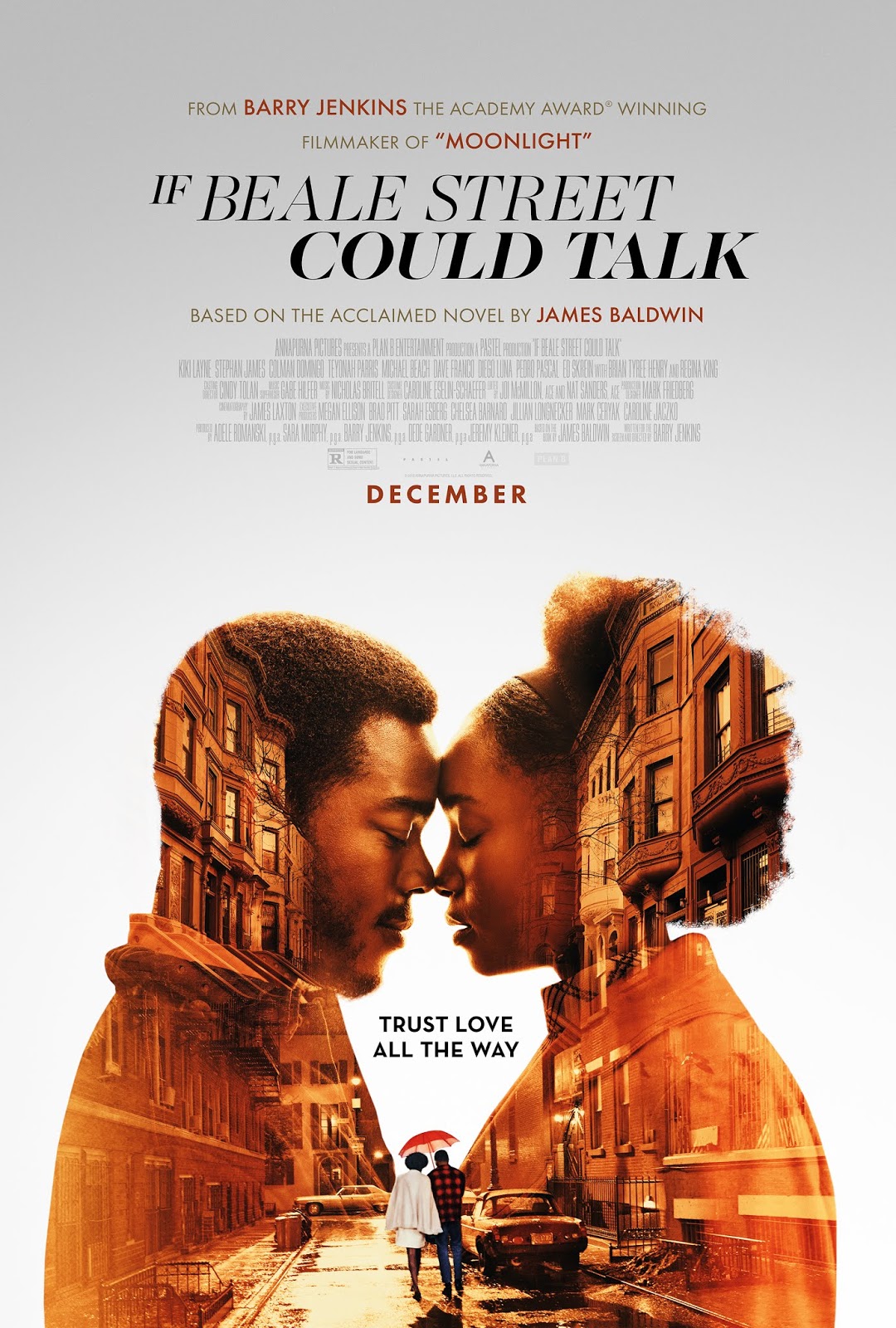
BEST SUPPORTING PERFORMANCE (FEMALE):  Regina King, If Beale Street Could Talk  

“As Sharon Rivers, Regina King lights If Beale Street Could Talk” with a maternal glow that serves as a port in the storm surrounding the lovers Fonny and Tish. Her beacon burns brightly, illuminating a path for not only her daughter but her future son-in-law as well. She is the quintessential mother, comforting and warm yet in command of a fierceness that protects her progeny like the strongest armor. Sharon’s chainmail has been forged in the fires of an unjust, unequal America; when her daughter faces similar injustices, Sharon shrewdly prepares for battle.” (Odie Henderson)


OUSTANDING BODY OF WORK:  Brian Tyree Henry 

"In 2018, Brian Tyree Henry had eleven credits on the IMDB, spanning film and TV with deliberate reach. If he had just had his turns in Atlanta, If Beale Street Could Talk, and Widows- that would have been enough to shame most careers as far as spanning genres and personae. But to start one day hearing colleagues at work talking about how great he was in Beale Street, and then hear the same thing from a bunch of teens talking about how great he was as Miles’ dad in Into The Spider-Verse later on in the same day; that doesn’t happen often. And it’s a testament to Henry’s tireless work ethic that it is happening.” (Jason Shawhan)


 25th ANNIVERSARY AWARD: Dazed and Confused  

"Keeping the political landscape of the era in the margins allows Linklater to elevate the emotional landscapes and keep focus on the more quotidian problems his characters are experiencing. Like getting Aerosmith tickets, finding a new location for the party, for the senior to find freshmen to beat, or for the freshman to find ways to fight back. What elevates Dazed beyond the average teen comedy is how deeply invested it is in these mini-dramas without overestimation their importance beyond the moment. As Linklater observes in the making of documentary, for teenagers 'the stakes are low, but it’s your life. So the stakes are actually pretty high.'” (Kevin Cecil)


BEST SCREENPLAY: Paul Schrader, First Reformed  

"It all has a touch of the personal; Schrader famously escaped into the cinema from a Calvinist upbringing indistinguishable to an outsider (or, indeed, many insiders) from systematic abuse, and while so many of his most famous protagonists spend seasons in various urban hells, First Reformed sees him return to small-town America, and struggle with his demons in the gray, wintry light of day. Home, where you can't blame being lost on being in a foreign land. Daytime, without darkness in which to hide. God shows His face when he feels like it, not when you want Him to.” (Danny Bowes)


BEST ENSEMBLE PERFORMANCE:  Support the Girls

"Lisa's struggle throughout the film is not that of a manager trying to ensure solid work from her employees but rather that of a mother trying to achieve social coherence within her work family. She's only kidding herself, and the chaotically amusing performances of the rest of Support the Girls' cast drive home that delusion. Haley Lu Richardson's perky Maci (picture King of the Hill's Luanne at the top of her class) is as winningly naïve as Shayna McHayle's Danyelle is guardedly skeptical. In particular, Danyelle's deadpan observation that she's 'pretty sure' it's illegal for Double Whammies to enforce an off-the-books max cap on how many black waitresses they're allowed to hire is note perfect, as is James LeGros as the restaurant owner who came up with that policy, dead inside and ruling like a despot what miniscule corner of the business world he can claim as his own. Double Whammies may not be the family Lisa seeks, but Support the Girls' cast comes as close as any movie's did this year." (Eric Henderson)


 TWOFER: BEST DIRECTION AND BEST CINEMATOGRAPHY: Alfonso Cuarón, Rom

“Roma is a deeply mythological film, too, that connects Cleo with some primal elemental force that bridges Earth, Air, Fire, and Water. The very first shot of the movie shows the sky and an airplane reflected on water, water Cleo is using to scrub the floor of the drive. She tracks down Fermin, her child’s father, to a vast field of dirt. There’s a forest fire at the celebration the family attends with their affluent friends. The film climaxes in the surf, before it bookends everything with Cleo ascending to the rooftop of the house, like she’s the mediator between the sky and the other elements.” (Christianne Benedict)


 BEST CINEMATIC BREAKTHROUGH: Boots Riley, Sorry to Bother You 

Sorry To Bother You spends its last third twisting itself into one odd metaphor after another about capitalism and the damage America’s classism and racism wreaks. If it starts to lose its footing in the final 20 minutes and goes from being laser-guided and consistently entertaining to gratuitously odd, it still feels far more together than superficially similar cult films like Richard Kelly’s Southland Tales. Alex Cox’s Repo Man became a hit among ‘80s punks for offering the same basic sensibility and politics. Here’s the equivalent for a new generation." (Steven Erickson)


10th ANNIVERSARY AWARD:  Wall-E 

"This visionary animated film that may well be regarded one day as one of the greatest of all animated features, stretches the boundaries of the form, and of art in general… The film has its level of cynicism, and there’s a hopelessness that recalls A.I. Technically and in its painstaking attention to detail it may well be the most accomplished of animated films. It is an exhilarating film of great physical beauty and wonderment, yet like all great art, its heartbreak is palpable.” (Sam Juliano)


 BEST EDITING:  The Other Side of the Wind 

“Welles and Murawski mix together 35mm, 16mm, and 8mm segments, variously shot in black-and-white and color, freely and seamlessly, in addition to switching aspect ratios between the 1.37:1 of the faux “documentary” footage of the party and the 1.85:1 of the film-within-the-film. It is an enormous credit to the skill of both editors (and the numerous other people involved) that this all registers not as simply as a cute formal device, but as a conscious configuration of the play between cinema and reality. And of course, it is a vital element in establishing the complex, almost free-jazz rhythm that the film takes on from almost its opening frames and carries through to the final shot — which, itself, is a post-production “fabrication” that, as paired with the closing lines, stands as one of the most enigmatic yet potent images in recent memory.” (Ryan Swen)


BEST LEAD PERFORMANCE COUNTDOWN #5: Thomasin Harcourt Mackenzie, Leave No Trace 

“Mackenzie’s considerable achievement here is to navigate viewers, with invisible technique and a depth of empathy that would be the hallmark of any far more seasoned actress, into an understanding of experience as this emerging young woman understands it, an understanding whose source can be traced directly to Mackenzie’s countenance and the way she occupies space, both in the frame and in her ever-new environment. By the time Tom declares to her father that ‘the same thing that’s wrong with you isn’t wrong with me,’ the movie has fulfilled its unhurried journey toward sublimity, with myriad opportunities for its audience to appreciate the nuanced, rarified air of a soul discovering itself, asserting independence, breathing in the world.” (Dennis Cozzalio)


BEST LEAD PERFORMANCE COUNTDOWN #4: Toni Collette, Hereditary 

“The obvious and easy thing would’ve been to push Annie’s brittleness, to intimate darkness and fragility as Annie shares her various traumas. Collette is smarter than that, playing the moment as pragmatic and, though she’s reluctant to open up, clear-eyed about her own baggage. There are many horror stories about broken people who are preyed upon by monsters; what sets Collette’s Annie apart is that she’s a flawed but self-aware person who tries, even before all hell breaks loose, to take care of herself. And she’s no less doomed because of it.” (Andrew Bemis)


BEST LEAD PERFORMANCE COUNTDOWN #3:  Olivia Colman, The Favourite

Towards the end of the film, she gorges herself on blue cake, takes a short break to puke, and then continues stuffing the cake in her mouth, sitting wide legged on the floor. It's a repulsive, darkly funny tableau. Yet even in that moment, Colman doesn't allow viewers to forget that it's a real, complex person sitting there. And that not knowing whether or not to laugh is kind of the point.” (Hedwig van Riel)


BEST LEAD PERFORMANCE (FEMALE):  Regina Hall, Support the Girls 

“Everybody knows a Lisa. You may have never worked in a ‘breasturant’ like Double Whammies but you probably worked with a Lisa. Familiarity helps with such a character but what makes Regina Hall as Lisa the glue in Support The Girls, and how her acting differentiates from her previous role in Girls Trip where she was also the lead and the glue of that ensemble, is that she is being crushed under the weight of modern capitalism and caught in her middle management position.” (Caden Mark Gardner)


BEST LEAD PERFORMANCE (MALE):  Ethan Hawke, First Reformed  

Hawke shows Toller as empowered by the past and traditions of his church and faith. Reverend Toller and First Reformed Church are both imperfect, weakened vessels through Schrader’s film, but Hawke enlivens both in his performance, by becoming a man with purpose.” (Caden Mark Gardner)


BEST PICTURE COUNTDOWN #10:  Support the Girls (Andrew Bujalski) 

"Andrew Bujalski's Computer Chess took place at a programming convention; Results was a romcom about personal trainers; and here's another oddball comedy, this one set at a Hooters-inspired sports bar. As in those earlier films, Bujalski's jokes play with the codes and quirks of his chosen milieu. The waitresses have to tease their clientele, but can't get too overt. ‘There is an art to this,’ says Lisa, the harried manager, to a new hire. She's having a bad day at work, juggling duty and compassion; most of the film spans from her morning commute to the end of her shift. (Not all of it, though, as the jam-packed screenplay has some structural surprises in store.)” (Alice Stoehr)


BEST PICTURE COUNTDOWN #9:  BlacKkKlansman (Spike Lee)

“Lee arranged for this film to be released on the eve of the one-year anniversary of the tragic Unite the Right rally in Charlottesville, Virginia, in which a counter protester, Heather Heyer, was killed. The movie ends as a tribute to Heyer, and we’re left with the horrifying thought that this shit is still happening with the flames being fanned by the asshole in the highest office in the land.” (Daniel Cook Johnson)


BEST PICTURE COUNTDOWN #8: The Ballad of Buster Scruggs (Joel and Ethan Coen)

“In The Ballad of Buster Scruggs, death doesn’t just hang in the air, it’s something so close it takes on a tactile quality. It’s so inevitable that even the one victory the film allows isn’t so much because the character won his prize, but because he skirted death (for now). We’re all sharing a stagecoach ride to the end, and we all have a story about how we got there. Exploring this truth through the eyes of Buster Scruggs’ eclectic characters, the Coen Brothers present something that’s as thrilling, resonant, and meaningful as anything they’ve ever done.” (James Frazier)


BEST PICTURE COUNTDOWN #7: The Other Side of the Wind (Orson Welles)

"I could talk all day about what makes The Other Side of the Wind such a major and vital piece of work, and one that proves that, even thirty-plus years after his death, Orson Welles still has plenty to teach all filmmakers who care to pay attention. But there's nothing I could say that the film itself couldn't say twice as well as I ever could. I'll just say that, with all the garbage that the world had to offer in the year 2018, it also gave us a brand-spanking-new Orson Welles movie. And that, like the fella said, ain't nothin'." (Paul Clark)


BEST PICTURE COUNTDOWN #6: Shoplifters (Hirokazu Kore-eda)
“If this is indeed his rumination on what makes a family, you couldn't make a much stronger argument for the Shibata family being a loving aspirational goal - a bulwark of security and support guarding against the shit and horror of the real world. But everyone has something to hide, and one aspect that ultimately makes Shoplifters feel so emotionally draining is the way Kore-eda, under the surface, was weaponizing that warmth.” (Steven Carlson)

 BEST PICTURE COUNTDOWN #5:  Zama (Lucrecia Martel)

Zama is the personification of complex as it is both dreary & beautiful. I’m not usually one for hyperbolic statements, but this is one of the best films I've seen in years.” (Marcus Pinn)


BEST PICTURE COUNTDOWN #4: Leave No Trace (Debra Granik)
“In her 2015 Dissolve interview with film critic Tasha Robinson, Debra Granik, commenting on her documentary Stray Dog (2014) about a Vietnam veteran, notes the richness of the things she wished her documentary had time to cover: ‘There could have have been a whole film that could have gone much more in-depth on therapeutic discussion, on what it takes to manage PTSD, or to face ghosts, and figure out how to live the next chapter of your life.’ Leave No Trace, Granik’s third feature-length narrative film, is, perhaps, a beautiful expression of that other film that Stray Dog did not have the space to be… The entire film is a quiet one; Granik gives her actors very little dialogue, but frames them, with beautiful work from DP Michael McDonough, in such a way that their faces and bodies communicate the emotion, the things that cannot be said but only deeply felt. Granik trusts the images to do the talking and allows room for the eloquence of silence. An unassuming but assured answer to the frantic editing and frenetic images that so often fill our cinema screens, Granik offers us space to breathe and feel, to learn to love our characters and feel with them their complicated emotions.” (Melissa Tamminga) 


BEST PICTURE COUNTDOWN #3: If Beale Street Could Talk (Barry Jenkins)
“Perhaps the biggest injustice of last week’s Oscar telecast wasn’t that Green Book, a movie where a walking Italian stereotype teaches an African-American gent how to eat fried chicken, won Best Picture over BlacKkKlansman and Black Panther, movies directed by African-American filmmakers that handled race and racism in a far more insightful, challenging, entertaining manner. (Don’t get me wrong — seeing Driving Miss Daisy 2.0 win was still fucked up.) It was that If Beale Street Could Talk, the latest from writer/director Barry Jenkins, wasn’t even in the running.” (Craig D. Lindsey)

BEST PICTURE COUNTDOWN #2:  Roma (Alfonso Cuarón)
“There’s a clear intention behind the use of the space inside the frame in Roma. Most of the time the characters are relegated to the background, so we get the time to fully explore the surroundings, trying to capture any period detail (or fault in it), expanding upon the ambience, helped through the impeccable sound design (which puts the camera as a physical entity where the ears capture sound as much as a person in that position is able to). This isn’t because the period detail or the sets are more important than what’s happening to the characters that inhabit them, but because those objects and sounds inform of the choices they end up making. It speaks of their social, racial and gender positions inside society. But it’s not an explicit dig by Cuarón to make these apparent or obvious, as he just decides to make a portrait of the normalcy of that moment.”

BEST PICURE COUNTDOWN #1:  First Removed (Paul Schrader)
“Among (Schrader’s) often brutal oeuvre I think he’s finally made a film which could be accurately described as exquisite, without betraying any of the rage and paranoia and unsettled psychological terrain that has earmarked both his finest and even his most flawed work. That word ‘exquisite’ should in no way imply preciousness, as if anyone describing Schrader’s work could ever make room for that adjective. First Reformed is a tormented consideration of faith (and the lack thereof), the difficult possibility of transcendence, and the seemingly even more difficult act of holding ostensibly opposed impulses of hope and despair in balance without completely losing one's shit. Which, of course, makes it a perfect piece with Schrader’s long-expressed vision and a perfect movie for our particular moment.” (Dennis Cozzalio)
*************************************