Wednesday, August 18, 2010

THOUGHTS FOR THE DAY


Book me, Dan-o!


And it must be a theme cake this year!


Aging makes you smarter, they say, so one really should flaunt it! I completely agree, so in that spirit I want my cake to look like this!


According to Xerxy, creators of the Ray Liotta Tribute Cupcake, "These devilish morsels come complete with fake blood and are made of a raspberry cake base with French vanilla cream cheese. The brain is made out of chocolate." Of course it is...


No, 50 years, not 50 feet!

Here's a much better example:


Joan Jett turns 50 on September 12 and she's still sexy as hell, even when she's making funny faces. (perhaps even more so!) According to my tarot card reader, 50 is definitely not what it used to be.

Click here for a great gallery of some other people who will be looking pretty damn great (and a far sight better than me) when they turn 50 this year. (Disclaimer: Some of 'em already have).

And have a great day! I know I will (thanks to you)!


**************************************

Monday, August 16, 2010

MOVIE BLOGGER SUMMIT PART 1: The SIREN and the SLIFR on Origins, Childhood Visions, Writing Philosophy and the Beetlejuice of Film Bloggers


Brooklyn resident Farran Smith Nehme, aka the Self-Styled Siren, and I both began our blogs in late 2004-early 2005, round about five and a half years ago, and by various degrees of kismet and good fortune became aware of each other’s tiny fiefdoms and mutual admirers of the work contained therein. She made me swoon with her passion for classic film right from the start, even though I think the first thing I read of hers may well have been her celebrated takedown of one of my favorite movies (we’ll get to that later!) I’ve linked to everything but her grocery list, it seems, and she once mentioned a piece I wrote while she was being interviewed in Cineaste magazine, which was probably the first thing anyone in a national print audience had ever heard of me or this blog. After several years of reciprocal support and enthusiasm we decided it was time to get together and talk. So, about two and a half months ago she and I each submitted six questions for the other and then connected up via Skype to yap about the answers. We sat down for about an hour and 45 minutes over two sessions, and the following two-sided interview you see before you is the result. (Well, this is just part one, but we’ll get to part two later too.) Farran proved to be just as delightful and quick-witted live and (almost) in person as she is in her writing, one of the telltale signs of The Real Thing in my book, and it only took a couple of seconds after anticipating actually getting to speak with her about matters of our movie hearts for the jitters to dissipate. Hopefully the conversation, as transcribed here (and edited, especially whenever I’d start rambling, as I am wont to do) will be as entertaining for you to read as it was for both of us to engage in.

This conversation isn’t exactly fresh, however. It was recorded on May 31, 2010, and thanks to an unusually busy and frantic summer it has taken me this long to get our little summit talk in reading shape. Over that summer there has been a lot going on at both of our houses. Farran became friends with Mary Astor’s daughter, did a definitive check on women’s costumes in the movies, turned a furtive glance toward a host of hunky movie directors (her word was “handsome”) and, oh, yeah, helped save a couple of silent movies from certain extinction. Of course, that’s not all. It never is with Farran. Is it any wonder I was over the moon about her even before I got the privilege to sit down and trade words in real time with her?

I spent my own summer reflecting on the late Ronald Neame, sitting down for a merciless interrogation, becoming part of the TCM Horror Dads Roundtable and calling the Los Angeles Times’s Patrick Goldstein out for suggesting David Edelstein had no right to write a negative review of Inception. (This, in turn, got me plenty of unexpected attention from Mr. Edelstein himself, Roger Ebert, and even the gosh-darned New York Times! WT f-in’ F?!)

But on top of all that, Farran and Self-Styled Siren headed Paul Brunick and Film Comment’s humbling list of the Top Film Criticism Sites on the Internet. It was a genuine thrill to see her continued acknowledgment and heightened profile as one of the best, most passionate writers out there in the blogosphere because she damn well deserves it. The fact that this blog you’re reading now was also included in that heady list was a great thrill, make no mistake, but it was made greater by the pride I took in knowing I was sharing that space with Farran, someone I genuinely respect and, yeah, okay, love. She’s an inspiration, and despite what my extreme tardiness over the transcription of this interview may suggest, I am eager and thrilled to share our conversation with you now. So without further messin’ around, here’s part one of the blog summit between the Self-Styled Siren and, if I may, the self-styled SLIFR. Enjoy!

************************************************

DC: Describe your childhood with the movies. Were you always interested in films of the past, or was that an interest that developed for you as you grew older and developed more of a sense of film as having a significant history? And what got you to the point where you felt you wanted to or had to write about them?

FSN: Well, this is the type of movie (classic film) I always watched, from the very beginning. I was sick a lot as a kid. I spent a lot of time in bed, and I spent a lot of time reading, but even I could not read all the time. So I would go into my parents’ bedroom, prop myself up on pillows and quickly discovered that I didn’t much care of series TV, but I did like the movies. There would be one on in the morning and one in the afternoon, and this was just what I watched. I quickly developed my own sense of taste, and then as my parents saw that I liked older movies—they both did too—they would kind of point me toward things that they thought I would enjoy. Then as I got more interested, I started getting books for Christmas that were about movies. So it was a long-time hobby for me. But when I look back it’s odd to me that I never really considered going into movies or writing for them. It was just something that was part of my personal life.

DC: Were your parents big movie-goers?


FSN: They were at one point. I don’t remember them going out to the movies that often, but they were frequently very happy to sit down and watch with me. My father’s taste ran to westerns and war movies and adventure stories and things like that, although he would sit still for a musical if it had Cyd Charrisse. (Laughs)

DC: I can understand that.

FSN: Oh, he had a tremendous crush on Cyd Charrisse! My mother, on the other hand, liked a lot of the old melodramas that she had grown up with, so I credit her with my love for Douglas Sirk and Delmer Daves and people who made movies like that in the ‘50s. And she also loved any kind of screwball from the 1930s, so if Irene Dunne was in it I could guarantee that Mom would pop down and watch. And, of course, Cary Grant. Everybody liked Hitchcock. So that was how it developed. But I didn’t really consider writing about them until I moved to Toronto with my husband. He got a job there and I quit work to be with him and spend some time with the twins while they were small, and I found myself very much at sixes and sevens. It’s difficult to make friends in a new city—we were in a suburban part of Toronto. I didn’t have much to occupy my time, and I started thinking that my brain was going to turn to Cream of Wheat if I didn’t do something to keep up my intellectual vigor. I had some friends who had started beauty blogs—they were blogging about things like make-up and perfume and fashion, and so I thought I’d start a blog too, but I didn’t think I was going to be able to muscle in on their territory. My original concept for the blog was that I was just going to write about whatever the hell I pleased. I never thought I would write about personal matters. But I quickly discovered that I enjoyed most just writing about old movies. So if you go back—Most of my archives are still there. I’ve taken down a few posts that I grew to intensely dislike— (Both Laugh)

DC: I wondered if you indulged in that kind of practice. I know I have!

FSN: Oh, yeah. There are a few that have disappeared down the memory hole, but for the most part it’s all there. You can kind of see it developing—very casual, chatty things giving way to more analytical pieces and me trying to think more deeply about movies that I liked and bring in more of the film history that I had always enjoyed as well.

DC: With your blog there’s a completeness that’s, I think, unusual. You can see the searching at first, but Self-Styled Siren doesn’t seem as scattershot as certainly my blog did when it started.

FSN: I don’t know. I think everybody has to find their voice and their footing, but Self-Styled Siren did develop very quickly that way. Basically, I just wanted to keep up my writing. I wanted to keep those muscles flexed and toned. I once saw an interview with Mikhail Baryshnikov and something he said stayed with me forever. He said that if he skipped morning bar class for two days, it took him two weeks to get back where he was. And it just struck me that that was true for anything, even mental exercise. So I felt if I could do this I would be able to keep things in shape.

FSN: My first question also kind of dovetails into this. You’ve written about how childhood viewing sort of formed your taste, but I was curious how growing up altered it. Are there things you used to avoid that you now seek out, or things that you used to love that have sort of palled in adulthood?


DC: It’s interesting how this question kind of fits in with something I’ve thought about over the past couple of years in terms of what I wanted to do with the blog. I’ve become more interested in going back and looking at movies I initially hated, or didn’t understand, or for some other reason dismissed when I was younger, and trying to determine just how life experience contributes to my outlook on any given film. Did I even have the experience to understand the movie to begin with? It’s strange to conceptualize it, but in terms of what I like my childhood viewing habits really haven’t changed an awful lot. I think back on something like The Seventh Voyage of Sinbad or any of the Ray Harryhausen adventures I loved watching on TV, or any movie I loved as a child, and I still have the intense desire to experience them, but I don’t feel like I’m slighting either the movie or my original experience with it if I can look at those movies through eyes that I acknowledge are 20-30 years older. Some people I know might frown on examining those movies any closer than as pure entertainment, while others would just as quickly laugh at you for taking them any more seriously than that—you either dishonor them or give them more credit than they are due. But going back and taking that look is important to me. I don’t just assume that what I thought about them 30 years ago is still going to hold true, or that they would even necessarily seem like the same movie. Sometimes they “hold up,” sometimes they don’t. Sometimes they are significantly different than what I remember, or sometimes I will notice things that completely escaped me before. In a way it’s disorienting to reassess like this, but on the other hand it’s something that has made my movie-going habits richer, and that has everything to do with what you were talking about—using your writing muscles to dig in a little deeper, both into the movie and into my own reaction to it. For three years I wrote reviews for a newspaper in Ashland, Oregon, from 1983-1985—that was the only time I’ve ever written professionally or with any kind of regularity outside of college, and since that time, before starting the blog, I really hadn’t written much of anything. So like you, I started the blog more as a way to get those muscles in shape again so I could understand more about what I was seeing. I had no expectations of any actual readership.

FSN: I think we started our blogs around the same time, and an amusing thing is, one can go back in the archives and see posts where there are two or three comments and they’re all from close personal friends. (Laughing)

DC: Oh, if not for those poor, selfless souls…! I was tracking that very thing a while back, and it was interesting to see the names of relatives and friends who were in there initially lending their support and how some of those names just kind of drop off after a while. My wife always says, “I’m too intimidated to post comments on your blog anymore! The company’s too smart!”

FSN: Yeah, that’s the line I get from my friends too! (Laughing)

DC: So I suppose there’s a level of success that’s reflected there, especially from relatively humble beginnings, in terms of what we’re trying to do.

FSN: But don’t you occasionally find yourself getting worried when you don’t hear from someone for a long time?

DC: Yes!

FSN: I mean, I’m really hoping they’re off doing something fabulous like having a passionate love affair in Tahiti or something! (Laughs)

DC: It’s like not being able to interpret the tone of an e-mail. I take these things more personally than I should, I guess, but when I haven’t heard from someone in, like, three months or something I always think, “Well, I guess I bored the hell out of them!” One of the things I really like about your site is that I never get the sense you’re fishing for the topics you think will draw in a wider readership. It’s very clear that you’re writing about things that reside in your heart and soul, even if it’s just a short post or a comment in response to someone else’s thoughts. There’s always the sense that you need to write about what you’re writing about. That’s the hallmark of a great blog to me.

FSN: Well, I think there are a lot of bloggers out there like that. Most bloggers aren’t getting paid for it and are doing it more or less strictly for love. A relatively small minority of blogs are trying to do it in a big, commercial way, and if you’re going to do it there is a certain thing that you have to accept, I suppose, about what’s going to appeal to a major audience, like it or not. But neither one of us ever had any aspirations to be D-listed or whatever, so— (Laughs)

DC: No, not really.

FSN: There are a variety of gossip sites out there, but when I read the comments on some of them it’s astonishing to me how much bile people have stored up toward celebrities, the incredible level of personal venom that’s expressed.

DC: And not just toward celebrities, but venom just across the board. And one of the things I like about your site, and it’s something I’ve tried to cultivate too, is a sense of the comments thread not being a place where you come to blow off steam or rub somebody’s nose in their inadequacies or whatever. Certainly in your case that thread is much more of a place for people to trade ideas.

FSN: Well, that sort of prepares for my second question, so maybe I’ll just take an extra turn here and go ahead and ask you: There are some critics and bloggers who almost never mix it up in their comments, and then there are others, like us, respond to as many comments as they can. What do you think are the merits of each approach?

DC: Well, it seems to me that if you’re blogging and you’ve got a comments column open, you are at least open to the idea of interacting with the people who stop by to take part and leave their impressions. So it doesn’t quite make sense to me that someone would take the time to create a long post full of ideas and angles and provocations and then not take part in the discussion of it. I don’t see that happening as often as I used to, but certainly for me whenever I don’t participate in any conversation about something I’ve written, it’s usually because I cannot take the time to stop down out of the non-writing part of my life and get into an extended back-and-forth. Sometimes I can only jump in after 20 or 25 people have already checked in, and then I’ll go back and try to address each comment at least briefly. But I always try to get involved to some degree. My models for that were certainly you, and Matt Seitz, when he started The House Next Door-- I’d throw down a comment, and he’d be right back, immediately it seemed. It gave me a real sense of being connected to the blogger and the blog, and the community that makes up that particular slice of the universe. So I took that as my example, though it’s one I don’t live up to nearly as well as I used to or should, and it’s simply because I can’t locate that 25th hour in the day.

FSN: I don’t quite live up to it as much as I used to either, just because the volume has increased so much. There is a point where you get so many comments—I haven’t reached that point, I’m not even close—but there’s a point where you get so many comments you can’t possibly— Dave Kehr would be the primary example. He’s got a column for the New York Times to write, and presumably he wants to shave and shower and eat every once in a while, and he simply cannot respond to 500 comments.

DC: I think about that in terms of general output too. I’ve really had to scale back from those heady days where I’d post once or twice almost every day—I just don’t write as much as I used to. And as I’ve started to find my voice, thankfully along with that has come an understanding that it’s quality, not quantity that matters. That extends to the comments too. If I don’t feel like I have anything to add to the conversation, maybe someone else will goose me and make me think of something that I missed and give me a reason to stay in the discussion. I did get a comment recently that made me feel like people understand somewhat what’s going on outside the writing. I wrote a piece on John Williams for a blog-a-thon and I talked specifically about his score for 1941-- and everybody knows how I feel about that movie.


FSN: Yes, right! (Laughing)

DC: But what was funny was, I had described a little section in the movie and I described a scene in which Slim Whitman is kidnapped by Japanese naval soldiers dressed as Christmas trees.

FSN: (Snickers)

DC: I proudly hit “Publish Post” and off it went. A day later somebody writes in and says, “Um, you can erase this comment afterwards, but… it’s Slim Pickens,” not Slim Whitman. So I’m a dummy. I know it. No way am I going to delete that comment!

FSN: I’m sure you were thinking Slim Pickens, but the fingers didn’t cooperate!

DC: I blamed it on having my “Yodeling’s Greatest Hits” LP blasting while I was writing. Okay, moving on to my second question. Your sense of film history seems well-lived in and certainly well articulated. There’s an old quiz question I’m going to crib from because I think people would be interested in hearing your answer: At what point in your film education did you become aware that movies were actually directed as opposed to just happy accidents or acts of God?


FSN: Not exactly, because it was really very early, and it was largely because of my father. Mom certainly knew about Busby Berkeley and Sirk—we both liked those movies a lot. But my father was the one who would really talk to me about directors. I didn’t have a strong sense of what exactly the director did; it was more a sense of what I could expect from a movie if a certain person had directed it. So for my father a movie was always worth watching if it had been directed by John Huston or Howard Hawks or, above all, John Ford. Ford was his god. So that was how I kind of became aware of it. Through watching things with him I also learned that I could expect certain things from each director, like Monument Valley and the sweep of American history and some slapstick interludes from John Ford, as well as his stock company of familiar faces. From Howard Hawks I could get very strong, wisecracking women, and from John Huston a sense of adventure. This is all very general, of course, but that was how I started looking at and hearing about directors. From there I moved on and started looking more at their work, although I would have to say, like most classic movie fans your gateway drug is stars and actors. I did look at that more than I looked at directors, at least initially. There were people that I was just in love with and would sit down and watch in anything. Stars were directing my viewing, but I was certainly aware that certain directors were associated with certain styles, like wisecracking showgirls with Busby Berkeley… (Brief Pause) I love wisecracking showgirls. I miss them so much in contemporary movies! (Laughs) You know, I feel like I need wisecracking showgirls in my life!

DC: Lately I’ve been lucky enough to see a bunch of old Universal-International westerns (in Technicolor!) in very close proximity to each other, and wow, there are some great wisecracking showgirls in those movies! Mara Corday, Yvonne de Carlo, Luana Patten…

FSN: “Wisecracking showgirls” is something of a euphemism in those westerns, isn’t it? And “dance hall girls”?

DC: Yeah! Remember what I was saying about discovering new angles on childhood favorites?

FSN: Earlier this year you wrote a long, excellent piece about the Turner Classic Movies Film Festival that I loved. Somebody said it belonged in The New Yorker-- I thought that was totally true. Based on that experience, where you saw people from all over the country and what you’ve observed going to revivals in Los Angeles, are you optimistic that the market for classical film is going to widen, or do you think we’re fated to continue to be a niche? In my nightmares, we devolve into something sort of like string quartets, where there’s this small group of connoisseurs who passionately appreciate it, and to the outside world you’re sort of largely not a factor.


DC: I don’t know that we can ever expect the audience for classic movies to ever be a force that would ever even make a blip on a box-office chart or anything like that. But given that slice of reality, it’s hard not to be at least encouraged by what I saw at the TCM Film Festival. And the venues like the New Beverly Cinema and the UCLA Film & TV Archive and the American Cinematheque here in Los Angeles always provide an excellent balance of classic film to go along with contemporary and cult favorites and oddities, and they always have an audience. It might not always be as large as you’d hope, but there is an audience for these films. And I wouldn’t necessarily even think that there would be much of an audience for some of the more adventurous choices. But the man who programs the New Beverly, Michael Torgan, is very smart and very astute at not only putting together double features that play well together and connect up with each other, but he’s also very good at balancing out a month’s worth of programming so it doesn’t get weighted too far in any one direction—classic, contemporary, grindhouse, what have you. And the audience feeds on that. They are very much in support of this kind of programming, and they will take chances, but it’s really hard to say how viable a test sample it is because I see a lot of same people there over and over again. It speaks to a tightly knit community of filmgoers, but that community may not spread out as wide as we may hope.

FSN: That’s true of Film Forum as well.

DC: So it’s a big question: Is the audience growing at all, or is it just an enthusiastic group of people, fairly large for a niche but nothing compared to the folks who pony up for the opening weekend of Iron Man 2, who just keep circling around this network of revival screenings? I get the feeling that many of the people in this audience, as young as it is, may be encountering a lot of these movies for the first time, on the big screen or not, and I think that can only be good. Young people broadening their scope and experiencing something other than the contemporary or the received cult classics and kind of laying the groundwork for adding to that experience and branching out into movies they may have never before considered seeing. What I love is seeing parents bringing their kids to these screenings. Maybe I just wasn’t tuned into it, but I don’t recall seeing a lot of tots in tow at the New Beverly 15 or 20 years ago. (And maybe it was just the movies I chose to see.) But every once in a while you’ll overhear someone talking to their son or daughter about how Randolph Scott starred in “X” number of movies for Budd Boetticher, who was a director of westerns, blah blah blah, and it’s really encouraging to see that happen.

FSN: What ages are we talking?

DC: Nine, 10, 11. I mean, my own daughter, the New Beverly is pretty much her film school. She’s moved on from being tolerant of old movies to being actively interested in them.

FSN: Aha! A future Siren!


DC: I hope so! But it’s neat— Maybe she just likes the time with Dad (I hope so!), but she doesn’t even question me anymore if I say, “Oh, let’s go see Kansas City Confidential or The Lady Eve.” “Oh, okay. Is it funny? Who’s in it?” Over the last couple of years she’s really gotten to know the Preston Sturges stock company. She recognizes William Demarest and Franklin Pangborn, by face if not by name. And she doesn’t seem to be put off by black and white the way a lot of young kids are either. So if this is happening in my family, I have to believe it’s happening in other families where film and film history is important, and I think that translates into something to be cheerful about when it comes to thinking about the future of the audience for classic movies. And Turner has everything in the world to do with that.

FSN: Oh, yeah. They’re doing the Lord’s work. (Laughs) No doubt about it!

DC: Yeah, and that’s why it’s annoying, all this speculation about people’s motivations for attending the festival or just watching classic films in general. I don’t give a crap about people’s motivations. Who cares? They’re there. They’re open to the experience. Let them develop their own thoughts and feelings about the movies. I know several people I talked to who could have gone to see Sweet Smell of Success again but instead chose to see, I don’t know, this Z-budget British noir they heard good things about. For some people venturing off that beaten path is a whole new world, and I kind of envy people who get to discover some of these films for the first time. I was in that position myself—I’d never seen Wild River or Murder, He Says or The Story of Temple Drake before the Turner Classic Film Festival showed me the way. I came away from that weekend with such a high. I could have cared less about the stars introducing—Well, I’ll take that back. Seeing Eli Wallach was pretty goddamn great.

FSN (Laughs)

DC: But in general, I don’t care whether they’d programmed somebody to come and visit beforehand. It was usually neat when it happened, but that’s not what was dragging me to these things. I mean, seeing Martin Landau wasn’t reason enough for me to pick Crimes and Misdemeanors over something I’d never seen before. Maybe it would be for some people, but for most I got the sense that it was the movies themselves that were the draw. You don’t stand around for two and a half hours just to see Anjelica Huston introduce The Treasure of the Sierra Madre. You’ve gotta love that movie to get sore feet like that. Speaking of old movies—and gee, what a shock that we would be speaking of old movies--

FSN: Right. With me? What were you thinking?

DC: We tend to be very civil and cool-tempered, but recently you stood up against a dull-witted attack on Douglas Sirk which was fueled by a pretty ugly undercurrent of homophobia padding the usual macho bluster. At first glance it seems like classic Hollywood could be divided into “Chick Flicks” and “Movies for Men Who Like Movies” just like modern films could be. But I wonder, apart from the usual garbage being slung on this site (the manliness of which continues unabated re Scott Pilgrim vs. the World and the inevitable chop-licking over its less-than-impressive box-office take-- Ed.), do you think people who like classic movies are maybe a little more resistant, or maybe even unaware of these kinds of divisions? I mean, I know plenty of people willing to give themselves over to Written On the Wind as readily as they would to 3:10 to Yuma.


FSN: Well, I think we can go ahead and say his name. He’s not going to pop up like Beetlejuice—Jeffrey Wells! I think he sort of perceived this sort of far-off, dull hum somewhere and attributed it to a malfunctioning refrigerator—Well, that was me taking him to task for his take on Douglas Sirk! (Both Laughing) We’re so off his radar! I don’t read his blog often enough, frankly, to get a sense of what his sense of film history is, so I can’t address him specifically. Maybe he does like classic movies, but he just likes classic movies about manly men doing manly things. (Laughing)

DC: I always feel there’s some sort of agenda attached to the things he likes or dislikes. Whenever I get sucked into one of his comments threads, I almost always come away from it feeling like I’ve been in a car wreck, yet I never get the sense that he loves the movies as much as the sound of his own voice railing against the tide or being in the movie culture and bumping up against some unfortunate starlet at a screening.

FSN: What was encouraging about that whole dust-up was, if you went into the comments on his post most of the people taking him to task were men saying, “I like Douglas Sirk just fine.” I wouldn’t so much as a classic movies fan, but I think if you have a broad sense of film history you are generally more resistant to easily classifiable kinds of tastes. You’re naturally resistant to that. You want to try and acquire a certain catholicity of taste—it’s considered a desirable quality. I will say that what I do find is—I find a certain resistance to taking certain films seriously, and that rankles a bit. People will go back and parse every moment in an Anthony Mann film, and yet somehow not deem it necessary to give the same attention to a woman’s picture like Back Street or Now, Voyager. Somehow they seem more trivial, or it’s regarded that way.

DC: That’s certainly the case in modern movies too.

FSN: Oh, yeah, you can see it in the reaction to Sex and the City 2. Let me say up front that I have absolutely no doubt whatsoever that it’s a completely atrocious movie, and in fact I hated the series. But in some of the threads that I would read on it, there was this kind of sniffy insistence that the very subject matter was inherently unworthy of any serious person’s attention. That does get up my nose a bit, you know. Excuse me, but your fantasies about being a scientist in a really cool iron suit are not any more serious than my fantasies about Manolo Blahnik. They’re just not. (Laughs) And increasingly, the coverage (of SITC2) started to take on a tone, after a while, where I was like, “Guys, it’s called piling on and you get penalized 15 yards for it! Just back off!” (Laughs)

************************************************

(Next: Thoughts of Mother Russia, Claudia Cardinale, High Profiles and Unexpected Pleasures as the Blog Summit between Yours Truly and Farran Smith Nehme, the Self Styled Siren continues. Part Two is up on this coming Friday!)

************************************************

Saturday, August 14, 2010

HORROR DADS PT. 3 -- THE FINAL CHAPTER!!!


“My dad was my frequent viewing companion for Saturday afternoon fare. I remember seeing The Brain That Wouldn’t Die (1962) for the first time with him. I imagine he squirmed through a lot of those scenes, hoping I wouldn’t ask about Herb Evers’ interest in those models. He also bought me my first copy of Famous Monsters of Filmland and continued to do so until the mag gave up the ghost. Neither he nor my mother were thrilled about my interest in Fangoria and I remember being asked to show some interest in subjects other than horror in regard to reading material. My stack of FMs went frequently absent when my grades took a nosedive; they were a convenient scapegoat, though they weren’t the particular culprit. As Michael Weldon wrote in The Psychotronic Encyclopedia of Film, I viewed most of my days behind a school desk as a waste of time. I imagine that they breathed a sigh of relief when I actually made a few dollars from my horror pursuits by writing for Fangoria, though I doubt they reported that particular credit to friends and relatives with the same degree of pride as writing for LA Weekly or the LA Times: “Oh, yeah, my boy’s got a piece on The Ring 2 in the new issue of Fangoria… what? It’s called Fangoria… how the hell do I know what it means? It’s about those stupid horror movies he loves.” -- Paul Gaita

“Though they got the heebie-jeebies about the splatter movies I was watching as a young teen and expressed their concern, my parents essentially left me alone in my obsession with horror movies, and encouraged me to make them, giving me a Super 8mm camera at age 10. In high school my mother would clean my room, which was covered with one sheets for movies like Videodrome (1983) and Eraserhead (1976). I have a memory of watching a tape of Dawn of the Dead (1978) when I was about 14, on the VCR I had saved up to buy. I was sitting there freeze framing a special effects shot where a zombie was getting shot in the head. I had read Tom Savini’s book Grand Illusions and wanted to see the effect up close. My father walks in and I’m staring at this frozen image of someone with blood bursting from their skull!. He got upset and started telling me that this is not the kind of thing I should be looking at. I got very upset too, and tried to explain to him that I was looking at it because it was a special effect, pointing out on screen how it was all done. He backed off. I imagine my dad had never heard the word “squib” before. Though I wonder if I had mentioned a “blood-filled condom” he might’ve been even more alarmed!” -- Nicholas McCarthy


This week, on the concluding installment of The Incredibly Strange Film Fiends Who Had Kids and Became Mixed-Up Horror Dads, Richard Harland Smith and the boys/men/dads (including Yours Truly) talk about their own familial influences that formed their own experience and tastes in the horror genre. Anyone who grew up with a specialized love for horror movies knows the unique thrill of discovering someone else in the world, and especially in your immediate surroundings, who doesn’t have to be told why the names Forrest J. Ackerman or Ray Harryhausen or Tom Savini, or “Captain Company” or The Psychotronic Encyclopedia of Film are important or exciting. But those of us bringing up our own children are just as likely to reconnect and reflect upon our memories of those in our own families-- moms, dads, grandmas, aunts, whoever-- who understood, merely tolerated or sometimes actively encouraged our own special relationship with this most disreputable and sometimes outwardly repulsive of movie genres. That’s what we dig into in part three of the Horror Dads Roundtable, and it’s a juicy, visceral, flesh-searing, brood-producing way of ending this particular phase of our association. Lots of great stories await you if only you’ll click here.

And be warned, this is not the end. We’ve learned, to our extreme pleasure and honor, that the HDR will become a semi-regular feature over at Movie Morlocks, and that next up on the docket will be an in-depth discussion of Frank Darabont’s controversial film of Stephen King’s novella The Mist. Keep checking for the publication date on that one, and for now, happy reading!

*********************************************

Thursday, August 12, 2010

HOLES, SOULS AND JACKASSES: 3-D PAST, PRESENT AND FUTURE


Lots of interesting discussion this week about 3-D. I just spent a night at the drive-in in front of Cats and Dogs: The Revenge of Kitty Galore thanking God and the ghost of Jack Warner that I didn’t cough up $12 a ticket for the kids and myself to witness this mind-numbing “comedy,” which isn’t a flea, 3-D or flat, on the ass of the surprisingly funny original Cats and Dogs (2004). Some wonder if the public isn’t starting to smell something funny about the jacked-up rates to see a movie that, in some cases, was never originally intended to be Comin’ at Ya! and is only 3-D because of a last-minute conversion that in most cases results in dimly-illuminated 3-D image that would have been far better left in two-dimensions. (See the recent Clash of the Titans, which I quite liked… in 2-D.) Meanwhile, Joe Dante’s The Hole, shot by the director as a 3-D feature, is having trouble finding screens this fall that aren’t being taken up by the likes of Megamind and Yogi Bear. Dante’s thriller is by all accounts terrific and certainly looks good:


Here’s hoping Dante’s movie can bring some fun back to 3-D and honor the process and the moviegoing public the way terrific films like How to Train Your Dragon and Despicable Me already have this year. Between The Hole and the prospect of a documentary about spelunking directed in 3-D by Werner Herzog, the master image-maker of modern documentary film, I’d say there’s some life left in the old stereo-vision concept yet.

So too, I’d guess, would Matt Zoller Seitz, who contemplates “3-D Filmmaking’s Radical, Revolutionary Potential” in a fascinating piece written for Salon. Matt begins by asking the right question: “Is digital 3-D the future of cinema or an annoying, overhyped fad?” Matt suggests that “(a)side from a brief flowering in the '50s, an aborted comeback attempt in the '80s and the current incarnation, which apes the preceding ones with more up-to-date technology, audience have gotten a limited, distorted sense of what 3-D is and could become.” He then posits a possible future for 3-D at the service of character-driven, more intimate, interior stories which he concludes, convincingly, could be “genuinely revolutionary,” if only the powers that be in the entertainment industry can be convinced/forced (in sheerly financial terms, one assumes) to look beyond what entertainment as they’ve always known it actually is—a tall order, to be sure. It's a compelling read all the way.

Conversely, Glenn Kenny’s piece at MUBI is all about the glorious past history of 3-D at the movies, written to coincide with a great program of classic 3-D pictures at New York City’s Film Forum. Kenny, a great writer, will get you all fired up about putting those antiquated red-blue cardboard doohickeys back on the bridge of your nose for this festival:

“New York's Film Forum and its ingenious, enterprising rep programmer Bruce Goldstein figured that the summer after Avatar would be a good time to book another 3-D festival, and this one's a doozy. The venerable Manhattan theater is working with swanky old, or maybe we should say vintage, equipment. Their 3-D system is analog, consisting of a silver screen, two projectors running in sync, and gray-tinted Polaroid glasses. All the films in the series are actual 35-mm 3-D prints.

The system places some interesting formal restraints on the films in question. Because we're talking about two projectors running in sync with each other, that would mean seamless reel changes would require...four projectors. Not happening, here, or in the '50s theaters where many of these films were first shown. Hence, these films run with brief, built-in intermissions. Also, a lot of them are reasonably short, as features go; of the three pictures I'll talk about in detail here, only one of them is over 80 minutes.”


Kenny’s description of the program includes a link to the full schedule at the Film Forum and will have you seriously considering a plane ticket east.

But I have to admit, other than The Hole, there is another 3-D movie coming in October which may not exactly point toward the future of 3-D movies as an intimate experience as much as it recasts (in a hopefully disgusting manner) the hurl-the-kitchen-sink-at-the-audience aesthetic of many of the movies on that Film Forum schedule. The trailer alone for this new film made it streak to the top of my most anticipated releases of the fall list—as you know, autumn being that time of year when studios bring out all their prestige release in time to make the critical year-end best-of lists. Well, other than me and maybe Steven Carlson, I’m not sure who would consider putting this one on their year-end best list, but that doesn’t make me look forward to it any less. Just imagine the things that are gonna get flung at the screen in this picture that decorum and the MPAA will not allow even a hint of in this trailer…


My 3-D glasses are polished and ready to go for October 15th!

*****************************************

Wednesday, August 11, 2010

A LULLABY FOR CHARLIE


At the end of this past school year my oldest daughter was busily rehearsing for a duet she was going to sing with a friend at the school talent show. But at literally the last minute her friend’s mother pulled her daughter from the show and refused to let the girl participate. At first my daughter was devastated, and her teacher scratched the song from the program. But after a couple of days of unsuccessfully trying to change the mother’s mind, her teacher told Emma that if she wanted to do the song solo, she could certainly do so.

Now, if it had been me I would never have had the nerve to go through with it. But Emma, to my great surprise and happiness, agreed to go it alone. So on the evening of the performance, having never rehearsed the song on her own, Emma walked out on stage and knocked an a cappella rendition of the “River Lullaby,” from the Dreamworks animated movie The Prince of Egypt, right out the back doors of the auditorium.

In the movie, the late Ofra Haza plays the mother of Moses. She sings the song as she sends her son down the Nile River in a basket toward his life as a member of the ruling Egyptian class. But I never thought of Ofra Haza while I was videotaping my daughter singing. Instead I marveled at her poise, the clarity of her pitch, her ability to navigate such a relatively complicated melodic line, and the fragility of her tiny voice ringing out to that little auditorium packed with parents and kids who were surprisingly gracious and attentive, and I became overwhelmed with pride and tears.

But it was when she began singing the third verse that the song, in my mind, became something else, a lullaby she was singing to her older brother Charlie, a brother she knows and loves but will never meet. Though it was never intended as such, I cannot hear her plaintive little voice singing this song now without interpreting it as her own tribute to Charlie, her wish to honor him, to tell others about him, to see him and speak to him for the first time. Charlie would have been 13 years old today, and I know he would have taken care of her, just like she cares for his memory in this song.


Hush now, my baby
Be still, love, don’t cry
Sleep as you’re rocked by the stream
Sleep and remember
My last lullaby
So I’ll be with you when you dream

River, oh, river
Flow gently for me
Such precious cargo you bear
Do you know somewhere
He can be free
River, deliver him there

Brother, you’re safe now
And safe may you stay
For I have a prayer just for you
Grow, baby brother
Come back someday
Come and deliver us too

**************************************

Tuesday, August 10, 2010

TOUGH AS RAILS: EMPEROR OF THE NORTH


This Thursday night the American Cinematheque will present Los Angeles moviegoers with a rare opportunity to see Robert Aldrich’s masterful Emperor of the North (1973) projected on the Lloyd A. Rigler Auditorium's massive screen inside the Egyptian Theater. The Cinematheque will also feature as its special guest the movie’s screenwriter Christopher Knopf. Knopf, a journeyman writer in television’s early days, wrote for such shows as Wanted: Dead or Alive, Zane Grey Theater, The Big Valley, Dr. Kildare and Cimarron Strip, but Emperor of the North was his first screenplay to make it to the big screen, which was adapted from a short story written by Jack London. Knopf worked with Aldrich again, contributing the screenplay to the director’s 1977 adaptation of Joseph Wambaugh’s The Choirboys, and he also wrote Posse (1975) for Kirk Douglas and a TV-movie sequel of sorts to Butch Cassidy and the Sundance Kind for Elizabeth Montgomery called Mrs. Sundance (19174), in which the Bewitched star stepped into the shoes once filled by Katharine Ross. But Knopf’s most well-known achievement, outside of Emperor of the North Pole perhaps, is the screenplay for the remarkable 1973 TV-movie A Cold Night’s Death (1973), which is a signpost of terror for genre enthusiasts of my generation. The movie, directed by Jerrold Friedman, stars Eli Wallach and the late Robert Culp as scientists who come to believe that there may be something other than them and their research monkeys occupying the remote arctic facility where they are stationed. A Cold Night's Death exploits the isolation and frigid environment for an exceptional and memorable level of suspense and was that rare commodity—a critical hit at a time when movies made for TV weren’t stylistically all that distinguishable from dramatic series programming. Knopf will undoubtedly have many stories to tell of the making of this movie, as well as fascinating observations about working with Aldrich on Emperor and The Choirboys, and screenwriter Josh Olson (A History of Violence) will be talking to him about all of that and more in the Rigler Theater before the screening. Knopf will also be signing copies of his new book Will the Real Me Please Stand Up? in the Egyptian lobby at 6:30 p.m. on Thursday night.

Emperor of the North is, as far as I can perceive, well-regarded, but I think it deserves a more rarified position in Aldrich’s filmography, if not on the grand stage of movie history, as one of this rugged, nail-hard director’s very best achievements. My enthusiasm for the movie, which I first saw on a drizzly summer night at my hometown drive-in during the summer of 1974, was gloriously confirmed when I finally had the chance to revisit it again four years ago for the Robert Aldrich Blog-a-thon, an Internet gathering of writers which I organized in October 2006 who presented their original pieces written specifically to celebrate, excoriate and analyze the director’s work. The following piece was written for that blog-a-thon, and I republish it here in the hope that you will be encouraged to seek the movie out at the Egyptian this Thursday. Or if you’re not living in Los Angeles, perhaps you'll consider putting the movie on your Netflix queue, where it is easily accessible on DVD, so you can see Aldrich’s brutal, spiritually calloused, cinematically exuberant adventure for yourself.

**************************************************


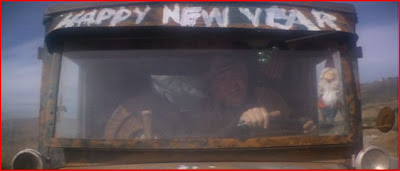
“1933—The height of the Great Depression. Hoboes roamed the land, riding the rails in a desperate search for jobs. Spurned by society, unwanted and homeless, they became a breed apart-- nomads who scorned the law and enforced their own. Dedicated to their destruction was the Railroad Man who stood between them and their only source of survival—the trains.”

So reads the title card that leads off Robert Aldrich’s Emperor of the North, a brutal, ghostly, propulsive distillation, and heightening, of the existentialist, masculine codes of behavior found entangled among the roots of earlier Aldrich action pictures like Attack! and The Dirty Dozen. Where those films depended largely on how men interacted within groups assembled in wartime who were compelled by a tangible purpose, a mission, which was also informed by Aldrich’s distinctly anti-authoritarian bent, Emperor boils the conflict and the character elements down to their sturdy bones and turns its qualities of moral purpose or righteousness on its ear. Aldrich, working from Christopher Knopf’s lean, spare script, crafts a narrative where, despite the film’s historical context, the primary event is ultimately only of importance to the three main characters, and perhaps the Greek chorus of hoboes and disenchanted railway workers who dot the landscape down the parallel lines and take bets on its outcome. Can the hobo known only as A-#1 (Lee Marvin), and the young ‘bo who imposes himself onto A-#1’s legend (Keith Carradine), succeed in riding the #19 under the nose of its murderous conductor, Shack (Ernest Borgnine), who, as one character correctly observes, “would rather kill a man than give him a free ride”? As an audience, we’re geared to root without hesitance against Shack when his compulsion to protect his railroad, and his train (apart from his murderous sadism), is the one that could be argued as being based in a moral position. A-#1’s actions, on the other hand, stem from personal pride and a desire to survive a deadly situation set into motion by acts he willfully undertakes himself, and whose moral righteousness is derived almost exclusively from the rootless existence imposed upon him not by his deeds but by a country slowly going to hell. When we are forced, as we are in Emperor of the North, to consider this dilemma of identification, we’re set up for the key question for Aldrich within this narrative— just what will victory mean to the survivor?


The movie begins with a device that ties it to its period and to the early days of the movies-- an iris that opens slowly out onto a train, which we will come to recognize as the Oregon Pacific & Eastern #19, moving down the tracks through the Northwest countryside. The opening montage of this relatively idyllic footage is set to a song called “A Man and a Train,” written by Hal David and Frank DeVol (who also scored the movie), a somewhat hokey ballad with lyrics that illuminate the elemental approach to the film’s action but betray its serious, hard-boiled one with gee-whiz orchestration and Marty Robbins’ earnest vocals. Throughout the movie, the music is the movie’s one serious tonal misstep, and its effect is quickly corrected when we see Shack quickly, and with no small amount of delectation, use his sledge hammer to dispatch a hobo who obviously is unaware of exactly whose train he has hopped. The man falls screaming beneath the moving boxcars, and the last we see of him is his body lying perpendicular across the tracks, bisected by the locomotive as it continues toward its final destination.


Our first glimpse of A-#1 (the only name by which we know Marvin’s character, by which we also immediately understand his earned status among the ‘boes riding the Oregon line) is as he emerges from the trees and eyes Shack, whose train has stopped near the hobo’s camp to make a track switch. Marvin’s world-weariness is marvelously encoded here as he trudges back through his camp, holding a live rooster by its legs— this is one of the actor’s truly great, iconic performances, and the introduction of Cigaret (Carradine), who attempts to raid A-#1 of that rooster (which the elder bum swings as a weapon to defend himself), ensures he’ll have plenty of opportunity to set his features in various degrees of stone-faced disbelief over the course of the film. Cigaret ends up following A-#1, and blowing his cover, into an empty boxcar on the #19. Forced to set the car on fire in order to escape after being locked in by Shack, A-#1 and Cigaret separate, with the young man immediately seizing the opportunity to brag to a group of railroad men about how he rode Shack’s #19 and lived to tell the tale, leaving the old guy he was with to burn to death in the car.


The word spreads to the hoboes near the yard that the railway men have discovered a new king of the road—Cigaret—and to counter the young tramp’s self-created mythology, A-#1 vows to ride the #19 all the way to Portland, proclaiming his intention in writing on the water tower outside the train station. Meanwhile, Shack himself interrupts the rail workers and their setting up a bet with Shack’s right-hand man, Cracker (Charles Tyner), a bet in which Cigaret would be used as a ringer. Aldrich expertly draws out Borgnine’s self-righteous villainy in this scene through a spectacular series of extended close-ups, emphasizing the tensile contours of the actor’s face and the lunatic fire in his bulging eyes, when Cigaret carries on his façade of arrogant toughness to the conductor’s face. Shack responds by nearly strangling the kid, until one of the workers rushes in to report that water tower message and that A-#1 intends to be on Shack’s train when it leaves at 7:00 the next morning. Thus is the movie’s central cat-and-mouse game set up— Shack’s mania to protect the ride, a locomotive aboard which his authority goes unquestioned, where he has total confidence in his ability to exercise power, a mania borne of equal parts professionalism, pride and perversity, versus A-#1, a drifter of legend (whose back story is left unspoken), who is the Emperor of the North Pole, the top of the heap, simply because those who ride the same line as he does say he is, whose only real dignity lies in the ability, even under such dire economic and personal circumstances, to do what he wants to do, what he says he’ll do, and thus remind himself of his status as a man.


Yet Aldrich never emphasizes the crude sentimental streak that courses just underneath such a conceptualizing of these characters. He resists that temptation through his own fierceness and muscularity as a filmmaker, which thrives on seeing both Shack and A-#1 as larger-than-life archetypes brought to the level of mythology (whether self-imposed or granted them by others) and as players in a larger game whose futility is the stuff of bitterness, not tears. Of all the Aldrich films I’ve seen (and I’m still missing a few key titles in his filmography), Emperor of the North looks, to these eyes, like the director’s most sustained, well-paced, crisply edited and viscerally imagined film, surely the zenith of his career as an “action director.” Notwithstanding that overly grandiose song that opens the movie on a rather discordant note, there are few, if any, of the overripe touches that mar some of the director’s other pictures, touches that often get Aldrich, whose films are as tough and calloused as the director himself purportedly was in his life, written off as a simple, vulgar misanthrope.

A masterpiece like Hustle is full of crudities that don’t fly in the eyes of those who like their policiers smoother, more even-handed, tonally consistent, and Aldrich hits like What Ever Happened to Baby Jane, The Longest Yard and even Kiss Me Deadly (not to mention The Grissom Gang and The Choirboys) seem inconceivable without their wild streaks of vulgarity. Among these, Emperor of the North has an almost classical beauty, enhanced, of course, by the spectacular Oregon locales (the film was shot in and around the greater Cottage Grove area, where another classic of the rails, Buster Keaton’s The General, was also made), but also by the streamlined visual iconography of the train itself, as elemental a force as either Shack or A-#1 (sans any symbolic baggage courtesy of the writer or director), and the tracks stretching through canyons, across bridges, into the forested horizon and out of sight. And Aldrich himself, who may have taken the project on as a potential commercial picture in the wake of several flops which brought down his own independent studio, gives the movie the weight and clarity and fervor of his most personal projects through his brutal, sensitive, consistently compelling mise-en-scene, which takes advantage of all the opportunities afforded him by the film’s central vehicle and the rich locations, including brilliant exploitation of the geometry of the underside of a bridge in one of the film’s signature suspense set pieces.

An early lobby card featuring the film's original title

It may be the director’s visual acuity, or the central metaphor of two men riding the rails, their destination meaningless in the shadow of the ride itself, but from the moment the #19 sets about pulling out of that train station, in a wonderfully sustained sequence which finds the immediate area of the train station blanketed in an eerie fog (“Sounds like a ghost story to me,” intones A-#1 to Shack, who he faces off on the tracks before slipping off into the mist, awaiting his opportunity to board the locomotive), a certain malaise begins to tinge the edges of the crisp, forceful action. Shack’s violent insistence on maintaining his dominant position as an unbeatable lineman has an almost religious intensity, enough to make one speculate as to whether he could or would feel the need to sustain this kind of intensity in whatever life he might have away from the train. (Aldrich and Knopf, of course, offer no clues themselves.) Conversely, A-#1 must keep moving, in part because of the disaster of the Depression and the level to which it has brought him (and all the men who ride the rails in search of a way out of their particular misery), but also because the mythology of being Emperor of the North Pole (the film’s original title during its New York run, before it was inexplicably trimmed, presumably by the Fox marketing department) gives him the only sense of himself that means anything to him—not that he’d ever admit to holding to a concept even as slightly romantic as that one. "Don’t ever grab on unless you’re sure you can hold on,” he tells Cigaret, who takes his advice only as far as it serves him in the moment. But A-#1 has the deliberate carriage of a man who fully subscribes to that notion, and who has seen that it can serve him well. But that little matter of destination haunts the blue skies and gorgeous scenery upon which the film’s central battle finally comes to a head, and much of the power that Emperor of the North delivers, apart from the violence of its visceral action, the sounds of chain and wood and hammer on flesh, comes from contemplating the degree to which any victory claimed by the end credits is profoundly hollow.

Perhaps even more satisfying than the moment when Shack takes his fall from the flatcar (“You ain’t heard the last of me!”) is the one immediately following. Cigaret, who has passively watched A-#1 fight for his life, offering no help, waits until Shack is not longer a threat before jumping down, laughing, and proclaiming his grand plans for their future together on the rails. But A-#1 has held his last session as mentor for this unrepentantly opportunistic kid and unexpectedly tosses him off the train and into the river below. As Cigaret gasps and treads water down at the bottom of the gorge, A-#1 shouts a rather long speech denouncing him and proclaiming his own triumph, continuing long after he (or any audience) could reasonably believe Cigaret could still possibly hear:


“Stick to barns, kid! Run like the devil! Get a tin can and take up moochin’! Tackle back doors for a nickel! Tell ‘em your story! Make ‘em weep! You could have been a meat-eater, kid, but you didn’t listen to me when I laid it down! Stay off the tracks! It’s a bum’s world for a bum! You’ll never be Emperor of the North Pole, kid! You had the juice, kid, but not the heart! And they both go together! You’re all gab and no feel! And nobody can teach you that! Not even A-#1! So stay of the train! She’ll throw you under for sure! Remember me for that! So long, kid!”

His voice booming, receding as the train pulls further down the track away from the camera, gaining a slight echo, as if he were proceeding out of this reality into some other, less-defined place (which is another way of saying that place that exists, if it exists, past “The End”), A-#1 continues on so long after Cigaret is out of range of hearing his voice that it’s not hard to assume that A-#1 is crowning himself at this point, trying to eke out some meaning to the course he has set and fought for, hoping the thunderous echo of his voice against the rattling boxcars and the whooshing pines will be enough to convince himself, if no one else. Aldrich never tips his own hand, despite the film’s apparently conventional “good” over “bad” conclusion—he’s a director with enough confidence to serve up a diamond-cut genre film imbued with enough ambiguity to make the film’s bitterness linger far beyond the final frame. Emperor of the North Pole is a sterling example of Robert Aldrich, perhaps more consistently overlooked and underrated that any major director, at his most brutal, insistent and confident as a storyteller.

**************************************************

(Many thanks to the good folks at Destructible Man for the use of some of the screen grabs in this post, which were liberally borrowed from their brilliant visual exegesis of the movie’s sledgehammer opening set piece.)

**************************************************

Thursday, August 05, 2010

GWEN WELLES'S SAFE PLACE


The world of Henry Jaglom has never been a safe place for me, but it certainly seems to have been that for many actors over the course of his almost 40-year career as a writer and director of what could generously be termed ensemble films that have consistently succeeded or erred (depending on your point of view) on the side of creative indulgence, for his actors certainly but also Jaglom himself. Jaglom disdained the “rules” of conventional storytelling from the start, opting instead to create free-form cinematic tableaux in which “real life” could be credibly represented by his actors’ long, shapeless improvisations. But I wouldn’t blame everything on the actors—Jaglom’s own fingerprints are just as sticky. He edits sound and picture with no concern over rhythm, pacing or even respect for one person finishing a sentence before a jagged cut-- ones which often, I swear, it seems you can see the visible marks of splicing tape roll by-- hitches the frame and delivers the viewer to her or his next destination, which is usually almost indistinguishable from the last. It is arguable whether Jaglom’s rejection of classic form and filmmaking fundamentals is purposeful or whether it is borne of simple disregard and, maybe, incompetence. What seems less arguable is that, looking back over his career, he has managed to balance his fumbling, look-Ma-no-training style with an almost licentious weakness for the raw voluptuousness of actors in their most vulnerable and self-indulgent moments.

I recently caught up with Jaglom’s first feature film, A Safe Place (1971), and the thing that astounded me right out of the box, and confirmed some of my own suspicions about the director, is how fully recognizable his rambling, “searching” style seemed right from the beginning. In a mid-period film like Someone to Love (1987), in which the director gathers a bunch of friends in a soon-to-be-demolished Santa Monica theater to reminisce and indulge their memories, all of which becomes a dissolute, upper-class white Hollywood meditation on the pain and folly of the creative process, Jaglom’s camera cuts back and forth between his actors with careless abandon. It prods and burrows into and just as surely evades the director’s subjects with a kind of phony interest that always seems to be most interested in reflecting the actor’s concerns back onto Jaglom himself. He casts himself here, as he almost always does when he casts himself, as the supreme yet conflicted listener, the one who will be there for them when everyone else throws up their hands and calls them on their bullshit, even as he recognizes—in that very sensitive yet condescending male way of his—that he’s probably full of shit too. Over his career he often cast Orson Welles, in a kind of balancing act of directorial iconography, as a kind of detached overseer, a magician, a muse, and in Somebody he cast himself as the off-screen interviewer who presumably sat at Welles’ feet and lapped up his every wry, bitterly wise observation. Yes, Jaglom is there for his actors, but like his camera’s phony observational status, Jaglom lets his subjects have the floor to his detriment and theirs—he rarely demands that they use the raw material of their experience and shape it into something that speaks to the entirety of a vision. It’s a constant wonder to me that someone who worshipped a control freak like Welles could find his way to a whole new martinet-like relationship with his actors, and with the craft of film, by so roundly rejecting the mastery of the film medium Welles represented. You can see him in a bit part in Jack Nicholson’s directorial debut, Drive, He Said (1971), as a self-indulgent, manipulative theater teacher who encourages a group of students into a series of guerrilla theater tactics that, for one kid in particular go violently awry, and he seems already the fully formed Svengali of “whatever, man” performance neurosis that he seems in films from 20 years later in which he would cast himself as the blunt-talking, whiny romantic lead of reason and constantly prodding psychobabble, a Woody Allen for nebbishes who, unlike Allen, are more or less convinced they have their shit together and are endlessly fascinated by the poor bastards (seemingly everyone else) who don’t.

In A Safe Place, Orson Welles is The Magician, who is seen only in what are most likely flashbacks (with Jaglom, from the beginning, one can never exactly tell), in which he relates with somnolent authority to a beautiful woman named Susan (Tuesday Weld). Susan is a dream vision of self reflected on by a woman named Noah (also played by Tuesday Weld), who thinks back on her more ethereal identity while she tries to make her way through a romantic life swinging between the attentions of bookish, well-meaning Fred (Firesign Theater’s Phil Proctor) and the dynamic, appetite-driven, vaguely sinister Mitch (Jack Nicholson, encouraged to improvise and already refining the “Jack” persona). Her time with the Magician, in which he entertains her with magical levitating balls and other devices, is Noah’s retreat from herself into “a safe place” where she dresses as she did when she was a child and relates to the Magician as a father figure, where she isn’t bound by the responsibilities and natural impulses of an adult. In her older roles Tuesday Weld always projected a bit of reluctance to move into the adult realm, and she’s perfectly charming here in a movie in which that reluctance is the ostensible subject. And it’s a bit of a relief that when Jaglom’s camera sputters and stumbles to its next scene, it’s usually one in which Weld can at least offer her natural luminescence, a quality Jaglom seems, at least at this stage of his career, ill-equipped to muffle. (Jaglom may be one of our most appropriately named directors, for the jaggedness of his editing and the way his movies lumber (lomber?) around in their given space.)

But Jaglom, even as a rookie, can’t resist the urge to meander away from his simple premise, and so we get a couple of scenes shot in the apartment where Noah lives—she works in some sort of salon which is apparently attached to the living quarters, so there’s always someone milling about who may or may not be part of the living arrangements, you know, in that late ‘60s, early ‘70s California-dreamin’ kind of way. She can be seen frittering about the edges of the frame in a couple of earlier scenes, but no introduction is given to the character played by Gwen Welles, whose very first film this was, when we are suddenly yanked away from the Noah/Fred/Magician triangle and into a scene in which Welles embarks on a monologue built around a peculiarly paranoid sexual fantasy. It’s one of those moments which are usually meant to embellish character, only here Jaglom, perversely, gives us the back story sans the actual character. It’s all rendered flat and affectless by Jaglom’s aloof observational approach and his insistent perforation of the scene with cuts to Weld in a state of romantic bliss or, worse, Nicholson, leering at the camera (her/us) and cackling while trying to think up something amusing to say.


Gwen Welles in Hellé (1972), directed by Roger Vadim

Welles was a pretty, natural actress who seemed incapable of a phony impulse—some I think mistook this rawness for lack of talent, and the kind of roles she is best known for (Sueleen Gay in Nashville being the best example) probably reinforce this notion to an uncomfortable degree. But she was smart, quick, and she used that nasal, disaffected voice to disarm those who hoped to catch her “acting” in pictures like Altman’s delightfully baked Southern California dreamscape California Split (1974) or Joan Micklin Silver’s comedy set backstage at an independent weekly newspaper, Between the Lines (1977), or even in Roger Vadim's period drama Hellé (1972), in which she plays a deaf-mute girl who befriends a French veteran who returns home during the earliest days of the Vietnam War. Welles had a captivating strawberry beauty about her and a slightly stoned fizz endemic to her personality that was sweetly seductive, and you can see in that monologue in A Safe Place that Jaglom had a camera subject, quite different from the one he had in Weld, who could do more to invite the viewer inside than he as a director might have been capable of handling at that point (if ever). Welles relates a situation in which she’s walking down some New York City street and suddenly becomes painfully aware of her vulnerability, and Jaglom surrounds her with actors hanging out, rolling joints, paying half-attention to what she’s saying and being condescending and inappropriately jokey when they do pay attention. After being scolded by a store owner for leaving herself open to attack by unsavory types on the street, Welles relates how she began, on her unaccompanied walk home, to let her paranoia about being attacked take over, eventually imagining herself as a lonely, bruised, ugly 45-year-old whore who can’t be sure if she even cared if she were to be raped or not. She goes on, her companions on the bed still only half listening, to describe becoming enamored of the entire experience of feeling so degraded—“I loved that whole feeling; It was a turn-on, very sexy.”

Suddenly the guys lying around her smoking, relaxing, become more sympathetic to her story, and Jaglom’s camera settles into its customary stare. Welles’ vulnerability increases as she admits that imagining herself as a beaten-up whore freed her from her everyday sense of isolation, of being apart from the dinner guests and normal contacts of everyday life, freed her from the sense of isolation, cueing her into the oneness to be found amongst those whose very lifestyle is built around despair. This is Welles’ moment in the movie, a point at which the young actress was given to command the camera, a chance any young actress would relish. But Jaglom undermines it by his hunger for “truth,” for the unadorned relating of experience. It is, of course, a lesson Jaglom has yet to learn, for all of his devotion to actors and their craft-- the stripping away of actorly effects in pursuit of some nugget of realistic insight usually results in less fascination, less revelation, because an actor’s art is built on artifice, the acclimation of experience, borrowed or lived, on moments made from the construction of an interior world which the actor then makes exterior. As Jaglom’s own movies have so often proven, the more convinced an actor may be that he or she is diving down deep and exposing something real, the more likely it is that the audience is painfully aware of that actor putting on a show, perhaps one more “raw” than a heavily rehearsed stage or film performance, but a performance nonetheless. Jaglom, his self-satisfied smirk evident even when he’s not on camera, leaves Welles, in her first film, to twist in the wind of this kind of ultimately embarrassing self-revelation, ostensibly because he’s fascinated by the actor in the moment, but I think more likely because he hasn’t a clue what to do to help Welles shape the moment into something truly affecting. The camera zooms in when Welles confesses about her strange affinity with these possibily violent street people: “If this is where one is happy, I don’t know where one goes from there. I felt completely apart from anything that didn’t resemble being completely miserable.” Dr. Jaglom nods patiently, and the scene cuts away, presumably for good, to Tuesday and Jack gamboling in the park, with Welles (the rotund, bearded one) always hovering nearby and bursting into inexplicable laughter.

Yet after 10 minutes or so, suddenly we’re back on that bed with Gwen Welles and her sympathetically stoned friends. “And they said I’d taken all these sleeping pills, and I couldn’t remember doing it.” The movie, as is Jaglom’s wont, roughly tosses us back into the realm of Welles’ psychic confession with nothing even resembling nuance. At this point it’s clear that Jaglom has let the camera run for a god-awful duration, and Welles sits mid-frame, skewered by her director’s patient anticipation of that therapeutic breakthrough that is surely on its way. “I took three pills just because I could stand the pain,” Welles now pleads directly into the camera. “Do you think people get to a point of pain where they just can’t stand it?” Long, uncomfortable pause. There are lots of tears now. “I took three pills to sleep and I almost died. You can imagine when I woke up I really wished I was dead.” Long pause. “I constantly beat myself on the head for being so unhappy, and I just get more unhappy and I ask when it’s gonna stop, and it never stops.” Long pause. The tears are flowing for real now. A hand reaches out from right of frame and cresses Welles’ face. (Could it be Jaglom’s?) There is another jagged cut to a boardwalk scene, a woman smoking in the foreground, and the shot is so clumsily composed you could be forgiven for missing the fact that Welles is in the background of the shot, dressed in a child’s black dress and holding a doll, staring forlornly. I imagine it’s the novice director’s intent to equate on some level Welles’ pain with Weld’s more free-wheeling attempt to deal with her past and her present romantic dilemma, but it’s a weak connection. There is no Welles there beyond this monologue, and Jaglom wouldn’t, by evidence of his superficial visual treatment of Weld, be much capable of digging into a real character anyway, let alone a doubling relationship like the one he blithely infers here.


But then we get the pay off. We cut back to Gwen Welles, inexplicably smiling through her tears, still pained but with light in her eyes. “Gee, I feel all better,” she proclaims, in the manner of a patient getting up off a psychiatrist’s couch after a particularly productive emotional spew. “All of the sudden I don’t feel so sorry for myself!” It’s an emotional Band-aid moment, but it turns out to be what Jaglom, with his peering, relentless camera, is after, and it’s hard to imagine we’re supposed to take it for anything but a triumph of sorts, the magical exorcism that occurs when people just “talk about it” and “let it all hang out.” Welles, beaming, ends her stay in the movie with this proclamation: “I don’t think I’ll try to kill myself anymore because I like walking down the street with all the bums.” Presumably without the indulgence of the paranoid fantasy that came along with that walk just a few moments earlier. Well, who wouldn’t feel better about all that? It’s a testimony to her luminescence as an actress to know that her talent would out and she would go on to contribute superb work to two or three of her generation’s best movies despite being essentially betrayed by the director of her first feature. (That feeling of betrayal I sensed from the film was likely not one shared by Welles herself. She may have well felt that indeed Jaglom took her to a safe place where she could do good work-- she did act for Jaglom two more times, in 1989’s New Year’s Day and in Eating, released in 1990.)

**********************************************

I had a film professor who once said that there was no such thing as a bad or misused moment in a film, because if your mind started to wander into other areas of your life and thoughts occurred to you that were of some importance during that wander, then the film could be said to have performed some important function for you. This is a premise that seems necessarily separate from whether a film works as art—sitting and watching a ticking alarm clock, to grab a random image, could function in precisely the same way, yet would we shout at the top of our lungs, “Henry Jaglom’s alarm clock is a masterpiece!”? Probably not. Yet my mental meandering during A Safe Place, especially where Gwen Welles was concerned, did set me to wondering about the actress and the circumstances that led to her death in 1993. As I reflected on the content of Welles’ monologue, I realized that I had no memory of how she died. And considering that I found Jaglom’s use of the actress to be borderline exploitation, I really hoped that Gwen Welles did not give in to the kind of demons she wrestled with “in character” in A Safe Place and kill herself. Suicide would already be an irreconcilable tragedy, but to have an on-screen moment that so prefigured this destructive act would be, as Welles herself put it, too much to bear. So I set about Googling Gwen Welles, an actress whose life was too short, as was her résumé, in the hopes of finding out something more about her life and what ultimately happened to her.


A good part of my summer was spent with several of the documentary films of Allan King, who will be the subject of a Criterion Eclipse box coming in September. King’s films deal with aspects of life we generally, as a society, turn either a polite or a defiant eye away from or work desperately to ignore altogether. His 1967 film Warrendale documented five weeks in a home for mentally disturbed children, and the nonjudgmental, patient way in which King observes and constructs the “stories” of his subjects would set a standard for excellence in nonfiction film making that could coolly stand beside the more emotionally exhaustive approach of someone like Frederick Wiseman. But it is King’s films dealing with aging and the inexorable finality of life’s final processes, which result in Alzheimer’s-related derangement, isolation and, of course, death, that so absorbed me over the past summer. I will have much more to say about the films themselves when the set becomes publicly available. But I will say that I have never seen a more quietly wrenching film than King’s two hour-plus document of life in a Toronto cancer ward entitled Dying at Grace (2003), a work of profound intimacy about the insistent approach to the most intimate moment imaginable, that in which a person’s life force passes out of the body, turning a person into a shell, a deteriorated physical memento of remembrance. King exquisitely frames the stories of several patients, some of which are more coherent and ambulatory at the outset than are others, but with their consent he has endeavored to portray the dignity hidden within the indignity of being at the mercy of a ravaging disease. We are privy to moments that chronicle the despair of loved ones, their anguished acceptance, and the struggle of the patient him or herself, shrunken and comatose, to simply draw another wet, ragged breath. And yet King’s approach is completely without exploitation.

This is not to say King’s films, particularly Dying at Grace, are without moments where the individual viewer might question the appropriateness of being privy to such moments of intimate agony. King’s ultimate statement is to leave those kinds of decisions to the viewer. In attempting to chronicle what is a legitimate, inevitable stage of life and to look on it with honest inquisition, searching for the grace which, despite the individual circumstances, can be located if one can simply bear to cast a gaze, King demystifies one of our greatest, most profound fears. King himself died of brain cancer a mere five years after finishing this film, and watching it one wonders if he knew of his own condition when he conceived the film. Even if not, the finished film remains an unparalleled act of empathic therapy, for him but just as surely for us.

I bring up King’s films here because, among the many things they do, they bring us close to the lives and deaths of “real” individuals (I hate the way reality TV has bastardized the use of a word like “real”) with whom we have never occasioned to meet before, and by doing so make us feel, within the span of two hours, the price exacted by the privilege of seeing someone, anyone, given up to death. How much more devastating, then, would it be to document, or see documented, the death of someone one knows, even in the most superficial sense?

It wasn’t difficult to locate an account of what happened to this wonderful actress. I Googled “Gwen Welles death” and was immediately directed to her brief obituary which was published in the New York Times on October 16, 1993. In addition to the fact that she was married to actor Harris Yulin, which I did not know, the obituary said only that Welles had died of cancer, and then went on to briefly list some her of most well-known films. (It was cold comfort to me to find out that, unlike her character in A Safe Place, Welles had not flirted openly with suicide or had ultimately taken her own life.) But the search also unveiled the Web site of director Donna Deitch, on which is posted a brief clip from a documentary Deitch filmed about Welles as the actress struggled with a particularly devastating form of colon cancer. The film, Angel On My Shoulder, which I have not seen, seems to aspire to something akin to what King achieved in his films, an unflinching portrayal of one’s person painful trauma that could never be mistaken for exploitation. Deitch was Welles’ best friend, and Welles, in a severely emaciated and weakened state, directly addresses Deitch (and us) to relate a most intimate agony. It’s that combination of our personal experience with Welles, the actress, and Deitch’s long history with her as a close friend that combines to make Welles’ pain so acute. The film also details Welles’ decision to reject the typical cancer treatment therapies, which helps us to understand the contradictory, sometimes exhilarating, sometimes exasperating personality that Welles possessed. (Deitch is interviewed at length on her site about the film and her friendship with Welles.) Yet even in the clip provided on Deitch’s site, Welles’ often displays an unlikely humor regarding acceptance of her situation, the elusiveness of peace of mind, the possibility for growth even as her body shrinks and turns away from her. “There isn’t a day that goes by where I don’t learn something,” she says with a clarity that may not be so easily accessible during those extended periods of pain that demarcate her journey toward death. What’s most moving about the Welles we see in the clip is the reticence born of experiencing pain and then having that pain momentarily recede—when she’s riddled with pain death seems attractive, but in her moments of lucidity and (drug-induced) peace she is fully aware of everything she stands to lose, which for Welles may be a different kind of pain, but equally devastating.


I have provided the clip from Angel On My Shoulder not for shock value, but because I think it’s valuable, in the way that King’s films are valuable, for the way it portrays the awful reality of approaching death and the state of grace that lies within acceptance, both the intellectual kind and the kind forced upon someone when their body begins to fail. The difference between Gwen Welles and King’s subjects is that, with one notable exception I can think of, King's subjects are mostly inarticulate about their situation, sometimes frustratingly so (for them and for us). And the filmmaker stays with them like a loyal friend, long past their own physical and mental cognizance, offering every hitched breath and rattled moan as evidence of the dignity one would have thought evaporated. It’s the kind of picture of physical devastation, as it relates to aging or to debilitating disease visited upon younger people, which deserves to be considered by a society as fearful of death as we are. Deitch’s portrait of her friend Gwen Welles is served well by her subject’s training in expression, self or otherwise, one which naturally became more acute the more acting she did. At one point she makes a comment that forced me back into the world of A Safe Place, a memory of how even when she was relating her emotional isolation and devastation she was smiling through her tears, her eyes lit up from a mysterious source. Incredibly, as she lies hooked up to machinery in a hospital bed, that light is still present and just as mysterious. She looks to Deitch, who is behind the camera, and says, “I look sweet when I cry, don’t I? Everybody says that I break their hearts when I cry. My face doesn’t get ugly when I cry.”

Anyone who has valued Gwen Welles’ contributions to movies like Nashville and California Split and Between the Lines and Star 80 and Desert Hearts, and even Jaglom’s films, should be glad that this document exists. I hope one day to be able to see the entire film, which was an acclaimed documentary award winner at the Chicago Film Festival in 1998. I am entirely sure it will be worth the pain.

***********************************************