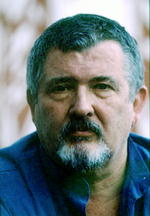
(NOTE: This past week has been a bad one for finding time to write, and now that I've finally got this rather time-sensitive piece ready to go, Blogger.com seems to be having some issues with its picture posting program. So, rather than letting another day go with the visage of the late Shohei Imamura threatening to become part of the
SLIFR official masthead, I've decided to get the text of this one up and running and worry about posting the pictures tomorrow-- and there are some really keen ones, too, that I know will make slogging through this post much more pleasant, so your patience is appreciated greatly in advance. Concentrate instead on the treasures about to be unveiled within...)
One of the bitter lessons I had to learn when I first moved to Los Angeles 19 years ago this month was that
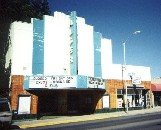
you just can’t see it all. I grew up in a small town in the Eastern Oregon desert in the ‘60s and ‘70s (one movie theater in the winter, one drive-in in the summer), which meant one movie a week, plus whatever could be culled from Portland TV stations through the town’s woefully inadequate cable TV system. I rarely missed my weekly chance to visit the Alger Theater or the Circle JM Drive-in Theater, sometimes going more than once to see the same feature.
When I moved on to the University of Oregon in the fall of 1977, from a movie-going standpoint it was like Charlie getting his first taste of the chocolate factory to me. My freshman dorm, in addition to being situated directly behind the world’s most delicious-smelling
commercial bread bakery, was literally right next door to the Waco Twin Cinemas, one of the city’s three art houses, which mixed up American independent films, foreign-language releases and second-run double features of played-out hits. (It was here that I saw my first
hardcore film, an experience I managed to survive with relatively little psychological scarring—at least that I’m aware of.) Between these art houses and Eugene’s mainstream movie offerings, my friends and I had four multiplexes, four old-fashioned single-screen movie palaces, one run-down dollar house and four drive-in movie theaters in which to run wild and gorge ourselves on the cornucopia of cinema the “big city” had to offer. (And I’m not even factoring in the many American and international classics to which my film courses would introduce me, or the 5-10 campus screenings and midnight movies that were also a staple of the weekend schedule.)
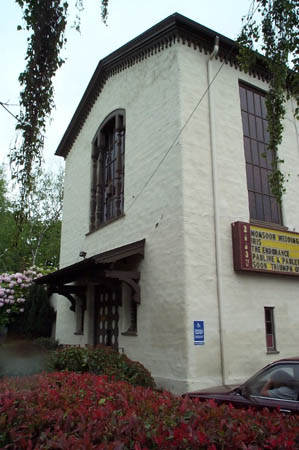
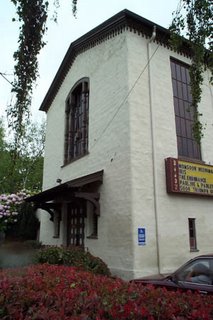 The Bijou, the Only Living Arthouse in Eugene
But time has not been good to small cities like Eugene when it comes to seeing movies in theaters—the Emerald City is down to two multiplexes and one art house in 2006. And even a large metropolitan center like Los Angeles has only one regularly programmed revival house left in operation,
the New Beverly Cinema-- when I moved here in 1987 there were still at least four up and running. Though there is still more playing on local screens every week than any one person could possibly see (and I know some people who still try mightily to take in as much of it as possible), even the most talked-about
foreign-language releases from the festival circuit are lucky if they can manage a week on local screens, if they’re even released at all.
Not particularly encouraging news, to be sure. But in the face of all that, and the increasing migration of specialized film viewing from big theatrical screens to big home theater screens, cinephiles in Los Angeles still have much to be thankful for, and much too much to choose from in the month of June, thanks to the American Cinematheque, which has four programs this month designed to drive a viewer like me mad at the prospect of not being able to see it all.
First out of the gate this week is the AC’s
Robert Altman Retrospective, a chance for those Los Angeles-based readers of
SLIFR and other like-minded blogs who participated in the recent
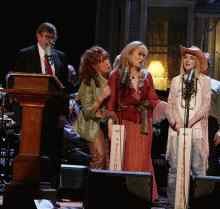
Robert Altman Blog-a-Thon to catch up on some rarely screened titles in the director’s canon. If you just can’t wait until Friday for its wide release, the Cinematheque offers you a chance to get a jump on your Altman-loving buddies and see the director’s newest picture,
A Prairie Home Companion, at the Aero Theater in Santa Monica before the great unwashed get a chance to pass it over on their way to see
Cars and
X-Men 3: The Last Stand.
The series continues at the Aero through Thursday, June 22, with some very rare opportunities to see Altman classics like
Nashville (1975) on the big screen. (The director's 1975 masterpiece shows on June 8.) And the week is filled out with some great double features on the Altman schedule too.

Friday, June 9, you can take in the director at his most cynically playful and obliquely sinister with a twin bill of
The Player (1992) and
Three Women (1977); Saturday finds Altman’s increasingly well-regarded take on Raymond Chandler,
The Long Goodbye (1973), paired up with one of his most underappreciated films, the psychological puzzle box
Images (1972). Temperamentally and thematically speaking, it would seem the better pairings would be
The Player/The Long Goodbye and
Three Women/Images, but given the chance just to see these movies in a theater, who really cares, right?
However, if you
do care, then Saturday’s combo might satisfy your obsessive inclination a little better—
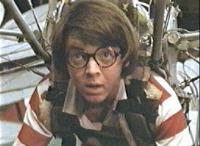
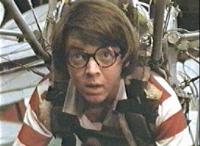
Brewster McCloud (1970), the director’s flop follow-up to
M*A*S*H, marked his first attempt at the broad, cacophonous canvas style that would find its apex in
Nashville and
Buffalo Bill and the Indians…, and
A Wedding (1978) found Altman returning to and attempting to expand the format from
Nashville’s 24-character template to an even rowdier 48-character cast of characters, with arguably diminished results. The final pairing, screening Thursday, June 22, is another thematically satisfying one--
McCabe and Mrs. Miller (1971) and
Thieves Like Us (1974), two elegiacal, atmospheric evocations of distant, difficult and violent lives framed by Altman’s potent and precise depictions of two distinct milieus—the organic development of community in the American west and a romance flowering amongst the desperation of depression-era criminality in the dusty Midwest. The Altman series wraps up on Wednesday, Jun 28, with
Vincent and Theo (1990), and if the Cinematheque could have found room or reason to highlight more from the director’s work that immediately predates
Vincent and Theo-- say, very rarely screened titles like
Secret Honor,
The Caine Mutiny Court-martial, or
Come Back to the Five and Dime, Jimmy Dean, Jimmy Dean-- it would have been an even greater cause for celebration. But I’m the last one who would look this particular gift horse in the mouth—even incomplete, this Altman retrospective offers plenty of reasons to buy more than one ticket.
*************************************************************************************
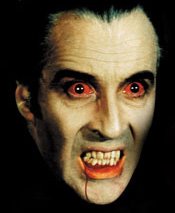
Perhaps even more exciting, however, and packed with films that are even harder to find on a big screen than Altman’s films, is the Cinematheque’s excellent tribute to
The Golden Age of British Horror, which fills the Egyptian’s big screen from June 8 through the 25th with unimaginable frights from the vaults of Hammer Studios, the horror fan’s equivalent of the Royal Shakespearean Company, and other companies who had a hand in the popularity of this gruesome and gothic chapter in British film history.
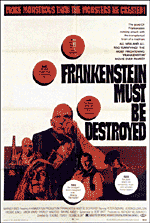
The series kicks off in Grand Guignol fashion with four undisputable Hammer classics. Thursday night, June 8, you can feast on
The Revenge of Frankenstein (1958), the follow-up to Hammer’s powerful first entry in their
Frankenstein series,
The Curse of Frankenstein, and a brand-new Technicolor print of my favorite Hammer horror,
Frankenstein Must Be Destroyed (1970), both directed by Hammer horror maestro Terence Fisher. Then, Friday, June 9, features a very tasty Christopher Lee double bill—the classic
Horror of Dracula (1958), the masterpiece that really put Hammer on the map, and one of the most highly regarded of the Lee/Dracula sequels,
Taste the Blood of Dracula (1970; also presented in a new Technicolor print).
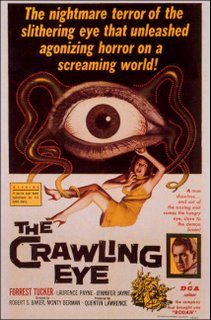
Saturday’s first pairing is a giant monster extravaganza--
X-The Unknown (1956) starring Leslie Norman and Dean Jagger, and a title that naturally fascinated me as a kid,
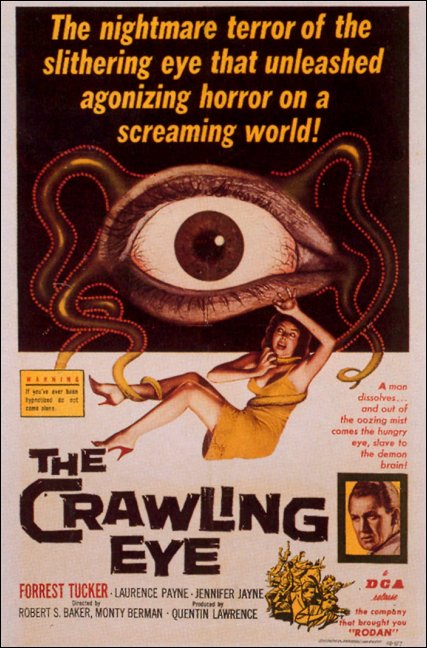
The Crawling Eye (1958) featuring Forrest Tucker and Janet Munro battling octopus-like creatures in the Alps. Then stick round for some gothic terror on the evening’s second double feature, Christopher Lee as Sax Rohmer’s classic villain in
The Face of Fu Manchu (1965), and Guy Rolfe investigating a series of brutal killings in India in
Stranglers of Bombay (1960).
Sunday, June 11, sees a very rare screening of the full-length, restored version of Jacques Tourneur’s chilling
Curse of the Demon (1957) paired with the even more scarce
Burn, Witch, Burn (1962), a black magic nightmare starring Peter Wyngarde and Janet Blair that is still unavailable on DVD.
Two from the 20th Century Fox vaults kick things off when the series resumes on Wednesday, June 14. Director Don Sharp’s visually atmospheric
Witchcraft (1964), screened here in a fresh 35mm print, is well paired with another terrific entry from director Terence Fisher,
The Devil Rides Out (1968).
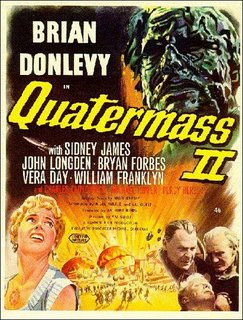
And the weekend of June 16-18 will make even the most jaded fan of British horror feel lucky to be anywhere near the Egyptian Theater, just for the chance to see twin bills like Christopher Lee in two Terence Fisher classics,
The Gorgon (1964) and
The Two Faces of Dr. Jekyll (1960) (June 16); a tribute to director
Val Guest featuring two seminal Hammer masterpieces,
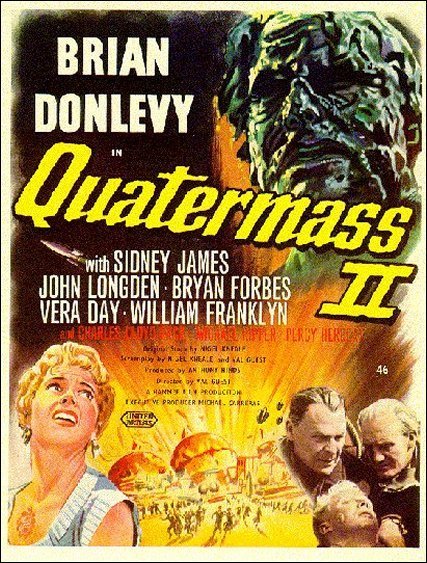
Quatermass II (1957), not seen in the United States on the big screen in nearly 50 years (the Cinematheque is featuring a sparkling new print), and
The Quatermass Experiment (1956) (June 17);
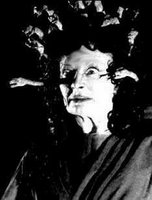
and Bette Davis as
The Nanny (1965), one that always terrified me as a kid and made me suspicious of more than one baby-sitter, and a strange pastiche of serial killer and coming-of-age stories called
I Start Counting (1968), featuring a pre-
Walkabout Jenny Agutter, which, according to the Cinematheque, was never released in the USA and remains unavailable on DVD (June 18).
Director Freddie Francis kicks off the first of a Peter Cushing double feature on June 21 with Amicus’
Torture Garden (1967), followed by Cushing and Lee together again on the
Horror Express (1973) for Spanish director Eugenio Martin. And finally, two more with Cushing--
Corruption (1967), and Freddie Francis’
The Skull (1965), neither of which are available on DVD-- close out the fesival on June 25.
As I suggested at the beginning of this post, I’m a much more realistic man these days—I couldn’t possibly harbor any illusions of being able to take advantage of all the juicy opportunities being afforded horror film fans this June by the Cinematheque. (I know
somebody who’d sure like to give it a try though.) Even so, I have my eye on
Revenge of Frankenstein and
Frankenstein Must be Destroyed, a heavenly hellish double feature that should sate my desire to relive the particularly pungent, tacky and yet never condescending delights offered by British horror films, Hammer or otherwise. Amazing that I could so take for granted, back on those Halloweens and Friday the 13ths of my cinematically deprived, yet also oh-so-spoiled youth, these movies, and that they would even make it as far down the theatrical food chain as my hometown theater. (Not every kid in every small town was so lucky, I’ll bet.) Now, in an age of tepid horror remakes and giggly torture porn, I miss even more the lurid sensibility combined with, yes, the relative restraint of the typical horror movie of the period covered by the Cinematheque’s tribute to the Golden Age of British Horror. There will be nothing taken for granted this month, at least not by me.
*************************************************************************************

As if all that weren’t enough to get a film fan with my particular tastes all aflutter, the Aero will play host to a brief but tasty three-night tribute to Walter Hill, and the director himself will be there two of the three nights to talk about his work. He’ll be at the Aero June 15 introducing, on the inaugural evening of the series, a brand-new four-hour, two-part mini-series entitled
Broken Trail. The series, starring Robert Duvall and Thomas Haden Church as two trail hands protecting five orphaned Chinese girls from a group of murderous cowpokes who want the girls for their own reasons and turn Duvall and Church’s journey into a nightmare of unexpected ambushes and violence.
Broken Trail premieres on AMC June 25 and 26, but this may be the only chance fans of Hill, whose last theatrical release was the underappreciated
Undisputed in 2002, to see this new work on the big screen.
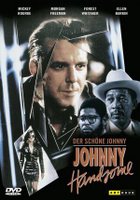
The next night, Friday, June 16, Hill sits with Ed Crasnick for the Cinematheque’s monthly “Lasting Impressions” series, focusing on conversations with filmmakers and screening their work. The movies highlighted will be Hill’s directorial debut, the granite-tough
Hard Times (1975) starring Charles Bronson as a bare-knuckle boxer and James Coburn as the shady drifter who becomes his manager, and one of Hill’s most unjustly maligned pictures,
Johnny Handsome (1989), featuring Mickey Rourke as a disfigured criminal betrayed in a holdup by his vicious partners in crime (Ellen Barkin and Lance Henriksen) who undergoes plastic surgery in the prison hospital and sets out for revenge.
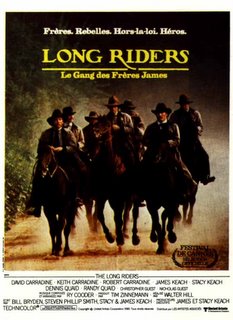
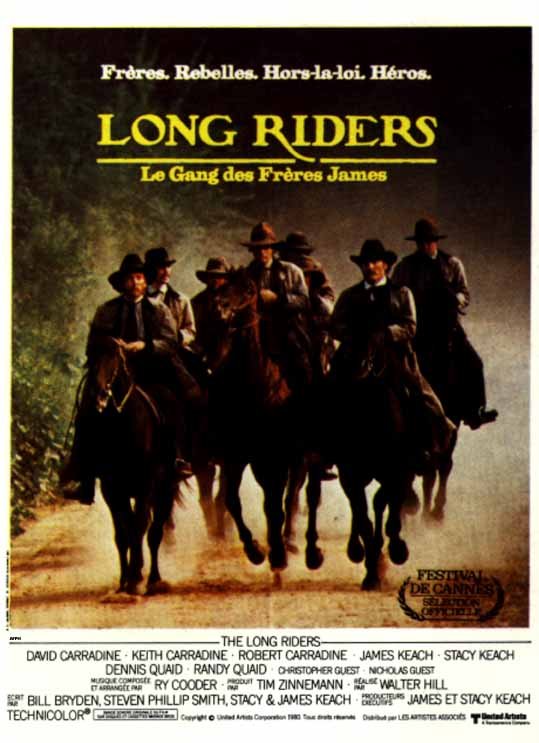
Finally, on Saturday, June 17, sans Hill, the Cinematheque offers an unmissable double feature—the director’s fraternal western masterpiece
The Long Riders, a retelling of the story of the James-Younger gang cast with the brothers Carradine (the Youngers), Keach (the Jameses), Quaid (the Millers) and Guest (Christopher and Nicholas as Bob and Charlie Ford), paired with the equally magisterial
Geronimo: An American Legend (1993) with Wes Studi as the titular Native American figure, and featuring Gene Hackman, Robert Duvall, Matt Damon and Jason Patric.
Geronimo, a visually resplendent look at the passing of another age within the legends of the American West (it was shot by frequent Hill collaborator Lloyd Ahern), will be shown in 70mm.
*************************************************************************************
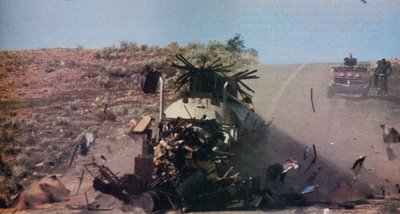
And speaking of 70mm, the Cinematheque rounds out June at the Aero with more in its 70mm “Seeing the Big Picture” series--
The Road Warrior (1982) screens Friday, June 23 in a 70mm print blown up from 35mm; Saturday, June 24, brings a spectacular restored 70mm print of Joseph L. Manciewicz’s notorious (1965), screens Sunday afternoon, June 25;

Alfred Hitchcock’s
Vertigo (1958), an entrancing revelation in 70mm, screens on Thursday, June 29; and the Aero’s month closes in 70mm on June 30 with Ivan Reitman’s sublimely overscaled laugh fest
Ghostbusters.
*************************************************************************************
There you have it— 43 reasons, if you live in Los Angeles, not to complain that the only thing to see in theaters this month are blockbusters like
The Da Vinci Code,
Cars,
The Fast and the Furious: Tokyo Drift and
Nacho Libre. Next up: A look at some of the treats available on Turner Classic Movies in June, in case the only reason you’re not going out to the movies has less to do with selection than because it’s just too damn hot outside.


 Posts
Posts


 My thanks to regular reader Robert Hubbard for pointing me in the direction of what promises to be an addictive site just to pore through, let alone download from-- ScoreBaby, described by its proprietor, one ScoreBaby, as “Your guide to cult soundtracks of the ‘60s, ‘70s and beyond!” If the sight of the covers of old LPs of the soundtracks from TV’s The Green Hornet, or Bruno Nicolai’s score for a minor spaghetti western called El Cisco,
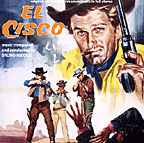 or Lalo Schifrin’s score for the forgotten horror thriller Abominable, get your pulse racing, prepare to spend a lot of time poring over ScoreBaby’s extensive collection, all with MP3 excerpts you can listen to right there on the page. And if that’s not enough, ScoreBaby has just inaugurated his very own blog, Score Baby Annex, which may be even more frightening and delightful than the main Web page. Here’s ScoreBaby on his latest project: