 The following is part three of a four-part article gathering up the answers to Professor Wagstaff’s Summer of 42 (Questions, That Is) Movie Quiz. You can find parts one and two posted below this article by scrolling down.)
All right, recess is over. Sit down, eyes forward and no talking!
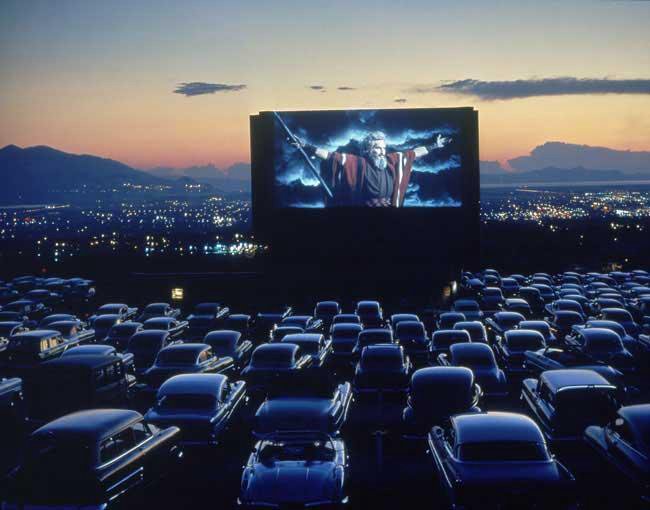
19) Best Use of 3-D in a Movie (not Best 3-D Movie) I really hoped I hadn’t phrased this question too clumsily or unclearly, but I think by some of the responses, in which the confused scratching of scalp was practically audible, that that’s exactly what I did. Most either gave this one a pass or had reactions like these:
“Can you use 3-D in a movie without it being a 3-D movie?”—Beege
“Haven’t seen anything like that.”—Novotny
“
Deep Throat”—Caption Jockey (Only in your dreams—Ed.)
Blaaagh gets close by citing a specific title--
Friday the 13th Part III-- and I really like Thom McG’s nod to
SCTV in mentioning
Dr. Tongue’s 3-D House of Pancakes, but I was looking for specific instances within that 3-D movie that stood out as particularly inventive use of the clunky, eye-straining stereoptic format. Machine Gun McCain grabs onto Blaaagh’s suggestion and actually cites the sequence that inspired me to put this question in the quiz in the first place—Jason Voorhees throwing a spear at the camera—but after I thought about it for a second I came up with what was, to my mind, an even better example, the single best use of the 3-D process I could ever remember seeing:
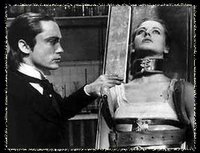
“The most indelible, and indelibly gross, 3-D image from a horror movie, or from any movie, comes in Paul Morrissey's
Andy Warhol's Frankenstein when the good doctor's housemaid discovers the grisly goings-on in the underground laboratory and ends up disemboweled for her concern. There is a cut to a shot from deep beneath a drainage grating through which we see the maid, guts exposed and still barely housed within her violated torso. She falls face first on the grating, and as she lays there her intestinal tract begins slipping out, through the grating,
unfurling and dangling right into the camera..."
Nobody has yet done it better than Morrisey and company. However, the “It’s Tough Being a Bug” attraction (based on Pixar’s
A Bug’s Life) at Disney’s California Adventure, which I experienced for the first time a couple of weeks ago, comes damned close…
20) 21) 22) Least Deserving Oscar Winners for Best Picture/Actor/Actress 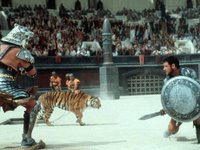
The earliest titles mentioned among awful Best Picture winners were
Around the World in 80 Days (1956) and
The Greatest Show on Earth (1952), but neither were the main selections of those who chose to bring them up. Factor those two out, and it would seem that all the specifically mentioned offending winners could be found originating from no earlier than 1990. Go back exactly one decade further in order to encompass Thom McG’s sweeping denouncement of
all Best Picture winners from the ‘80s as unworthy (and she may just have a point).
Dances with Wolves,
The English Patient and
Chicago all registered one pick apiece, whereas both
Titanic and
Shakespeare in Love had dual detractors. But most of the ire in this slot was reserved for two late-breaking costume epics that won in their respective years riding a tide of perceived sentiment and buzz, despite the fact that it’s nearly impossible to find anyone just a few years after their wins (1994 and 2000) who will admit to thinking the Academy made a wise choice in awarding either of them with its top bawble.
 Gladiator
 grabbed three votes, PSaga undoubtedly speaking for the other two when she derided the Ridley Scott sweat-and-sandals epic as “a very bad comedy—its win was a classic case of mass delusion.” And way back in 1994 voters who cast their ballots for
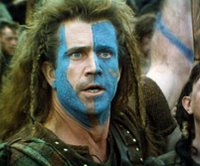
Braveheart probably had ideas that they were ushering in a new David Lean in their coronation of Mel Gibson. Cut to the early months of 2004, a decade later, mere geological seconds before Mel would unleash
The Passion of the Christ upon a suspecting world only too ready, especially in Hollywood circles, to retract that coronation and take the high moral road, many studio insiders vowing never to work with him again based on what they perceived (and perhaps rightly) as a nasty streak of sadism and anti-Semitism running through his fervently reverent film. Just a blink of an eye later, the movie was raking in considerably more than Judas’ 30 pieces of silver, and all of a sudden Mel was a genius again, though to some still no less deranged—the difference being that, hey, Mel’s movie made money, and in Hollywood taking in the dough trumps all high-minded thoughts of morality and religious responsibility. Eleven years later,
Braveheart’s excesses are the stuff of parody—nobody outside of Trey Parker and Matt Stone has had the balls to call Gibson out publicly and make fun of
The Passion of the Christ just yet—and the four who put their votes down here in what Virgil Hilts rightly described as a “dogpile” will probably ultimately only remember
Braveheart , if they remember it at all, as the movie that robbed
Babe at the 1994 Oscars.
Down Best Actor way there lay a couple of surprise mentions. Benaiah takes Rod Steiger to task for robbing Paul Newman in the year (1967) of
Cool Hand Luke; I roasted Paul Newman for coasting in
The Color of Money and collecting a sympathy/career-capper award to make up for the times when he probably really should have won (perhaps, say, for
The Verdict, even though that movie did extend an ugly streak for him in the ‘80s when it seemed written into Newman’s contracts that at some point he had to punch out his leading ladies—Charlotte Rampling, Sally Field, et al—on screen in fits of righteous indignation); and Rodger was so upset at
Dances with Wolves for winning Best Picture that he slams Kevin Costner to the mat for winning Best Actor, when the winner that year was actually
Jeremy Irons for
Reversal of Fortune (another win that came about four years too late—Irons, as Robert observes, should have won for
Dead Ringers). Rodger, you could always say Costner’s was the worst Best Actor
nomination to ever come down the pike, although I suspect you still have plenty of fire built up to cover Costner’s actual win for Best Director. Ben Kingsley (
Gandhi), Roberto Benigni (
Life is Beautiful), Tom Hanks (
Forrest Gump), Denzel Washington (
Training Day) and Dustin Hoffman (
Rain Man) all got single vote mentions too. Beege wins Best Snarky Comment (Actor Division) with this observation: “I don’t have an answer for this yet; when Tom Cruise wins an Oscar, I’ll come back and change my answer.” And poor the Mysterious Adrian Betamax finally, at question 21, starts showing signs of stress and potential head explosion: “I am
so not going to talk about the stupid-ass Oscars!”

Ultimately, two instances of dual votes resulted in a tie in this category: Caption Jockey and Machine Gun McCain cast aspersions on
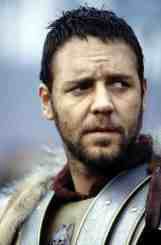
Russell Crowe in the aforementioned
Gladiator (CJ: “Incidentally, I like Russell Crowe as an actor, but, please…”) while Thom McG and Virgil Hilts gang up on
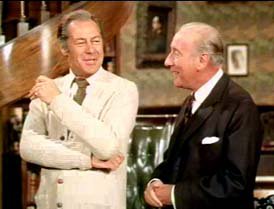
Rex Harrison’s Professor Henry Higgins in
My Fair Lady (Thom McG: “ Awarded for sullen misogyny… and not having enough interest in his craft to actually sing his songs! Awful.”)
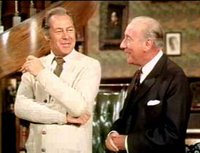
But Blaaagh ended up with the last word on Harrison in a follow-up comment: “I have to stand up for Rex Harrison: it takes a lot of guts to talk-sing your way through a musical role, and I thought he did it beautifully, and embodied Henry Higgins memorably. It's not his fault the ending of the movie is such a sucker-punch, souring all that came before it. If only they'd had Eliza throw those slippers at him, or light them on fire and put them under his chair...” Thom, care to keep this going?
Despite another blanket denouncement from the fingertips of Thom McG re the least deserving Best Actress winner (“Everyone in the last five years”), there was a tiny bit more focus when it came to names in this category. With her Oscar win as serial killer Aileen Wuornos and her upcoming role as a working-class miner (!) who encounters every known harassment and humiliation on the job until she takes the Man (and the men) to court in
North Country, Charlize Theron seems determined to prove yet again that in Hollywood beauty is no albatross when it comes to humorless truthtelling (like it undoubtedly is in every other aspect of the movie business, right?)—she grabs one vote here for her tireless efforts. Sally Field and Cher, those beacons of Oscar embarrassments past (behavioral and sartorial, respectively) each got single votes as well. Dual votes were awarded to three actresses—Gwenyth Paltrow (
Shakespeare in Love), Julia Roberts (
Erin Brockovich-- though Jen insists we take another look at
Mary Reilly) and Nicole Kidman (
The Hours)—but only one amassed enough votes (in this case, three) to take a solo spot atop the Least Deserving Best Actress Winner pedestal.

The winner:
Halle Berry, who seemed so out of her league in the overly emotional role she played in
Monsters Ball, not to mention in the company of someone like Billy Bob Thornton. While watching this movie, I felt embarrassed for her-- a rare experience, because usually the embarrassment one feels is cut by a sense of the actor being complicit in the elements that compose that squirmy feeling. But in
Monster’s Ball I got the sense that Berry was simply overwhelmed by this shot at playing at the big kids’ table—I really don’t think she knew what she was doing much of the time. She seems fatally underprepared in most every scene, especially in her big breakdown moment, fondling the candy bars, just before the next big scene—the one that probably did more to help her win the Oscar than any other—in which she screws Billy Bob Thornton with wild (and again, somewhat embarrassing) abandon. Well, they couldn’t very well give her an Academy Award for topless subathing in the tacky 2001 thriller
Swordfish, could they? Even though, if we’re honest, I bet a lot of folks who saw both movies might feel (as I do) that she was far more enjoyable in that piece of junk than in
Monsters Ball-- in fact, I’d pick the “piece of junk” over
Monsters Ball just about any day too.
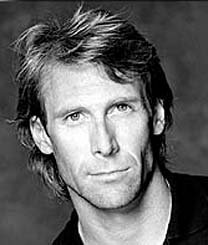
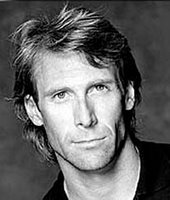 23) Michael Bay—yes or no, and why?
 Again, I admit to a bit of audience baiting here, but at the time I wrote the question I’d just seen the waterlogged
Bad Boys II, which has sealed beneath its many layers of flab a taut, exciting and (of course) overscaled car chase, and as a result I was also somewhat pleasurably (irrationally so?) anticipating
The Island. Here are some of the comments I liked most:
“Nay. More than anyone this side of John Woo, his movies are overrated by people who don’t watch many movies. If I have to hear one more person tell me that
The Rock was awesome…” (Benaiah)
“Yes. He has a vision, an awful one, but I can tell his films apart from everyone else.” (Novotny)
“Yes. If you’re looking for overblown, cheese-tastic, mindless action fun, Michael Bay is your man.” (Sharon)
“Absolutely. My kind of movies, I own 4 of them.” (Murray)
“No to M. Bay! On general principle. Gives me a headache. Which doesn't mean I won't see
The Island, but that's a whole different
story.” (Thom McG)
“No. Why? Movies. Cut. In. A. Bass-O-Matic. Not. My. Cup. Of. Tea.” (Virgil Hilts)
“Yes… but only for his “Got Milk?” spot featuring the Aaron Burr fan with a mouth clogged with peanut butter. To this day, I can’t say the ill-fated man’s name without pronouncing it “Aawanh Buuh!” (Jen)
“Me like things go boom. Me no like Michael Bay. Michael Bay go boom someday.” (Rodger)
“No, and not because I don't believe in brainless action-oriented entertainment, but because his whole MTV, quick-cut aesthetic gives me a headache.” (Machine Gun McCain)
“No – Bay is extremely talented, technically; but appears to be incapable of being able to tell a coherent story or to capture something emotionally substantive in his films. The ADD kid does get all the attention – until you get tired and whack him over the head to cease his constant spazziness.” (Robert)
PSaga gets the last word on Bay, which she relates from our friends at a certain funny newspaper: “I TOTALLY agree with Michael Bay who wrote recently in
The Onion about
March of the Penguins, deploring the sad state of entertainment in a summer ‘when a futuristic techno-thriller starring Ewan McGregor and Scarlett Johansson as escaped clones on levitating jet bikes doesn't outgross the shit out of a glorified Discovery Channel rerun… These days, I guess old-fashioned values like megawattage, high-octane thrill rides and explosions just don't matter anymore. Well, I call that a sad day for American moviemaking.’”
Readers, commence weeping.
24) Your Favorite Movie About Food I deliberately waited until after dinner to compile this category.
“Not
Super-Size Me, that is all I know.” (Benaiah)
Big Night got several mentions, to which Jen adds: “That last one-shot scene where Stanley Tucci makes eggs… oh, Lordy. I weep every time. My only complaint is that he’s got the fire on too high on the stove, but Italians DO like a frittata-like brown on their scrambles.” (This is true—Ed.)

“
The Scent of Green Papaya made me want to run, not walk, to the nearest Vietnamese restaurant and scarf down everything on the menu. I'm hungry now just thinking about it.” (Thom McG)
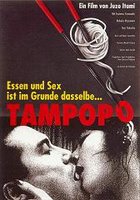
“Probably
Tampopo. I was obsessed with this movie at a time when I was falling in love with this Japanese chick and learning to love the fabulous cuisine of the culture, and the way this movie twisted up food and sex and desire like the ingredients of the perfect bowl of ramen was exactly what I needed when I needed it.” (Dennis)
“A whole movie? Huh. I got nothin', but I've always liked the scene in
The Godfather where Richard Castellano shows Al Pacino how to make spaghetti sauce.” (Virgil Hilts) (Virgil, somehow that scene trumps the egg-making finale of
Big Night for me-- I love the sight of Castellano’s gigantic hands scooping up the meatballs out of the up-ended pan and guiding them into the sauce—Ed.)
“
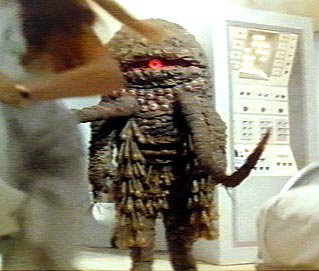
Soylent Green” (Rodger)
“I really liked
Big Night when I saw it in the theater. Driving home dimeless through North Beach after it let out was excruciating. I saw the movie since and didn't like it nearly as much.
Eat, Drink, Man, Woman was pretty good.” (Caption Jockey)
“
Eating Raoul” (Machine Gun McCain) (You and Rodger win the award for running with the concept!—Ed.)
And you can practically hear the coils tightening in the M.A.B.’s neck as he contemplates food movies: “Oh, man. I can't think. You need to provide a list to choose from, bastard! You expect us all to remember this shit? Damn. There are so many, and I can't think of one.”
25) Your Favorite Disaster Movie 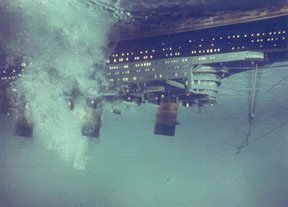
Lots of votes, naturally, for
The Poseidon Adventure (“Not this woman!”),
The Towering Inferno (though none, sadly, for the late
Towering Inferno-- it’s times like these that those IMDb folks scare me a little), and even one for
Airport 1975 (“Climb, baby,
climb!). Of all the ‘70s specimens,
Poseidon gets the most respect as a
movie, but somehow
Earthquake came through with some strikingly genuine endorsements as well:
The M.A.B.: “
Earthquake! I love them all. Someone will probably name
the one I'm thinking of that I like even more. I do like airplane ones a lot too.” (I find the M.A.B.’s childlike sincerity here disarming and charming—but don’t worry, it’s just the calm before the storm—Ed.)
Machine Gun McCain: “I was watching some of
Earthquake again recently, and it's actually not so bad. Walter Matthau's 70's attire especially.”
Twister and
The Day After Tomorrow get called out as favorite modern manifestations, while Virgil’s pick--
The Hurricane starring Dorothy Lamour and Jon Hall—serves as a reminder that there were disaster movies--
Green Dolphin Street and, of course,
San Francisco leap to mind—before Charlton Heston. But when I conceived this category I wondered in the back of my mind if someone would pick a particular movie, and finally, midway down the comments column, someone finally did: “
Heaven’s Gate” (Rodger).
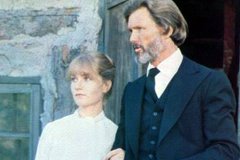
There are probably many other movies since Michael Cimino’s epic was released and roasted in 1981 on which more money has been spent, movies which consequently ended up losing more than
Heaven’s Gate did (perhaps
The Adventures of Pluto Nash might be a good place to start that list…). And a look at Cimino’s full-length version a couple of years ago revealed (to me, at least) less the heinous offenses of its reputation than a rambling, intermittently spectacular vision conjured by a man who eventually lost sight of the core of the story (The Johnson County wars) that inspired him.
Heaven’s Gate endures as an emblem of the kind of rampant, unchecked, disastrous megalomania, the frayed, played-out end of the
Easy Riders, Raging Bulls phenomenon in American cinema in the 1970s, that eventually brought down a studio. But as a movie
Heaven’s Gate, the product of an artistic sensibility, however misguided, seems much less a disaster in 2005 than does the prevalent Hollywood tendency to pander to video game-cultivated attention spans, mindless nostalgia for TV titles to remake, and a perplexing insistence on the belief that sequels and remakes are financial safe bets, when the law of decreasing returns, regarding sequels and most TV retreads, is more the rule than the exception. The real disaster movies are the ones spawned from a dearth of imagination, or an outright hostility to it.
27) Best Adaptation of a Book or Other Source Material Into A Movie I decided it might be fun to begin against the grain on this one, being that most often the comment heard about a movie adapted from a book, or play, or TV series, or video game (my, how times have changed) reads somewhere along the lines of, “The book, play, TV series/video game was better” or “They (the filmmakers) missed the essence of what made the b/p/TVs/vg interesting.” But what about the adaptations that got it right, in at least not dishonoring their source material or even, on those rare occasions, surpassing them? If such beasts exist, what were they? Well, as you might guess, there were some pretty good suggestions as to their identities, but the Mysterious Adrian Betamax burst right out of the gate, and almost out of his skull cap, on this one:
“This is the kind of thing that, if you provided us with a list to choose from, it would be 10,000 pages long! Give us a break! That’s more than half of all the movies ever made! You might as well say pick our favorite movie!”
(Note to self: Make sure to include “Name your favorite movie” on next quiz.)
But some were up to the task even without a 10,000-page list and came up with some good answers:
Benaiah thinks Mary Harron fleshed out and made more bearable the misanthropy of Bret Easton Ellis’
American Psycho.On the other end of the scale, for Beege,
Under the Tucsan Sun, as adapted by director Audrey Wells from Frances Mayes’ book, was a definite improvement, and she has some nice things to say about what Peter Jackson and company did with Tolkien’s
Lord of the Rings trilogy.
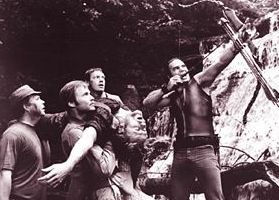
James Dickey’s screenplay for
Deliverance, adapted from his own novel, is tops for Blaaagh, who still thinks highly of the original work as well. Murray saves raves for David Self’s adaptation of Ernest May and Philip Zelikow’s
The Kennedy Tapes—Inside the White House During the Cuban Missile Crisis (aka
Thirteen Days Which Shook The World), which became the Roger Donaldson docudrama
Thirteen Days. And Novotny pines for Luchino Visconti’s ravishingly sad adaptation of Thomas Mann’s
Death in Venice.
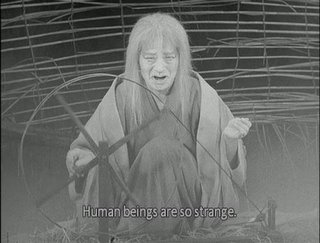
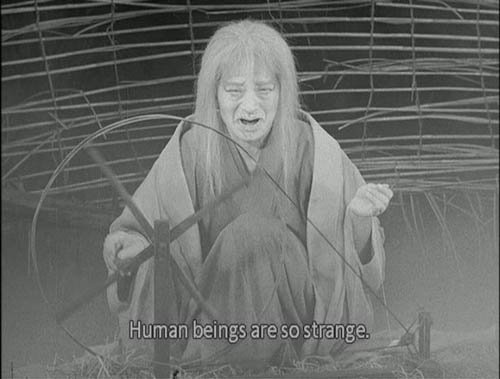
Virgil thinks Kurosawa’s visionary adaptation of Shakespeare’s
Macbeth into
Throne of Blood is as good as it gets. I appreciated what the screenwriters and directors of
Jaws and
Carrie did to tighten up the bloat and excess of their respective best-selling novel sources; each of them far surpasses the style and effect and import (or lack thereof) of the work of Stephen King and Peter Benchley.
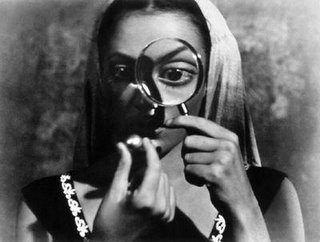
(I also cited Emilio Fernandez’ adaptation of John Steinbeck’s
The Pearl as an excellent example of turning a great book into a great film.) Jerzy Kozinski once claimed that Peter Sellers brought more to the character of Chauncey Gardener than was ever on the pages he wrote that became the novella, and then film,
Being There, and Jen absolutely agrees (she wants us to remember how good George Roy Hill’s faithful reimagining of Kurt Vonnegut’s
Slaughterhouse-Five was too.)
For Rodger, the film that David Hare and director Stephen Daldry crafted from Michael Cunningham’s
The Hours is an excellent example of how to wrestle a difficult text to the ground and make it work cinematically. Francis Ford Coppola’s
Rumble Fish, from S.E. Hinton’s novel, does it for Machine Gun McCain—which makes me wonder what he thinks of Coppola’s new DVD cut of
The Outsiders. And Robert raises a toast to the team of director Robert Wise and Screenwriter Nelson Gidding, whom he feels did novelists Shirley Jackson and Michael Chricton proud with their compelling adaptations of
The Haunting and
The Andromeda Strain.
But the last word goes to Thom McGregor, whose own words close out this category nicely:

“The British TV version of
Macbeth with Ian McKellan and Dame Judi Dench is simply amazing (now available on DVD!). And I was quite impressed with
The Unbearable Lightness of Being (one of my all-time favorite novels), not because it was “faithful” to (Milan Kundera), but because it took something I love,
which was unfilmable, and made it into something completely different—not nearly as wonderful, but admirably close.”
28) Worst Adaptation of a Book or Other Source into a Movie 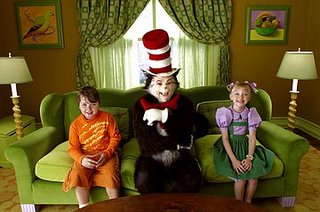
Novotny kicked off this category not with a contender, but a statement: “I reject the concept that an adaptation has to be faithful to a book.” I responded thusly in the comments column:
“I think most would reject that concept too. But faithful or not, adaptations stand or fall on what they are as adaptations. I wouldn't suggest that in order to be any good a filmed adaptation of a book must stick rigidly close to the source. But are you saying that the concept of a failed adaptation is specious because a filmmaker has the creative right, or obligation, to create something new in a film, and so whatever he/she comes up with is okay? I hope I'm not misrepresenting your comment, but it is a very interesting question that it raised in my mind, anyway. There's Pier Paolo Pasolini's
Salo: The 120 Days of Sodom, which loosely transplants de Sade into fascist Italy in World War II to devastating effect. And David Cronenberg's
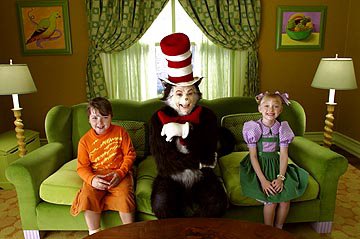
Naked Lunch practically had no choice but to become its own entity, referencing the book and using it largely as a foundation for Cronenberg's own ideas, which were naturally suited to Burroughs anyway. But Beege picked a great example of a movie that crashed and burned when the filmmakers perverted their creative license into a license to kill, the corpse in this case being the legacy of Dr. Seuss. Could an artist, being similarly free in his/her approach to
The Cat in the Hat, have raped the source material as thoroughly as did the hacks responsible for the movie that does exist? I think absolutely.”
(The only thing I have to add to that comment is to retell a great bit from an episode of
The Simpsons. Bart and Nelson sneak into their first R-rated movie, which happens to be
Naked Lunch. Of course they are very excited upon passing through the front doors of the cinema, and as soon as they do there’s a lap dissolve and a chyron (something on the order of “Two Hours Later”) and Bart and Nelson, visibly dejected, shuffle out of those same front doors. Nelson looks up at the marquee and says simply, “I can think of two things wrong with that title…” Not particularly germane to our discussion here, but funny all the same.)
Otherwise, it was an interesting collection of failures, both well and cynically intended, that we came up with here. Murray and Beege back me on my aversion to
The Cat in the Hat, and I felt compelled to add the completely crosswired adaptation of Bob Woodward’s
Wired. Benaiah suggests that “idiots” could have cobbled together a better adaptation of the Alan Moore’s graphic novel
The League of Extraordinary Gentlemen. For Blaagh, Richard Brooks’ adaptation of Joseph Conrad’s
Lord Jim provides an insurmountable casting problem: “When I found out that Peter O’Toole played Jim in the movie, I decided that I never wanted to see it, and that it had to be one of the worst casting decisions ever.” And speaking of Conrad, Virgil Hilts calls
Apocalypse Now out on the jungle floor, “inasmuch as it is often referred to as an adadptation of
Hearts of Darkness.” Virgil also thinks Barry Levinson’s
The Natural, with its goldenrod tinting of the Bernard Malamud story, comes up way short of the novel’s devastating power.
Sharon shames Chris Columbus (“Boo, Chris Columbus, you hack!”) for rendering the first two
Harry Potter films with such lack of feeling, Jen wishes she could see Robert Downey Jr. play Charlie
Chaplin in a good movie, and Thom McGregor puts Baz Luhrmann’s “adaptation” of
William Shakespeare’s Romeo + Juliet in its place: “A bit, let’s say,
unnecessary.”
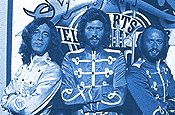
But the most amusing entries here came from Robert, who claims that the movie made from the Beatles’ 1966 album
Sgt. Pepper’s Lonely Hearts Club Band offers plenty of on-screen “proof positive that everyone involved… must have been high”; Machine Gun McCain, who sticks it to Burt Reynolds’ crappy version of Elmore Leonard’s
Stick-- interesting that Leonard is credited with the screenplay under his own name and also as Joseph Stinson, which makes me wonder if Leonard thought that, in lieu of dumping his writing credit, he could blame this disaster on a bad rewrite from his pseudonym; and Rodger, who probably suspects that John Huston’s none-too-pretentious adaptation
The Bible… In The Beginning might not have been salvagable even with a little
deus ex machina in the writing process.
30) Your favorite Marx brother 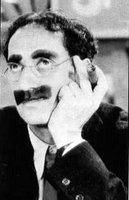

The official tally: Groucho got
eight votes, Harpo got
three votes, and, dissed even worse than Bela Lugosi, no one gave even
one shit for Chico— Chico got
no votes. The Mysterious Adrian Betamax spelled it out for you in disgust:
“Let’s just wait and see how many people say Harpo. Then there’ll be the wise guys who name the fourth (Zeppo—Ed.) or fifth (Gummo—Ed.) Marx brother. Anyone who says Zeppo is lying. And let’s not have any Karl Marx or Richard Marx jokes, ‘cause it don’t mean nothing!”
Other votes cast:
Novotny—“Karl” (meaningless)
Murray-- “Zeppo” (liar!)
Rodger—“Zeppo” (liar!)
And Thom McG—“Groucho—I like a witty, self-assured man.”
Which begs a question I haven’t the heart, or the wit or the self-assurance, to pose at the moment…!
31) The Most Frightening Movie You’ve Ever Seen That Is Not Strictly A Horror Movie 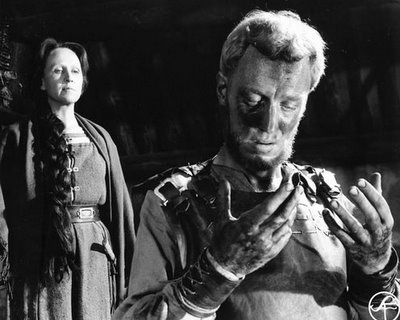
Beege and Rodger voted for
Seven (or
Se7en, depending on how fond you are of movie titles that think it’s cool to inexplicably substitute
numbers for letters); Virgil Hilts cast his ballot for
Henry: Portrait of a Serial Killer; and Blaagh put his fear behind Spielberg’s new
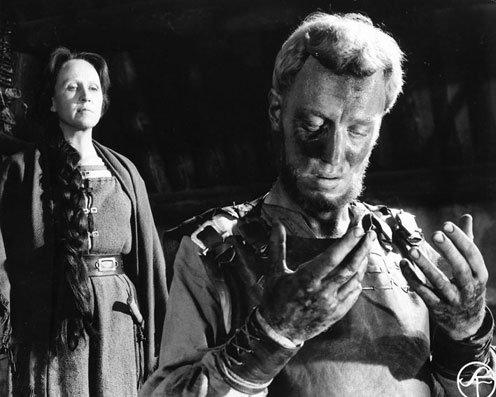
War of the Worlds. But unless you count Novotny’s pick of Ingmar Bergman’s
The Virgin Spring, which was the source material, believe it or not, for Wes Craven’s
The Last House on the Left, those were the picks in this category that most closely resembled horror films.
The rest of the voters were all over the Freudian map when it came to chronicling found fright. Robert cites
Carnal Knowledge as a particularly traumatizing experience, while Murray and Thom McG go to the reliable Disney well and come up with some refreshingly non-
Bambi titles on which to lay the blame for childhood (and adult) emotional scar tissue (
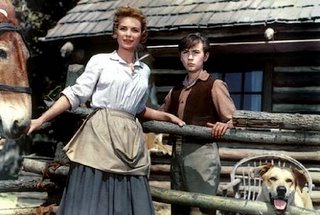
Old Yeller and
The Santa Clause 2, respectively).

I felt the need to throw the spotlight on a trifecta of terror—the dizzingly chilling documentary
The Corporation, Pasolini’s final film, the horrifically personal allegory of fascism
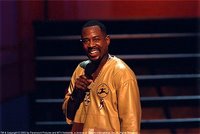
Salo: The 120 Days of Sodom, and Martin Lawrence’s ghastly car accident of a concert documentary,
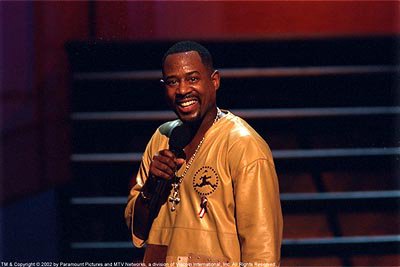
Martin Lawrence Live: Runteldat, in which he uses his performance as an opportunity to justify the irrational outbursts that repeatedly landed his delusional ass in the headlines, minus even a whiff of the wit and acerbic self-deprecation that Richard Pryor employed to illuminate the same sort of chronic misbehavior.
Jen saves a jab for Mel Gibson’s histrionic
The Passion of the Christ (“Christ!”), Benaiah was frightened by
About Schmidt (“A cautionary tale of how not to live life”) and the M.A.B. says “I just watched Stan Brakhage’s real autopsy movie last night, although I wasn’t really scared.” Which leaves us with Machine Gun McCain’s pick, a film entitled
Negatives, which I’m guessing is the little-known (at least by me) psychological drama from Peter Medak, made shortly before he would gain fame as the director of
A Day in the Death of Joe Egg and
The Ruling Class. MGM, if you have the gory details, we’d love to hear ‘em.
Next: Part 4, the conclusion of Professor Wagstaff’s Key, “Comedy, Fantasy, Cliches, Commentaries and All the Rest”


 Posts
Posts


 On this early Friday morning, it’s time to take a few minutes to send a shout-out and a whole passel of best wishes to friend and fellow blogger PSaga. I didn’t meet PSaga through this blog, but the whole blogging adventure opened up an avenue which allowed and encouraged us to become good friends, and she’s been a valued member of our little SLIFR community from the beginning. She’s been a little less active than usual on her own site these days, and I suspect that has everything to do with wrestling the details involved in taking a big leap and changing her life ever so slightly, the reality of which will dawn on Saturday, when she heads off into a bright future in another place, a state which holds a place dear to my heart. PSaga is one of those rare people I’ve met who I liked right away, and who proved my first impression correct right down the line. She’s been an excellent movie pal-- I dragged her along to some pretty great films this past summer, including The Good, the Bad and the Ugly, Once Upon a Time in the West and Grizzly Man, and one spectacular bomb, Doom-- and a superb colleague who understood the intricacies of the work we do with admirable speed and clarity, and who always approached her job with a thoroughness and intelligence that made me very glad whenever we got to share a project. Speaking purely selfishly, I’m pissed that she’s moving away. But when I remember the feeling I had when I moved to Los Angeles at age 27, as if the whole world was still in front of me, and being a little giddy, and scared, about what the future might, or might not, hold, I envy her being in somewhat the same position, and I’m exceedingly glad for her. Besides, she’ll still be able to get her cine fix, I’m sure, and there’s this thing called the computer that oughta keep her as close to all of us who know her or who have enjoyed her comments on this blog as we ever have been. Yep, as long as we can still call her a part of the SLIFR cabal, then I’ll be punch as pleased. Happy trails, PSaga. Have a safe journey, and drop us a line to let us know you got there safe, won’t ya? Oh, and get ready— Professor Wagstaff expects your participation in the upcoming Christmas Vacation quiz, and, as you know, geographical distance is no excuse!